Shocking Images From The Mexican Earthquakes That Will Break Your Heart
By
Michael Avery in
Heartbreaking
On 25th September 2017
For most residents of Mexico City, September 19th began like any other day. People got up, had their morning coffee, went to work, and later went to lunch. By the time they returned the entire city’s landscape would be forever altered.
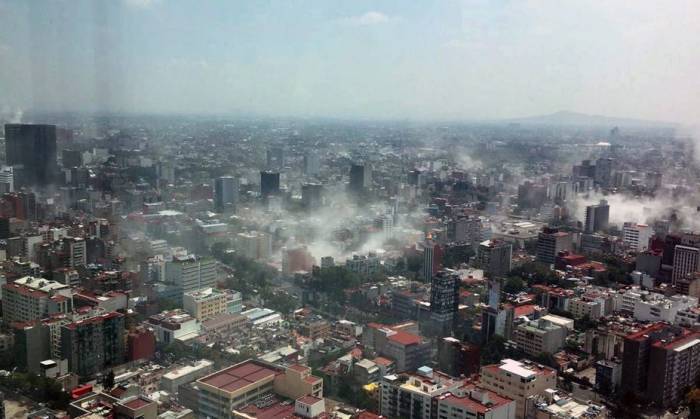
At around 1:14 PM local time, just after everyone had gotten back to work, a massive earthquake struck at the very heart of Mexico. Approximately 120 kilometers southeast of Mexico City, a geological fault finally gave way and unleashed a tremor that would shake the burgeoning metropolis to its foundation.
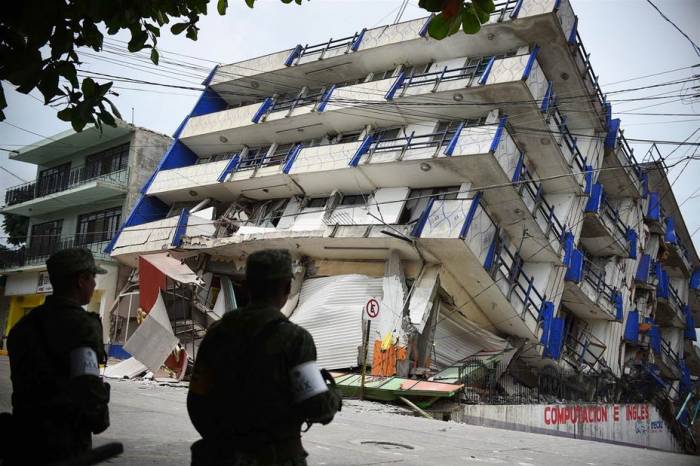
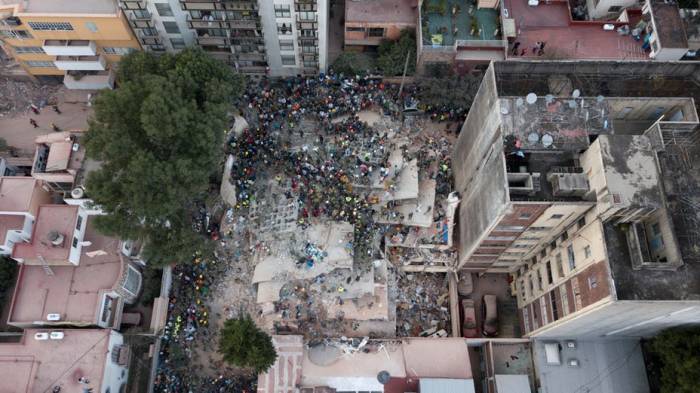
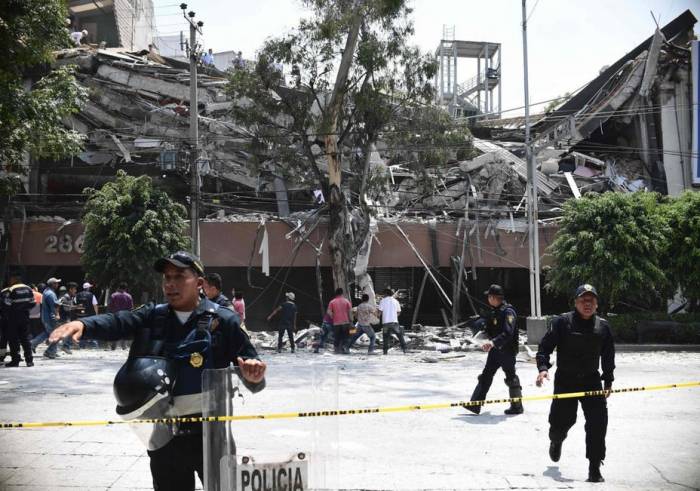
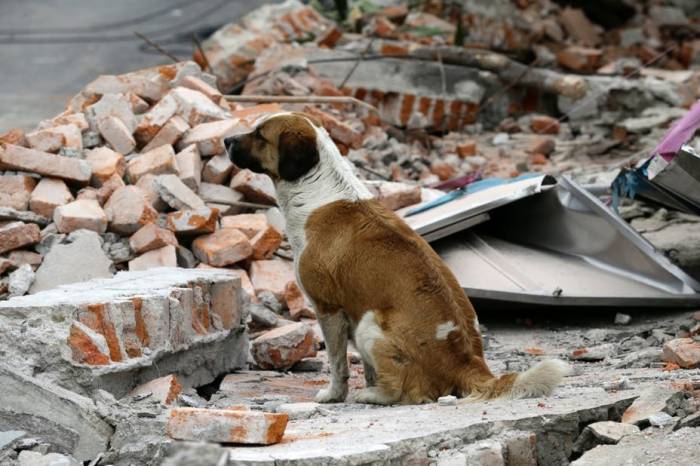
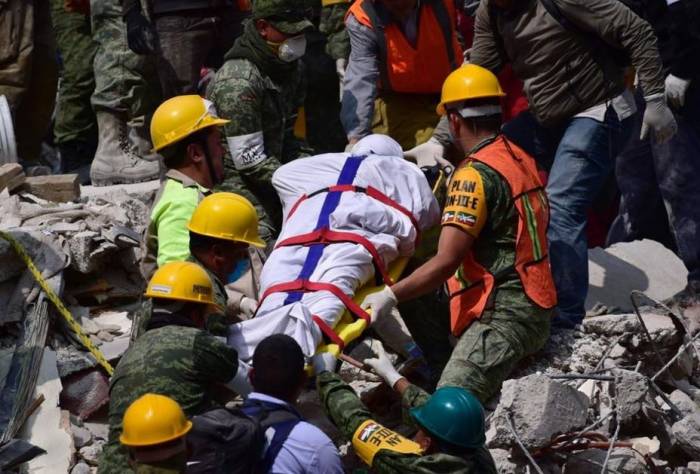
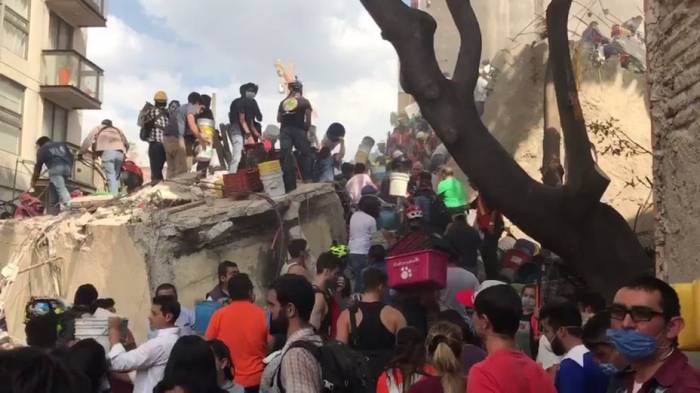
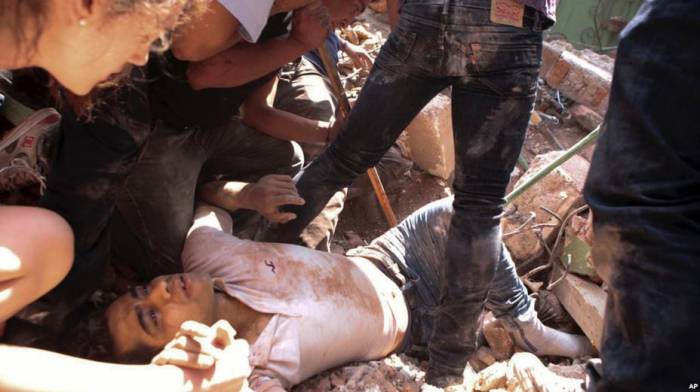
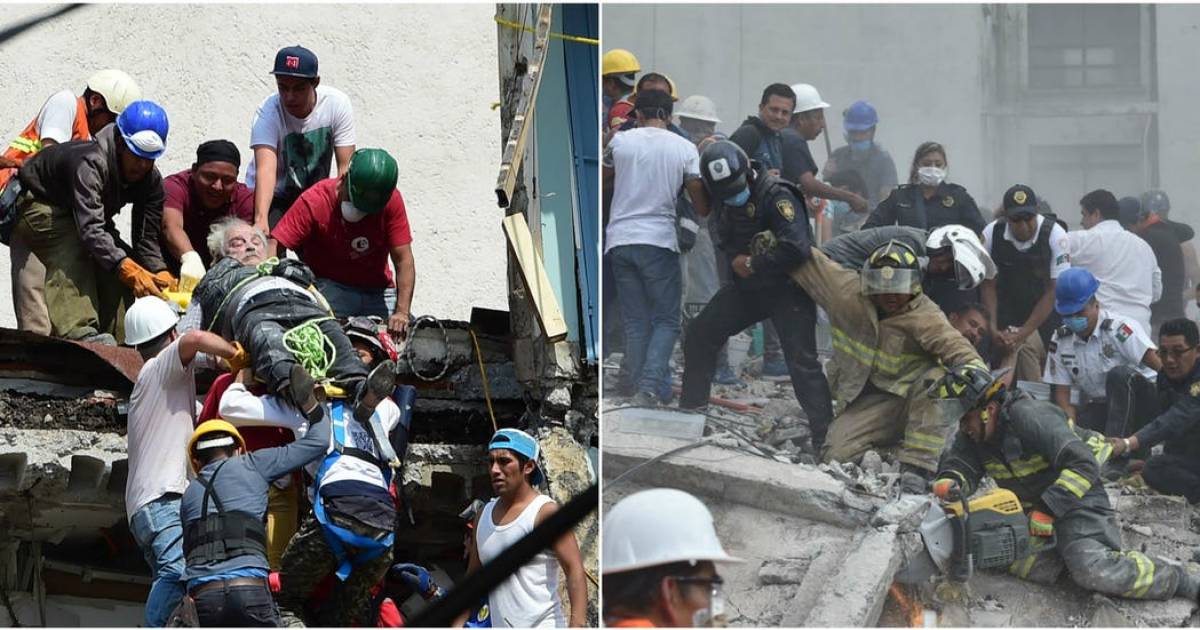
Dozens of buildings collapsed. Lives were ruined, or lay in ruins, or were lost amidst the rubble. By the time the dust settled 225 people were killed by falling buildings and debris.
As one of the most seismically active zones in the world, Mexico is no stranger to earthquakes. Mexico sits above 3 tectonic plates all grinding together. The entire country experiences an average of 40 earthquakes a day. Most of them are barely noticeable even if they happen in highly populated regions. But some earthquakes can be utterly devastating, such as the one that struck on the 19th.
Here are 15 shocking images from Mexico’s most horrific earthquake in over 3 decades.
TWO EARTHQUAKES SEPARATED BY DAYS
While the September 19th earthquake was far more destructive, it’s important to note there was another earthquake that happened not 12 days prior, on September 7th. This earlier earthquake occurred in the Pacific Ocean, just south of the southern-most tip of Mexico, and was far stronger than the one that hit Mexico City over a week later.
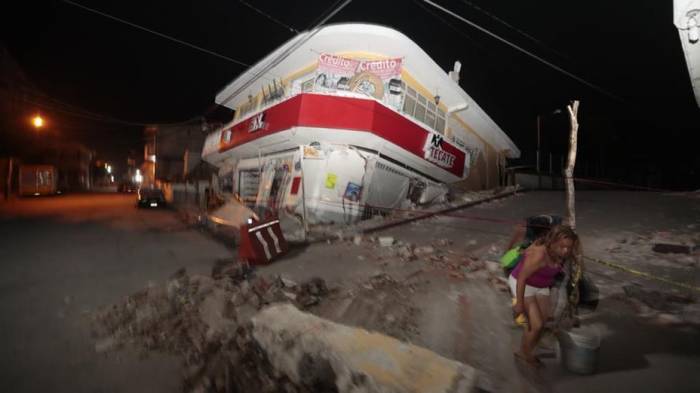
This earthquake was a massive 8.1 magnitude – the largest that Mexico has experienced in over a century. But because it took place in the ocean, far from any major urban centers, the casualties were considerably less than the September 19th tremor, with 90 people believed to have lost their lives. A tsunami alert was issued for the coast but thankfully none appeared, otherwise the damage could have been much worse.
MEXICO CITY SOIL ESPECIALLY BAD FOR EARTHQUAKES
Eleven days later, a 7.1 magnitude earthquake struck just southeast of Mexico City, and despite being a comparatively smaller earthquake to the one that hit over a week ago, the ground composition made it vastly more damaging.
According to John Vidale, seismologist, and director of the Southern California Earthquake Center, the soil on which Mexico City sits is far less dense than other cities around the globe which magnifies an earthquake’s strength. “The downtown of Mexico City is notoriously vulnerable to earthquakes because of the very soft and wet ground underneath. Its soil amplifies shaking like Jell-O on a plate and is prone to liquefaction, which is the ability to transform dirt into a dense liquid when sufficiently churned,” John wrote for CNN.
SMALLER EARTHQUAKE, BUT MORE DAMAGE
The location also played a huge factor in the devastation. While the September 7th earthquake hit in the middle of the Ocean and was fairly deep underground, the September 19th quake struck well inland at a depth of 51 km – practically right underfoot, as far as earthquakes go.
The fact the quake was at such a shallow depth contributed greatly to the power felt on the surface as the energy unleashed had far less dirt and rock in its way to slow it down. That meant nearly all of the 7.1 magnitude force was felt across Mexico City with disastrous results.
Thousands of homes and dozens of high-rise commercial structures collapsed in the wake of the quake, causing untold billions in damage.
LATER QUAKE NOT CONSIDERED AN AFTERSHOCK
Although the two earthquakes took place shortly after one another, the September 19th quake is not considered to be related to the September 7th quake. It’s just unlucky that the two separate fault lines happened to shift roughly at the same time, geologically speaking.
Aftershocks are common following a large earthquake. Since an earthquake is essentially caused when the pressure between Earth’s tectonic plates gets to be so great that they slip, and since tectonic plates tend to be enormous jagged jigsaw pieces, when they do those jagged edges tend to catch a few times before they finally settle down. The 8.1 magnitude earthquake that struck earlier in September reportedly had aftershocks that lasted into Friday afternoon.
225 PEOPLE DEAD, HUNDREDS MORE INJURED
By the time the dust cleared over 200 people had died as a result of the September 19th quake. According to Luis Felipe Puente, the coordinator of Mexico’s national Civil Defense Agency, Mexico City reported 94 casualties, Morelos state reported 71, Puebla state reported 43 dead, Mexico state reported 12 dead, Guerrero had 4 dead, and Oaxaca had a single confirmed death.
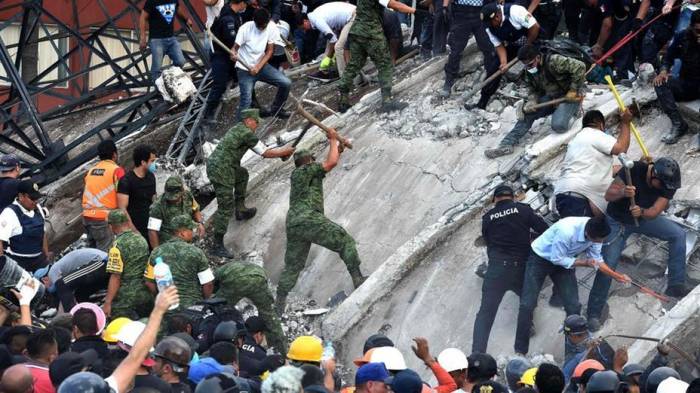
Most of the reported casualties were the result of collapsing buildings and structures. One church in Atzala Puebla was said to have collapsed during a baptism, killing 11 in attendance as well as the infant being baptized. Another church on the slopes of Popocatépetl in Atzitzihuacan collapsed during morning mass, leaving 15 dead. It’s almost certain that as the rubble is cleared more bodies will be discovered and the death count will continue to rise.
HOW EARTHQUAKES HAPPEN
To understand how an earthquake can happen you must first understand the Earth on which you stand, which isn’t nearly as solid as it appears. A few dozen kilometers below the surface the ground is actually composed of plastic silicate (called the mantle), atop which interconnected slabs of solid rock float. These slabs contain everything we know on the surface of the world and are called tectonic plates.
Tectonic plates don’t stand still, however. As the Earths mantle that they sit upon slowly churns those plates move ever so slightly year after year. Some plates move a few millimeters, while others move as many as 10 centimeters annually. That may not sound like a lot, but over many years the pressure between tectonic plates can build up until it’s finally released as an earthquake.
And when the earth moves, it can really move. The 2011 earthquake that struck Japan actually moved its coastline by 8 feet.
MEXICO SITS ABOVE 3 ACTIVE FAULT LINES
Mexico is particularly active when it comes to seismic events. To the west, the Cocos Plate and the North American Plate grind along Mexico’s coast, while just south is the intersection between the Cocos and Caribbean plates. The Riviera Plate also sits just between the Pacific and Cocos plates in the west, bringing the total number of fault lines to three. All these intersecting bodies make Mexico one of the most earthquake-prone places on the planet.
These plates all intersect on the coast, so why did the September 19th quake happen further inland? That’s because fault lines aren’t just clean lines we can see. They’re shaped more like the stitching on a baseball, with smaller cracks reaching into the interior. Those cracks can be just as bad for quakes as the main fault lines, if not worse.
HOW TO SURVIVE AN EARTHQUAKE
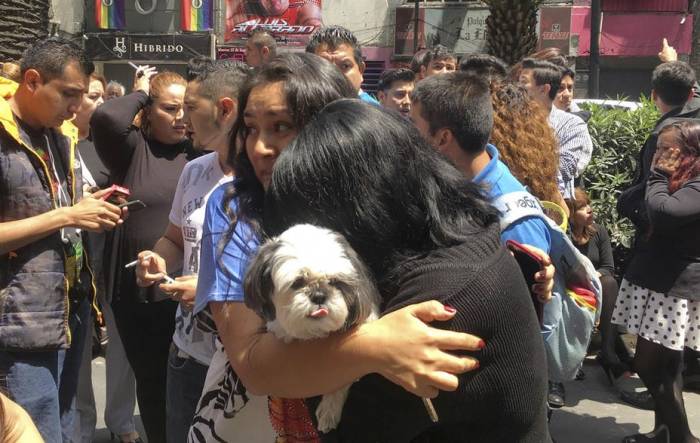
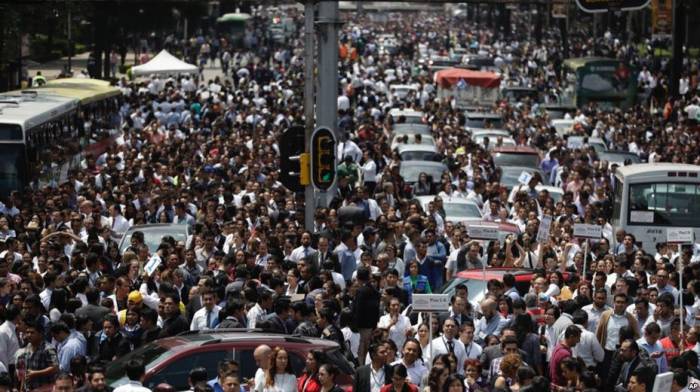
As you can see in the photo below, once the earthquake siren rang everyone piled out of buildings and into the streets. Being under the open sky is the safest place you can be during an earthquake as most deaths and injuries are caused by falling debris from man-made objects.
Mexico is fortunate enough to have an alarm system to give people time to evacuate buildings, but most places don’t have that technology. If you’re caught inside during an earthquake, drop to the floor and try and find a sturdy table to hide under until the tremors are over. Stay away from walls, doors, windows, or anything with glass as it’s likely to break and cause a hazard. Cover your face and head with your arms to avoid injury from glass or falling debris.
IT HAPPENED ON THE ANNIVERSARY OF APOCALYPTIC 1985 QUAKE
Some consider the September 19th quake a cruel joke since it happened on the 32nd anniversary of a similarly large earthquake that took place in 1985. That earthquake has stuck in Mexico’s memory as it was one of the most horrendous earthquakes recorded for loss of life.
Over 10,000 people died during the 8.1 magnitude quake that struck Mexico City in 1985, with estimates from the surrounding area bringing that total to many thousands more. Hundreds of buildings collapsed leading to the many thousands of trapped individuals suffocating before help could arrive.
Most of the buildings built at the time had been designed to withstand earthquakes, but not one of such magnitude. The 1985 quake caused Mexico to establish new codes for construction, as well as creating the world’s first earthquake detection system which provides residents with around a minute to find shelter before a quake strikes.
EARTHQUAKE DRILL HAPPENED TWO HOURS BEFORE REAL THING
It’s fitting that on the anniversary of the worst quake-related death toll in Mexico’s history they would hold an emergency drill of their early warning system. The entire city shuts down and shuffles into the street for 15 minutes as companies and residents ensure that the city knows how to respond to a massive earthquake.
At 11 AM, Mexico City’s sirens all blared for the drill, and people poured out into the streets as expected. A few hours later they’d do it again, but this time for real as the 7.1 magnitude quake rocked the city.
It’s preventative measures and planning like this that kept the loss of life to a minimum, losing hundreds rather than thousands.
209 SCHOOLS STRUCK, DOZENS OF STUDENTS KILLED
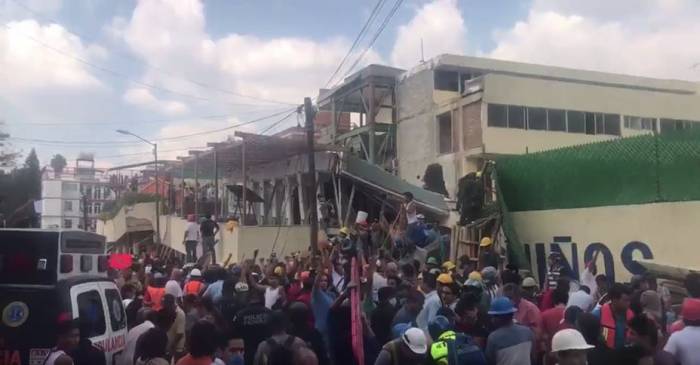
Sadly, classes were still in session for students when the September 19th quake began, and while many were built after 1985 or upgraded to better withstand earthquakes, over a dozen were heavily damaged. One school, pictured above, had multiple floors collapse with students still inside.
Rescue workers were quick to respond to the crisis at Enrique C. Rébsamen public school as children cried out from beneath the rubble. Most kids and teachers managed to get out alive, but according to reports, dozens were crushed when their roof collapsed. A total 26 student’s bodies and four instructors were pulled from the rubble, with 30 more students and 8 more instructors still unaccounted for as of the time of this writing.
45,000 HOMES DESTROYED
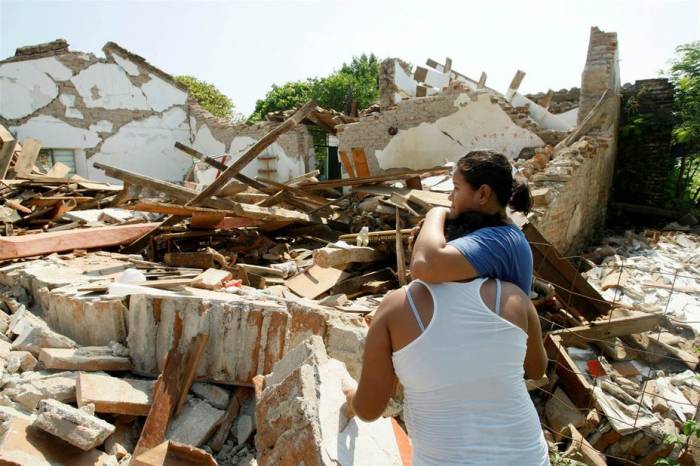
While much of the media coverage centered on the high-profile and deadly collapse of larger office buildings, there were a far greater number of personal residences destroyed in the aftermath of the September 19th quake.
Over 45,000 homes were destroyed as a result of the earthquake, more than the 40-odd thousand destroyed in the wake of Hurricane Harvey, leaving hundreds of thousands of people homeless. Disaster relief funding will certainly help many rebuild their homes but that could take months, even years.
Mexico City officials have opened three mass shelters to house those displaced following the quake, but those shelters are overflowing and still leave many thousands of people to fend for themselves.
4.6 MILLION PEOPLE WITHOUT POWER
Mexico City and the surrounding metropolitan area are home to over 20 million people. After the quake, about 4.6 million of those people were suddenly without power.
Loss of power can be just as deadly as a collapsed building to those in hospital, where electricity is needed to keep people on life support systems alive. The Federal Electricity Commission, Mexico’s nationalized power provider, was quick to respond, providing emergency generators to affected hospitals and nursing homes around the city.
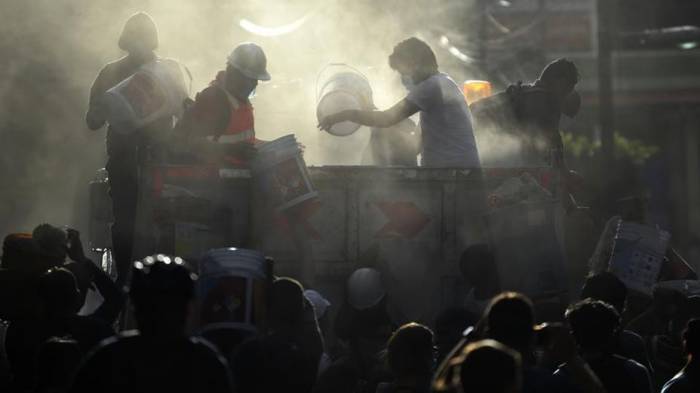
The CFE deployed a total of 32 generators as well as 54 lighting towers to help rescue workers continue to search for survivors amidst the rubble of collapsed buildings. Power for 2 million would be restored by the following day, but many millions are still without power due to lines being cut as buildings collapsed.
MEXICAN PRESIDENT FLYING HOME FROM EARLIER QUAKE WHEN THE SECOND QUAKE STRUCK
The devastation caused by the September 8th quake in southern Mexico was a big deal, both politically and not, so naturally, the president of Mexico, Enrique Peña Nieto, went to offer support and survey the damage.
He was just finishing his tour and on his way home when the second earthquake struck Mexico City on September 19th. His flight was diverted to nearby Santa Lucía Air Force Base, but not before performing a flyby of the city so he could view first-hand the destruction. Even from a moving jet, it was obvious the number of buildings that had been flattened as a cloud of dust had settled over the city.
President Nieto would address the media from inside his plane while still at the air force base, offering his condolences and unleashing 3000 troops to help with search and rescue efforts.
THE WORLD OFFERS THEIR SYMPATHY, SUPPORT
As soon as news broke of the massive earthquake, the world responded with an outpouring of support. World leaders took to social media to offer their sympathy and condolences as well.
Despite his previous threat to build a wall between the two countries, US President Trump tweeted, “God bless the people of Mexico City. We are with you and will be there for you.” White House spokespeople confirmed that the United States had dispatched search and rescue teams to assist city officials.
Canadian Prime Minister Justin Trudeau wrote, “Devastating news from Mexico City. My thoughts are with those affected by today’s earthquake – Canada will be ready to help our friends.” The Israeli Defence Force would also dispatch a contingent of 50 soldiers to assist with rescue and cleanup efforts.