If we look back to how we cared for babies in the past, you will most likely be shocked at how we provided remedies to certain problems and how we chose to nurture them so as to lessen the burden a bit when they get unruly. If we think of it, some of this may even be considered illegal today. Let’s take a look back so we may never do any of these again to the young ones.
Shocking Things People Used To Do With Their Babies
By
Editorial Staff in
Bizarre
On 19th September 2017
advertisement
#1 Give Medicine Made Of CANNABIS, MORPHINE, AND CHLOROFORM To Crying And Teething Babies
Mrs. Winslow's Soothing Syrup was a 19th-century medicine for crying and teething babies...that had alcohol, cannabis, morphine, and chloroform in it.
In the 1840s, Mrs. Charlotte N. Winslow discovered that making infants stop crying was as easy as plying them with a boatload of drugs. Her son-in-law Jeremiah Curtis and fellow druggist Benjamin A. Perkins partnered up to manufacture the remedy for market, and it was a hit. The opiates in it knocked out the little kiddos and eased their diarrhea, as the drugs are known to cause constipation. The American Medical Association eventually denounced Mrs. Winslow's Soothing Syrup in 1911, but it was still sold as late as 1930.

#2 Infants Were Sent To The Countryside To Get WET-NURSED
Paris was once called "the city without babies" because most newborns were sent out to the countryside to be wet-nursed.
Wet nurses — women hired to nurse babies when the mother cannot or chooses not to do so — were very popular in the 18th century. So popular that, in 1780, only 700 of the 20,000 babies born that year weren't wet-nursed. Not only that, but only about one out of every four babies stayed in the city to be wet-nursed; the rest were shipped out to the countryside, resulting in Paris's dubious nickname.

advertisement
#3 Animals used to nurse babies
Oh, and until the 20th century, babies were often nursed by LIVESTOCK like goats and donkeys.
In fact, all kinds of animals, including sheep, cows, and horses were used, but goats were most preferable. To ensure a proper feeding, parents would place cradles right under the goats so babies could suck directly from the udders. The weirdest part? People reported that the goats could recognize the infants they were feeding(!) and would run over to "their" babies when they heard them crying for food.

#4 People also thought tickling could severely damage a baby.
“Tickling is bad for children. Sometimes it does serious harm, and it never does any good,” the educator Angelo Patri wrote in 1922. I mean, tickling is the worst anyway, tbh.

advertisement
#5 In 1928, a psychologist recommended shaking hands with your baby as a morning greeting instead of a hug or a kiss.
For years, people warned against touching your child too much or, in some cases, at all to avoid spreading germs. There is some sort of laws also in selected countries for not touching the baby too much.

advertisement
#6 Parents used to believe that “THUMBSUCKERS” will become hooked into chronic “SOLO PLEASURES”
There have been books written in the past that claim that babies who thumb suck will turn into chronic masturbators when they grow up. This alarmed parents so they try to find different ways to combat it. For instance, there are parents who would pin the sleeves of their baby’s clothes when they are on the crib so that they can’t reach for their hands and start thumb sucking. Other parents make their babies wear mittens all the time.
The most extreme method some parents do to prevent their babies from thumb sucking is by putting something spicy on the baby’s thumb so when they suck it, they would cry and later on, learn not to do it again.

advertisement
#7 Neck Stretching
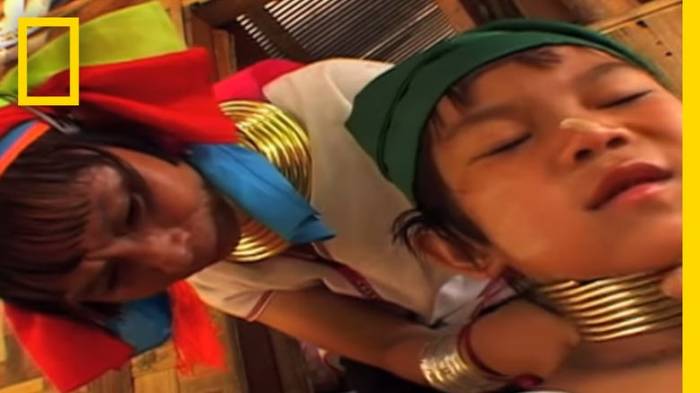
This 1000 year tradition doesn’t actually elongate the neck. Instead it collapses the collar bone and compresses the ribs and clavicle which gives the illusion of a longer neck.
Medicalbag.com explains that this deformation of the body is started with girls as young as 5 years old. A coil is placed around the girl’s neck which weighs about 4.5 pounds. The weight is increased as the girl ages to about 22 pounds!
Although this can be a painful cultural tradition, young women are said to look forward to the addition of rings to their necks as it is a cultural rite of passage. In addition to this, mothers often encourage their daughters to keep up the tradition because it has become a popular tourist attraction, waves of tourists travel to see the young girls and women to witness this unique tradition.
This can provide a decent income for the young girls.
advertisement
#8 Leaving The Baby Outside While Mom Runs Errands
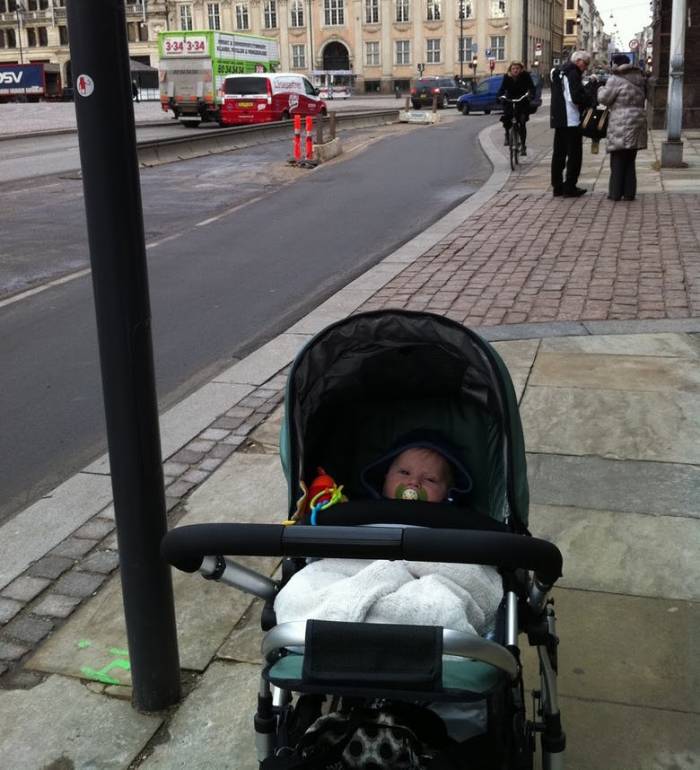
Ever considered leaving your child in the car to run into the gas station real quick? The baby is sleeping so soundly in her car seat and you truly will only be a minute… It used to be quite normal to do so but now days in the US this is heavily frowned upon. Imagine leaving the baby in her stroller curbside as you go into a restaurant to enjoy dinner!
In America people would lose their minds if they saw an unattended baby, outside in a stroller! But this is quite ordinary in Denmark. You can actually walk down the street and see many strollers parked alongside the curbs as parents shop or sit inside a restaurant to eat.
Perhaps it is a more civilized society than we are used to in America. Or maybe parents are just more trusting of people in their community. Either way, I don’t see this trend catching on in many other parts of the world any time soon.
advertisement
#9 Encourage Underage Drinking
In America, parents are wary of letting our children drink too much fruit juice. We don’t want to allow excess sugar out of fear of obesity, diabetes or even cavities. Moreover, we would never consider allowing our children to drink alcohol.
Child protective services would surely get involved! Hence the 21 and over law for consumption of alcohol. However, it’s quite the norm in Belgian to allow children to drink beer. Apparently this trend was introduced in 2001 as an attempt to give children an alternative to soda.
The idea was that with an alternative to soda, childhood obesity would decrease. According to Cracked.com, in Croatia, 30% of eighth grade boys and 12% of eighth grade girls report drinking beer up six times a week! It’s only slightly ironic that Europeans are infamous for alcoholism. Perhaps a cavity or two caused by fruit juice isn’t so bad when you compare it to the debilitating effects of alcoholism.

advertisement
#10 Female Cutting
This parenting norm is truly as horrifying as you are probably imagining. Only making it worse is the fact that this is a family affair. According to the guardian, having a daughter who is not “cut” effects the family’s status in the community and her price as a bride.
Although technically illegal, secret ceremonies are being held frequently in countries like Kenya. It became illegal because of the very serious health risk it poses to the child. Not to mention the inhumanity of it. The procedure is done by cutting the girl’s external genitalia with a razor blade and stopping the bleeding with alcohol.
The child’s legs are then bound from the hips down until she begins to heal. What is even worse is that social pressure inhibits the child from making any noise during this gruelling procedure. Efforts have been made to stop this practice but it is so culturally ingrained in communities like that in Kenya that parents fear that not practicing it will leave them in a state of communal outcast.

advertisement
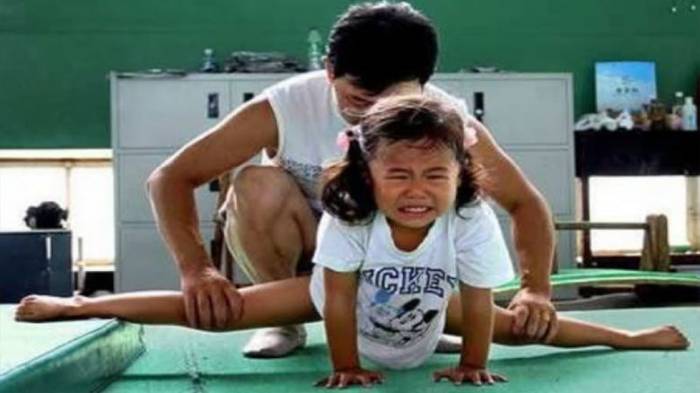
#11 Treating Kids Like Profesisonal Athletes
At 6 months old some of us are teaching our babies to use a spoon or how to sit up. Some of us are teaching our babies how to play tennis or baseball. Seriously. Some parents introduce their children to objects such as a tennis ball or something of the like as early as a day or two old, claiming that it begins to develop coordination between the eye and ball.
This training only intensifies as the child grows. ABC News recently did a story on a 4 year old girl named Mia who practices tennis for no less than 3 hours per day, sometimes in heat reaching 95 degrees.
While some parents justify this as time spent more efficiently than in front of the television or game consoles, others beg the question, “what if something happens along their lives that disables them from playing such sport?” Then their whole childhood is spent reaching for something that is no longer likely. Not to mention, God forbid, the child grows up a bit and decides he or she doesn’t like the sport and will no longer practice it!
advertisement
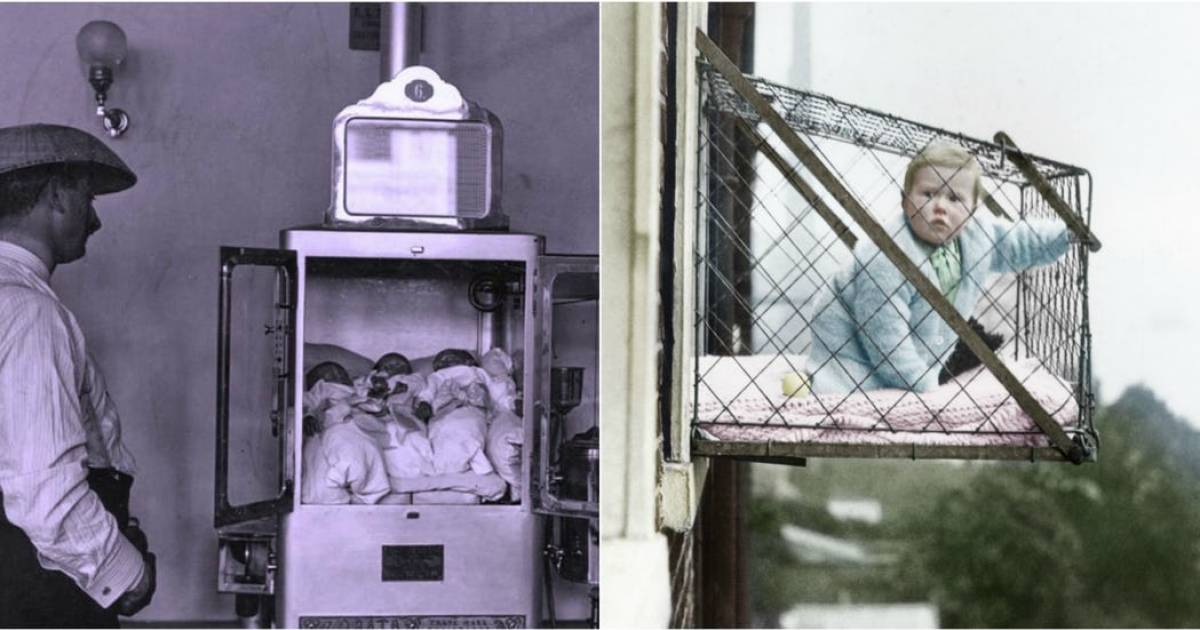
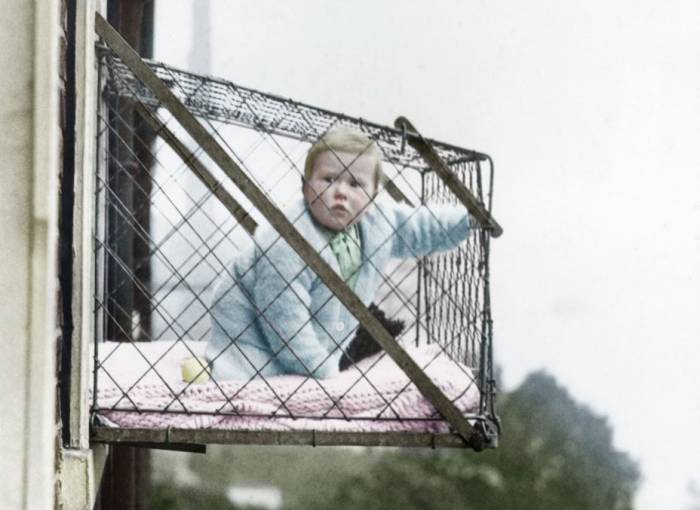
#12 Baby cages on building windows were popular in early 1990's
Baby cages that were installed sticking out on building windows to serve as an open air playground for babies were the hype in the early 1900s. Emma Read patented this device in 1922 and it instantly became a hit among families living in the bustling city. With buildings popping from almost every corner of the city and families moving in from the countryside to the metro, they still wanted to give babies a breathe of fresh air so they had baby cages installed at home.
This may be a shocking thing to do today but way back then, you will see a lot of buildings with baby cages. Good thing, not a lot of babies were afraid of heights…yet.
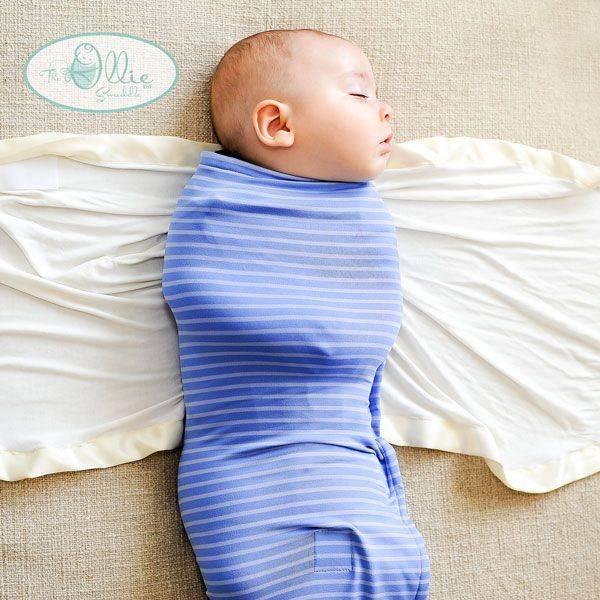
#13 Tightly swaddling babies to ensure they grow as upright adults.
In ancient Europe, tight swaddling of babies was a popular practice. Parents swaddled their babies so tight that they are unable to move almost any part of their body, even just tilting their heads. The first reason they did this is so that it is easier to look after the newborn because they can’t move and just roll out. Moreover, parents believed that babies who were not swaddled tightly grew bent or in distorted shapes. Also, they saw babies who were not swaddled properly to be walking on all fours like an animal and they thought they would just grow to do that. So, to ensure that their kids grew into an upright adult, they made sure the swaddled cloth on their babies were extremely tight.
advertisement
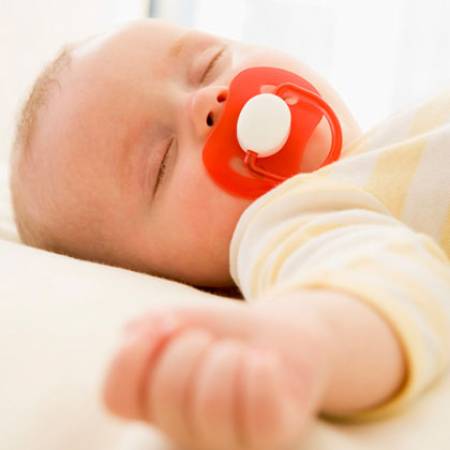
#14 Pacifiers were dipped in sugar water or honey to calm babies
We all know that babies are unruly. You cannot simply command them to stop crying because they don’t know how to do that on their own just yet. So, when babies cry and cry, and parents have already tried different remedies but nothing happens, they turn to the pacifier. However, to make it work best, they dip it in sugar water or honey because it almost instantly sedates babies and calms their nerves. However, this practice has resulted in lots of dental problems among growing kids so they had to stop it. Still, doing this has been popular for a time and it worked. The result, though, has made many parents cautious of the pacifier.
#15 Salt was put on baby's skin to harden it
There are a lot of weird things and treatments we did to babies in the ancient times. Another one of the weird treatments we did to them is salting their skin to harden it as if curing meat. The baby’s skin is so soft that it was prone to almost any injury. Hence, in the ancient times, they salted baby’s skin to give it a certain layer of protection.
This was found to be weird though. Aside from that, it can cause certain skin irritations that can lead to permanent skin problems as the baby grows. So, they stopped this practices and parents just became more careful with how they handle their baby’s skin.