
You enjoy your partner’s company, share his concerns, and feel connected to her even when you’re separated. These are signs you are attached to your partner. The outcome of attachment is intimacy, caring, and understanding. It can be a beautiful thing and it is absolutely necessary to form a healthy relationship. But not all kinds of attachment are healthy. Excessive attachment is unhealthy and damaging.
advertisement
#1 Our style of attachment affects everything from our partner selection to how well our relationships progress to, sadly, how they end.

#2 That is why recognizing our attachment pattern can help us understand our strengths and vulnerabilities in a relationship.

advertisement
#3 An attachment pattern is established in early childhood attachments and continues to function as a working model for relationships in adulthood.

#4 When Attachment Goes Wrong
People with anxious attachment disorder are vigilant clock-watchers. As they are dependent on contact and affirmation from their partner, they have an uncanny ability to sense if contact is waning. They tend to be chronic checkers of technology, checking voicemail, emails, and texts with great frequency. They may also have a need for constant texting. They can also be easily prone to feelings of jealousy. They love and respect their partners but are also wary that love may disappear.
advertisement
#5 Jealousy and Abandonment Fears
Jealousy is the other feature of anxious attachment that wreaks havoc on romantic relationships. Sometimes a sudden jealous anger can be very confusing. Imagine this scenario: A man has recently broken up with his girlfriend of three years. Yet when he sees her with another man in a nightclub the day he’s laid off from his job, he struts over, makes a scene and gets kicked out of the club for his aggressiveness. His intellectual brain knew that they were broken up. In fact this is what he wanted. But an attachment injury is a rupture in a relationship at a critical moment of need. His emotional brain still looked to her as his secure base, and, feeling vulnerable because of his job loss, he was consumed with a jealous rage.
advertisement
#6 Rescue behavior
If you make your partner’s life your own life, rescue behavior will naturally follow. When you are worried about every little thing that happens to your partner, no matter how trivial, you will try to take charge, make decisions, and provide solutions – even when they didn’t ask for your help. This is called rescue behavior.
In a healthy relationship, partners ask for each other’s advice, but they understand that the individual has to be comfortable with and take responsibility for the decision. You may step in to help your partner if they ask for your help, but you don’t wade into their life and start living it for them.
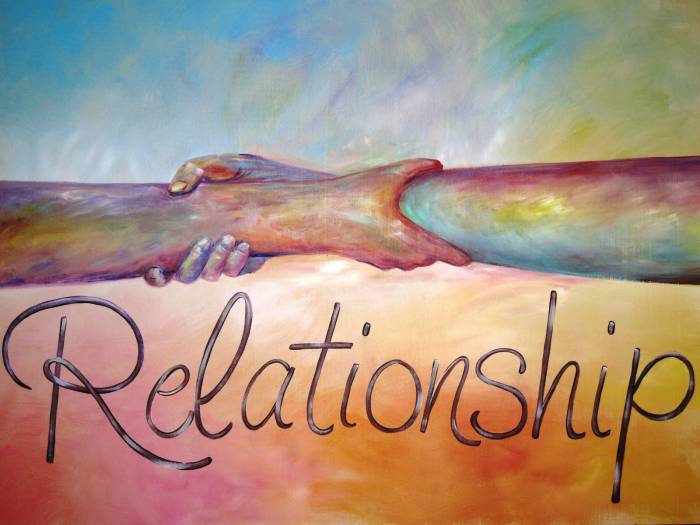
If you take over your partner’s life and something goes poorly, then you stop being the partner they walk through life hand-in-hand with as equals. Instead, you become the person to blame when things go wrong, or the person expected to fix everything.

advertisement
#7 Emotional dependence
A good relationship includes a healthy dose of interdependence; an unhealthy relationship includes a poisonous dose of emotional dependence.Meeting all of your partner’s needs and not expecting to have your own needs met – or demanding that all of your needs are met without meeting your partner’s – is not healthy. Self-sacrifice is not loved and can end up making one — or both — of you feel guilty that you’re not doing enough to make the other happy.

advertisement
#8 Controlling behaviors
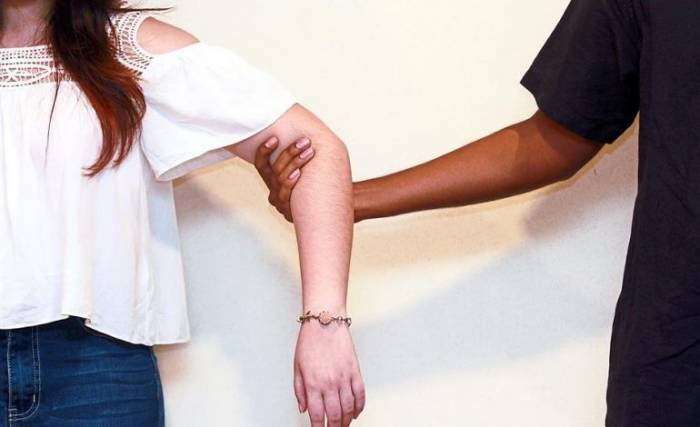
Do you try to control a love interests comings and goings? Is there a history of you irrationally questioning where the person you are dating is going? Do you constantly inquire about their interactions with others? If so, this is a sign of mistrust and a major characteristic of abandonment issues.
advertisement
#9 obsessive behavior
Another feature of the insecure attachment style is obsessiveness. We are like detectives examining our nearest and dearest for signs of the deception and betrayal we have learned to expect.People tend to behave how we treat them. So when we treat our partner as though they aren’t trustworthy, we are driving a wedge between them and us. It is the insecurity that we bring to relationships that they continually reflect back to us. It can feel terrifying to consider changing a pattern like this, but when the alternative is continually damaged relationships, it’s worth taking the chance.
advertisement
#10 Attachment style
Those of us with an insecure attachment style is also likely to have problems accepting and feeling comfortable with the way things are. We constantly seek to escape the present moment, because we aren’t happy with ourselves just the way we are. We also project this onto our partners, wondering whether we are ‘good enough’ for them and whether they are ‘good enough’ for us.

advertisement
#11 Anxious
Someone in this category may become compulsive in their caregiving. They tend to over-invest their emotions in relationships and may struggle to maintain long-term relationships. A strong desire for contact is common and they may perceive relationships as unbalanced.
advertisement
#12 Avoidant
Those in the avoidant category are likely to distrust people and feel a sense of anger. They can lack empathy and shy away from intimacy. They often feel like they can only rely on themselves.

#13 Social difficulties
Those with attachment difficulties may find it difficult to socialize. They may find it hard to understand other people and be wary of them. This can lead to social anxiety.

advertisement
#14 How to Heal An Attachment Disorder
Attachment disorder is typically thought to be specific to children and young people. There is, however, a growing understanding that unresolved attachment issues can cause significant problems in adulthood.
When attachment issues aren’t addressed during childhood, adults can be left with resulting struggles. Forming relationships and bonds with others is often the biggest issue.
Adults with attachment disorder may become co-dependant or, alternatively, exert a level of hostility that prevents others from getting close. Others may struggle to tune into their emotions. Many will rely on the coping mechanisms they built during childhood, which can leave them isolated as adults.
The good news is that it’s never too late to seek support and treatment are available for adults with attachment problems, too.

#15 Can attachment disorders be healed?
It’s one of the most frequently asked questions in my column for DatingAdvice.com.
Work with an empathetic, ethical therapist can foster a healthy therapist-patient relationship that can rebuild an adult attachment style. Patients learn how to depend on relationships, to trust love and to tolerate criticism and consistent contact. If you feel you are suffering from an attachment disorder, try to find a therapist who specializes in attachment theory.
advertisement
#16 Therapy
Therapy can also be helpful for changing maladaptive attachment patterns. By becoming aware of your attachment style, both you and your partner can challenge the insecurities and fears supported by your age-old working models and develop new styles of attachment for sustaining a satisfying, loving relationship.

#17 So what should you do when you come home and feel lonely?
Be calm. Learn to contain yourself.. Be aware that people with an anxious attachment disorder are most often attracted to those who are emotionally avoidant. In fact, they get surprisingly turned on by people who won’t meet their emotional needs. If you feel this pattern happening with you, find a good therapist and learn to like the nice girls, the ones who do call you back.