

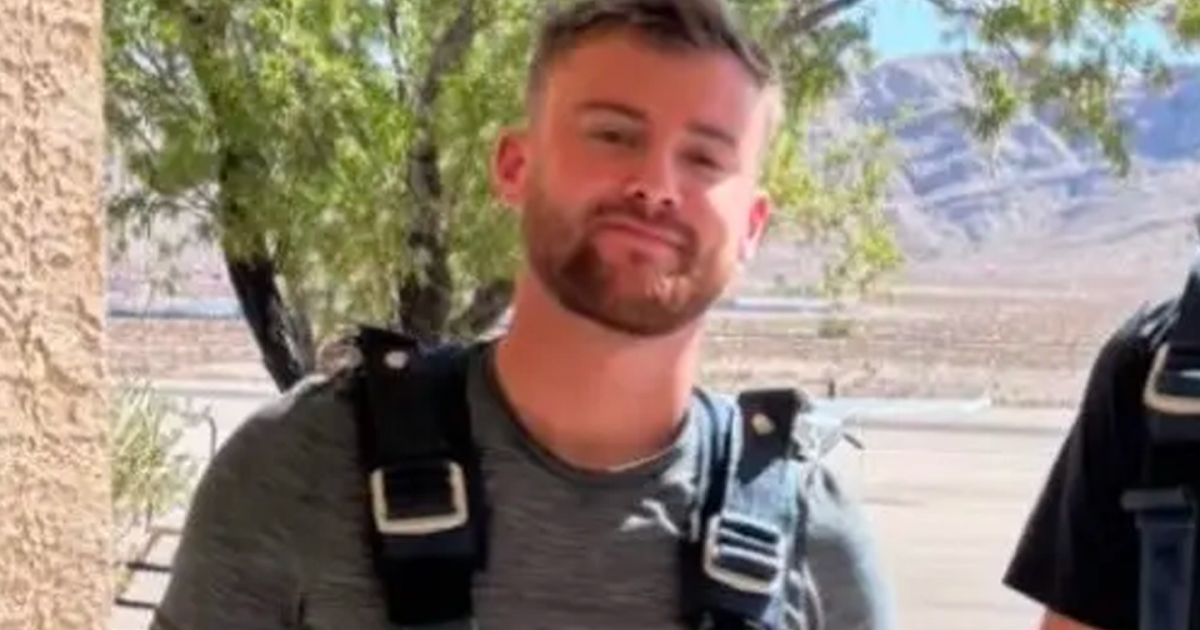
Mitchell Deakin and his skydiving instructor both sustained severe injuries after crash-landing in the Nevada desert near Las Vegas.
advertisement
The relatives of a 25-year-old man from Britain have spoken publicly after he and his skydiving instructor fell an astonishing 11,000 feet to the ground during a terrifying accident that happened just outside Las Vegas, Nevada.
The man, identified as Mitchell Deakin, and his 54-year-old instructor, named by a family friend as Jiron Arcos Ponce, were both left with major injuries after their parachute malfunctioned during the tandem skydive on September 17. What should have been an adventurous jump quickly turned into a life-threatening fall.
According to a report from the Metropolitan Police Department, which was later cited by the Las Vegas Review-Journal, the two were strapped together when the parachute failed. They went into a rapid uncontrolled spin before finally crashing into the desert at speeds estimated to be more than 45 miles per hour.
Details shared on a GoFundMe page set up to support Deakin explain that he suffered a fractured pelvis, several broken ribs, a perforated lung, and a lacerated kidney. These serious injuries meant he had to be taken to University Medical Center in Las Vegas for urgent treatment.
The page update explained: "Mitch has now had surgery in America where they have put metal plates in his pelvis, so it will not collapse in on itself. He has also having liquid drained from his lung and is unable to stand/walk at the moment."
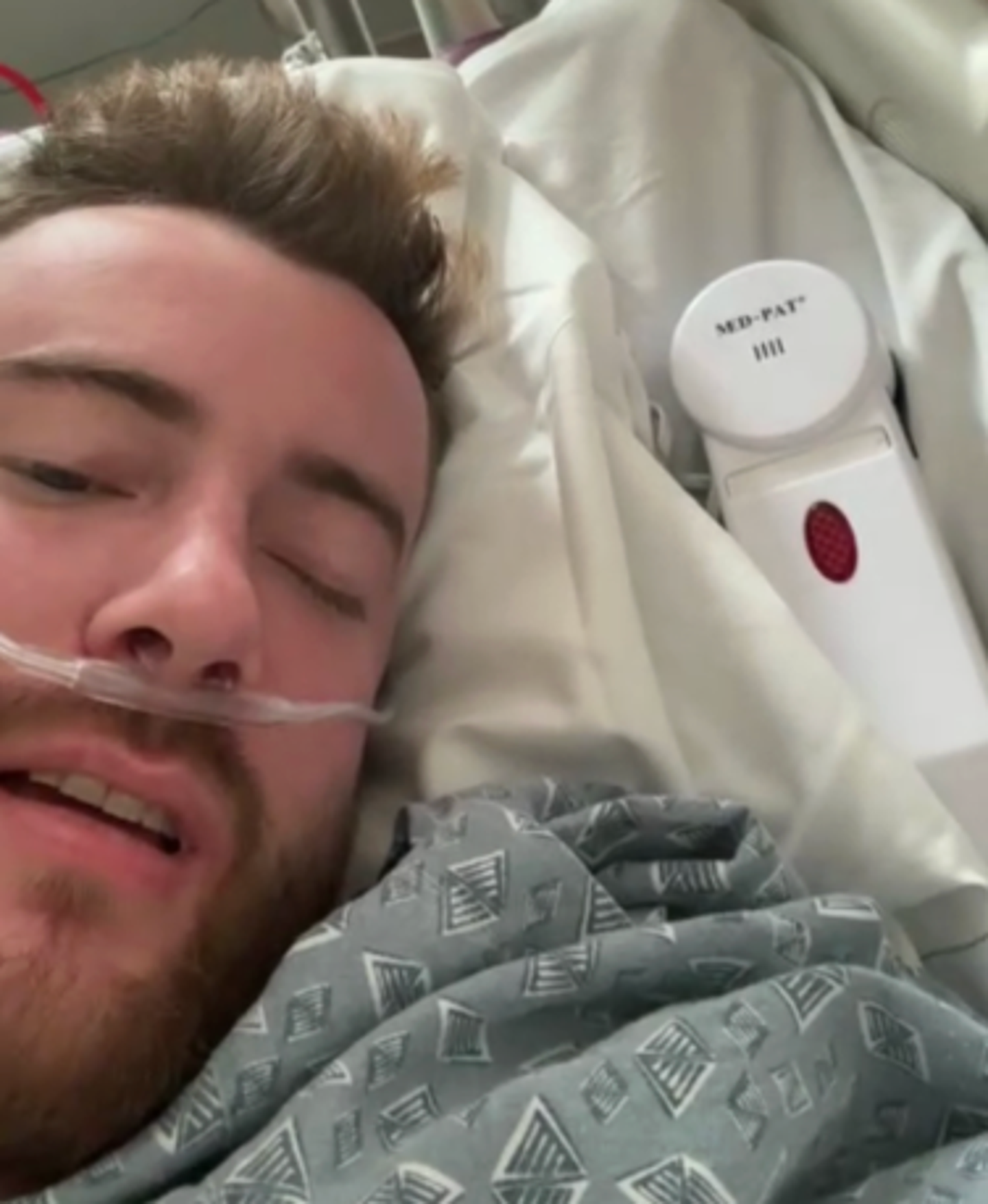
Deakin is being treated in Las Vegas following the incident
GoFundMe
advertisement
At the same time, a family friend of Ponce told the Review-Journal that the instructor remained in critical condition as of September 25, showing just how devastating the accident was for both men involved.
Deakin’s mother also gave an update following the ordeal, sharing that he had been receiving physiotherapy. Thanks to this, he has been able to walk with the help of a frame, though at the moment he is still unable to put any weight on his right leg.
She added: "We found out yesterday he has more internal fracture injuries in his back and ribs and pelvis than we knew about, were told they will heal as they are all stable and held in place by muscles."
"He was particularly exhausted yesterday but had a great sleep. A dietician has arranged food he does like so hopefully that we help him get stronger, he isn't really eating very much."
Despite the immense challenges he is facing, Deakin’s mother also shared that her son has managed to stay 'really positive' throughout the situation. She said he remains 'truly grateful' for all the love, encouragement, and support that has been sent his way since the accident happened.
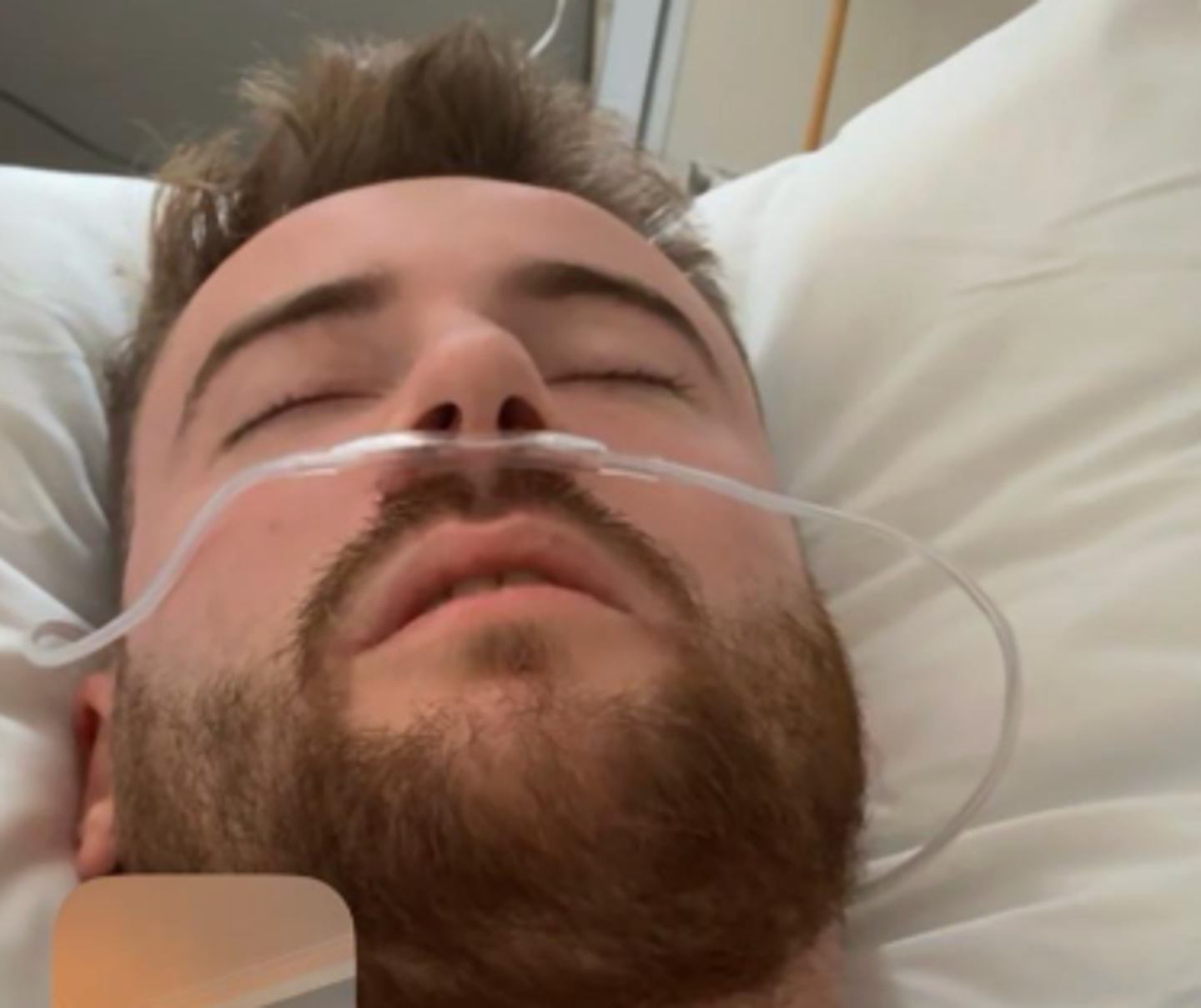
Deakin's family are keen to get him back to England
GoFundMe
advertisement
Isabel Clacher, who launched the GoFundMe campaign to help with Deakin’s recovery, described the entire situation as 'extremely traumatic for him and his family and friends'. She pointed out that the difficulty has been made even worse because Deakin is recovering so far away from his home and loved ones.
"We all want him back in the UK safe, where he can be looked after by us all," Clacher wrote in the campaign. "The donations made will go towards the rest of his recovery time in America paying for any necessary medical bills, transportation and accommodation, as we do not know how long it will be until he can fly home. Mitch has told us that if there any donations are left over, he would like to donate them to a charity of his choice."
The fundraiser was created with a target of $27,010 and, by October 2, had already collected $25,117 in donations. The strong response shows how many people have been touched by his story. Anyone who wishes to help can still donate through the campaign page.
advertisement
The cause of the parachute failure is now being investigated by the Federal Aviation Administration (FAA), which has taken charge of the case to ensure all procedures are reviewed properly.
A spokesperson for the FAA explained to the BBC: "The FAA investigates the packing of the main and reserve parachutes, and the rules of flight for the pilot and aircraft. If the FAA does not find any evidence of regulatory violation, it will defer any further investigation of the accident to local law enforcement. The FAA does not determine cause."