

The late professor’s powerful speech warned of nuclear war, alien contact, and the dangers of climate change.
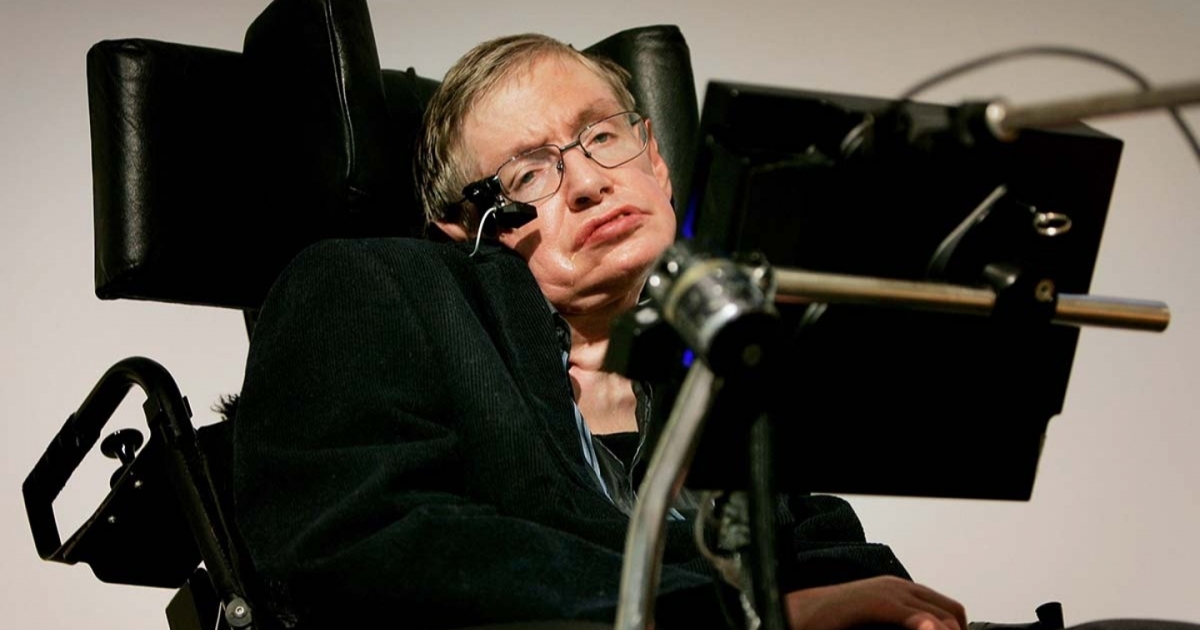
Stephen Hawking's Chilling Prediction About How The World Could End — And Why It Might Not Be Far Off
By
maks in
Science and Technology
On 14th October 2025
advertisement
Stephen Hawking once shared a grim warning about how humanity could bring about its own end — and the accuracy of his prediction feels more believable with each passing year.
Regarded as one of the greatest scientific minds in history, Professor Hawking served as the director of research at the Center for Theoretical Cosmology at the University of Cambridge before his death in 2018 at the age of 76.
Just one year before he passed, the world-renowned physicist cautioned that unchecked population growth and skyrocketing energy use could trigger catastrophic events, possibly turning Earth into what he described as a “giant ball of fire.”
Speaking at the 2017 Tencent WE Summit, Hawking told the audience that there was “no sign” that human innovation or technological development would ever slow down.
"Certainly not by the time of Star Trek, which is only about 300 years away. But the present exponential growth can not continue for the next millennium."
"By the year 2600, the world's population would be standing shoulder to shoulder, and the electricity consumption would make the Earth glow red-hot. This is untenable" he explained, illustrating the extreme consequences of exponential growth.
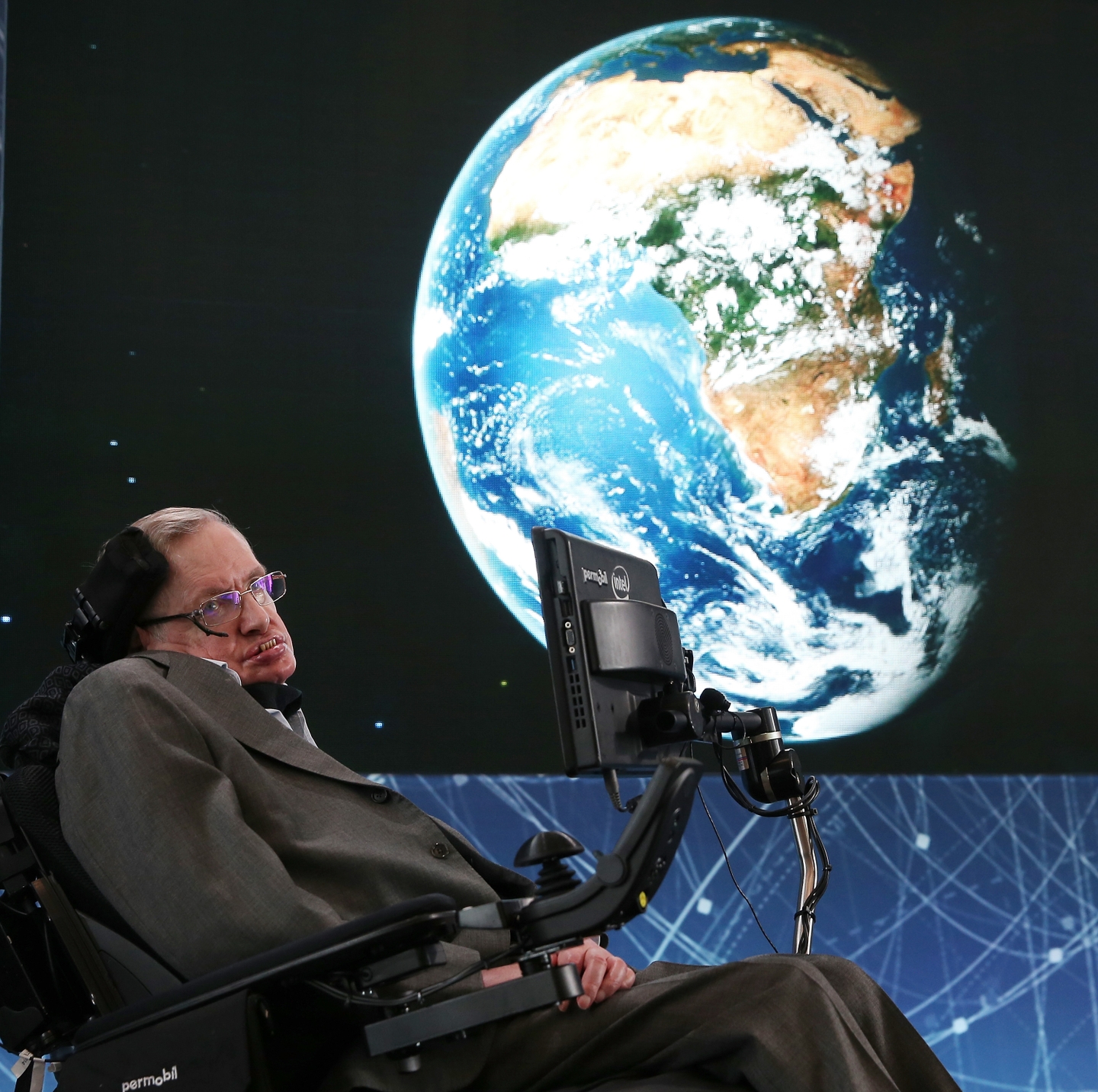
Stephen Hawking once revealed how he thinks the Earth will meet its end
Jemal Countess/Getty Images
advertisement
He went on to paint a vivid picture of how overwhelming the pace of human progress had become. He joked that if you tried to stack every new book being published one after another, you’d have to travel at 90 miles an hour just to keep up with the end of the line.
"Of course by 2600, new artistic and scientific work will come in electronic forms rather than as physical books and papers."
"Nevertheless, if the exponential growth continued, there would be ten papers a second in my kind of theoretical physics, and no time to read them."
Hawking warned that if population growth continued unchecked, humanity could face self-destruction — possibly through nuclear war or another man-made disaster. His remarks came at a time when the threat of atomic conflict was already a serious concern.
Today, nine nations, including the United States, Russia, and North Korea, are known to possess nuclear weapons. According to the House of Commons Library, Russian President Vladimir Putin has repeatedly invoked the country’s nuclear arsenal to pressure Western nations over their military support for Ukraine.
For Hawking, these global tensions underscored how fragile civilization had become, reminding people how quickly advanced technology could turn against us.
advertisement
But nuclear warfare wasn’t the only danger he foresaw. Hawking also believed that extraterrestrial life — or our attempts to find it — could pose a serious threat to humanity.
"There is a sick joke that the reason we have not been contacted by extra-terrestrials is that when a civilization reaches our stage of development, it becomes unstable and destroys itself," the professor warned, suggesting that advanced alien civilizations might not view humans as equals or allies.
"Of course it is possible that UFO's really do contain aliens, as many people believe, and the government is hushing it up. I couldn't possibly comment!" he added, hinting at the mystery and controversy surrounding UFO sightings and government secrecy.
advertisement
Hawking didn’t stop there. He also expressed concern over two other major threats — the rise of artificial intelligence and the growing risk of global pandemics. He believed both could dramatically alter or even end life as we know it.
According to a Pew Research Center study, nearly 79 percent of Americans now interact with AI in some form every single day — whether through smartphones, online tools, or smart devices in their homes.
And with data from the UN Conference on Trade and Development showing that the global AI market could surge from $189 billion in 2023 to over $4.8 trillion by 2033, Hawking’s warnings about the potential dangers of unchecked technological growth seem even more relevant today.

The professor claimed the development of AI could impact life as we know it
Getty Stock Images
advertisement
In another interview, Hawking pointed to climate change as one of the greatest dangers to human survival. Speaking to the BBC in 2016, he issued a stark reminder about how environmental neglect could doom future generations.
"Although the chance of a disaster to planet Earth in a given year may be quite low, it adds up over time and becomes a near certainty in the next thousand or 10,000 years."
He attributed this prediction to the growing effects of global warming and the greenhouse gases trapping heat within the planet’s atmosphere — a process that scientists say could spiral out of control if not managed responsibly.
advertisement
Experts now warn that the planet could breach the critical 1.5°C warming threshold within just three years if current carbon emission levels continue. This milestone, once crossed, could unleash irreversible damage to ecosystems and human life across the globe.
While global warming can’t be stopped overnight, climate scientists emphasize that it can still be slowed. Transitioning homes and industries from oil, gas, and coal to renewable sources like solar or wind energy could make a significant difference.
Simple lifestyle changes — such as choosing sustainable travel options, conserving energy, and supporting eco-friendly policies — can also help reduce environmental strain and buy more time for future generations.

The scientist also said climate change could end the Earth
Bruno Vincent/Getty Images
advertisement
Some reports have suggested that NASA once supported Hawking’s apocalyptic predictions, lending credibility to his theories about Earth’s eventual fate. However, the agency has publicly denied any direct connection.
In an official statement, NASA clarified its stance: "For more than 50 years, NASA has studied our home planet, providing information to directly benefit humanity and producing observations that can only be gathered in space that address some of the areas that Hawking mentioned."
The organization reaffirmed its commitment to studying and protecting Earth, emphasizing that scientific understanding — not fear — remains humanity’s best tool for safeguarding the planet’s future.