Surprising Things You Didn’t Know About Your Body
By
Sughra Hafeez in
Facts
On 2nd August 2017
It's easy to take our bodies for granted. The moment we are injured, however, we begin to think more actively about how to protect ourselves. Something as little as a paper cut can bring enough discomfort to ruin our daily routines. The best way to understand and take care of our bodies is to keep learning more about them.
When we are educated on just how fragile and, conversely, how strong our bodies are — yes, they can be both — we learn how to nourish ourselves with the right food, proper rest, and care. We can also push ourselves to run faster and more often, and we know to switch to products that our bodies respond more positively to.
Wherever you are in your learning journey, you're a lot more interesting and more powerful than you think. Here's a list of facts about the human body to prove it.
#1 Your Feet Can Grow as You Age
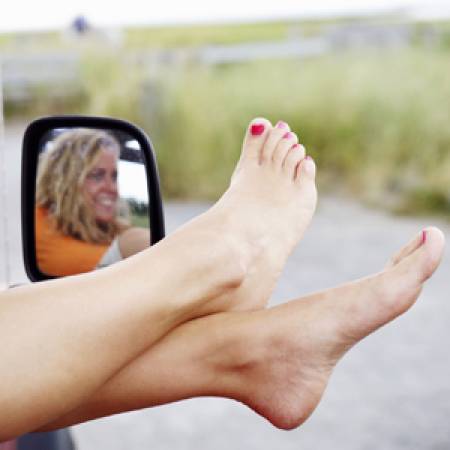
After years of wear and tear, tendons and ligaments in your feet may weaken. This can cause arches to flatten, which means feet get wider and longer. It won’t happen to everyone, though-people who are overweight, who get swollen feet or ankles, or who have certain medical conditions, like diabetes, are more prone. If it does happen, the average gain is about one shoe size by age 70 or 80.
#2 Metal nail
Your body has enough iron in it to make a metal nail 3 inches long.
#3 Growth
While most people assume that you stop growing after you’ve hit puberty, there are actually a few body parts that continue to change as you age. It doesn’t happen to everyone, but some people experience foot growth once they enter old age.
#4 Motion Sickness is Caused by Your Insides Actually Shifting
When a roller coaster comes over its crest, slows for a second for added torture, and then plummets downward, the seat belt keeps your rear in place, but some loosely connected internal organs-like your stomach and intestines-get a little “air time.” You’re not damaging your innards by riding even the craziest of coasters (everything returns to its proper place), but your nerves detect the movement, which registers as though your stomach has jumped into your throat.
#5 Music and heart rate
Have you ever felt calm while listening to a slow song? That's because our heartbeats mimic the music we listen to.
#6 Heart electrical system
Each heart has its own electrical system, which means that as long as it receives oxygen, it'll continue to beat even if it's removed from the body.
#7 Women Handle the Cold Worse than Men
The fairer sex has a higher percentage of body fat and conserves more heat around the core. That helps keep vital organs nice and toasty but not the extremities-and when your hands and feet feel cold, so does the rest of your body. Plus, research suggests that women have a lower threshold for cold than men. When exposed to the same freezing temperature, the blood vessels in women’s fingers constrict more than men’s do, which is why they turn white more quickly.
#8 Tongue Print
Everyone knows that each person has a unique fingerprint. This comes in handy when police are dealing with identifying criminals and for using smart phones. They are even beginning to be used for identification purposes within businesses. But did you know that another body part also has this function?
#9 “Old-person Smell” is Real
But there’s also a distinctive middle-aged-person smell and a young-person smell, according to a recent study. The research found that older people have a less intense-and more pleasant-scent than the middle-aged folk and young whippersnappers. Not what you expected, right?
#10 Energy
On a daily basis, our hearts produce enough energy to drive a truck for 20 miles.
#11 Your Senses Hate Room Temperature Coffee
Temperature affects flavor. Researchers in Belgium found that certain taste bud receptors are most sensitive to food molecules that are at or just above room temperature. So hot coffee may seem less bitter (and, in turn, taste better) because our bitter-detecting taste buds aren’t as sensitive when coffee is hot. Odors influence flavor as well, so even the most bitter hot coffee may taste delicious because of its pleasant aroma; room-temperature coffee doesn’t smell the same.
#12 Sweat
Sweat is odorless, and body odor actually comes from it mixing with bacteria on the skin.
#13 You Can Urinate at Night, but That’s Usually It
The sophisticated, intelligent neurons in your gut that control colon contractions, which push out waste, are also influenced by your body’s circadian rhythm, the internal clock that wakes you when it’s light out and makes you feel sleepy at night. So most people don’t have the urge to empty their colon in the middle of the night.
On the other hand, the bladder, which acts a reservoir for the continuous flow of urine produced in the kidneys, can stretch only up to a certain volume before you gotta go. Normally, you can sleep six to eight hours without having to urinate, but certain medical conditions or drinking too much water before bed can wake you to use the bathroom at night.
#14 Megapixels
Of course, from a scientific point of view, comparing an eye and a digital camera is not very correct. But if we abstract away from that, we can count approximately 126 megapixels in our eyes (in the center of the pupil).
#15 hear beat
Although smaller in size, a woman's heart beats faster than that of a man's, even while asleep.
#16 Belly button
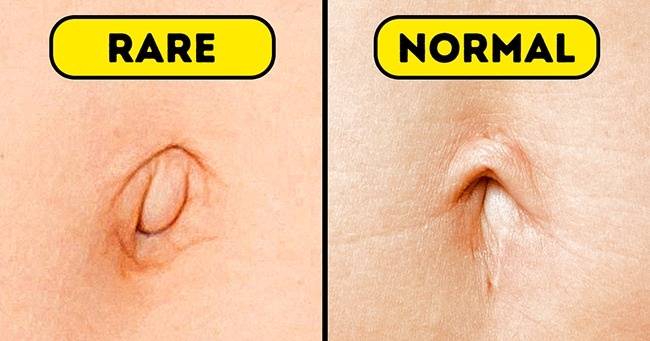
There are two types of belly button: an outie and an innie. Did you know that only 1% of people have an outie? That’s pretty cool, and also more hygienic as less dirt can accumulate. However, studies have shown that innies are considered more attractive!