

A Polish high school student was disturbed by news of rising domestic abuse during the coronavirus lockdown and wanted to open a fake online shop to provide a lifeline to victims stuck in their homes.
Teen Created A Fake Beauty Site For Women To Report Domestic Violence
By
Haider Ali in
Amazing
On 10th March 2021
advertisement
People can report domestic violence when pretending to shop on a fake cosmetics website set up by a teenage girl.
Domestic violence has increased globally, according to the New York Times, as a result of the coronavirus lockdowns that are still in practice in many countries.
Hotlines have been receiving a higher number of abuse reports as more people have been forced to stay at home with their abusers.
Uneasy about the disturbing statistics, one Polish high school student felt compelled to assist.
advertisement
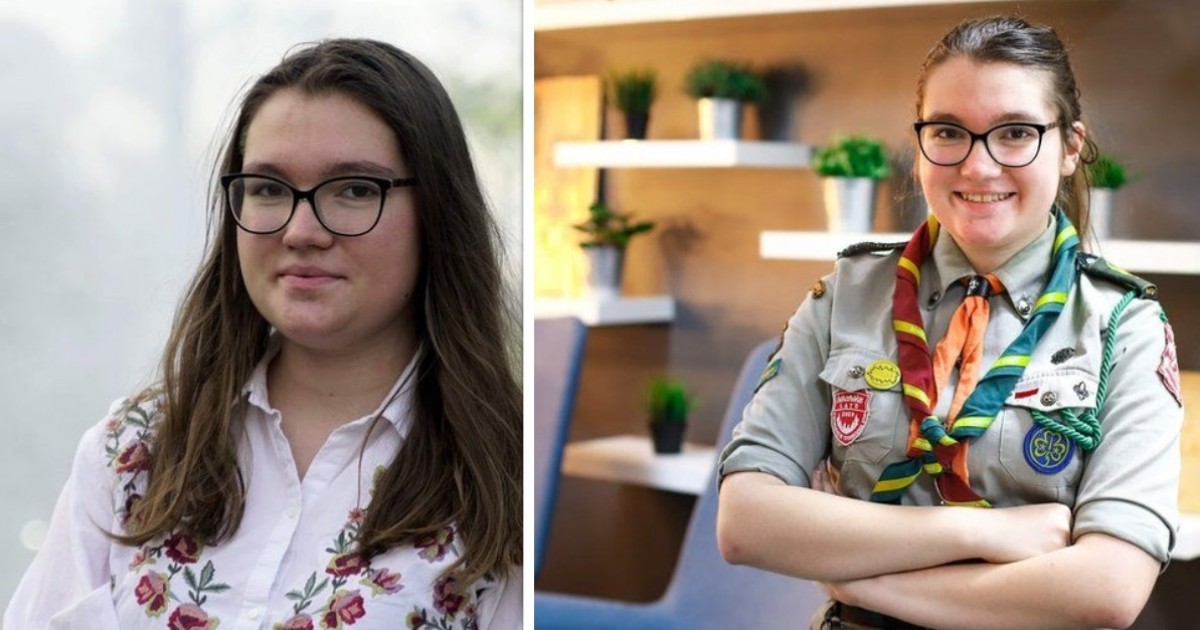
Krystyna Paszko, 18, founded an "online shop" to provide a lifeline for victims and survivors stuck at home with their abusers.
Indeed, her brilliant and potentially life-saving idea won her the European Union prize, which included a €10,000 ($12,100) cash prize.
In an interview with the BBC, Paszko explained: "Firstly, I heard about the increase in domestic violence cases during the pandemic.
"Then I heard about a French initiative, where people go to the pharmacy and ask for a special mask that lets the pharmacist know they are a victim of domestic violence. I thought it was a brilliant idea, so I came up with the idea of selling cosmetics."
advertisement
Paszko, who was 17 at the time, founded the fake cosmetics store last April. The website's idea is that survivors will arrange for assistance in a confidential manner.
A psychologist, not a sales associate, responds to a "buyer's" request for a skin cream. The psychologist then inquires about the duration of their "skin problems."
advertisement
The authorities will visit the victim and their abuser's home if the "buyer" orders an item and leaves an address.
Paszko wrote about the retailer on her Facebook and received an unexpected amount of interest.
advertisement
"I thought it would only be for my friends, and friends of friends. I thought I would help maybe one person or two, but the shares on Facebook were big and it became really popular," she told the BBC.
Paszko then contacted the Women's Rights Center, a Polish non-governmental organization, and requested assistance. Psychologists and attorneys were able to use the website as a result of this.
advertisement
More than 350 people have contacted the website since it was launched nearly a year ago. The majority of the victims and survivors are under the age of 40, with men accounting for around 10% of the total.
"More younger women prefer to write on Facebook than to call on the phone, it's more natural for younger women to use Facebook chat. Most of the men writing to us are teenagers," Paszko said.