Even if you don’t want to admit it, we still know it happens: your body goes through serious changes, and it doesn’t work as it did 10 years ago. You sure can feel the change. And although it may be difficult to accept, we don’t want you to feel bad about those natural changes.

Tell Us Your Age And We’ll Tell You How Your Metabolism Works
By
Editorial Staff in
Health and Fitness
On 24th May 2017
advertisement
#1 Metabolism
While your metabolism is your body’s process of converting food into energy, it is connected to your body’s expenditure of energy. You burn energy when you are active; however, even when you are not active, your body still uses energy for processes like breathing and healing. This is called your basal metabolic rate--or BMR--which is determined by how much weight and muscle your body has. Muscle burns more calories than fat, so if you are overweight you burn fewer calories even when resting, causing your metabolism to seemingly slow.
#2 Metabolism and Age
Thermogenesis, the food processing part of your metabolism, actually stays fairly steady throughout your adult life. The illusion that your metabolism slows as you age actually occurs because as you get older, your muscle mass decreases and your amount of fat tends to increase, decreasing your BMR and the amount of calories your body burns. This in turn decreases the amount of calories you need to take in through your diet.

advertisement
#3 Your Metabolism at 20's
When you’re a kid, you can wolf down candy bars, fast food, and frozen pizza bagels without a second thought—you know it won't impact your weight. Now, you're a hardcore veggie eater and struggle to lose those extra few pounds. Why does this happen? As you likely know, your metabolism takes a nosedive over the years and ultimately impacts your waistline. Now that we've got that out of the way, here are all the ways your natural calorie-burning power transforms as you age—and what you can do to keep it in high gear.

#4 Your Metabolism at 30's
Most women enjoy their highest basal metabolic rate (the number of calories you burn by just being alive), in their late teens or early twenties, says Christopher Ochner, Ph.D., weight-loss expert at Mount Sinai Hospital in New York. Some women will hit it a bit earlier, others later, which has a lot to do with genetics, but your activity level also plays a big role. After all, the more you hoof it around campus, play on intramural teams, and hit up the university weight room, the more calorie-torching muscle you’ll build and the higher your metabolism will be, he says. Plus, until you’re about 25 or so, your body is still building bone, and that process burns up calories.

advertisement
#5 Your Metabolism at 40's
Around age 40, your body will naturally begin to lose muscle mass in a process known as sarcopenia. "Physically inactive people can lose as much as 3 percent to 5 percent of their muscle mass each decade after age 30. Even if you are active, you’ll still have some muscle loss," WebMD explains.
advertisement
#6 Your Metabolism at 50's
In Your 50s The average woman enters menopause at age 51, according to the Mayo Clinic. When that happens, her production of estrogen and progesterone declines drastically, leading to bone and muscle loss and often weight gain because of the hormonal change. (Men, on the other hand, tend to gain weight at a slower pace due to a more gradual hormonal shift.) Once again, strength training is key. “Now that your bones are at an increased risk for injury, it’s even more important to lift weights,” says Apovian.
Watching your sugar intake is also key, says Cederquist. “As you age, your body isn’t able to move glucose — our primary source of fuel — into our cells for energy as efficiently,” she says. “When that happens, the body has to do something with the glucose that doesn’t enter the cells, so it ends up storing it as fat.”
The bottom line: Monitor your sugar and carb intake, squeeze in plenty of exercise, and follow it up with a hefty dose of protein. That’s the hat-trick you need to having a fit, speedy metabolism — no matter what your age.

advertisement
#7 Tips for maintaining a healthy weight
For those who aren't in the habit of frequent exercise, the key is just to start moving. "Chair-living has proven so enticing that we have forsaken our legs. It is now time to find ways to get us back onto our legs," said James A. Levine, M.D., Ph.D., of the Division of Endocrinology, Diabetes, Metabolism, and Nutrition at Mayo Clinic Rochester. His research on nonexercise activity thermogenesis has found that those who make an effort to move more frequently throughout the day maintain muscle mass and burn more calories than those who are mainly sedentary with sporadic attempts to visit the gym.
Dr. Walter Medlin, a weight-loss surgeon at Salt Lake Regional Medical Center, also proposed a few tips for how adults can maintain a healthy weight even as they age. "It's important just to stay healthy in general," Medlin said. "A high BMI puts you at risk for metabolic diseases like premature cardiac death and diabetes. Mechanically, more weight puts more stress on joints as we age."
To prevent this weight gain, Medlin suggested that people should "track their weight and maintain muscle mass. Properly treating medical issues" is another important part of sustaining a healthy lifestyle. "People don't realize how quickly muscle mass diminishes," he went on. "Physical therapy just gets people started. It can take up to a year to regain muscle mass lost by just a few weeks of bed rest. It's important they keep exercising consistently." Before starting any new exercise program, make sure you check with your doctor to find out what kinds of fitness activities could be right for you.
Salt Lake Regional Medical Center cares about your health. For more information on how to get started on your weight-loss journey, visit saltlakeregional.com.
advertisement
#8 A sluggish metabolism may lead to obesity
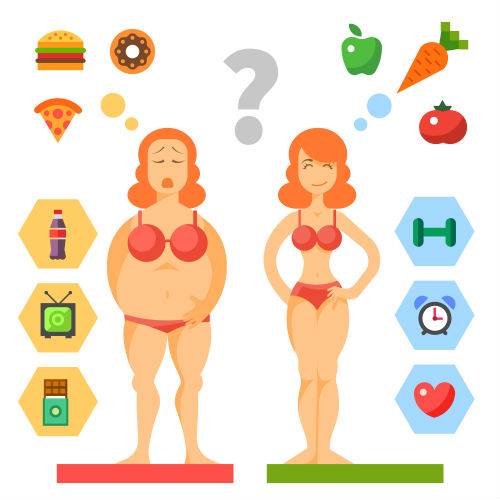
Obesity, which often results from the slowed metabolism seen in older adults, is known to have a host of negative side effects on the body. A study published in the Online Journal of Issues in Nursing lists a few of these possible corollaries, including hypertension, respiratory issues, arthritis, heart disease, high cholesterol, diabetes, impaired cognitive function and lower quality of life. Though these effects are detrimental at any stage of life, they can be especially damaging to aging adults who might be experiencing other diseases or pain incident to age.

advertisement
#9 Here are some other factors that affect your metabolic rate:
1. Rhythm and quality of life
As you get older, you should start working on your body. A sedentary lifestyle and bad diet are your worst enemies. Try to replace your favorite junk food with healthier options. Never skip breakfast as it gives you more energy than you think. And remember: it’s best to eat often but in small portions.
2. Free time
Take your time, relax, and enjoy the little things. Learn to eat more slowly because eating in a hurry is not healthy: your brain can’t process the signals of satiety and, as a result, you eat a lot more than you need to feel full. Eating too quickly raises blood sugar which triggers a dramatic decline in your metabolic rate.
3. Sleep
At the age of 30, some people experience occasional sleep problems. If you’ve already turned to sleeping pills for help, try to give them up as soon as possible because they’re often addictive. It’s better to look for natural alternatives.
Getting a good night’s sleep is very important for your health, so try to do the following: exercise in the evening, don’t eat heavy food, take a warm shower, and read something before going to bed.
4. Climate
A warm climate slows down your metabolism; cold temperatures, on the contrary, stimulate it. This doesn’t mean you have to migrate every 6 months, but you should pay more attention to temperatures during different seasons.