

We all have the habit of leaving things in our freezer for years and forgetting about them. When we finally clean up, we are amazed by the contents inside. Similar to us, Mother Nature has a habit of keeping things frozen. Permafrost is kind of like nature’s own deep freeze. The permanently frozen land makes up about a quarter of all the land in the Northern Hemisphere. As humans further explore these untouched parts of Earth, they come across things that are old and preserved perfectly. Without further ado, here are six of the most terrifying and weird things that came out of the permafrost.
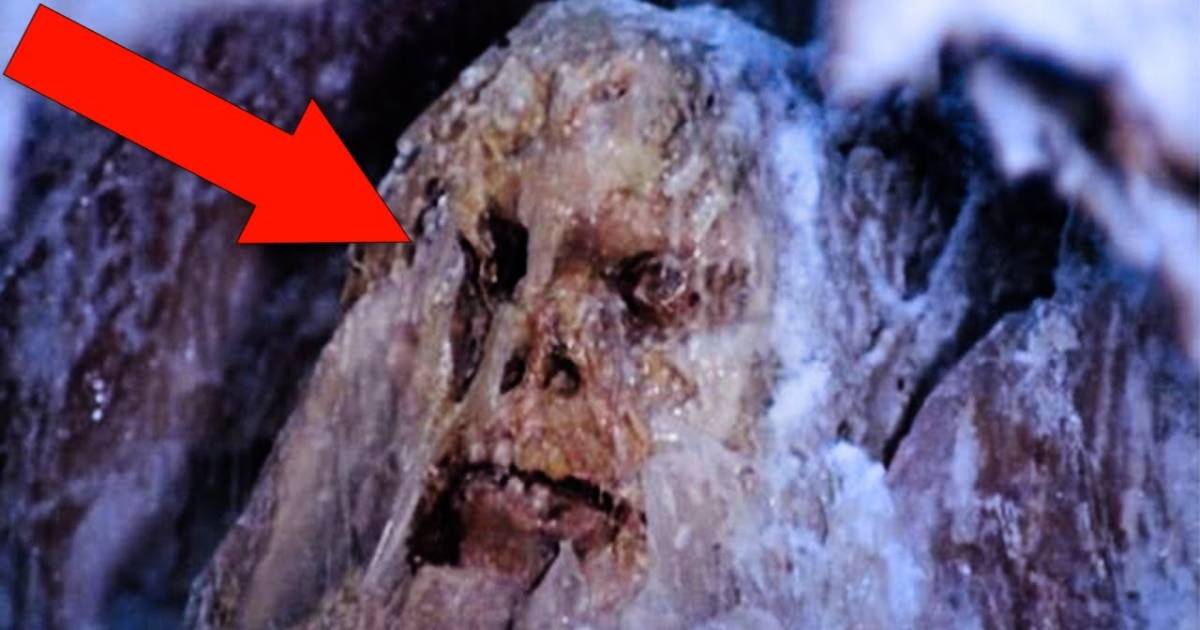
Terrifying And Weird Things That Came Out Of Nature’s Deep Freeze
By
Sughra Hafeez in
Bizarre
On 29th June 2017
advertisement
#1 WWI Soldier
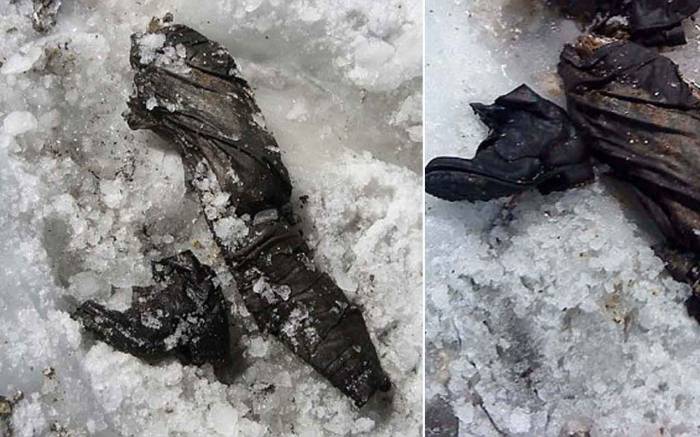
An amateur historian has discovered the mummified body of a World War I Solider frozen into an Italian glacier.
The discovery was made by Dino De Bernardin, as he was strolling through the mountains close to his home. The location to which the mummified body was found, had been the scene of a war that took place between the Austro-Hungarian Empire and Italy. The body was revealed because of the melting ice and it is believed that there are thousands of yet undiscovered bodies in the location. Dino thought he had seen a ‘bundle of rags’ emerging from the melting ice but was, in fact, a WWI soldier.
In 2004, a mountain guide named Maurizio Vicenzi stumbled upon three mummified WW1 soldiers that were hanging from an ice wall at the San Matteo peak
During the First World War, the Dolomites were the scene of fierce battles between Italian and Austro-Hungarian troops. A characteristic of the fighting was the fact artillery was used at altitude with horses and donkeys being used to carry the guns up to 9,000ft.
The area is still littered with military hardware and gas masks, helmets, berets, guns, and ammunition. Unexploded bombs and hand grenades are often found as are bits of uniform - more than 9,000 soldiers died in the mountains from either fighting, avalanches or the cold.
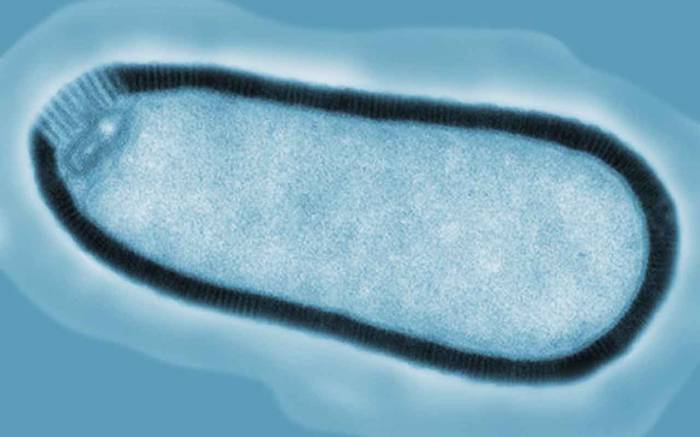
#2 30,000-Year-Old Virus Found in Siberian Permafrost
As if from the plot of a movie, scientists recently discovered an ancient virus buried underneath the Siberian permafrost. This virus, Morbillivirus sibericum, belongs to a group of other ancient viruses collectively known as "giant" viruses. Morbillivirus sibericum is not unique in its discovery. In fact, since 2003 researches have found four other frozen giant viruses. Some worry that reawakening this so-called "Frankenvirus" will lead to trouble but, rest assured, Morbillivirus sibericum poses no real threat to humans. Of more concern is the role climate change plays in the discovery of ancient viruses.
Morbillivirus sibericum is the second oldest (30,000-year-old) virus that has been unearthed from the Siberian permafrost.
advertisement
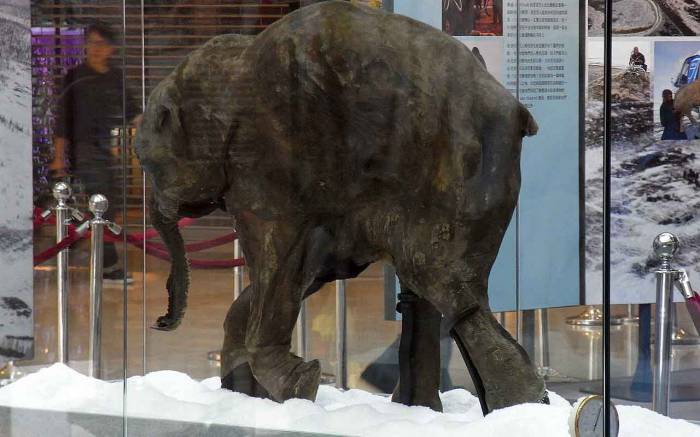
#3 Woolly Mammoths
In the frozen tundra of Russia’s Yamal Peninsula, a reindeer breeder named Yuri Khudi came across an astonishing discovery.
In 2007, as Yuri Khudi was working his regular schedule, he came across the mummified body of a baby mammoth that had been preserved for more than 42,000 years. Yuri was amazed at his finding and decided to trek over 150 miles to notify a local museum director. When authorities from the museum arrived, they were amazed because what Yuri had discovered was a nearly 42,000-year-old baby mammoth.
Lubya is one of the best-preserved mammoths in the world. Scientists analyzed the remains and were able to exactly pinpoint what the mammoth ate before its death, as well as the reason for its death. According to the sediments discovered in Lyuba’s trunk, scientists believe that the baby mammoth fell into a mud hole and suffocated. Other ice-age animals were also discovered around the permafrost; such as horses and wooly rhinos.
#4 Human bodies
People sometimes bury bodies in the frozen ground. And sometimes those bodies don’t stay buried.
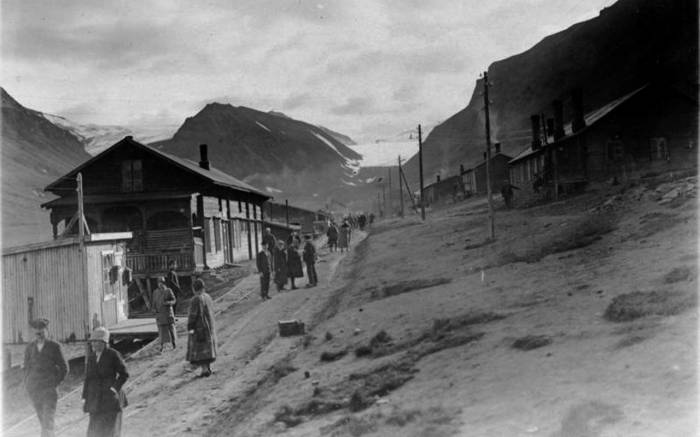
In the 1980s, for instance, a river exposed a mass grave near Pokhodsk, Siberia. There are some fears that bodies like these could be reservoirs for past diseases. In 1998, six frozen bodies in Svalbard were found to have traces of the Spanish flu, which killed 50 million to 100 million people in the early 20th century.
advertisement
#5 Ötzi the Iceman
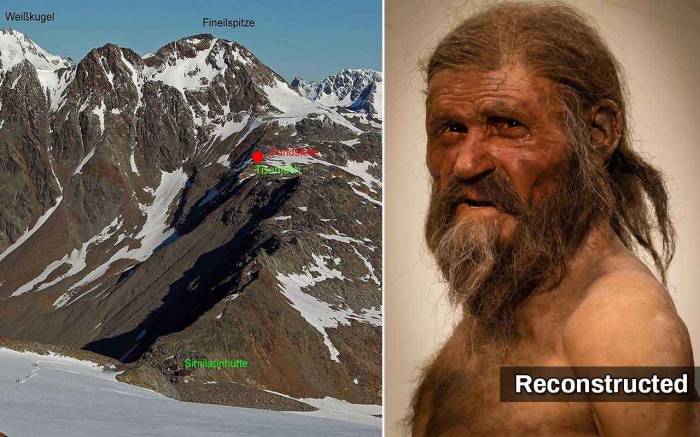
On September 19, 1991, at the Ötztal Alps, two hikers came across a deceased body that they believed to be of a mountaineer.
Ötzi is a glacier mummy from the Copper Age, who, thanks to extraordinary circumstances, has been preserved down to the present day. Little by little, he has imparted genuine stores of knowledge. He was discovered accidentally by hikers in 1991, together with his clothing and equipment, on the Schnalstal/Val Senales Valley glacier and has been the subject of intensive research ever since.
Konrad Spindler, an archeologist, examined the body and determined that it was at least 4,000 years old. It was later revealed through advanced testing that the body was 5,300 years old. A DNA analysis, as well as CAT scan, was performed on the body, which was named Ötzi. The tests revealed that the body had an arrowhead, as well as several cuts on it.
Scientists believe that Ötzi was killed while out hunting by a rival group. His body was then preserved by the cold mountain air and ice; transforming it into a mummy.
He is, therefore, older than the Egyptian pyramids und Stonehenge and the result of a series of highly improbable coincidences. Ötzi lived during the Copper Age, a period of the late Neolithic. He was still using stone tools but owned an innovative and very valuable copper ax. The skill of extracting and processing metal had recently arrived in Europe from Asia Minor. The advent of copper marked the beginning of the Bronze Age.
Today, the body is kept on display at the South Tyrol Museum of Archeology in Bolzano.
advertisement
#6 Mexican Hikers
In 1959, seven hikers traversed the slopes of Pico de Orizaba, the highest mountain in Mexico. Only four returned. The story of the missing three sparked a long-standing local mystery—a mystery that may now have been solved.
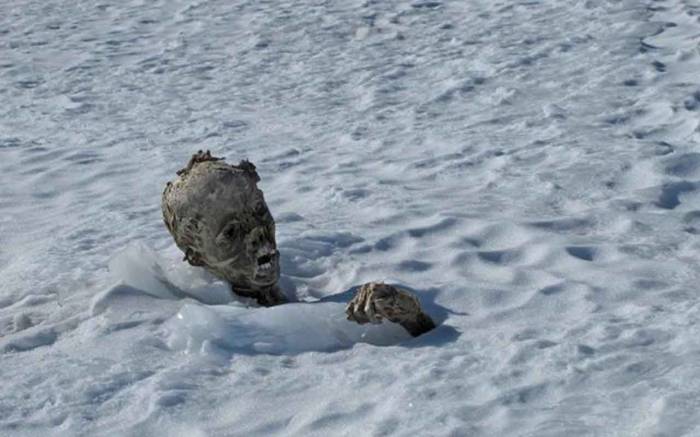
Recently a team of climbers took the same trail as the original hikers and came across a pair of bodies protruding out of the snow. The bodies are completely mummified and retain remnants of clothing and even hair. Could these be two of Pico de Prizaba's missing three?
Just about 1,000 feet from the summit (at about 17,290 feet), hikers spotted a head and an arm protruding out of the side of the mountain. After some light digging, it was, in fact, two bodies, mummified and clinging together for warmth.
The hikers were on a mission to find the bodies of three missing hikers, who in 1959 experienced a devastating avalanche that separated them from the rest of their seven-man team.
One of the surviving hikers from that 1959 expedition, Luis Espinoza, analyzed the two bodies and confirmed that these were indeed those of his long lost friends, a reunion 56 years in the making.
advertisement
#7 Ancient plants
In 2012, a team of Russian scientists revived 30,000-year-old plants they found frozen in the tundra. The plants appeared to be an ancient form of narrow-leafed campion and were found in the cache of an ice-age ground squirrel.
The scientists brought the plants back to the lab and, through a little coaxing, were able to actually grow new specimens. They even flowered and produced new seeds!

advertisement
#8 Weird shapes
Not everything that comes out of the tundra is alive. Sometimes the Earth itself gets freaky.
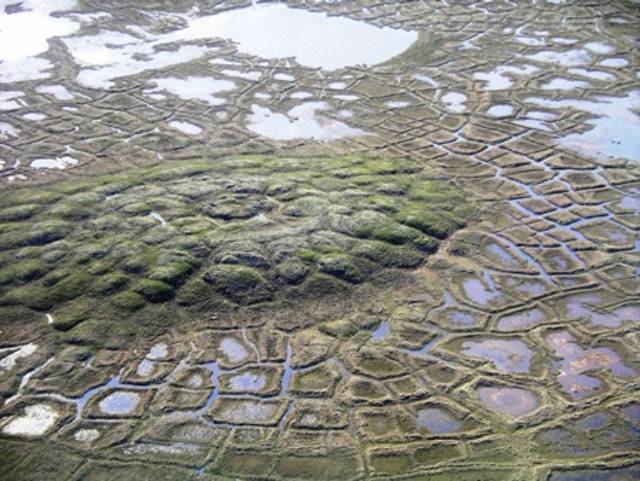
These weird shapes include small, volcano-shaped hills called pingos (which some people have claimed to have seen explode like massive, icy landmines), ice wedges, and geometric shapes made of rocks. These weird shapes happen when water in the ground keeps freezing and thawing.
In the last few years, people have even reported massive craters. The craters were probably made when underground gases built up and exploded outward.
advertisement