There's only 7 left of the animal in number 1! Look and see how many and how little are left on the list before they're extinct!
advertisement
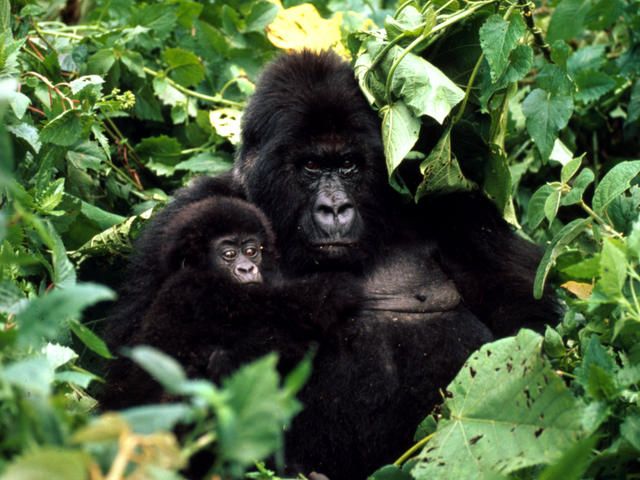
#20 Mountain Gorilla, world population 880
As their name implies, mountain gorillas live in forests high in the mountains, at elevations of 8,000 to 13,000 feet. They have thicker fur, and more of it, compared to other great apes. The fur helps them to survive in a habitat where temperatures often drop below freezing. But as humans have moved more and more into the gorillas' territory, the gorillas have been pushed farther up into the mountains for longer periods, forcing them to endure dangerous and sometimes deadly conditions.
What might have been a bleak outlook for the subspecies just a couple of decades ago has brightened in recent years due to conservation efforts. Despite ongoing civil conflict, poaching and an encroaching human population, both populations of mountain gorillas have increased in numbers
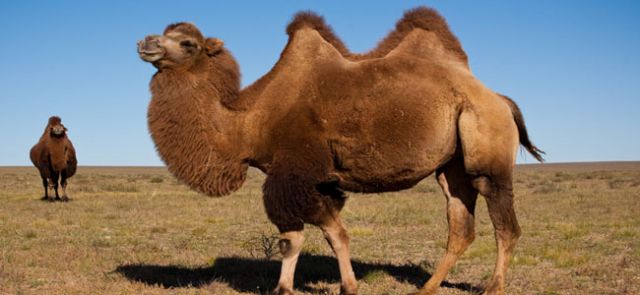
#19 Bactrian Camel, world population 800
The Bactrian Camels life span is 35 to 50 years old. This Bactrian Camel is eating grass, their primary diet. Bactrian Camels are over 7 feet tall at the hump. Bactrian Camels can last up to 10 months without water. Bactrian Camel can have from 6 camels in a herd to 40 in a herd. Bactrian Camels weigh over 990 pounds to 1,800 pounds.
advertisement
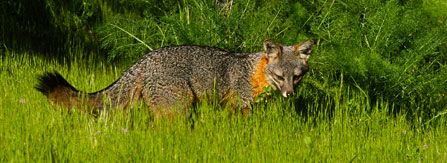
#18 Island Fox, world population is 700
The island fox only lives on six of the eight Channel Islands off the coast of southern California--they are found nowhere else on Earth. Each island population is recognized as a separate endemic or unique subspecies.
The island fox, a descendant of the mainland gray fox, is the largest of the Channel Islands' native mammals, but one of the smallest canid species in the world.
Although foxes have always existed at low population sizes, four island fox subspecies underwent catastrophic declines in the 1990s. On San Miguel, Santa Rosa and Santa Cruz Islands at Channel Islands National Park, the decline was attributed to predation by golden eagles. The presence of non-native ungulates as a food source in addition to the DDT-caused decline of bald eagles, a natural competitor, facilitated the establishment of golden eagles as resident breeders on the islands. By 2000, predation on island foxes resulted in population declines to 15 individuals on San Miguel and Santa Rosa Islands, and less than 80 on Santa Cruz Island. In 2004, each of the park's island fox subspecies were federally listed as endangered.
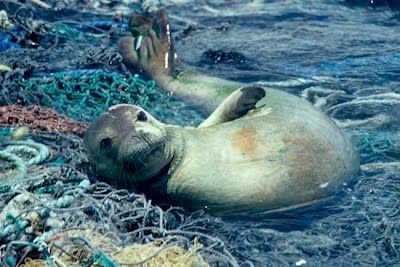
#17 Mediterranean Monk Seal, world population 510.
The Mediterranean monk seal (Monachus monachus) is one of the world's most endangered marine mammals, with fewer than 600 individuals currently surviving.
The species is described as "critically endangered" by the World Conservation Union (IUCN) and is listed on Appendix I of the Convention on International Trade in Endangered Species (CITES). Other international legal mechanisms which recognise and attempt to address the monk seal's critically endangered status include the Bonn Convention (Convention on the Conservation of Migratory Species of Wild Animals), the Bern Convention (Convention on the Conservation of European Wildlife and Natural Habitats), the Convention on Biological Diversity and the EU Habitats Directive.
advertisement
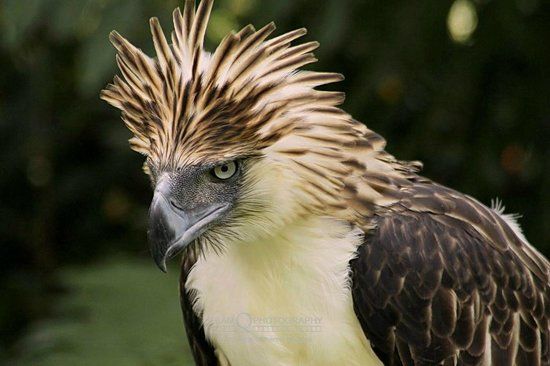
#16 Philippine Eagle, world population 500.
The Philippine eagle is the world's largest eagle with a wingspan of up to 2 meters, a body length of 90 centimetres, and a weight of 4.5 to 8 kilograms. In addition to its size, the Philippine eagle is also distinguished by what might be called a ‘mane' of brown and white feathers on its head. This mane can be raised or lowered at will. The underside of this eagle is white except for the primary and secondary wing feathers and tail, and the upper side is dark brown. The beak and facial mask are black.
advertisement
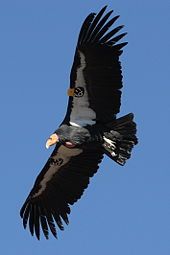
#15 Californian Condor, world population 435
The adult California condor is a uniform black with the exception of large triangular patches or bands of white on the underside of the wings. It has gray legs and feet, an ivory-colored bill, a frill of black feathers surrounding the base of the neck, and brownish red eyes. The juvenile is mostly a mottled dark brown with blackish coloration on the head. It has mottled gray instead of white on the underside of its flight feathers.
The condor's head and neck have few feathers, and the skin of the head and neck is capable of flushing noticeably in response to emotional state, a capability that can serve as communication between individuals.The skin color varies from yellowish to a glowing reddish-orange. The birds do not have true syringeal vocalizations. They can make a few hissing or grunting sounds only heard when very close.
advertisement
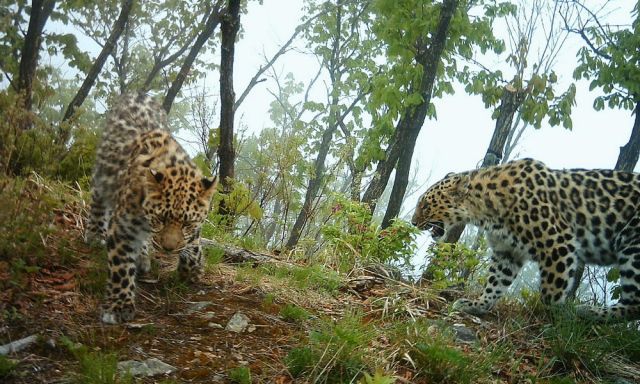
#14 Amur Leopard, world population 349
People usually think of leopards in the savannas of Africa but in the Russian Far East, a rare subspecies has adapted to life in the temperate forests that make up the northern-most part of the species' range. Similar to other leopards, the Amur leopard can run at speeds of up to 37 miles per hour. This incredible animal has been reported to leap more than 19 feet horizontally and up to 10 feet vertically.
The Amur leopard is solitary. Nimble-footed and strong, it carries and hides unfinished kills so that they are not taken by other predators. It has been reported that some males stay with females after mating, and may even help with rearing the young. Several males sometimes follow and fight over a female. They live for 10-15 years, and in captivity up to 20 years. The Amur leopard is also known as the Far East leopard, the Manchurian leopard or the Korean leopard.
advertisement
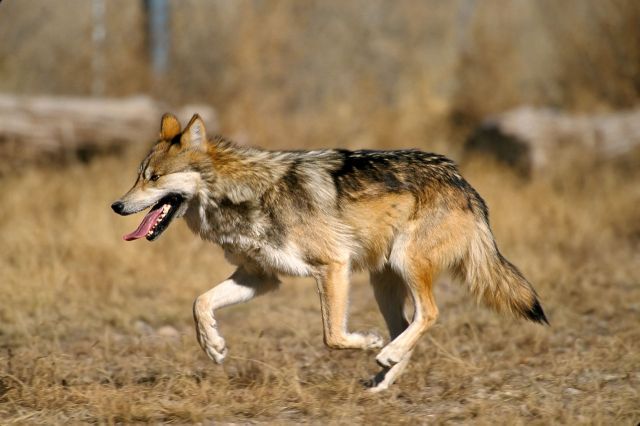
#13 Mexican Wolf, world population 340
The Mexican gray wolf is a subspecies of the gray wolf. Commonly referred to as "El lobo," this wolf is gray with light brown fur on its back. Its long legs and sleek body enable it to run fast. Though they once numbered in the thousands, these wolves were wiped out in the U.S. by the mid-1970s, with just a handful existing in zoos. In 1998, the U.S. Fish and Wildlife Service, led by Jamie Rappaport Clark (now president of Defenders of Wildlife), released 11 Mexican gray wolves back into the wild in Arizona. Although their numbers have grown slowly, and they remain the most endangered subspecies of wolf in the world.
The lobo was once "top dog" in the borderlands, and when the wolf population returns to healthy numbers, biologists believe that lobos will restore balance to the Southwest's ecosystems by keeping deer, elk and javelinaa type of peccary populations healthy and in check. Wolves strengthen these animals by preying on the old, sick and young, and prevent their populations from growing so numerous that they overgraze and destroy habitat that countless other species depend on.
advertisement
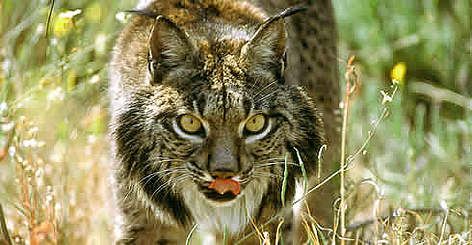
#12 Iberian lynx, world population 310
In the early 19th century the Iberian lynx was found in Spain, Portugal and Southern France. It has steadily declined since then, falling to the dangerously low levels today. At the beginning of last decade there were only two isolated breeding populations of Iberian lynx remaining in the world, located in southern Spain, and totaling about 100 adult animals, with only 25 breeding females. IUCN's assessment in 2007 stated that the numbers were not sufficient for the survival of the species in the long term , putting this wild cat on the brink of extinction. Thanks to the joint efforts of the Spanish national and regional administrations, different NGOs (like WWF) and the European Union (via the Life projects), the total population is currently increasing. The 2009 census shows around 230 individuals, including 7 adults that have been introduced in the area of Guadalmellato (Córdoba, Spain), which should open up a third Lynx territory. To this figures we have to add the 81 animals that are part of the Captive Breeding Programme. But although there are signs of recovery, the species future is still fragile.
advertisement
#11 Vaquita, world population 300
Vaquitas, also known as the "Gulf of California porpoise" or "Cochito," are elusive and timid members of the porpoise family. They were first described by western scientists in 1958 based on several skulls. This species is the smallest known cetacean. These porpoises reach about 4-5 ft (1.2-1.5 m) in length and weigh 65-120 lbs (30-55 kg). Females are generally slightly larger than males.
Vaquitas have compact, robust bodies and a rounded head with little or no beak. Their triangular "falcate" dorsal fin is proportionately tall and is located in the middle of the back. This species' complex coloration consists of various shades of dull gray that transition from dark on the dorsal side to pale on the ventral side of the body. The lips, chin, and eye ring are black. Individuals get lighter in color as they age, and the face is usually pale.
This species of porpoise is usually found either singly, in pairs, or in small social groups of 7-10 individuals. These shy animals will typically avoid vessels. They are not usually active at the surface and are often difficult to observe visually due to their cryptic behavior.
Vaquitas spend relatively long periods of time underwater to opportunistically feed on a variety of small schooling fish (e.g., croakers and grunts), crustaceans, and cephalopods (e.g., squid and octopus). They have 16-22 pairs of small spade shaped teeth in the upper jaw and 17-20 pairs in the lower jaw that are used to capture prey.
Vaquitas become sexually mature at 3-6 years of age. After a gestation period of about 10-11 months, females typically give birth every other year to a single calf that is about 2.5 ft (0.7-0.8 m) long and weighs about 16.5 lbs (7.5 kg). Calving usually takes place between the months of February and April. These cetaceans have an estimated lifespan of at least 21 years.

advertisement
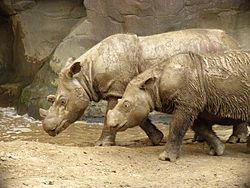
#10 Sumatran Rhinoceros, world population 300
A mature Sumatran rhino stands about 120145 cm (3.944.76 ft) high at the shoulder, has a body length of around 250 cm (8.2 ft) and weighs 500800 kg (1,1001,800 lb), though the largest individuals in zoos have been known to weigh as much as 2,000 kilograms (4,400 lb).Like the African species, it has two horns. The larger is the nasal horn, typically only 1525 cm (5.99.8 in), though the longest recorded specimen was much longer at 81 cm (32 in).[ The posterior horn is much smaller, usually less than 10 cm (3.9 in) long, and often little more than a knob. The larger nasal horn is also known as the anterior horn; the smaller posterior horn as the frontal horn. The horns are dark grey or black in color. The males have larger horns than the females, though the species is not otherwise sexually dimorphic. The Sumatran rhino lives an estimated 3045 years in the wild, while the record time in captivity is a female D. lasiotis which lived for 32 years and 8 months before dying in the London Zoo in 1900.
Two thick folds of skin encircle the body behind the front legs and before the hind legs. The rhino has a smaller fold of skin around its neck. The skin itself is thin, 1016 mm (0.390.63 in), and in the wild, the rhino appears to have no subcutaneous fat. Hair can range from dense (the most dense hair in young calves) to scarce, and is usually a reddish-brown. In the wild, this hair is hard to observe because the rhinos are often covered in mud. In captivity, however, the hair grows out and becomes much shaggier, likely because of less abrasion from walking through vegetation. The rhino has a patch of long hair around its ears and a thick clump of hair at the end of its tail. Like all rhinos, they have very poor vision. The Sumatran rhinoceros is fast and agile; it climbs mountains easily and comfortably traverses steep slopes and riverbanks.
advertisement
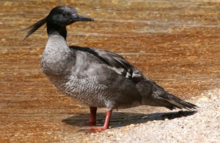
#9 Brazilian Merganser, world population 250
This merganser is a dark, slender duck with a shiny dark-green hood with a long crest, which is usually shorter and more worn-looking in females. Upperparts are dark grey while the breast is light grey, getting paler toward the whitish belly, and a white wing patch is particularly noticeable in flight. It has a long thin jagged black bill with red feet and legs. Although females are smaller with a shorter bill and crest, both sexes are alike in color. The slender ducks range in size from 49 centimeters to 56 centimeters as an adult. Young Brazilian mergansers are mainly black with white throat and breast.
The Brazilian mergansers are generally silent birds, but may make barking calls in certain situations. Four calls have been recorded. A harsh krack-krack acts as an alarm call emitted in flight. Males make a barking dog-like call, females make a harsh rrr-rrrr and the contact call ia a soft rak-rak-rak. Ducklings give a high pitched ik-ik-ik.
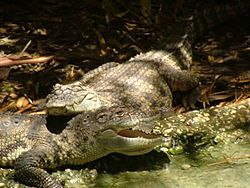
#8 Siamese crocodile, world population 200
The Siamese crocodile is a small, freshwater crocodilian, with a relatively broad, smooth snout and an elevated, bony crest behind each eye. Overall, it is an olive-green colour, with some variation to dark-green. Young specimens measure 1.21.5 m (3.94.9 ft) and weigh 612 kg (1326 lb), growing up to 2.1 m (6.9 ft) and a weight of 4070 kg (88154 lb) as an adult. The largest female specimens can measure 3.2 m (10 ft) and weight 150 kg (330 lb)[7] Large male specimens can reach 4 m (13 ft) and 350 kg (770 lb) in weight. Most adults do not exceed 3 m (10 ft) in length, although hybrids in captivity can grow much larger.
advertisement
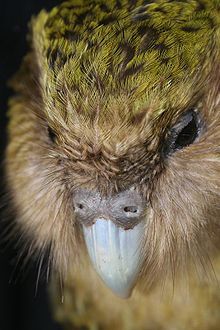
#7 Kakapo, world population world population 126
The kakapo (MÄÂori: kÄÂkÄÂpÅÂ or night parrot), Strigops habroptilus (Gray, 1845), also called owl parrot, is a species of large, flightless, nocturnal, ground-dwelling parrot of the super-family Strigopoidea endemic to New Zealand.
It has finely blotched yellow-green plumage, a distinct facial disc of sensory, vibrissa-like feathers, a large grey beak, short legs, large feet, and wings and a tail of relatively short length. A combination of traits make it unique among its kind; it is the world's only flightless parrot, the heaviest parrot, nocturnal, herbivorous, visibly sexually dimorphic in body size, has a low basal metabolic rate and no male parental care, and is the only parrot to have a polygynous lek breeding system. It is also possibly one of the world's longest-living birds. Its anatomy typifies the tendency of bird evolution on oceanic islands, with few predators and abundant food: a generally robust physique, with accretion of thermodynamic efficiency at the expense of flight abilities, reduced wing muscles, and a diminished keel on the sternum. Like many other New Zealand bird species, the kakapo was historically important to the MÄÂori, the indigenous people of New Zealand, appearing in many of their traditional legends and folklore. It was hunted and used as a resource by MÄÂori, both for its meat as a food source and for its feathers, which were used to make highly valued pieces of clothing. It was also sometimes kept as a pet.
The kakapo is critically endangered; as of March 2014, with an additional six from the first hatchings since 2011, the total known population is only 126 living individuals, as reported by the Kakapo Recovery programme, most of which have been given names. Because of Polynesian and European colonisation and the introduction of predators such as cats, rats, ferrets, and stoats, the kakapo was almost wiped out. Conservation efforts began in the 1890s, but they were not very successful until the implementation of the Kakapo Recovery plan in the 1980s. As of April 2012, surviving kakapo are kept on three predator-free islands, Codfish (Whenua Hou), Anchor and Little Barrier islands, where they are closely monitored. Two large Fiordland islands, Resolution and Secretary, have been the subject of large-scale ecological restoration activities to prepare self-sustaining ecosystems with suitable habitat for the kakapo. The New Zealand government is willingly providing the use of these islands to kakapo conservation.
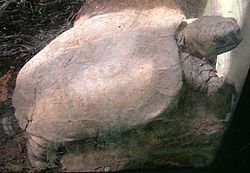
#6 Arakan Forest turtle world population, 114
The Arakan forest turtle (Heosemys depressa) is an extremely rare turtle species which lives only in the Arakan hills of western Myanmar.The Arakan forest turtle is a semiterrestrial turtle, meaning it can survive in aquatic as well as terrestrial habitats, but as adults, they prefer living in terrestrial habitats.
The turtle remains dormant the majority of the time by hiding in leaves and debris if they are not foraging for food. The Arakan forest turtle is an omnivore, feeding on both animals and plants. Although these turtles are considered a relatively reserved animal for the majority of their daily activity, they are aggressive when it comes to eating insects, worms, and fish. They also consume fruit that falls to the forest floor.
The Arakan forest turtle was believed extinct (last seen in 1908), but in 1994 was rediscovered when a few specimens turned up in Asian food markets. Like most Asian turtles, it is collected yearly as a food source or for "medical cures". Only a handful of these conservation-reliant turtles are in captivity, and their status in the wild, which is dubious at best, is listed as critical.
advertisement
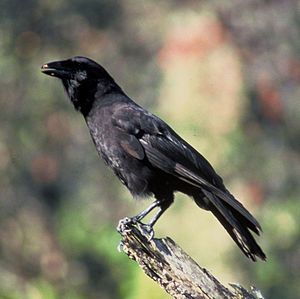
#5 Hawaiian Crow world population, 109
The Hawaiian crow is extinct in the wild. Before this, the species was found only in the western and southeastern parts of Hawaii. It inhabited dry and mesic forests on the slopes of Mauna Loa and HualÄÂlai at elevations of 3002,500 metres (9808,200 ft). Ê»ÅÂŒhiÊ»a lehua (Metrosideros polymorpha) and koa (Acacia koa) are important tree species in its habitat. Extensive understory cover is necessary to protect the 'alala from predation by Ê»io (Buteo solitarius), Hawaiian hawk. Nesting sites receive 6002,500 millimetres (2498 in) of annual rainfall. Fossil remains indicate that it previously was relatively abundant on all the main islands, along with four other extinct crow species. The species is known for strong flying ability and resourcefulness, and the reasons for its extirpation are not fully understood. It is thought that introduced diseases, such as Toxoplasma gondii, avian malaria (Plasmodium relictum), and fowlpox, were probably a significant factor in the species' decline.
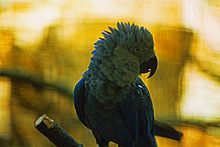
#4 Spix Macaw world population world population, 93
Spix's macaw (Cyanopsitta spixii), also known as the little blue macaw, is a macaw native to Brazil. It is a member of Arini tribe in the subfamily Arinae (Neotropical parrots), part of the family Psittacidae (the true parrots). It was first described by German naturalist Georg Marcgrave, when he was working in the State of Pernambuco, Brazil in 1638 and it is named for German naturalist Johann Baptist von Spix, who collected a specimen in 1819 on the bank of the Rio São Francisco in northeast Bahia in Brazil.
The bird is a medium size parrot weighing about 300 grams (0.66 lb), smaller than most of the large macaws. Its plumage is various shades of blue, with a grey-blue head, light blue underparts, and vivid blue upperparts. Males and females are identical in appearance, the females being a little smaller on average.
The species inhabited riparian Caraibeira (Tabebuia aurea) woodland galleries in the drainage basin of the Rio São Francisco within the Caatinga dry forest climate of interior northeastern Brazil. It had a very restricted natural habitat due to its dependence on the tree for nesting, feeding and roosting. It fed primarily on seeds and nuts of Caraiba and various Euphorbiaceae (spurge) shrubs, the dominant vegetation of the Caatinga. Due to deforestation in its limited range and specialized habitat, the bird has been rare in the wild throughout the twentieth century. It has always been very rare in captivity, partly due to the remoteness of its natural range.
The IUCN regard the Spix's macaw as critically endangered and possibly extinct in the wild. Its last known stronghold in the wild was in northeastern Bahia, Brazil and the last known wild bird was a male that vanished in 2000. The species is now maintained through a captive breeding program at several conservation organizations under the aegis of the Brazilian government. It is listed on CITES Appendix I, which makes trade illegal except for legitimate conservation, scientific or educational purposes.
The Brazilian government department of natural resources (ICMBio) is conducting a project Ararinha-Azul with an associated plan to restore the species to the wild as soon as sufficient breeding birds and restored habitat are available.
advertisement
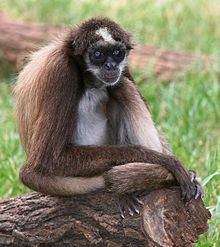
#3 Brown Spider Monkey world population, 60
Brown spider monkeys have long and thin limbs with their forelimbs being longer than their hind limbs. They also have a distinctive 75 cm (30 in) long flexible, thin and prehensile tail which at times acts like a fifth limb. The tail has a highly flexible, hairless tip with skin grooves which improves grip. Their hands look slightly curvy and they have small thumbs. All these features make it possible for them to climb trees at high elevations, hang and swing from one tree to another without having to lower themselves to the ground often. Adult males weigh between 7.9 and 9.1 kg (17 and 20 lb) and adult females weigh between 7.5 and 9 kg (17 and 20 lb). Their average adult body length is about 50 cm (20 in). Their coloration ranges from light brown to dark on upper parts including the head. Their most distinctive characteristic is their whitish triangular forehead patch although not all spider monkeys have this. Some, even though unusual, possess pale blue eyes.
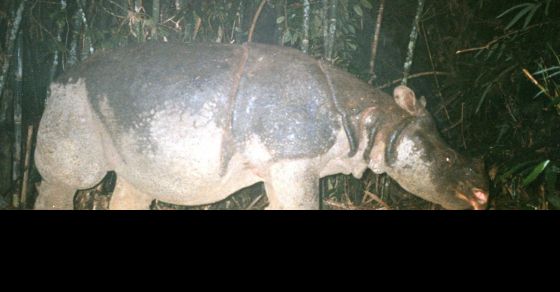
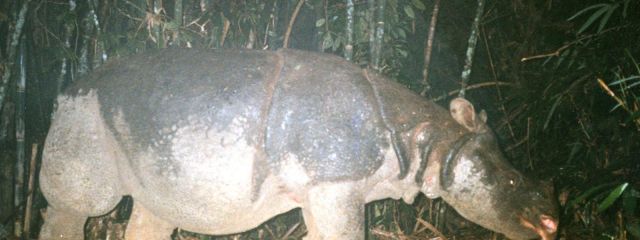
#2 Javan Rhinoceros world population world population, 50
Javan rhinos are the most threatened of the five rhino species, with as few as 35 individuals surviving in Ujung Kulon National Park in Java, Indonesia. Vietnam's last Javan rhino was poached in 2010. The Javan rhino is a dusky grey color and has a single horn of up to about 10 inches. Their skin has a number of loose folds giving the appearance of armor plating. This species is very similar in appearance to the closely-related greater-one rhinoceros, but has a much smaller head and less apparent skin folds.
advertisement
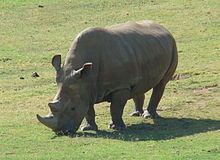
#1 Northern White Rhinoceros world population, 7
The northern white rhino (Ceratotherium simum cottoni) formerly ranged over parts of northwestern Uganda, southern South Sudan, the eastern part of Central African Republic, and northeastern Democratic Republic of the Congo. Their range possibly extended as far west as Lake Chad, into Chad and Cameroon.[citation needed]
In 2006, there were only four northern white rhinos left in the wild, according to the World Wide Fund for Nature. However, in June 2008 it was reported that the subspecies could be extinct in the wild since none of these four known remaining individuals had been seen since 2006.
Poachers reduced their population from 500 to 15 in the 1970s and 1980s.[citation needed] From the early 1990s through mid-2003, the population recovered to more than 32 animals. Surveys in 2000 indicated the population had started recovering, with 30 animals confirmed in 2000, and possibly six others.[10] Since mid-2003, poaching had intensified and reduced the wild population to only 5 to 10 animals (7 as of 2007).[11] Four rhinos living in Garamba National Park were the last known wild northern white rhinos; they have not been seen in recent years and it is feared they have been killed. If confirmed, this would make the northern white rhino extinct in the wild apart from the last-chance efforts by the Ol Pejeta Conservancy to reintroduce it in a wild state. Indeed, as of 2011, the total number of northern white rhinos on the planet is reported to be five males and two females (3 in captivity and 4 in conservancy).
On 28 November 2009, two Russian helicopter pilots had seen Northern White Rhinos in southern Sudan. It is probable that the three rhinoceroses that were spotted belong to this subspecies, as other rhinoceroses have not been living in the area for a long time.