#1. Columbus Misses Asia
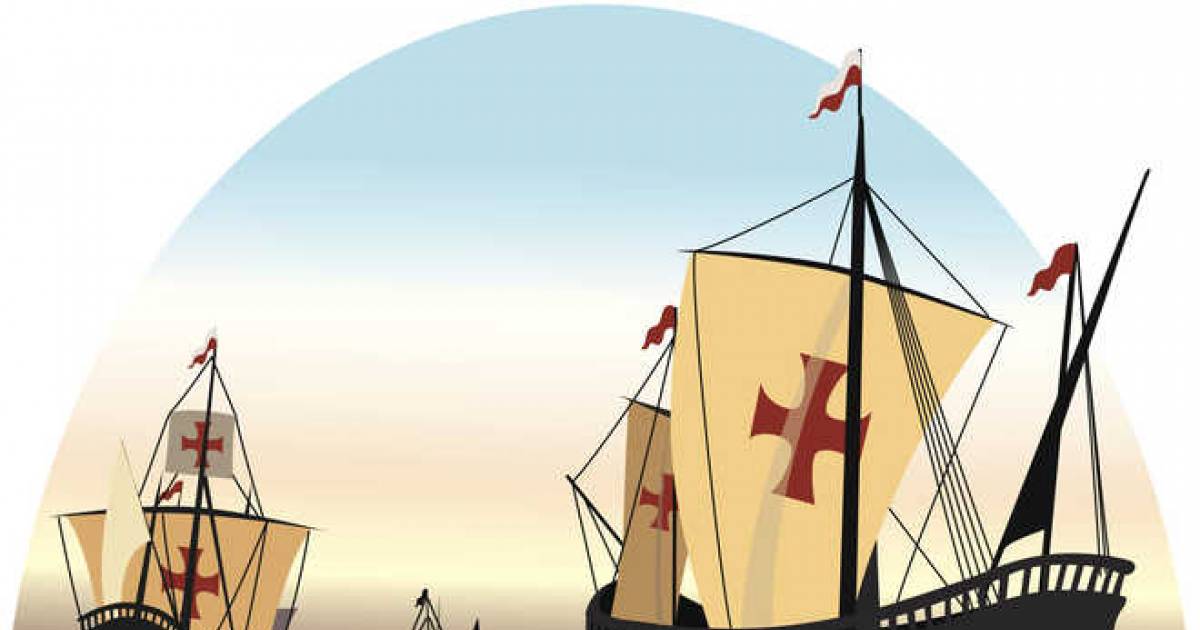
Despite what your grade school curriculum might tell you, Columbus didn't discover America. Properly, Columbus didn't discover what would become America, either. The explorer really wanted to find a route to Asia by going west from Europe, a concept that was widely considered to be fairly goofy even at that time.
Ultimately, Columbus ended up bumping into the Bahamas, Hispaniola (now Haiti and the Dominican Republic), Central and South America. He never did make it to North America. So while he never found his route to Asia (though he claimed that he did), Columbus did initiate the bigger boom of European exploration and more or less guaranteed permanent contact between the two hemispheres. And no, we don't know why he still has a holiday, either.

#2. D-Day Paratroopers Scatter All Over the Beaches
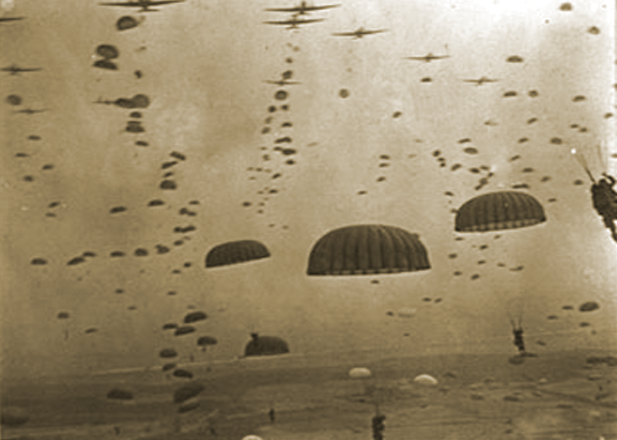
The D-Day invasion of World War II remains one of the most massive assaults in the history of modern warfare. Planning and coordination efforts went on for months, with revisions and tinkering happening up until the last minute in almost every case.
One crucial component was the dropping of the 101st and 82nd Airborne Divisions overnight prior to the amphibious assault on the beaches of France. However, as the drops began, bad weather, anti-aircraft fire, and other factors led to the wide dispersal of Allied paratroopers. But while this dispersal did create major problems in terms of achieving the invasion's initial objectives, it ended up helping the invasion overall.
How's that? The dispersal confused the absolute hell out of the German command structure. American and British troops seemed to be everywhere, attacking a variety of targets, and operating with seemingly no centralized base or command structure. And that's because a) they were everywhere, b) teams were formed based on improvisation and who happened to be where when they landed, and c) Americans tend to be really good at breaking stuff and then finding more stuff to break.
The Germans didn't know if this was the full invasion, a partial invasion, or an extremely elaborate prank. Even better, much of the German command was scattered itself, either at training elsewhere, or, in the case of Erwin Rommel, visiting his wife in Germany for her birthday. Oops.
At any rate, while the overall scattering of forces made things more difficult, it expanded the element of surprise and built on other Allied deception tactics to keep the German forces in disarray. And all of that led to an ultimately successful push by the Allied forces.
#3. Militaries Invade Russia During the Winter
When a military mistake is so colossal that it becomes a permanent pop culture punch line, you know it's a big one. Amazingly, it's a blunder that people keep making. Granted, a lot of historians and military experts will tell you that every example of a failed winter invasion of Russia comes loaded with its own unique factors - but you can still find army after army that died in the Russian snow.
In 1708, Sweden invaded Russia during a winter so bad that even Venice's port froze. The invaders lost 16,000 men in that particular push. Just over 100 years later, Napoleon took a swing at it in an action that began in the summer. By late fall, he'd lost thousands of troops and though he occupied Moscow, he eventually had to retreat.
The famous example, however, is from World War II. Hitler's big screw-up was in thinking that he'd take Russia before winter, and so his army wasn't ready when winter came. In fact, things went so poorly in Russia that Hitler lost three-quarters of a million troops before November.

#4. Japan Picks the Wrong Targets at Pearl Harbor
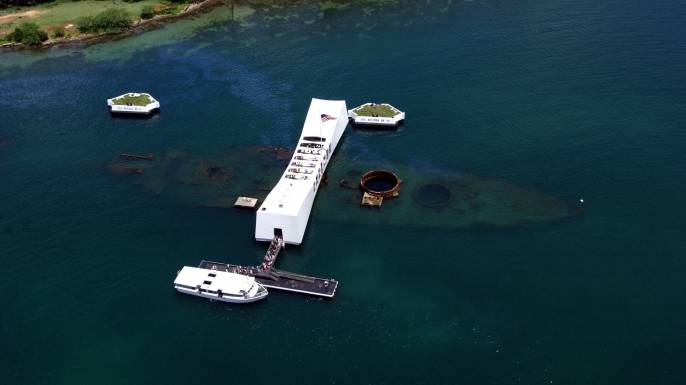
You might think that Pearl Harbor was a mistake on the part of Japan because it mobilized the United States, re-energized a flagging economy, and generally pissed us off. Well, yeah, but the specific set of mistakes in Pearl Harbor had more to do with what Japan didn't bomb rather than what they did.
The bombing raid of December 7, 1941 concentrated most of its fire on American battleships. The line of thought ran that knocking out the big ships would hamper US power at sea. As such, Japanese planes didn't concentrate on Pearl Harbor's fuel reserves, repair yards, or, incredibly, the aircraft carriers present. When the smoke cleared, the US kicked the repair yard into full gear and was able to get ships back to sea quickly. And as the war went on, US naval dominance eventually came from submarines and yes, aircraft carriers. So don't wake a sleeping giant, and if you do, don't let him keep the big boats for planes.
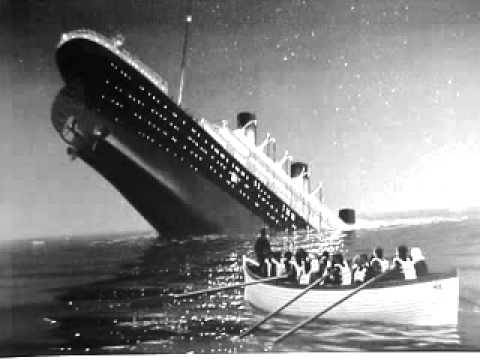
#5. A Missing Key Led To The Sinking Of The Titanic
Right before the Titanic sailed, the company that ran the cruise decided to replace the ship's second officer, David Blaire, with the more experienced Charles Lightoller. Mr. Blaire neglected to give Lightoller the key to the locker that contained the binoculars.
Lookout Fred Fleet claims he would have spotted the iceberg sooner, if he'd had binoculars.
#6. Alexander Fleming Forgets to Clean Up His Lab
When you forget to clean the dishes, it's gross. But when a scientist forgets to do it... well, it's still gross. But it can lead to world-changing discoveries. Take penicillin (unless you're allergic). Alexander Fleming gets the credit for discovering penicillin in 1928 - and his methodology came down to forgetting to do the dishes.
Turns out that Fleming spent the month of August on holiday with his family (that's how you know he's Scottish; otherwise, it would be "on vacation"). Upon his return, he noticed that one of his petri dishes of staphylococci had grown a mold that destroyed the sample around it. He then grew the mold in a pure culture and found out it could annihilate all kinds of bacteria (gram-positive pathogens, if you want to get technical).
It took a few years before penicillin would catch on, but by the time it did, it was widely used to treat Allied wounded in World War II, saving countless lives.

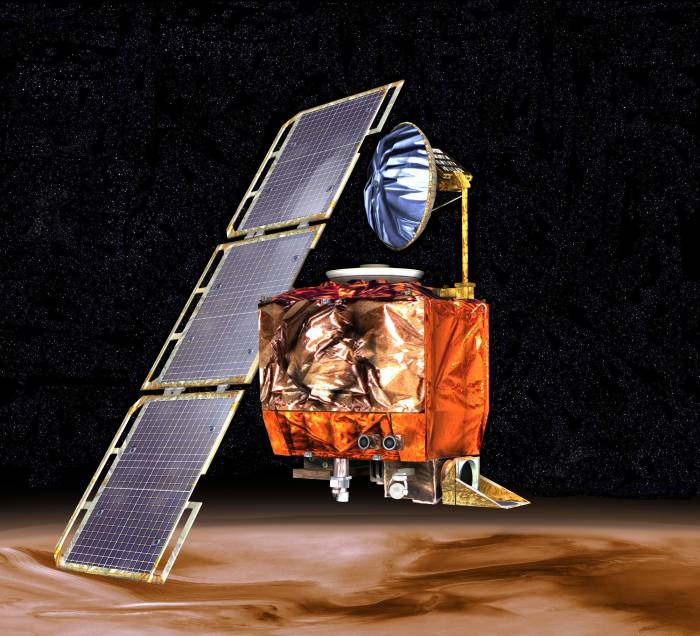
#7. The Mars Climate Orbiter Can't Convert Its Units
When the greatest minds in the world come together, you expect discovery and innovation. You expect mind-bending frontiers of research to be explored and trails to be blazed. You don't expect things to stop working because one team used pounds and another team used Newtons. But that's what led to the loss of the Mars Climate Orbiter in 1999.
The Orbiter had a number of tasks to perform measuring atmosphere and climate; it was also going to be the communications relay for the Polar Lander. NASA aimed to gather never-before-collected data on the Red Planet. It was a Big Deal. However, when the Orbiter tried to - well, orbit - it failed and disintegrated in the very atmosphere it was there to analyze.
The reason? Lockheed Martin produced ground software that ran calculations in pounds instead of the Newtons specified by NASA. That meant that the thrusters were wonky (picture driving 100 mph in a 100 kmh zone) and the craft was lost.