

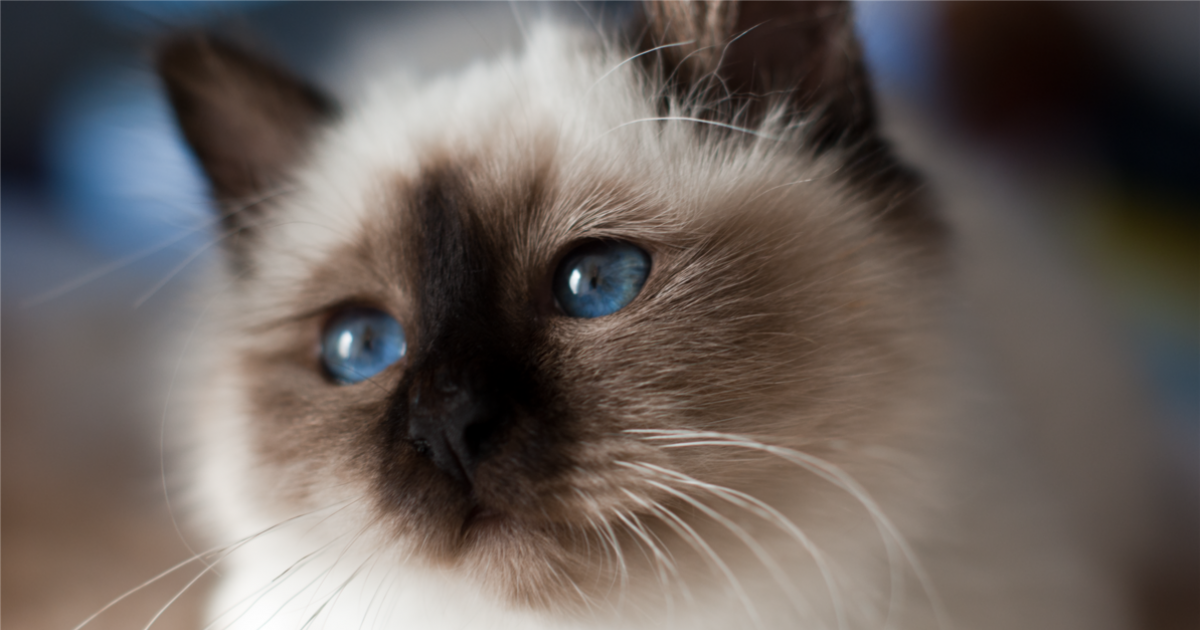
The Birman communicates in a soft voice, mainly to remind you that perhaps it’s time for dinner or maybe for a nice cuddle on the sofa.
advertisement
Mystical, magical, enchanting with soulful blue eyes, a gentle demeanor, and the best friend you ever had… this describes the Birman cat.
The Birman beginnings are shrouded in legend and mystery. There are numerous folk tales and legends describing how the Birman obtained its unique colorings and markings that offer explanations, while the real Birman history keeps everyone guessing.
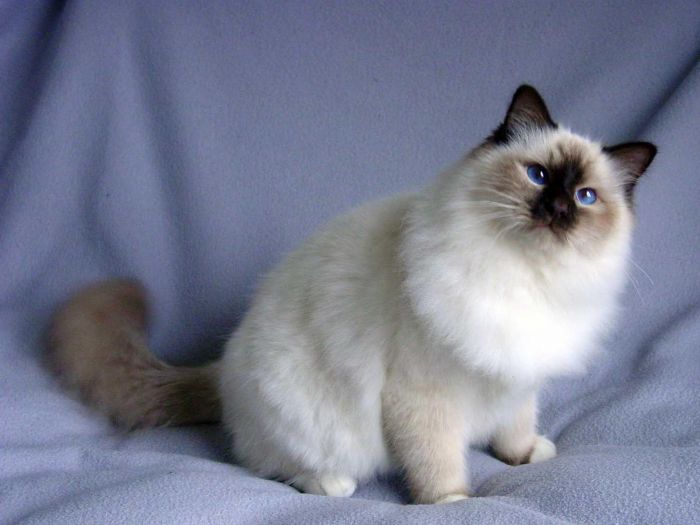
A beautiful cat deserves a beautiful legend of origin.
The Sacred Cat of Burma, as the Birman is sometimes called, is said to have acquired his striking appearance through the intervention of a blue-eyed goddess, who rewarded a temple cat's love for and devotion to his priest by turning his white coat golden and changing his yellow eyes to blue. His paws remained white as a symbol of his purity. Ever since, the temple cats have borne the goddess's marks of favor, and it was said that priests who died were reborn into the cats' bodies.
advertisement
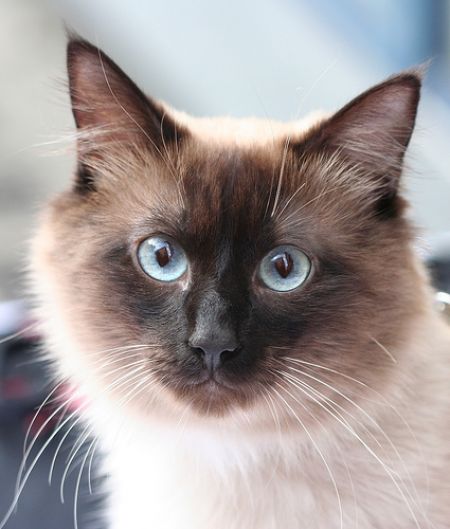
As former temple cats, Birmans seem to have become accustomed to adoration.
Birmans are affectionate, gentle, and faithful companions with an air of dignity that seems to invite adoration by their human companions. They are very intelligent and affectionate, according to fanciers, and very people-oriented. They will generally greet visitors with curiosity rather than fear.
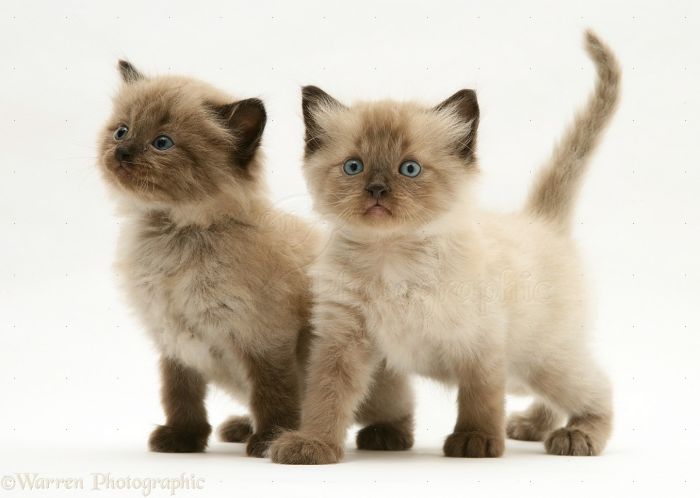
Because of their gentle temperaments
Birmans are easy to handle, care for, and show, and they make ideal pets for anyone who wants quiet companions that will offer love and affection in return for just a little well-deserved worship
advertisement
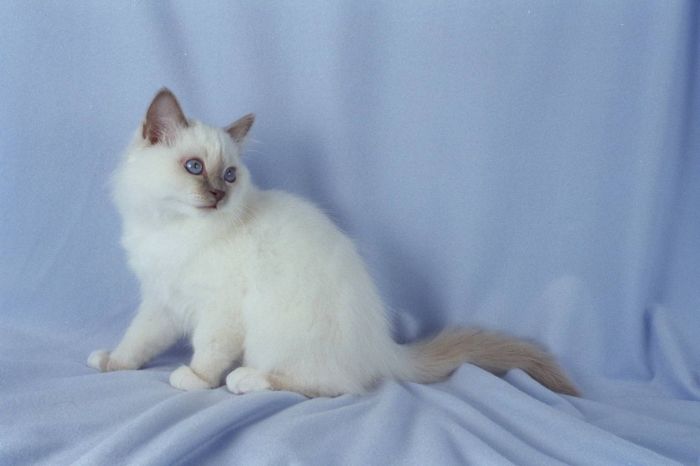
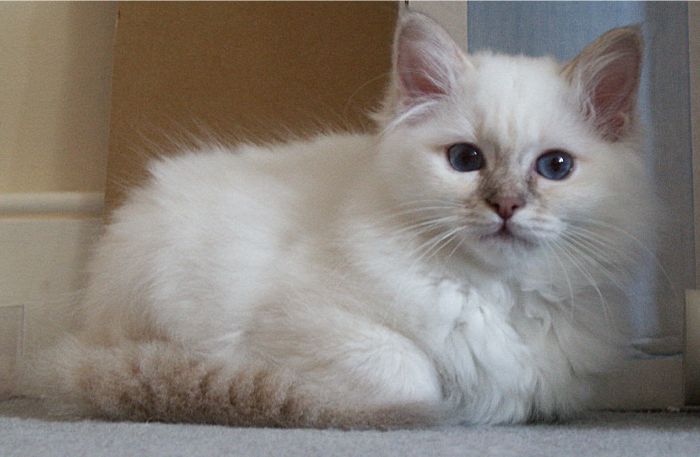
Like all color point cats, Birman kittens are born all white and develop their color as they mature.
They come in a rainbow of colors, including seal, blue, lilac, chocolate, red, cream, and tortie. All these colors can be either the traditional solid pattern or the dramatic lynx pattern. A special and unique feature of the Birman is their beautiful white paws.
advertisement
There is no clear record of the breed's origin.
They are most often claimed to have originated as the companions of temple priests in Northern Burma in the Mount of Lugh. There are many stories extant of how the cats first came to France, including pairs of cats being given as a reward for helping defend a temple, or being smuggled out of Burma by a Vanderbilt. Another pair of Birmans (or a pregnant female called Poupée de Maldapour) were said to have been stolen and later imported to France by Thadde Haddisch. The first traces of historical Birmans go back to a Mme Leotardi in the city of Nice in France.
advertisement
Birmans were almost wiped out as a breed during World War II.
Only two cats were alive in Europe at the end of the war, a pair named Orloff and Xenia de Kaabaa, both belonging to Baudoin-Crevoisier. The foundation of the breed in postwar France were offspring of this pair. They had to be heavily outcrossed with long-hair breeds such as Persian and Siamese to rebuild the Birman breed. By the early 1950s, pure Birman litters were once again being produced. The restored breed was recognized in Britain in 1965 and by the CFA in 1966 The first Birman cats were seal point. The blue point colour was introduced in 1959 using blue Persian lines. New colours were later added by English breeders including chocolate, red, and lynx (tabby) points. Birmans have also been used in the development of new breeds, notably including the Ragdoll
advertisement
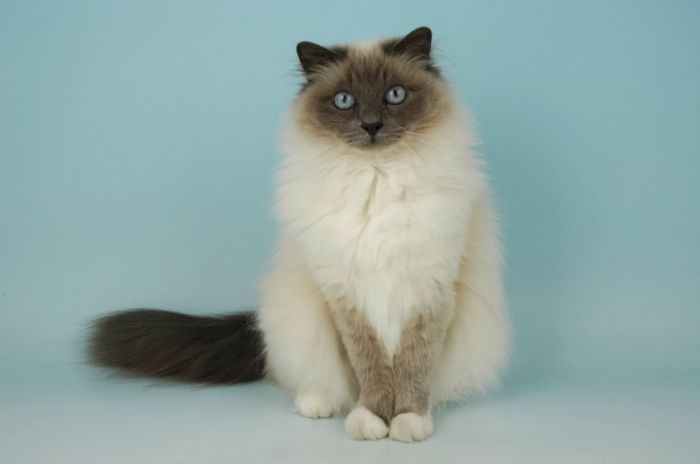
The Birman is similar to the Siamese of Thailand
but he has a stockier body, white feet, and a long, silken coat that comes in all pointed colors, including chocolate and lilac. He's considered a medium- to large-sized cat, weighing between seven and 12 pounds.
advertisement
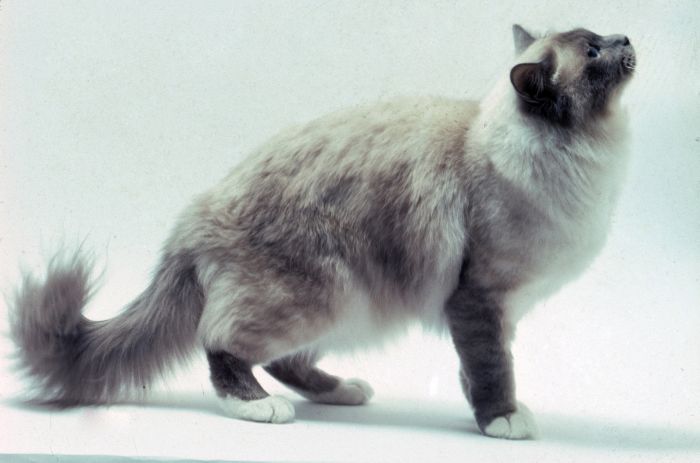
The Birman is a calm, affectionate feline who enjoys spending time with his family
especially if you lavish lots of attention on this former temple idol. Birmans get along well with children and other pets. If you talk to him, your Birman will respond in a soft, pretty voice, but he's not as vocal as the Thai Siamese. Although Birmans are less active than some breeds, they have a serious playful side. It's not unusual for them to fetch or chase a ball -- when they're not curled up in your lap.
advertisement
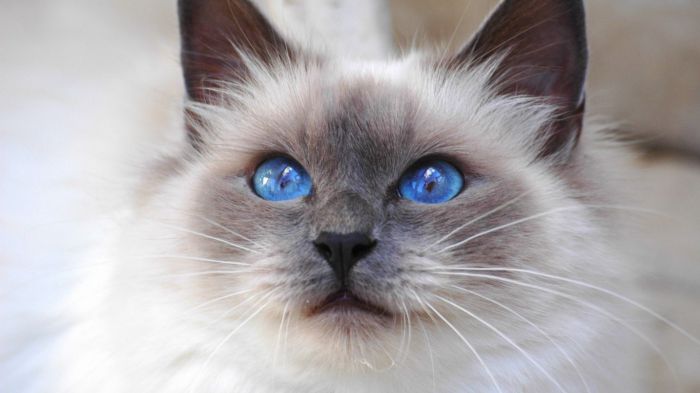
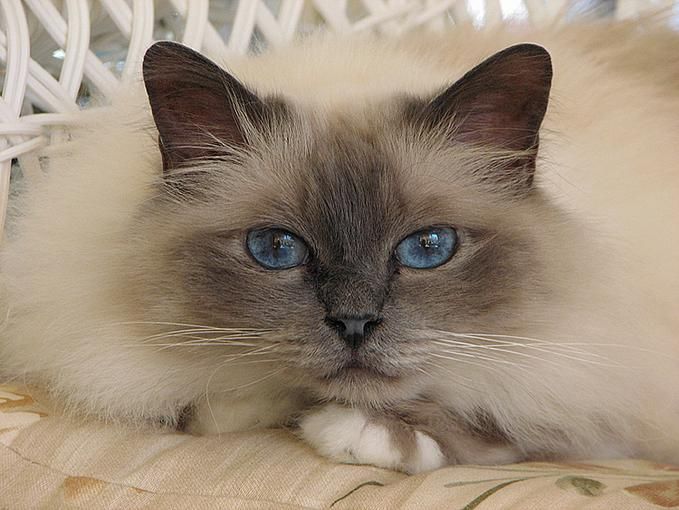
His piercing, sapphire-blue eyes stare deep into your soul, and his semi-long coat -- ideally misted with gold -- is silky to the touch.
The white-gloved Birman may look elegant, but his appearance belies a powerful, muscular body and a strong love of play.
advertisement
Ideally, the Birman is a medium-sized cat, strongly built cat with striking eyes, round face, and a Roman-shaped nose which all result in a pleasing expression.
The Birman fur is a single-length (no undercoat) soft, silky, and lush coat; they have a longer ruff around the neck and a fluffy tail. Their coats do not mat, and they require a minimum amount of grooming.
advertisement
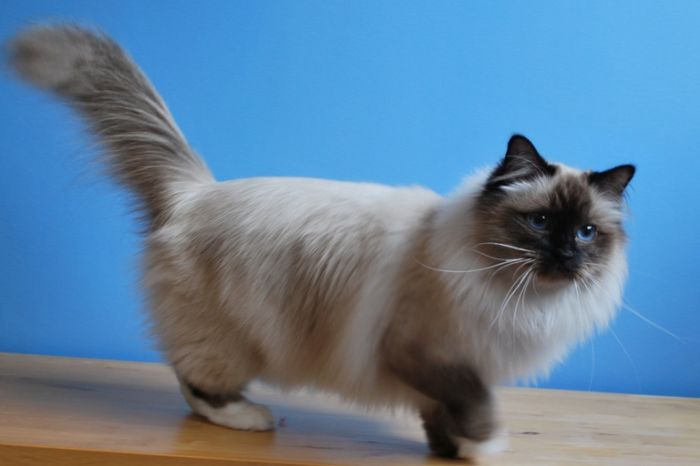
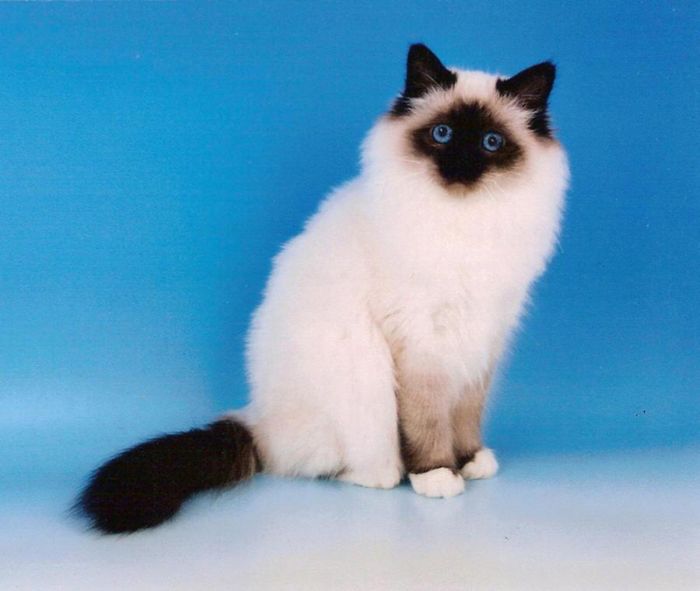
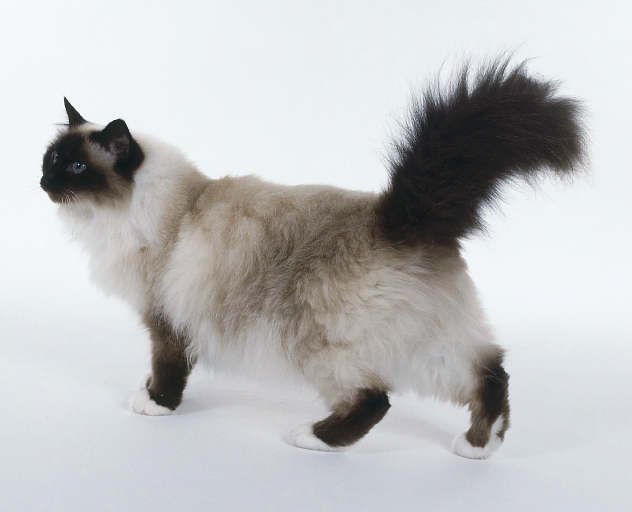
Birmans should have four white feet, with a pattern described as “gloves and laces.”
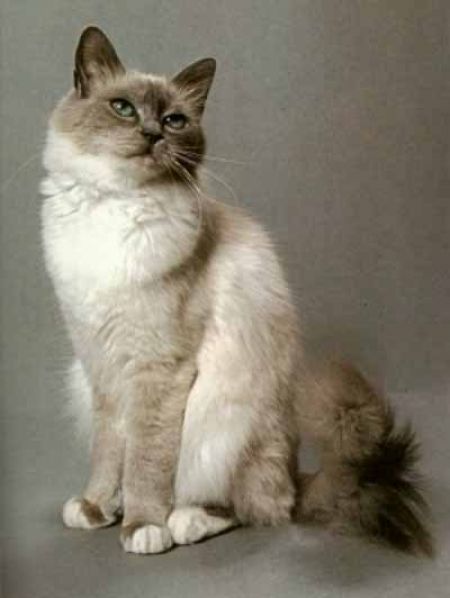
The Birman has a silky, medium-length coat in the pointed pattern of the Siamese (meaning that the color is darker on the face, ears, legs and tail), a broad, rounded head topped with medium-size ears, bright blue eyes that give him a sweet expression, and four white feet that give him the appearance of wearing little white mittens. This is a medium-size to large cat with a stocky, powerful body that belies his gentle demeanor.
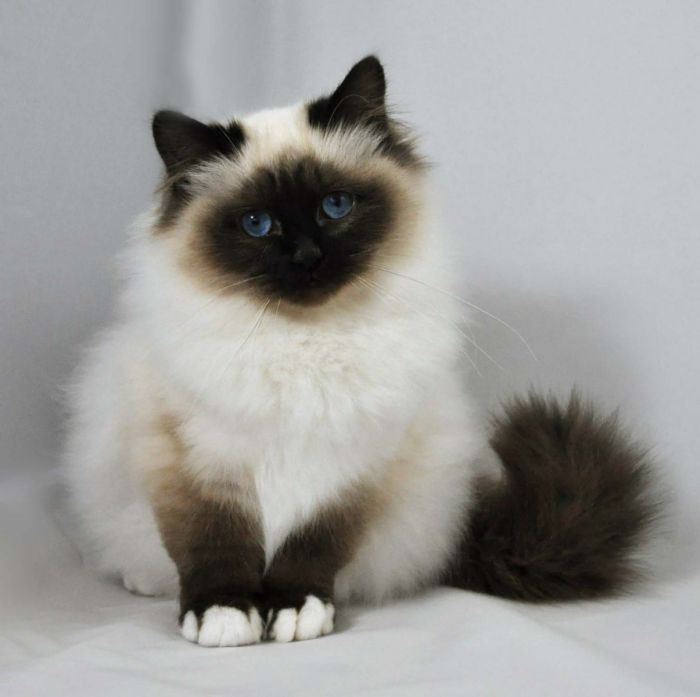
The medium-long to long coat has a silky texture and little undercoat, which means that it rarely mats. It forms a heavy ruff around the neck and is wavy on the belly.
A pale body, which varies in shade depending on the cat's color, is set off by darker points. For instance, a seal point Birman has a body that is a pale fawn to cream color with a warm tone, gradually shading to a lighter color on the belly and chest. The points are a deep seal brown. On the front and back paws are white "gloves" ending in an even line across the paw. On the back paws, the gloves extend up the back of the leg (called laces) and end in a point or an inverted V shape. In the show ring, the symmetry of the "gloves and laces" are an important factor and may mean the difference between a kitten going on to a career as a show cat or as a pet.
advertisement
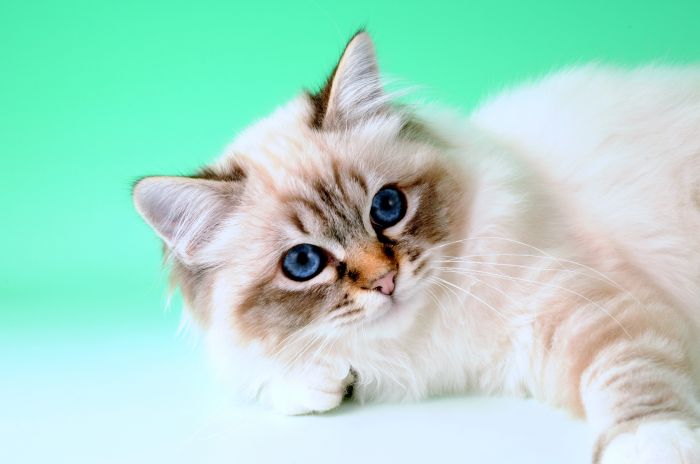
Besides seal point, Birmans come in blue point, chocolate point, lilac point, and various parti-color point and lynx point colors
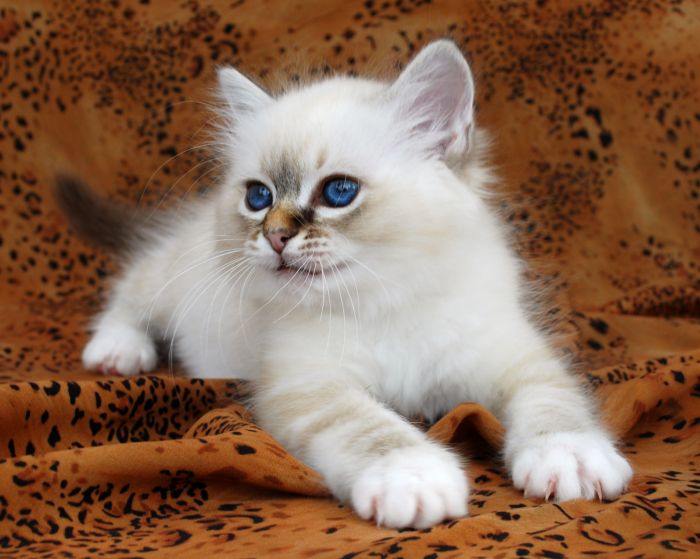
Lynx point Birmans have a clearly defined M marking on the forehead, light markings that resemble eyeglasses around the eyes, spotted whisker pads, solid-colored ears with no stripes, and "thumb marks" on the back of the ears. The legs and tail have stripes and rings.
The Birman is a hearty, healthy cat that does not reach full maturity until approximately 3 years of age
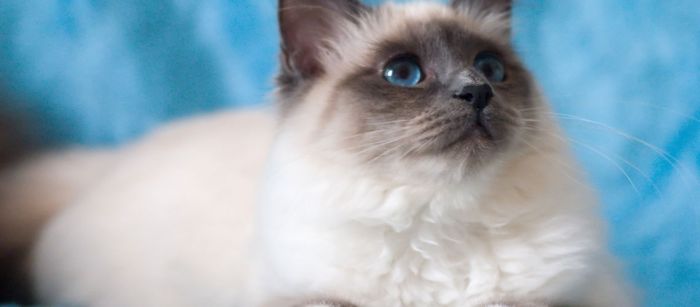
Because of its exceptionally sweet nature, the Birman is easy to handle and makes an ideal pet. The Birman is sociable, gentle, quiet, loving, and companionable. They love to be with people and are playful and desirous of attention. They are social with both people and other animals. Because the Birman is patient, even-tempered and tolerant, they make an excellent choice for families with children and/or other pets.
advertisement
Birmans are relatively quiet cats; most are soft spoken and refined, with soft chirp-like voices.
Birmans are very helpful; they love helping you make beds, load the dishwasher, fold laundry, read the newspaper, and work on the computer. They are a willing participant in whatever you do. You will never be alone with a Birman in your home.
Problems that may affect the Birman include the following:
Congenital hypotrichosis, which causes them to be born with no hair, and thymic aplasia, an immune deficiency that leads to increased risk of infection and death. Fortunately, these conditions are rare.
Corneal dermoid, the presence of skin and hair on the surface of the cornea (the clear front of the eye) of one or both eyes. It can be corrected surgically.
Spongiform degeneration, a progressive degenerative disease of the central nervous system causing signs that include hind-limb weakness and uncoordinated movement.
Shaking and trembling in kittens. This condition begins in some kittens when they are about 10 days old and lasts until they are about 12 weeks old. The cause is unknown and recovery occurs spontaneously.
Unusually high concentrations of urea and/or creatinine in the blood, which may or may not indicate kidney dysfunction.
advertisement