

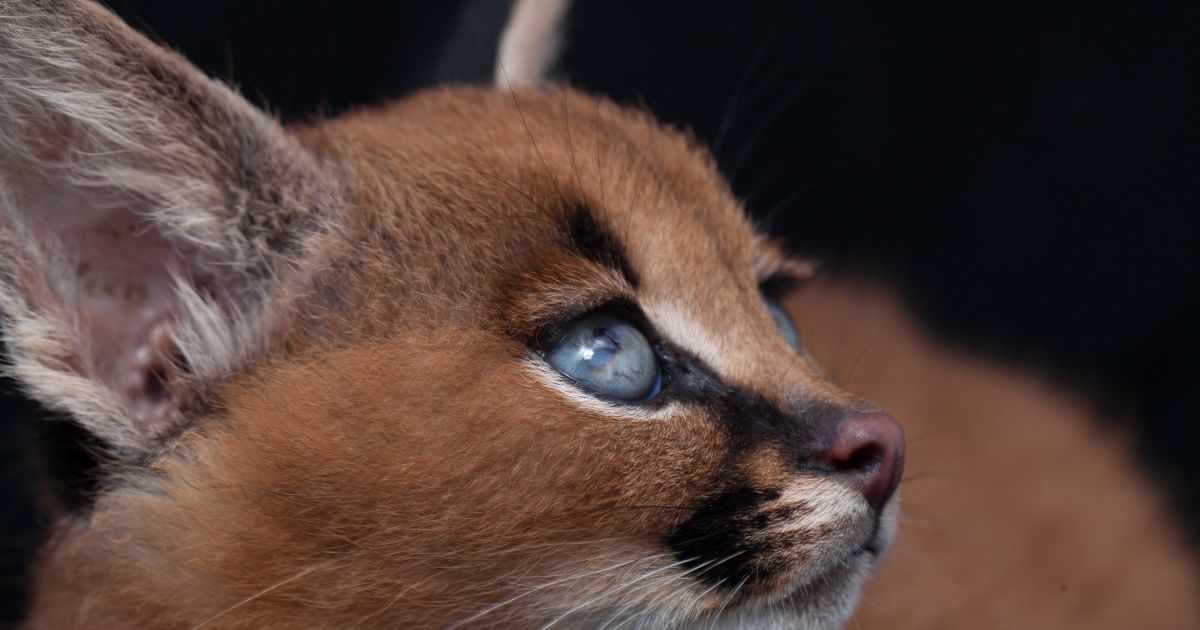
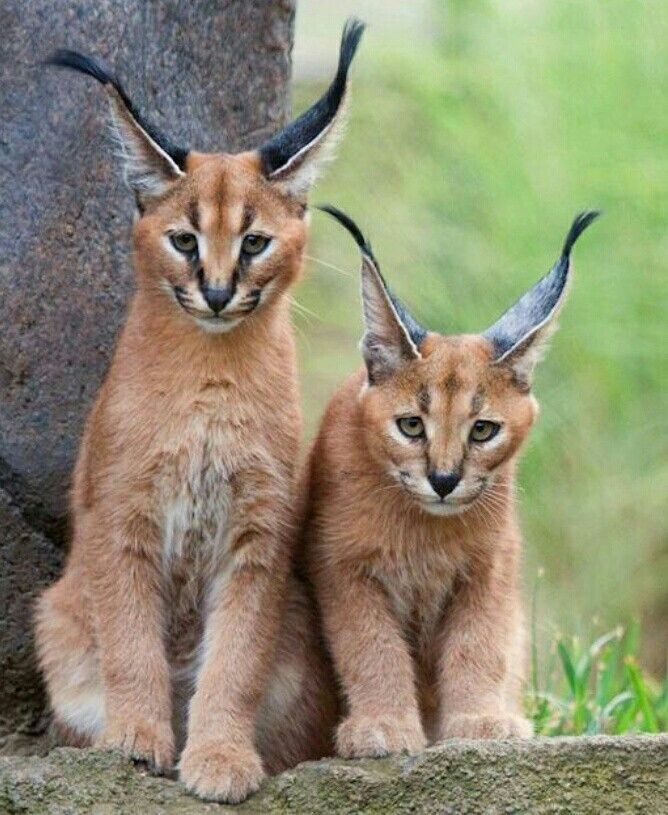
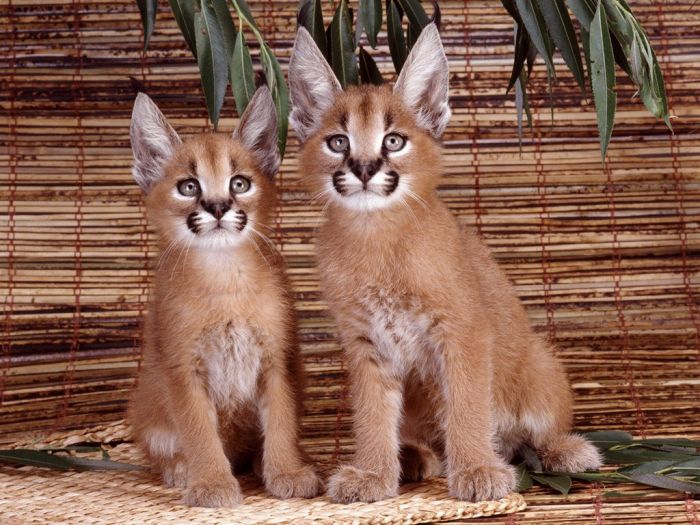
The caracal is a slender, graceful cat with a short, dense coat & distinctive, long, black-tufted ears
advertisement
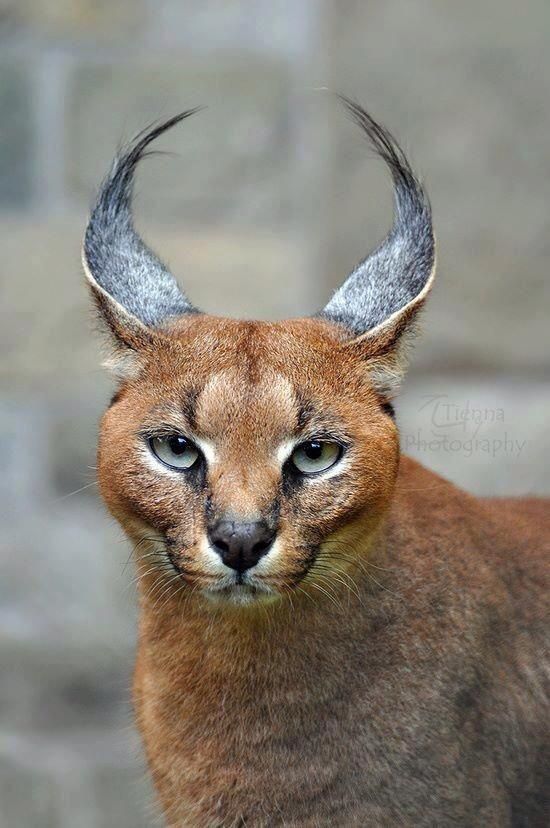
Caracal comes from the Turkish word "karakulak" meaning "black ear."
The ears of these cats are black and topped with long black tufts about 1 ¾ inches long.
The caracal is native to Africa, Central Asia, Southwest Asia and India.
The caracal is sometimes called the desert lynx, African lynx, or Persian lynx, but it is not a member of the Lynx genus
advertisement
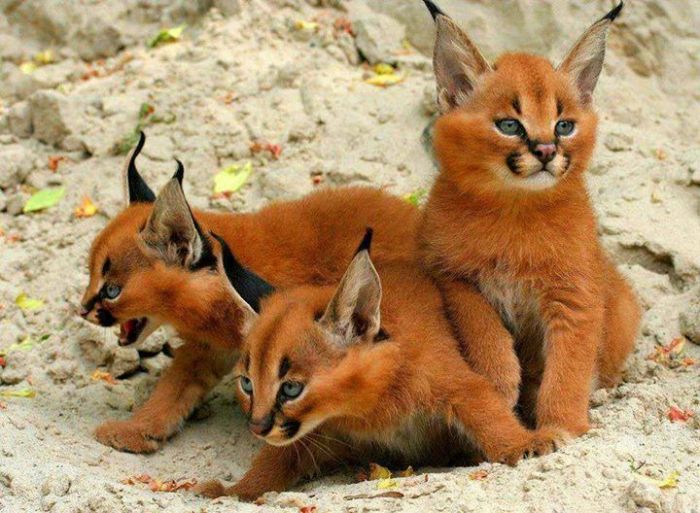
The Caracal was once trained for bird hunting in Iran and India.
They were put into arenas containing a flock of pigeons, and wagers were made as to how many the cat would take down. This is the origination of the expression "to put a cat amongst the pigeons." The Caracal is capable of leaping into the air and knocking down 10-12 birds at one time!
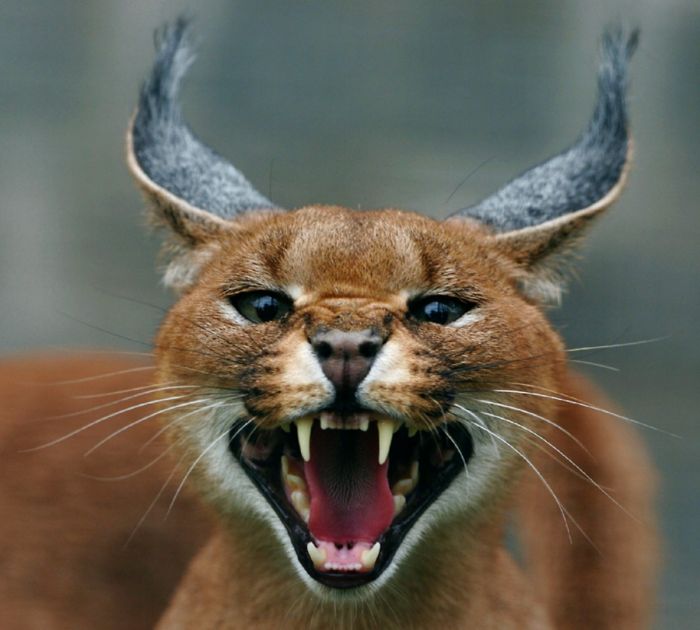
Often referred to as the desert lynx
the Caracal does not actually possess the same physical attributes of members of the lynx family, such as the characteristic ruff of hair around the face. Instead, it has a short, dense coat, usually a uniform tawny-brown to brick-red, and black (melanistic) individuals have been recorded.
advertisement
As the name implies, the backs of the ears are black & topped with long black tufts about 1.75 inches long.
This tuft is the characteristic that Caracals do share with the members of the lynx family. It is the largest member of Africa's small cats, and it's most formidable. Males can weigh as much as 40 pounds, and females as much as 35. They stand between 16-20 inches at the shoulder, and are 35-39 inches long.
advertisement
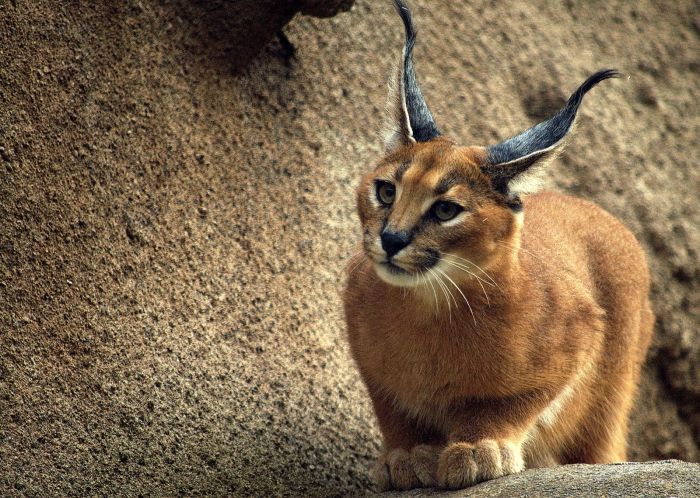
The caracal is the largest of Africa's "small cats."
Males can weigh up to 18 kilograms (40 lb), and females up to 16 kilograms (35 lb). Caracals are about 40 centimetres (16 in) to 50 centimetres (20 in) tall at the shoulder. Caracals have a short tail. The male and female look the same. Its eye pupils shrink to circles, while other cats' pupils shrink to slits
advertisement
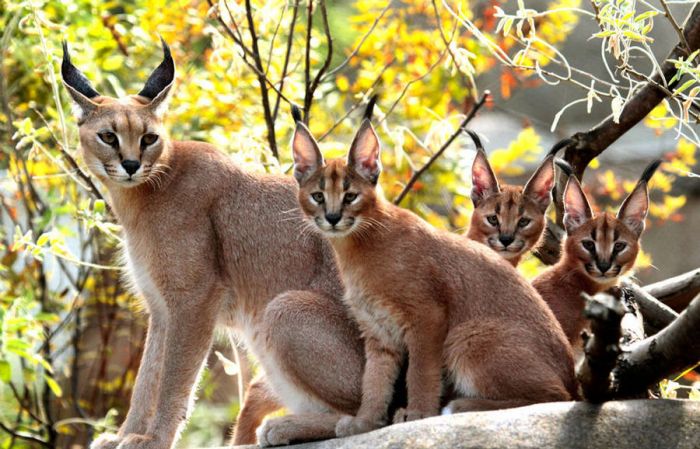
The muscular hind legs are longer than the forelegs.
The hind legs give it the ability to jump so spectacularly. This cat can sprint short distances at a speed similar to the serval at 50 mph but is more sturdy in appearance than the serval (the serval has the longest legs to body size of all the wildcats).
advertisement
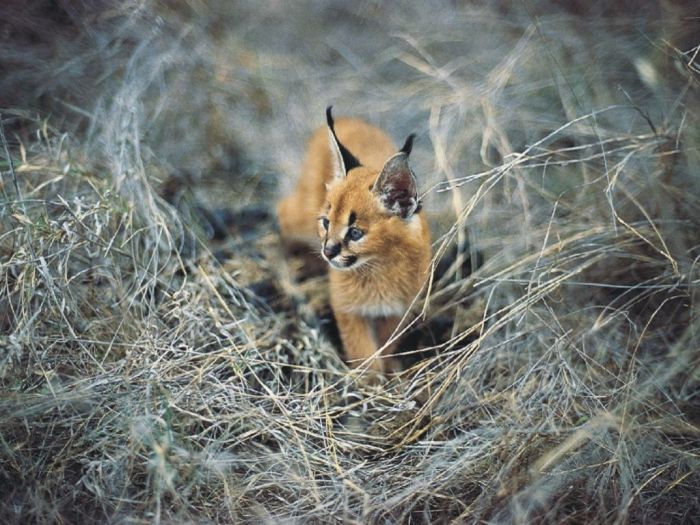
The body color is ‘tawny grey, reddish, frosted sand color'
The body colour varies from reddish-brown to tawny-grey, but occasionally entirely black "melanistic" individuals may occur. The chin, throat and underparts are white, with pale red spots or blotches on the belly and the insides of the legs that vary from very faint to distinct in different individuals. Distinctive narrow black stripes run from the eye to the nose and down the centre of the forehead, and the eyes are yellow-brown, with the pupil contracting to a circle rather than a slit
advertisement