Yoga classes are meant to help you forget it all: It’s a Zenned-out space where thinking about your to-do list or work drama isn’t allowed. But according to a new study, there might be a hidden danger to spending all that time on the mat—which could cause a whole lot of stress and heartbreak down the road.
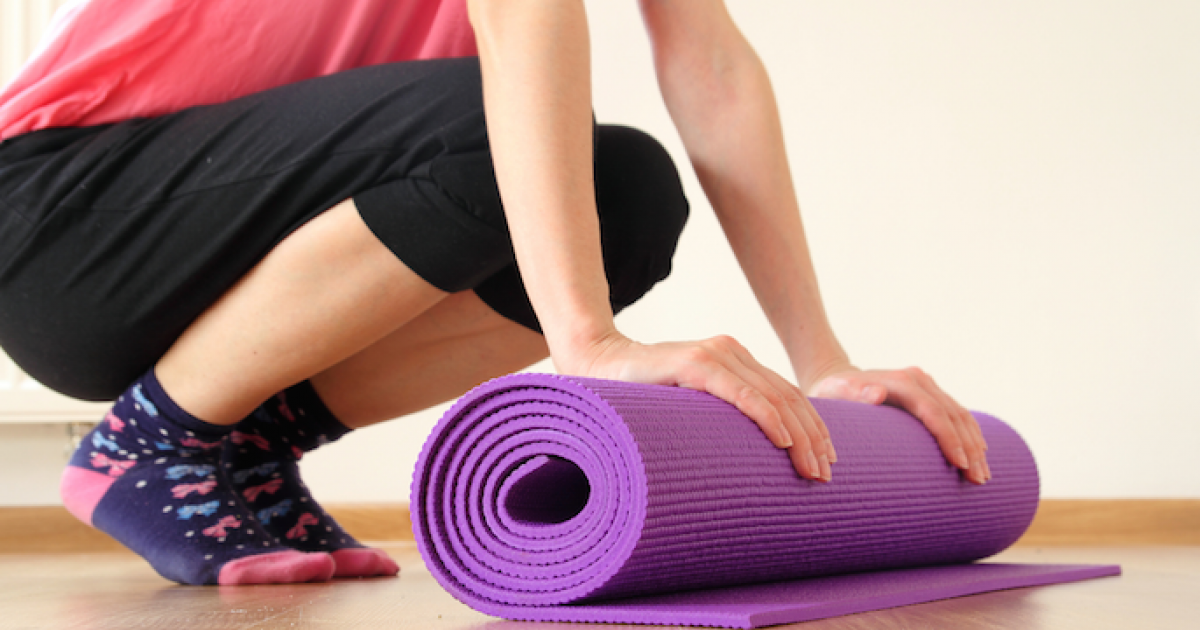
The Chemicals In Your Yoga Mat Could Cause Infertility. Here's What To Do About It
By
Editorial Staff in
Facts
On 31st August 2017
advertisement
#1
If you're a woman who regularly practices yoga, a new study published in Environmental Health Perspective last week may have sounded a few alarm bells: Apparently, there are chemicals in yoga mats that can make it more difficult to get pregnant.
#2
The study, conducted by the Harvard T.H. Chan School of Public Health, looked at organophosphate flame retardants (PFRs), which are commonly used in polyurethane foam in many household items like upholstered furniture, baby products and yoga/gym mats.
The chemical can easily transfer from household items into the human body, via dust.
advertisement
#3
The researchers tested for metabolites of PFRs in each woman's urine, and they found that the women with higher levels of these metabolites were 31 percent less likely to have the embryo successfully implant in the uterus, 10 percent less likely to achieve fertilization, 41 percent less likely to get pregnant, and a 38 percent less likely to give live birth. Yikes.
#4 So, what are these chemicals that are making it harder for women to get pregnant?
Organophosphate flame retardants (PFRs) are used in polyurethane foam in many different common household items, from sofas and baby toys to (possibly) the yoga mat you spend hours a week on. And considering the study detected the chemicals in more than 80 percent of participants, it’s a serious issue.
“Couples undergoing IVF and trying to improve their chances of success by reducing their exposure to environmental chemicals may want to opt for products that are flame-retardant free,” senior author Russ Hauser, professor of reproductive physiology at Harvard T.H. Chan School of Public Health, said in a press release.
advertisement
#5
Couples trying to get pregnant via in vitro fertilization should also minimize contact with car seats, sofas, computer chairs and other materials similarly treated with those chemicals.
advertisement
#6
However concern has been growing about PFRs – organophosphate flame retardants – which are used in polyurethane foam in upholstered furniture, baby products and gym mats, for example. They can spread from furniture into the air and dust of rooms.
advertisement
#7 But how can such chemicals get into your body when most of us don't eat yoga mats?
Well, as described in a publication in Chemosphere, PFRs can easily move from the foam to your hands, face, and body through contact and even into the air that you breathe. So, in essence, you could be literally eating and breathing your yoga mat.
advertisement
#8
Professor Allan Pacey, of Sheffield University, said the data obtained by the Harvard researchers “seems fairly convincing” and supported the idea of “a link between a woman’s exposure to these flame-retardant chemicals and her chances of getting pregnant”.

advertisement
#9
“Ultimately, we need to keep our lives safe from fire and so before men and women undergoing IVF throw away their yoga mats, I think we need a bit more data in larger populations and in various parts of the world.
“We also need some more details about the likely mechanism by which these chemicals could be causing such an effect.”

advertisement
#10
Before you freak out, this is only the first study to investigate the link between the materials and pregnancy, and researchers are keen to look further into the matter, including how these chemicals affect men, and the joint effects of different types of chemicals on both sexes.
There are many factors that can affect fertility, so if you’re struggling to get pregnant, talk to your GP or specialist who can find the best course of action for you.