Acrocanthosaurus
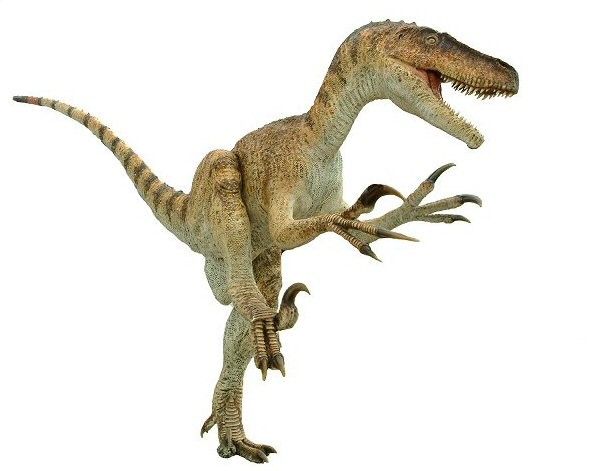
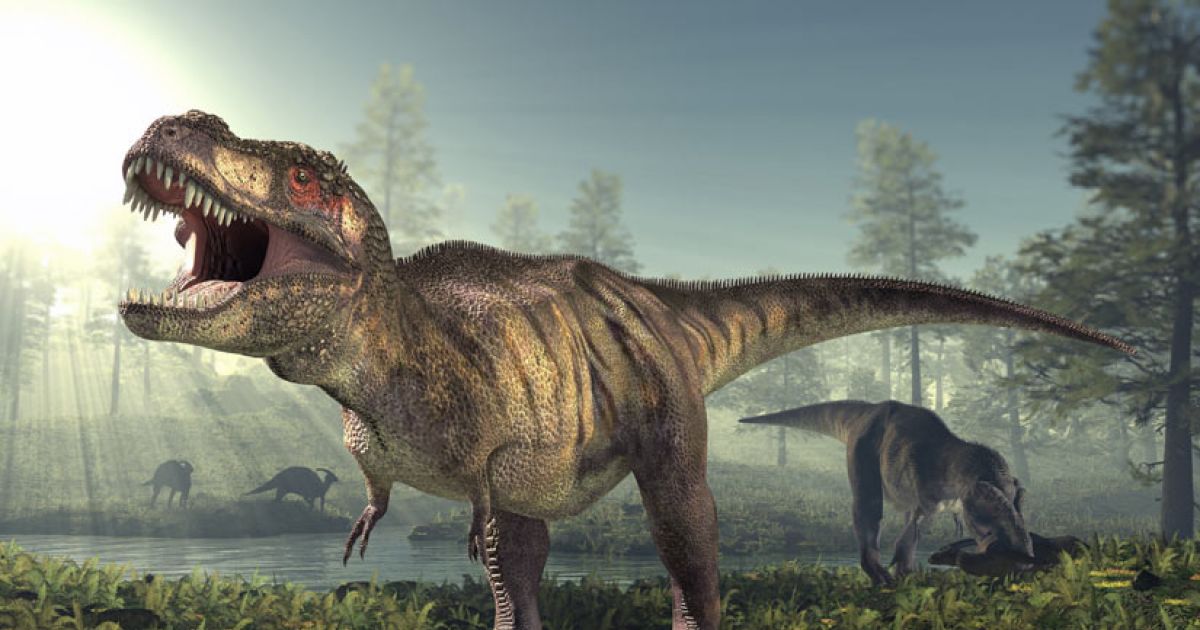
Acrocanthosaurus is a genus of theropod dinosaur that existed in what is now North America during the Aptian and early Albian stages of the Early Cretaceous. Like most dinosaur genera, Acrocanthosaurus contains only a single species, A. atokensis. Its fossil remains are found mainly in the U.S. states of Oklahoma, Texas, and Wyoming, although teeth attributed to Acrocanthosaurus have been found as far east as Maryland.
Tarbosaurus
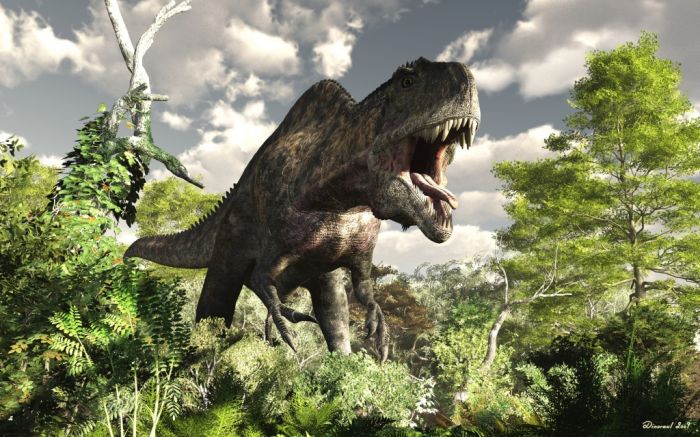
Tarbosaurus is a genus of tyrannosaurid theropod dinosaur that flourished in Asia about 70 million years ago, at the end of the Late Cretaceous Period. Fossils have been recovered in Mongolia, with more fragmentary remains found further afield in parts of China.
Carcharodontosaurus
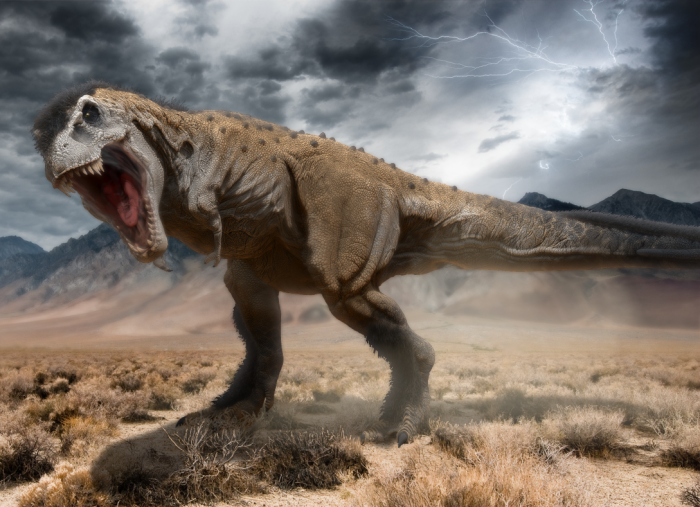
Carcharodontosaurus is a genus of carnivorous carcharodontosaurid dinosaurs that existed between 100 and 93 million years ago, during the late Albian to early Cenomanian stages of the mid-Cretaceous Period. It is currently known to include two species, C.saharicus and C.iguidensis, which were among the larger theropods, as large as or slightly bigger than Tyrannosaurus and possibly slightly larger than Giganotosaurus, but not quite as large as Spinosaurus.
Giganotosaurus
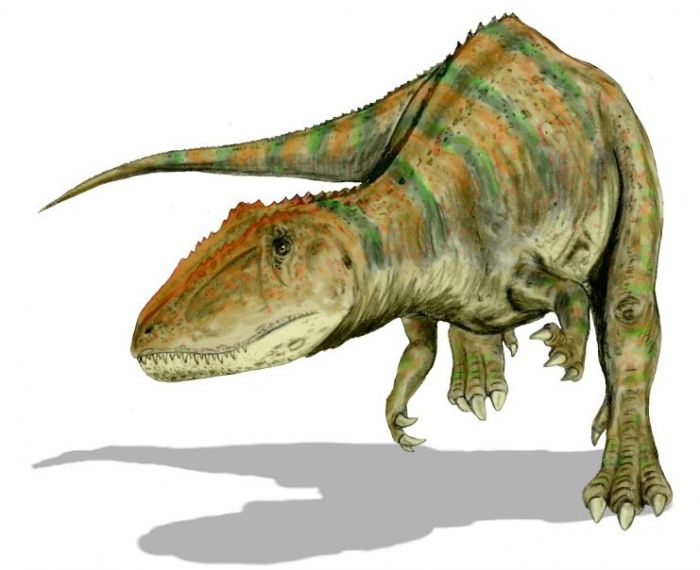
Giganotosaurus is a genus of carcharodontosaurid dinosaurs that lived in what is now Argentina during the early Cenomanian age of the Late Cretaceous Period, approximately some 99.6 to 97 million years ago. It included some of the largest known terrestrial carnivores, with known individuals equaling or slightly bigger than the size of the largest of the genera Tyrannosaurus and Carcharodontosaurus, but not as large as those of Spinosaurus.
Mapusaurus
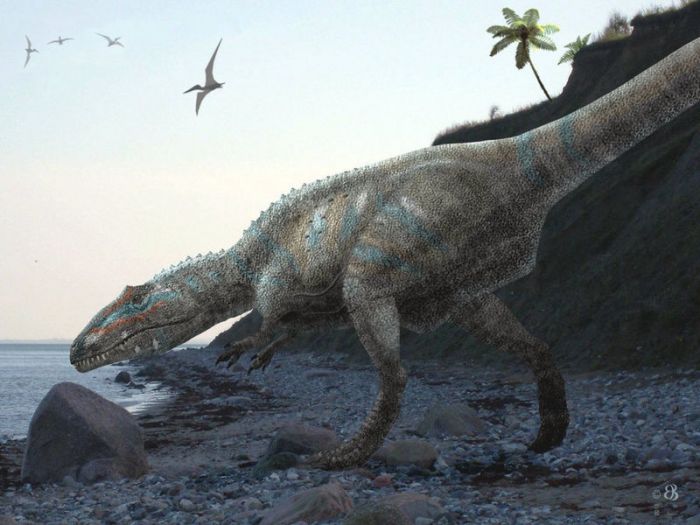
Mapusaurus was a giant carnosaurian dinosaur from the early Late Cretaceous of what is now Argentina. It was similar in size to its close relative Giganotosaurus, with the largest known individuals estimated as over 10.2 metres in length and weighing approximately 3 metric tons. The longest individual for which Coria and Currie provided an estimate is the animal to which femur MCF-PVPH-208.203 belonged; this individual is estimated as 10.2 metres long. Coria and Currie note the presence of isolated bones from at least one longer individual, but do not provide a figure, instead finding the larger bones comparable in size to those from a Giganotosaurus estimated at 12.2 metres in length. Maximum length is thus unknown but greater than 12.2 metres. The weight estimate is from another femur. It was furthermore concluded that the largest remain, a pubic shaft, was 110% the size of the Giganotosaurus holotype. Holtz estimated it at 12.6 metres. In an analysis on the cranial anatomy of carcharodontosaurids, Drew Eddy and Julia Clarke estimated the size of Mapusaurus at 12.6 metres. this estimate was repeated in a calibrated phylogenetic table in a 2014 analysis by Canale et al.
Saurophaganax
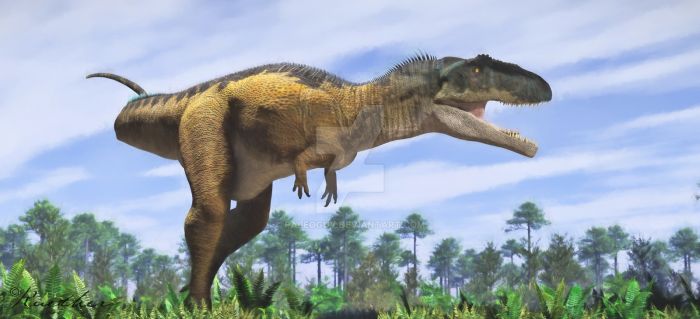
Saurophaganax is a genus of allosaurid dinosaur from the Morrison Formation of Late Jurassic Oklahoma, USA. Some paleontologists consider it to be a species of Allosaurus. Saurophaganax represents a very large Morrison allosaurid characterized by horizontal laminae at the bases of the dorsal neural spines above the transverse processes, and "meat-chopper" chevrons. The maximum size of S. maximus has been estimated at anywhere from 10.5 metres to 13 m in length, and around 3 tonnes in weight.
Spinosaurus
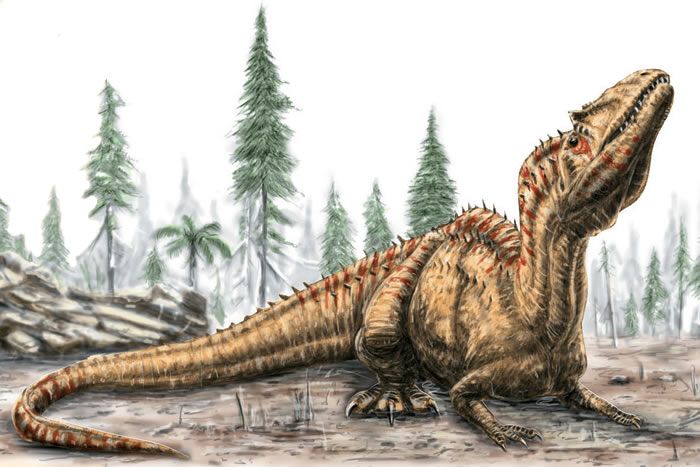
Spinosaurus is a genus of theropod dinosaur that lived in what now is North Africa, during the lower Albian to lower Cenomanian stages of the Cretaceous period, about 112 to 97 million years ago. This genus was known first from Egyptian remains discovered in 1912 and described by German paleontologist Ernst Stromer in 1915. The original remains were destroyed in World War II, but additional material has come to light in recent years. It is unclear whether one or two species are represented in the fossils reported in the scientific literature. The best known species is S. aegyptiacus from Egypt, although a potential second species, S. maroccanus, has been recovered from Morocco.
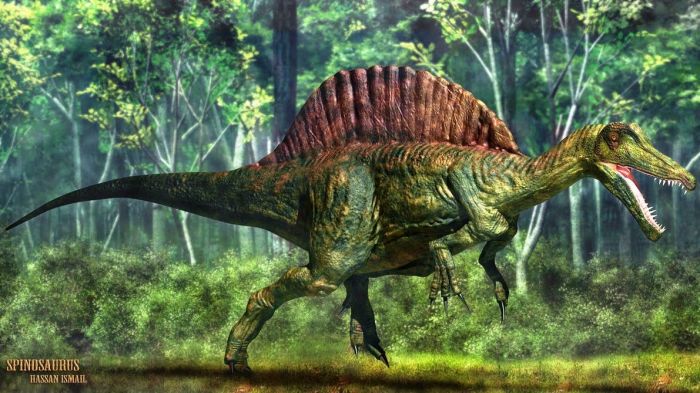
Tyrannosaurus Rex
Tyrannosaurus is a genus of coelurosaurian theropod dinosaur. The species Tyrannosaurus rex, commonly abbreviated to T. rex, is one of the most well-represented of the large theropods. Tyrannosaurus lived throughout what is now western North America, on what was then an island continent known as Laramidia. Tyrannosaurus had a much wider range than other tyrannosaurids. Fossils are found in a variety of rock formations dating to the Maastrichtian age of the upper Cretaceous Period, 68 to 66 million years ago. It was the last known member of the tyrannosaurids, and among the last non-avian dinosaurs to exist before the CretaceousPaleogene extinction event.
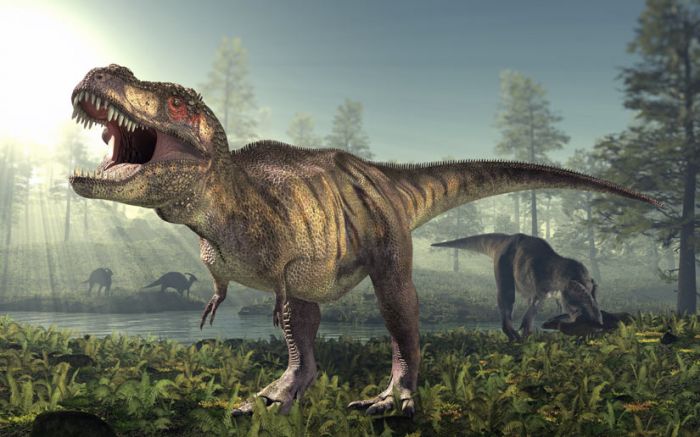
Tyrannotitan
Tyrannotitan is a genus of huge bipedal carnivorous dinosaur of the carcharodontosaurid family from the Aptian stage of the early Cretaceous period, discovered in Argentina. It is closely related to other giant predators like Carcharodontosaurus and especially Giganotosaurus as well as Mapusaurus. The name means "Tyrant titan".
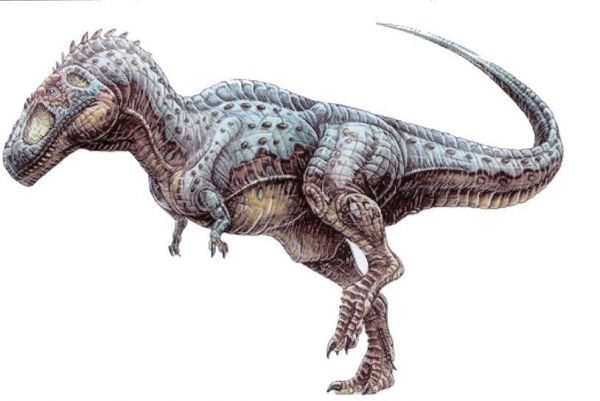
Utahraptor
Utahraptor is a genus of theropod dinosaurs. It contains a single species, Utahraptor ostrommaysorum, which is the largest known member of the family Dromaeosauridae. Fossil specimens date to the upper Barremian stage of the early Cretaceous period.