

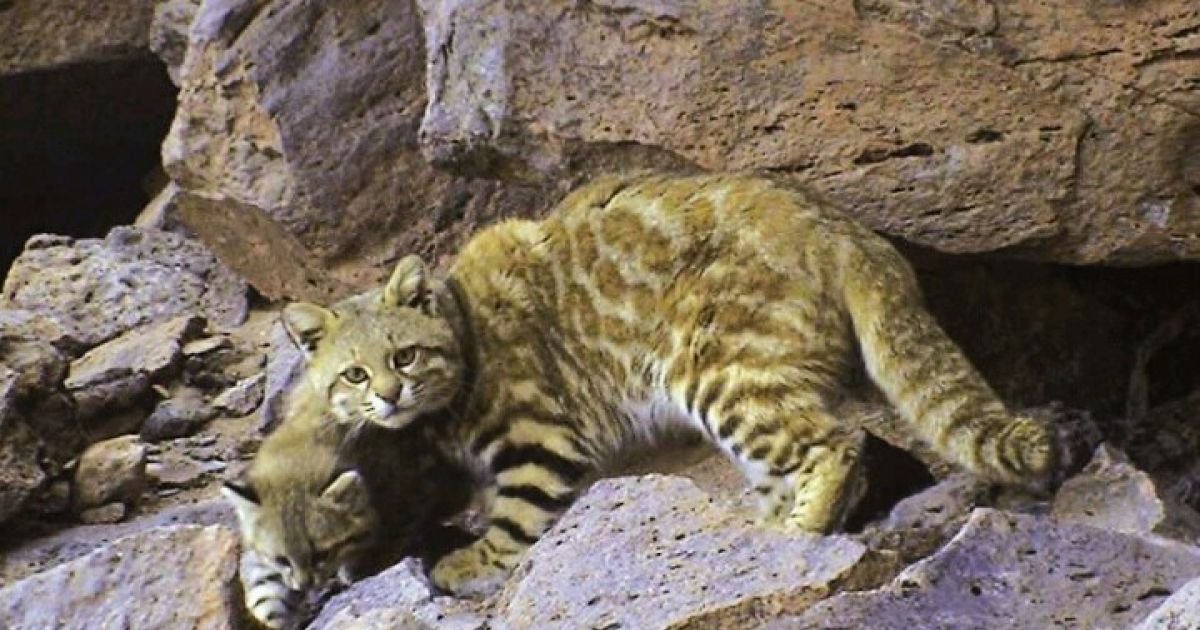
The Pampas cat is a small cat native to Argentina, Chile, Bolivia, Peru, Ecuador, & possibly far southwestern Colombia
advertisement
Pampas cats are small cats — about the size of a large domestic cat — native to the Pampas region in South America.
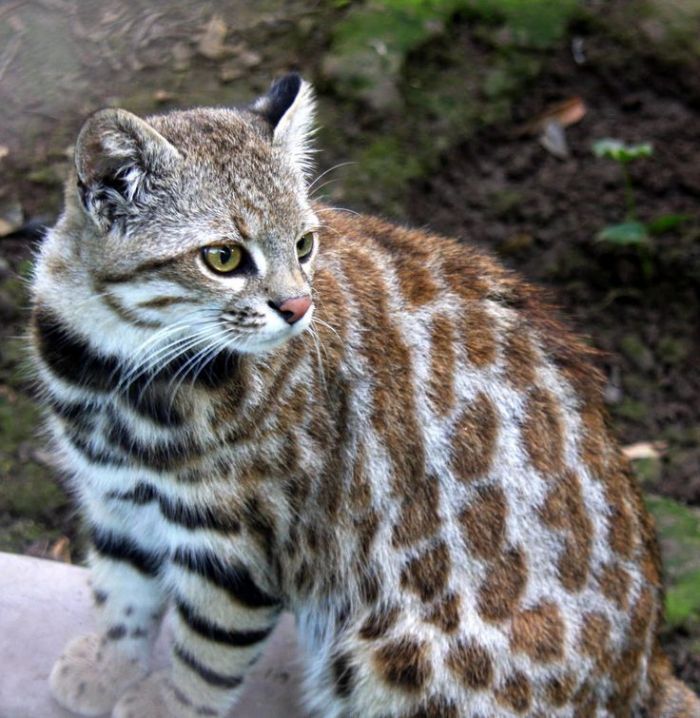
They also inhabit much of Central and southern South America, living in grasslands and forests. Their fur ranges in color from white to gray or brown, often with brown or black stripes and spots.
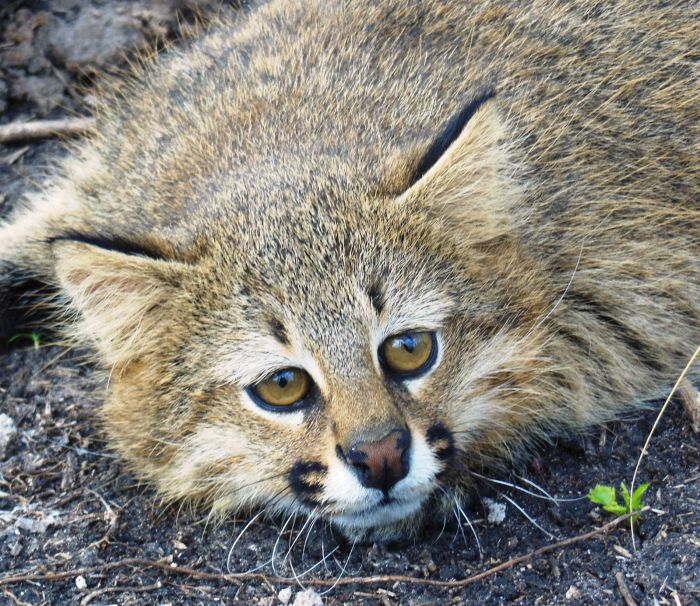
Little is known about Pampas cats
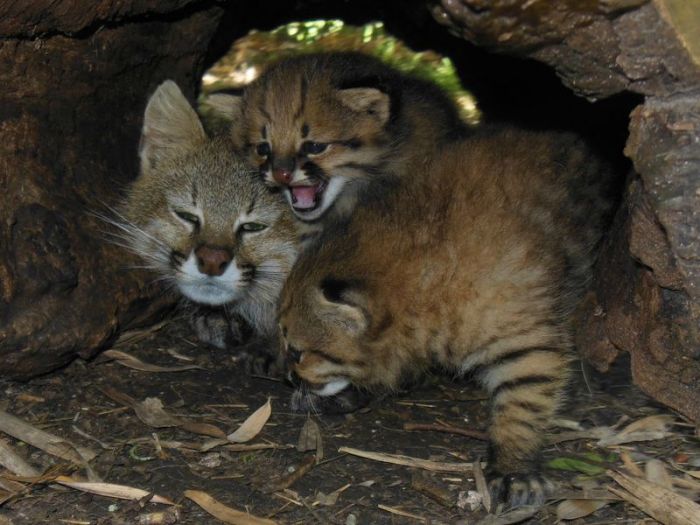
but it is believed that they are nocturnal hunters that prey on small mammals and birds. Pampas cat litters usually contain two to three kittens and their breeding season is believed to be from April to July. They can live up to 16 years in captivity.
advertisement
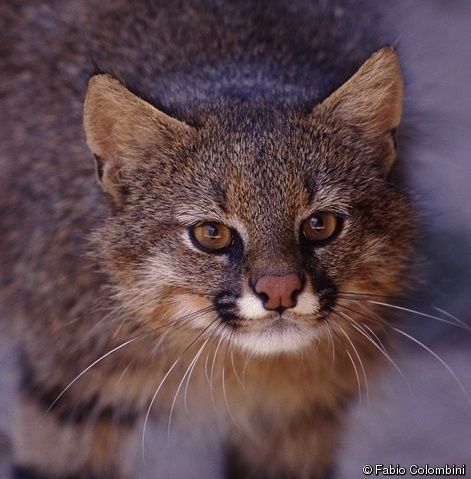
Pampas Cats (Leopardus colocolo) look like heavy set domestic cats
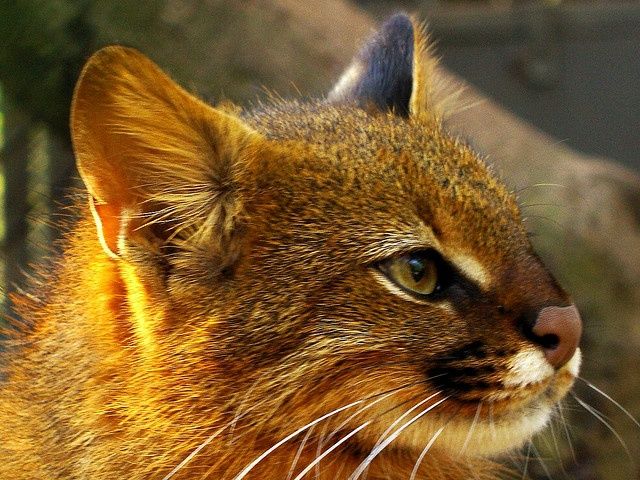
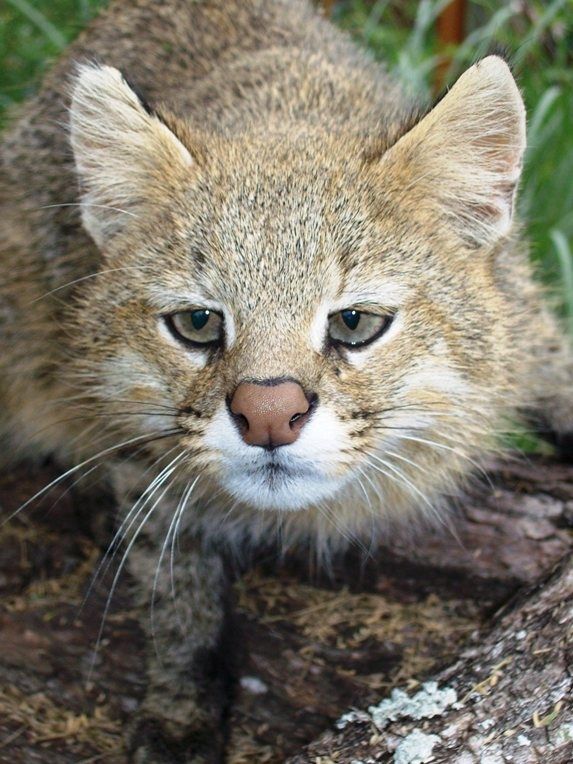
Though relatively small, these are sturdy animals with muscular bodies that make their heads seem comptively small. They have thick bushy tails and tufted, pointed ears. The long coats vary in colour from yellowish-white to brown and silvery-grey. There is a large degree of variation between pampas cats depending on where they live.
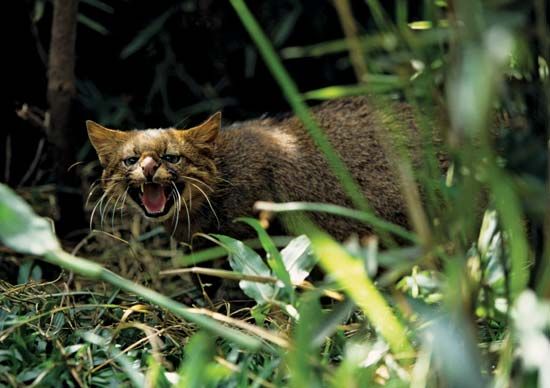
The Pampas cat is also known as the 'grass cat'
because that's where this denizen of the South American grasslands prefers to live. It is small for a wild cat, being the size of a large domestic cat - i.e. a little over two feet long, with a weight of between 3 kg and 6 kg (6 to 13 pounds).
advertisement
There are long, mane-like guard hairs on the back which they erect when frightened or nervous
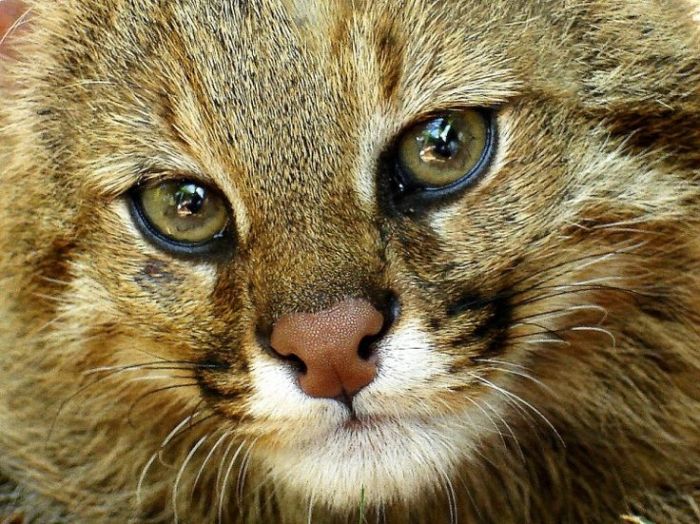
Their head is broad with a short muzzle, and they have relatively large, amber eyes. The ears are somewhat pointed, and are grey black on the backs with a silvery white central spot. The legs are short and stout, marked with brown or black bars and spots. Their tail is fairly short and bushy, sometimes marked with indistinct rings.
advertisement
Pampas Cats are among the most common & most widely distributed of the wild cats of South America
They are found across western central South America, in an area from Ecuador and Chile across the Andes Mountains into Argentina and neighbouring countries. Despite this wide distribution, little is known about the Pampas cat.
advertisement
The Pampas cat is a truly wild animal, and can't be domesticated
so outside its native habitat there is only a handful of them in different zoos across the world. As the name says, their preferred environment is open grassland and humid forest, but they are equally comfortable in the mountainous Andes.
advertisement
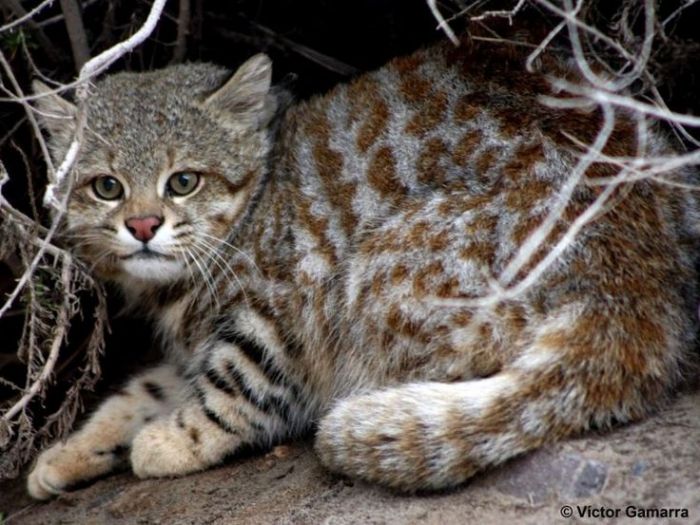
Differences in coloring has allowed them to evolve the best camouflage for each region
Possibly they have learned that out of sight, out of mind is the best recipe for a long and undisturbed life, which is what most Pampas cats seem to live. The average lifespan appears to be of between 9 and 16 years. The major threat to these cats is the loss of habitat due to human settlement and domestic grazing.
advertisement
Pampas cats eat small mammals
especially guinea-pigs, rodents and flightless birds. They are happy to add domestic poultry to the menu, especially in the coastal region of Chile where these cats make their homes relatively close to human farms.
advertisement
Pampas Cats
advertisement