This article lists down diary entries from people who have gone through significant historical events or done something utterly horrific. Basically, things that normal people could never imagine doing or going through. Diary entries from war paint a picture that hopefully, future generations will only have to read about it. People who have committed murder and written about it give the rest of us a look into a mind so different from ours, willing to commit to the ultimate crime of stealing another’s life. When we read diaries like this, it puts a human face on experiences very removed from our own, and may even in a way help us to understand them better. These 15 diary entries will have chills running down your spine.

The Most Haunting Diary Entries Ever That’ll Make You Shudder
By
Sughra Hafeez in
Heartbreaking
On 19th August 2017
advertisement
#1 Alyssa Bustamante: Teen Killer
Classification: Homicide
Characteristics: Juvenile (15) - Thrill killing
Number of victims: 1
Date of murder: October 21, 2009
Date of birth: January 28, 1994
Victim profile: Elizabeth Olten, 9 (her neighbor)
Method of murder: The autopsy revealed that Olten had been strangled, her throat and wrists had been slashed and she'd been stabbed
Location: Cole County, Missouri, USA
Status: Pleaded guilty to second-degree murder and armed criminal action on January 10, 2012. Sentenced to life with the possibility of parole on February 8, 2012
A teenager who slit her young neighbor's throat and called it "enjoyable" may have the opportunity to walk free one day.
The teen expressed remorse for brutally killing her neighbor, Elizabeth Olten, in October 2009, in what prosecutors described as a thrill killing.
"I know words can never be enough and they can never adequately describe how horribly I feel for all of this," Bustamante said to Olten's mother and siblings, who sat silently. "If I could give my life to get her back I would. I'm sorry."
Bustamante stabbed the 9-year-old girl in the chest, strangled her, sliced her throat and left her in a shallow grave covered with leaves so she could find out what it felt like to kill.
"I just f***ing killed someone. I strangled them and slit their throat and stabbed them now they're dead. I don't know how to feel atm [at the moment]," Bustamante wrote in her diary
She later added: "It was amazing. As soon as you get over the 'oh my Gawd I can't do this' feeling, it's pretty enjoyable. I'm kinda nervous and shaky though right now. Kay, I gotta go to church now...lol."
During the trial, Alyssa’s diary entry right after she killed the 9-year-old was presented as evidence against her.
On the teen's YouTube page, a video appears to show the suspect with her brothers purposefully shocking themselves on an electrified fence. She listed "killing people" as one of her hobbies under her profile.She has been sentenced to life in prison without the possibility of parole.

#2 Robert Falcon Scott
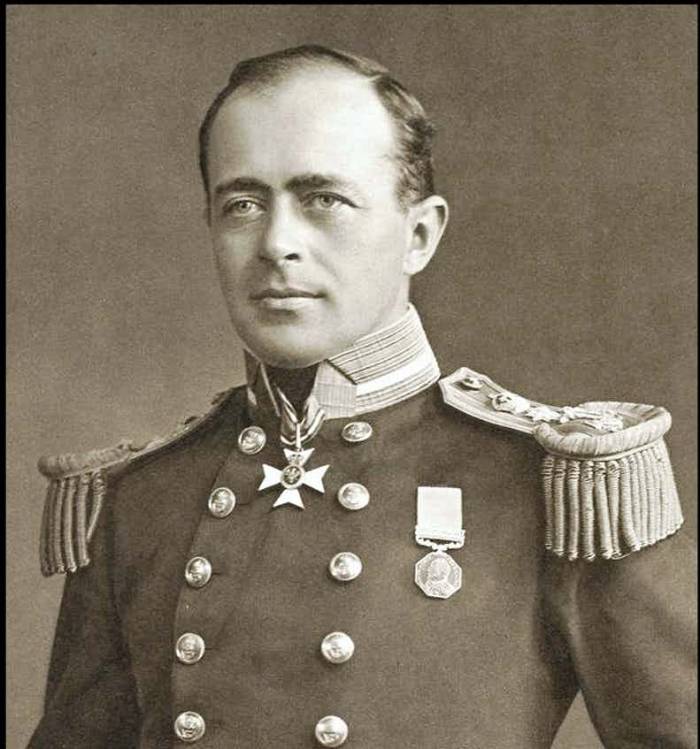
Robert Falcon Scott (1868 - 1912) and his four companions reached the South Pole on 7 January 1912, just one month after their rival Norwegian party, led by Roald Amundsen.
Realising that they had been beaten they attempted to make it back to their supply base but the journey was dogged by misfortune and all the men died.
Edgar Evans suffered a fatal concussion in February, and in March Scott’s diary records the heroic end of Captain Lawrence 'Titus' Oates who, stricken with frostbite, walked out from the camp to his death, with the words, 'I may be some time'.
Scott and his two remaining companions were caught in a blizzard and perished only 11 miles from the next supply depot. In his last diary entry he recognises that there is no hope of survival. He writes letters to his family and friends but, perhaps most famously, his final sentence, ‘for God’s sake look after our people’ was reiterated in his last message to the nation.
Along with Scott's diaries, the British Library also holds sledging orders from the Terra Nova expedition. These, along with the diaries, document all aspects of the expedition including the voyage, the establishment of the winter base, the scientific work they undertook, and the sledging expeditions.
‘Since the 21st, we have had a continuous gale from W.S.W. and S.W. We had fuel to make two cups of tea apiece and bare food for two days on the 20th. Every day we have been ready to start for our depot 11 miles away, but outside the door of the tent it remains a scene of whirling drift. I do not think we can hope for any better things now. We shall stick it out to the end, but we are getting weaker, of course, and the end cannot be far.’
That was one of his final diary entries, and he was correct in assuming that the end was near. It is estimated that Scott died on March 29th, 1912, just a few days after making that entry. More than a century has gone by after his death and geologists estimate that Scott and his parties remains are now buried underneath about 75 of ice.
advertisement
#3 Dylan Klebold
The diaries of the two teenagers responsible for the Columbine massacre have been released, giving a chilling, step-by-step insight into their plans for the deadliest school shooting in American history.
In violent drawings and messages, Eric Harris, 18, and Dylan Klebold, 17, revealed their hatred for schoolmates and feelings of frustrated love in the build-up to the shooting that left 12 fellow students and a teacher dead in 1999. The killers turned their guns on themselves.
In a diary entry for the day of the shooting, April 20, 1999, Klebold marked precise details of the massacre, beginning with a 6 am meeting between the two killers, followed by a 10.30am "set-up" and an 11.12am "gear-up". At 11.16am, the time of the shooting, Klebold simply wrote: "HAHAHA."
"Have fun!" Klebold wrote of the massacre in another notebook. It was among 936 pages of material released by the Sheriff of Jefferson County, Colorado after the Denver Post sued for the publication of the information.
The sheriff refused to release videotapes made by the gunmen, concerned that they would encourage people to copy the teenagers and blanked out some names in the journals.
Other documents and videos relating to the massacre had been released previously, but the new material offered details about the killers' activities in the months before the violence.
In October 1998, six months before the attack, Harris wrote in a diary: "Once I finally start my killing, keep this in mind: there are probably about 100 people max in the school alone who I don't want to die, the rest MUST F****** DIE!"
On separate "to do" lists, the killers had ticked off all the requirements for the massacre. Memos said "get nails", "get propane, fill my [ammunition] clips" and "finish fuses".
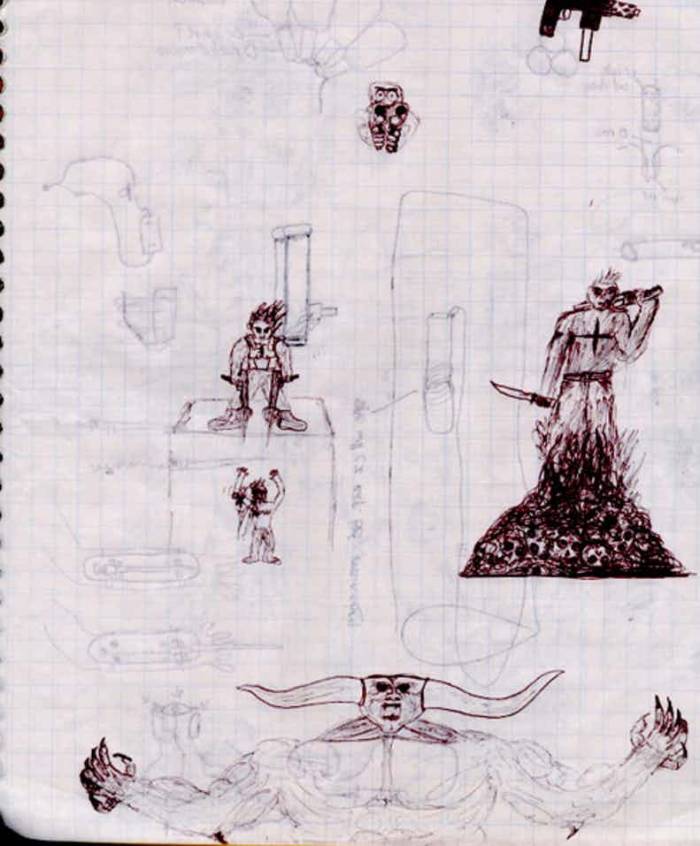
Klebold's writings included detailed drawings of guns, sketches of the Columbine cafeteria and his hopes for "500+" dead. His entries are scattered with racist remarks.
"Hell on Earth - ah, my favorite," Klebold wrote in Harris's 1998 yearbook, above a drawing of a headless soldier. He had added: "So many people need to die."
In an essay written two months before the killings, Klebold composed a story about a mass killing. His teacher had told him: "I'd like to talk to you about your story before I give you a grade. You are an excellent writer/storyteller, but I have some problems with this one."
In his journal, Klebold also wrote of his unrequited love for a student. "I hear the sound of her laugh, I picture her face," he wrote. "I just hope she likes me."
Harris made elaborate plans for their escape after the killing, recalling a night when he and Klebold got arrested for breaking into a van. He wrote: "That experience showed me that no matter what crime you think of committing, you will get caught - that you absolutely must think things through before you act, and that just because you can do something doesn't mean you should."
Harris went on to write that, if the pair survived, they would escape to a country where they could not be extradited. If not, they would crash a plane into New York city.
"I have a goal to destroy as much as possible, and I must not be sidetracked by my feelings of sympathy, mercy or any of that. It's cool to hate."
Harris's writings showed a fixation with the killer Charles Manson and Nazism. His father, Wayne, was so concerned about his son that he too kept a journal to record the boy's threats against a classmate, Brooks Brown, a year before the attack.
Wayne Harris failed to heed the warning signs. He wrote: "We feel victimised. We don't want to be accused every time something happens. Eric is not of fault. Brooks Brown is out to get Eric."
#4 Eric Harris
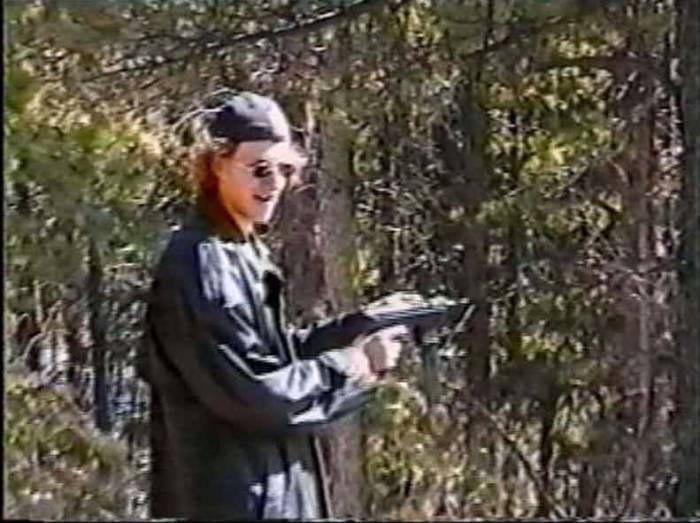
Eric Harris was the other half of the murderous Columbine shooters. There are online rants from Eric Harris from as far back as 1996. The angry young man would go off online about everything he felt was unfair in this world, and punctuated it with dark song lyrics. When reading the journal entries of Harris and Klebold, it is clear both teens felt the same way – displaced in the world, unwanted, and unappreciated. Like Klebold’s, his journal had drawings of the school and plans for their massacre. The final entry in his diary is particularly terrifying.
I hate you people for leaving me out of so many fun things. And no, don’t f****** say that ‘well that’s your fault’ because it isn’t, you people had my phone# and I asked and all, but no. No no no, don’t let the weird looking Eric kid come along, ohhh f*** no.
In his journals, Harris also says that there is no blame to be put on his family, the media, music, video games. It is him and solely him that is responsible for the decision to attack his school. If there is anything to be taken from the haunting entries of both Columbine killers, it’s the effects that loneliness, social rejection, and untreated mental illness can lead to.
advertisement
#5 Pearl Moen
Disturbed Pearl Moen, who was 17 at the time, attacked the woman as she shouted “what the f***! Help”
In the brutal attack last March, Moen plunged a knife into the 23-year-old woman, a nurse from Austin, Texas, 21 times.
The teen left the unnamed woman for dead in a critical condition near the home she shared with her boyfriend.
But miraculously, the victim survived the savage attack – despite Moen believing she had killed her.
In the diary, she wrote: “So, okay, I’ll start with the exciting bit.
"I stabbed an innocent woman to death earlier today. (Technically yesterday since it’s 1 am).
"It was absolutely fantastic.
"Murder gives me a high unlike any other.
"It feels like this crisp unreality, flashing and sparkling, adrenaline and shock. Fight or flight mode.
She continues: "How do I even go about describing it. The whole thing was unreal."
"I’m so proud of myself. I stabbed her like 20 times.
"Maybe more. I wasn’t counting.
"She screamed & grabbed at me saying 'What the f***?! Help. Leave'."
According to the Washington Post, Moen remained at large for three months until cops were called to a disturbance at her family home.
During interrogation, her mother told investigators Moen collected knives and had joked about the stabbing.
When police searched the teen’s room, they found the diary containing the chilling confession.
In the entry, she also wrote about losing a gold ring during the stabbing which matched the one found at the scene.
She wrote: “I'm a homicidal psychopath. I have a deep hatred towards people right now.”
The teen admitted to attempted murder and was sentenced to 15 years in jail last week.
Her victim asked not to be named but was filmed for an interview with local media outlet Kxan.
In the interview, she showed the scars on her arms and shoulders and spoke of the months of rehab she received.
The woman said: "I always thought she would walk around with guilt, but knowing she had this joy and this pride is very unsettling.”

advertisement
#6 Zygmunt Klukowski
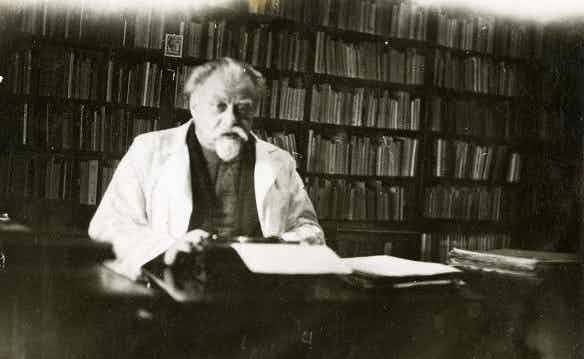
World War II, like any war, was marked by atrocities. It is one thing to read about them in a text book, though, and another to read a person’s personal account of what happened. A doctor named Zygmunt Klukowski kept a detailed journal when the Nazi’s arrived at his small town in Poland and began their reign of terror.
All Jews will be shot. Between 400 and 500 have been killed. Poles were forced to begin digging graves in the Jewish cemetery. From information, I received approximately 2,000 people are in hiding. The arrested Jews were loaded into a train at the railroad station to be moved to an unknown location. It was a terrifying day, I cannot describe everything that took place. You cannot imagine the barbarism of the Germans. I am completely broken and cannot seem to find myself.
This look into WW II is stomach churning, and one can only begin to imagine what all the victims at the hands of Nazi’s actually went through. To be forced to dig a grave for what are ultimately your innocent neighbors is the stuff of nightmares. It is important to study history, especially the dark parts, in order to prevent anything of the sort from happening again. One of the most powerful tools in learning about history is through reading diaries from people who’ve gone through these atrocities.
advertisement
#7 Lena Mukhina
"People are not born brave, strong and smart. These qualities must be acquired through perseverance and with determination, like the ability to read and write."
When Lena Mukhina wrote this stern reminder to herself, she was a Leningrad schoolgirl of 16 with two great worries - her end-of-year exams and her secret crush on a boy in her class. Her diary of the summer of 1941 is sprinkled with Soviet pieties, teenage problems and a blithe disregard for anything concerning politics.
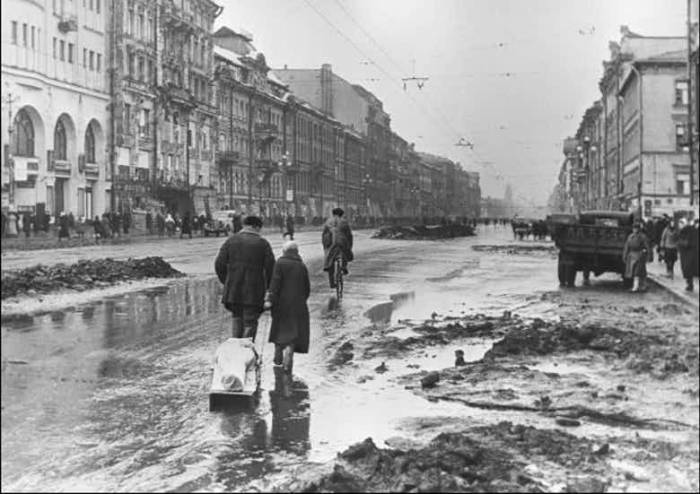
All this changed on June 22, when the radio announced that the Germans had invaded. By mid-September, Leningrad was encircled, and it's two and a half million inhabitants were under bombardment. The blockade was to last an incredible 874 days, but that first winter was the most harrowing of all. Until late November the city was completely cut off; then a single, fragile line of supply known as "the Road of Death" opened up over the ice of Lake Ladoga. People starved in their hundreds every day.
Throughout it all, Lena continued to keep her diary. She wrote of the terror of the air-raids, the lack of sleep, her exhausting labor building the city's defenses and her observations on the transformed city - all interspersed with the anxieties and dreams of a young girl. No wonder that when her notebook was discovered recently in an archive in Moscow, she was hailed as "the Russian Anne Frank". Before discovering from relatives that Lena lived until 1991, the publisher had concluded from the dairy's abrupt end that its author had died, one of around 800,000 siege victims.
Lena's family consists of the beloved aunt she calls Mama, and an elderly housekeeper, Aka. Mama works in the theatre and receives the higher "worker's" rations, while Lena and Aka are "dependents". I broke off from my reading to weigh 125g of bread, Lena and Aka's daily portion by November 1941 - one thickish slice, which would have been heavily adulterated with wallpaper dust, wood cellulose, and bran. And yet how philosophically Lena managed on this diet. "I'm listening to piano music on the radio and nibbling tiny crumbs of bread, to prolong my pleasure." She sets down long, vivid daydreams of food and life after the war when she and Mama will look back on these hardships as memories. "Everything we have to endure is temporary."
The Wehrmacht, meanwhile, has dug into its positions. Unknown to Leningraders, the order has gone out that "any requests for surrender arising as a result of this action will be categorically rejected". Why? Because they had "no interest in saving any part of the civilian population of the city". This whole section of northern Russia was to be emptied for future resettlement by Aryans. "The delirious fantasies of a madman," remarks Lena. "Yet because of this we are suffering…"
By December they are forced to kill and eat their "dear puss". "I never thought cat meat would be so tender and tasty," Lena writes, beyond all pretence at sentiment. She is still attending school, occasionally going to the theatre, and she enjoys the New Year party for the city's children arranged by the authorities - yet she is so weak, she observes, "it's making me unsteady on my feet". Any food now seems tasty: the wallpaper-paste bread appears "golden and delicious, better than any before the war". "What joy, what joy!" she exclaims on December 25 - the bread ration is to be increased by 75g.
By the end of December Aka has taken to her bed. "It would be better if she died… she is just an extra mouth to feed," writes Lena in a rare lapse of humanity. "But if she dies I hope it happens after the 1st, so we can get her ration card..." Aka does die and a month later, despite all Lena's attempts at cheerfulness, despite queuing and begging and making "meat jelly" out of carpenter's glue, Mama slips away, too. "My dear, sweet, beloved Mama…" Alone, Lena must now fend for herself.
Her stern injunction to herself back in the pre-war summer has surely come good by now. Through perseverance and determination, she has become brave, strong and smart. As she comments, sadly: "Yes, fate has taught [me] a thing or two, though rather harshly." Evacuated in 1942, Lena made her way to an aunt in Gorky and trained as a mosaic artist, but never married, despite her crushes and daydreams as a girl. Had not her health been permanently weakened by early malnutrition, she might have lived beyond the age of 66; she might even have lived long enough to see her teenage dream of becoming a published writer triumphantly fulfilled.
advertisement
#8 Joseph Goebbels
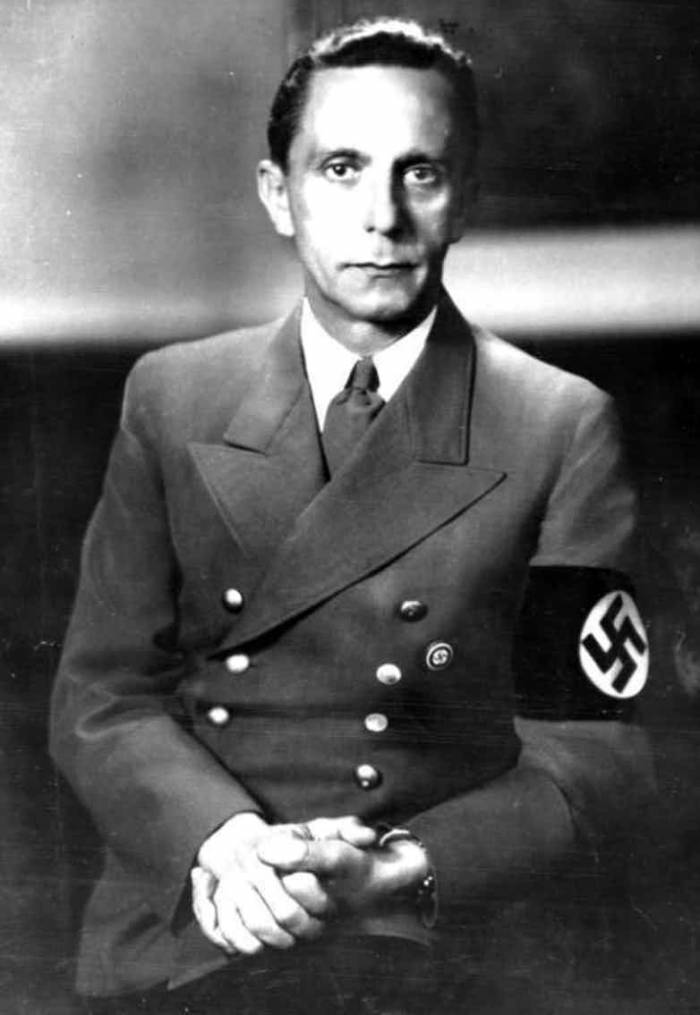
Joseph Goebbels served as minister of propaganda for the German Third Reich under Adolf Hitler—a position from which he spread the Nazi message.
By 1944, Germany had adopted Goebbels's war plan, and in July of that year, Goebbels was appointed general plenipotentiary for total war. However, by late April 1945, Germany had lost the war and Hitler was dictating his last will and testament to Goebbels, which appointed Goebbels chancellor of the Reich. The following day—May 1, 1945—instead of taking command, Goebbels had his six children poisoned, and he and his wife, Magda, committed suicide in Hitler's "bunker" in Berlin.
advertisement
#9 Poch Younly
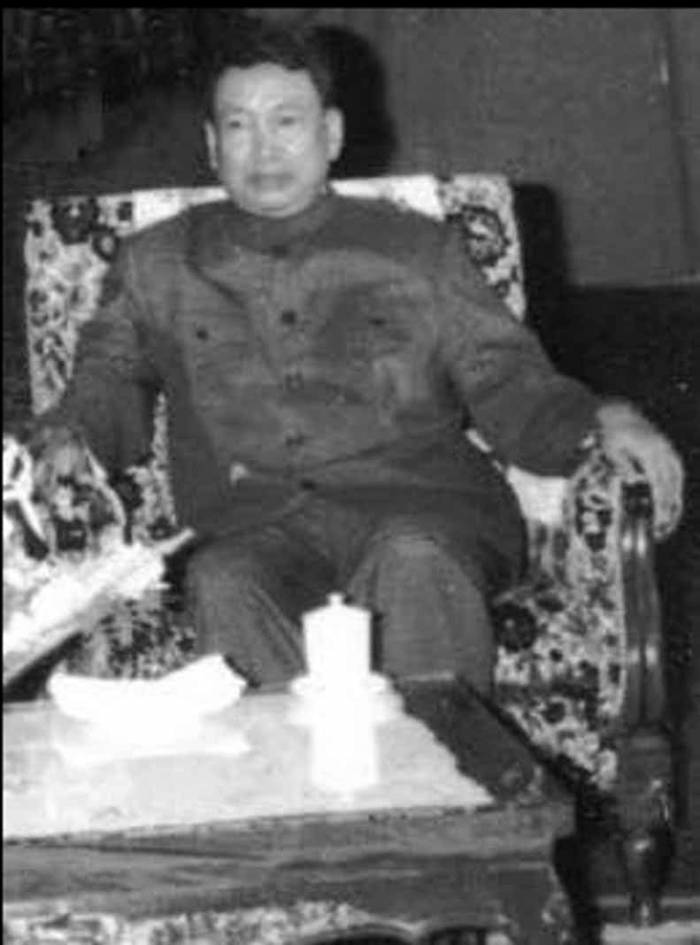
Nearly 40 years ago, hunched on the floor of the wood-and-leaf hut he was forced to live in away from his children, Cambodian school inspector Poch Younly kept a secret diary recounting the horrors of life under the Khmer Rouge, the radical communist regime whose extreme experiment in social engineering took the lives of 1.7 million Cambodians from overwork, medical neglect, starvation, and execution.
Acutely aware that he could be killed if discovered, Mr. Younly hid the diary inside a clay vase. In those dark days, when religion and schools were banned and anyone deemed educated was a threat, he had no right to own so much as a pen and paper.
“Why is it that I have to die here like a cat or a dog... without any reason, without any meaning?” he wrote in the notebook’s last pages. Four decades later, that question still haunts Cambodia.Mr. Younly did not survive that era. But his diary did.This short, but succinct diary entry relays the feeling of hopeless during the time.
advertisement
#10 George W. McKinstry
George W. McKinstry (c. 1810 -1882) arrived in California in 1846, after making the overland journey westward from Independence, Missouri. He became the first American sheriff of California. McKinstry assisted in the rescue of the Donner Party and chronicled the rescue expedition in the Breen Diary, which was submitted to Washington.
McKinstry arrived in San Diego in 1858 and lived there until his death in 1882. During this time, he most notably served as a dentist, physician, and sheriff of San Diego. In addition to these duties, McKinstry served as a politician (although what post is unknown) and as the Chairman of the Republican Committee of Southern California. He actively lobbied that California does not secede from the Union.
McKinstry was given the post of Collector of Customs at the Port of San Diego. Throughout his life in San Diego, McKinstry spent many months with the local Native American population and kept a daily diary which chronicled his life in San Diego.
A group of pioneer families in 1846 left their homes for California in wagon trains led by George Donner.The group encountered many obstacles due to the terrain they were crossing and the weather they had to deal with. In the winter of 1846-1847, they were snowed in in the Sierra Nevada. According to reports, the group resorted to cannibalism in order to survive.
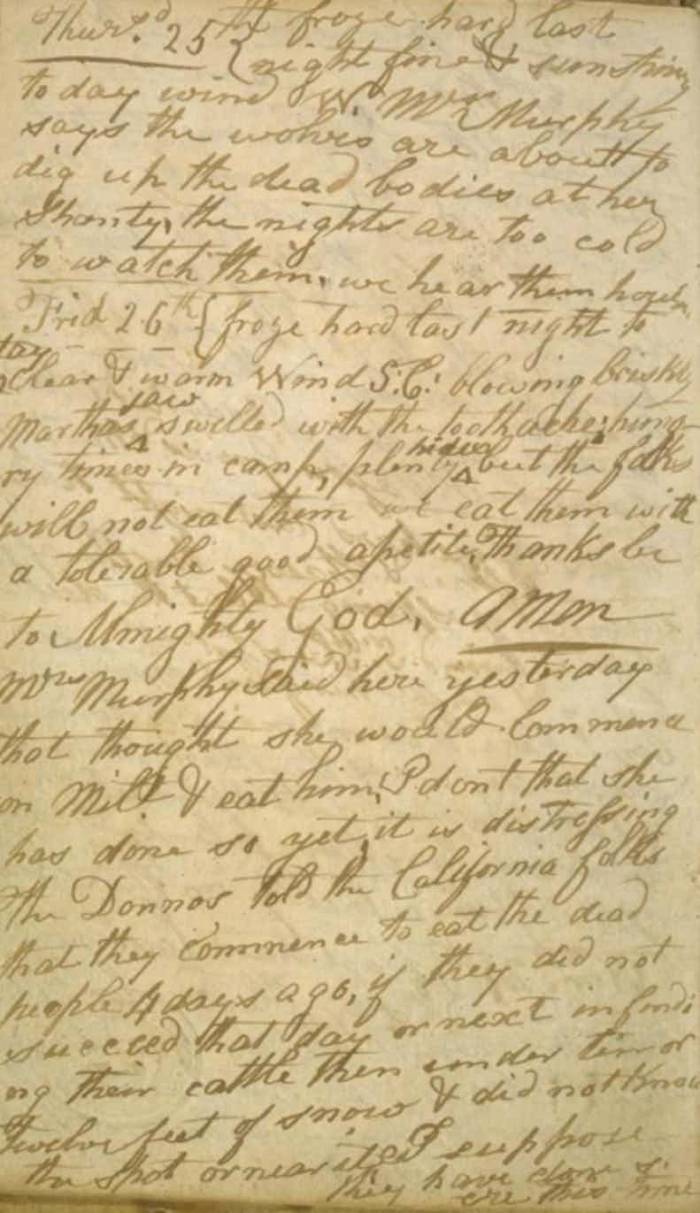
Mrs. Murphy said here, yesterday, that she thought she would commence on Milton and eat him; I do not think she has done so yet; it is distressing. The Donners told the California folks, four days ago, that they would commence on the dead people, if they did not succeed that day or the next in finding their cattle, then ten or twelve feet under the snow, and did not know the spot, or near it; they have done it ere this.
This is an excerpt from the diary of one Geory McKinstry Jr. documented the group getting stuck in the snow, and eventually the road that led to cannibalism in a desperate bid for survival. There were 87 people that began the journey, and after being stuck in the mountains only 48 survived. This included George where he finally settled in Santa Ana.