

For thousands to millions of years, these massive creatures stalked Earth at its dawn, until climate change or early man hastened their demise.
The Most Incredible Prehistoric Creatures That Once Inhabited Earth
By
Khadija Pervez in
Animals
On 27th December 2023
advertisement
Long ago, Earth was home to a variety of prehistoric animals that once roamed and reigned over the planet. Some, like the giant sloth or the woolly rhino, were generally docile creatures. Others, such as the saber-toothed tiger and the dire wolves, asserted dominance in their environments through their formidable size and fearsome fangs.
For millions of years, these ancient beings traversed grasslands, climbed trees in jungles, and pursued prey into tar pits. Despite their vast differences, their eventual extinction was marked by similar factors, including changes in climate, poaching, and the spread of disease.
advertisement
Today, remnants of these creatures linger as mere whispers of their former might — a bone here, a tooth there. However, during their prime, these prehistoric animals would have instilled both fear and awe in early humans.
Glyptodon: The Prehistoric Armadillo The Size Of A Car
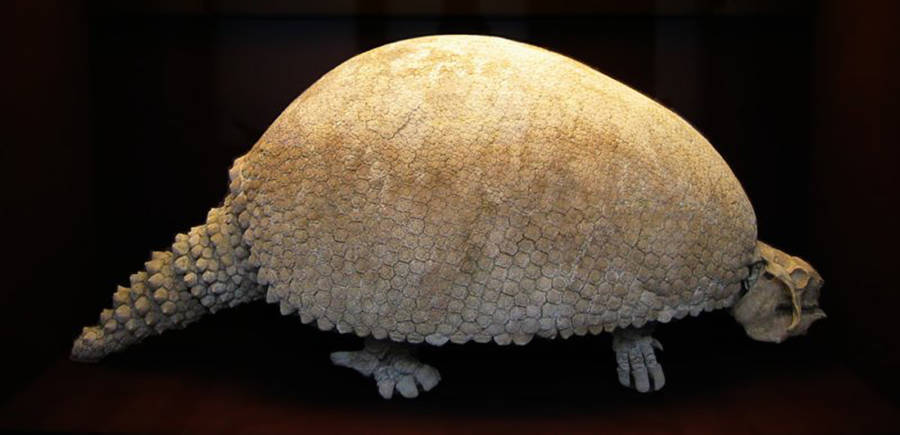
Between 5.3 million to 11,700 years ago, a peculiar creature called the Glyptodon meaning “grooved tooth” walked the Earth.
Wikimedia Commons
Ten feet long and weighing as much as 4,000 pounds, this “giant armadillo” existed in present-day North and South America.
advertisement
Though the glyptodon had a powerful tail and an armored back made of 1,000 bony plates, it likely lived a fairly peaceful existence. An herbivore, it mostly ate grass and didn’t have to worry about any bloody tussles over game.
advertisement
That said, the glyptodon could defend itself even against other glyptodons if need be. Its powerful tail could crush a human skull, and its shell-like back offered a strong defense.
Based on the damage found on glyptodon shell fossils, scientists believe that the beasts often fought each other. To settle disputes over territory or mates, they’d pummel their opponent’s shell with their strong tail.
advertisement
Wikimedia Commons
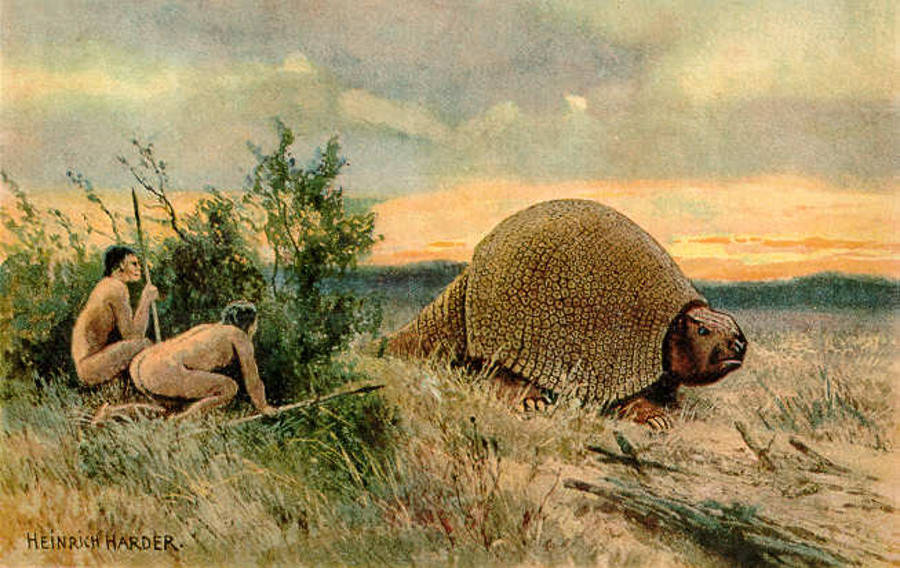
But this ancient animal often had to contend with humans, too. Early hunters likely stalked the glyptodon for its meat and shell. To kill it, however, they had to turn it on its back — no small task — and spear its soft underbelly.
advertisement
Researchers first discovered the glyptodon in 1823, when Uruguayan naturalist Dámaso Antonio Larrañaga came across a giant femur. The bone weighed about seven pounds and stretched six to eight inches long.
advertisement
Most believed, however, that he’d found the bones of a giant sloth called Megatherium. Further discoveries convinced scientists that they were dealing with a different prehistoric animal, however, and biologist Richard Owen dubbed it a glyptodon because of its curved teeth.
advertisement
The reign of the glyptodon came to an end shortly after the last Ice Age. Climate change, and aggressive human hunting, drove the giant armadillo into extinction.
Today, only their massive bones speak to their existence. As recently as 2020, an Argentinian farmer found several glyptodon shells in his yard.
advertisement
Titanoboa: The Monster Snake Of The Paleocene Epoch
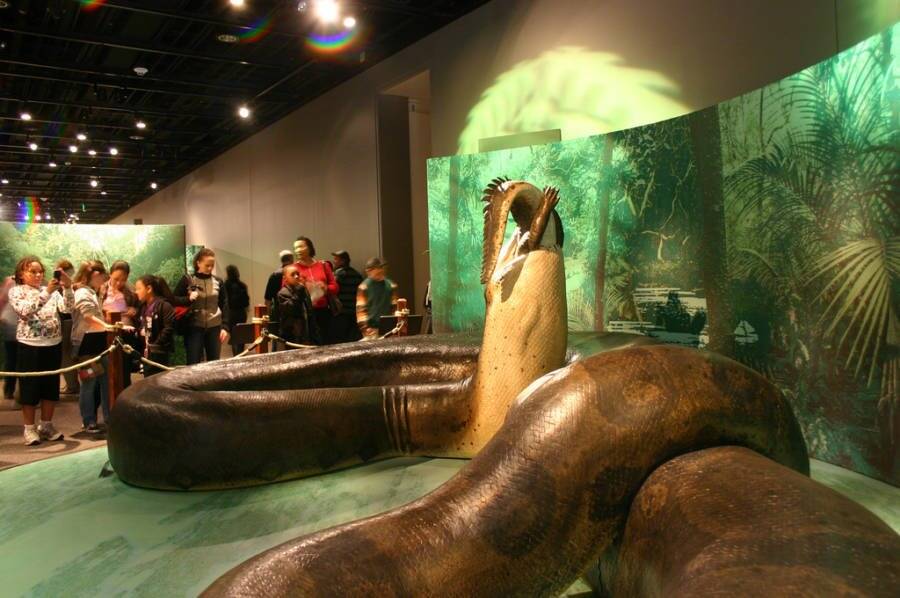
Imagine a snake. Now, imagine that it’s 45 feet long and weighs 1.25 tons. That’s what the terrifying Titanoboa cerrejonensis, or Titanoboa looked like.
Ryan Sommma/Flickr
“The snake’s body was so wide that if it were moving down the hall and decided to come into my office to eat me, it would literally have to squeeze through the door,” explained Jason Head, a paleontologist who studied Titanoboa.
advertisement
The monstrous snake lived some 60 million years ago. After the extinction of the dinosaurs, it zipped up the food chain and quickly came to dominate the tropical jungles of present-day South America.
When its killer gaze latched onto five-foot giant turtles or 20-foot long crocodiles, the Titanoboa likely waited in shallow water for its prey to approach. Once the unfortunate animal got close enough, the snake would strike — and crush its meal to death.
advertisement
Though this ancient animal terrorized the world for millions of years, it took a long time for modern-day humans to realize that it had even existed.
Florida Museum/Jeff Gage
In 2002, a fossilized leaf discovered in a Colombian coal mine convinced scientists that a rainforest had once flourished at the same site. Indeed, they soon found fossils of giant turtles and crocodiles, as well as early bananas, avocados, and bean plants.
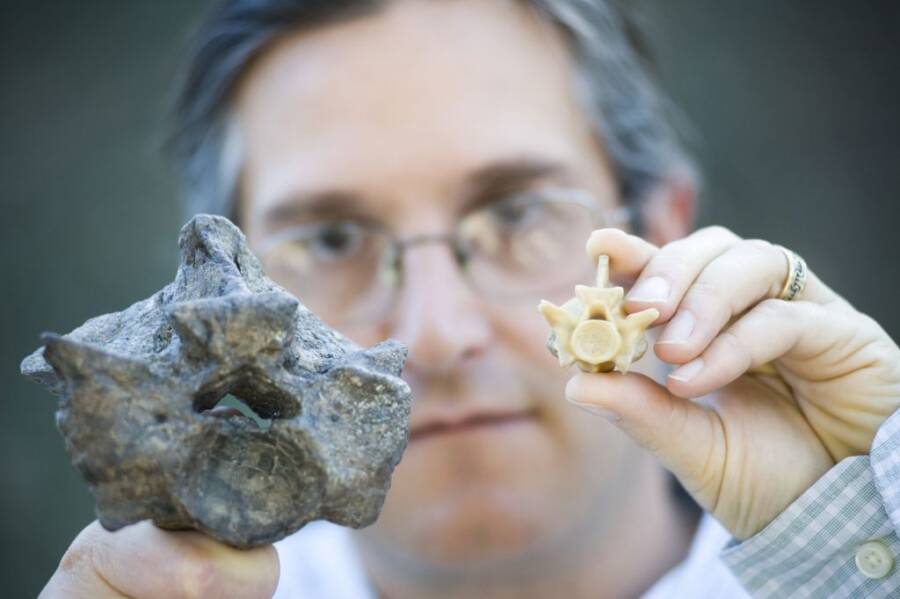
But of all the finds, one stood out: a massive vertebra. Convinced that it had once belonged to a snake, possibly one caught in a muddy landslide, researchers scoured the ground for more bones.
advertisement
In the end, they found the remains of not one but 28 enormous snakes. Thrillingly, they also found three snake skulls which can be elusive. Snakes use the muscles in their mouths to kill, not their bones, and skulls often disintegrate over time.
As for those crocodile and turtle fossils? Likely the giant snakes’ unfortunate victims. Titanoboa, surmised the scientists, had once dominated the animal kingdom.
Megatherium: The Giant (And Probably Extinct) Ground Sloth
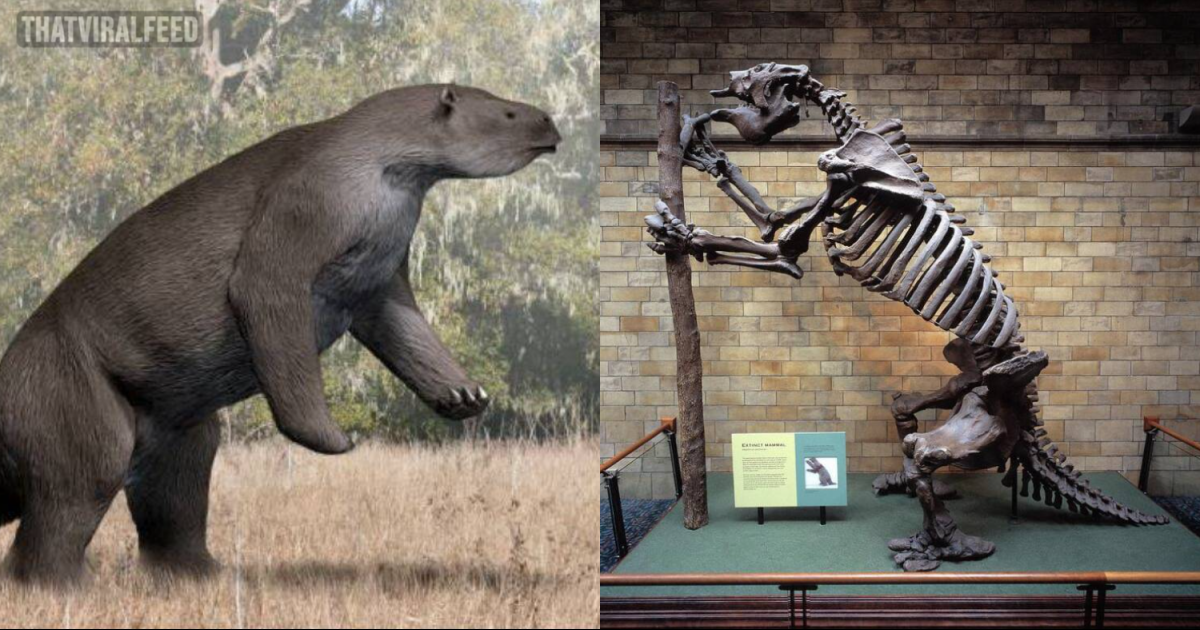
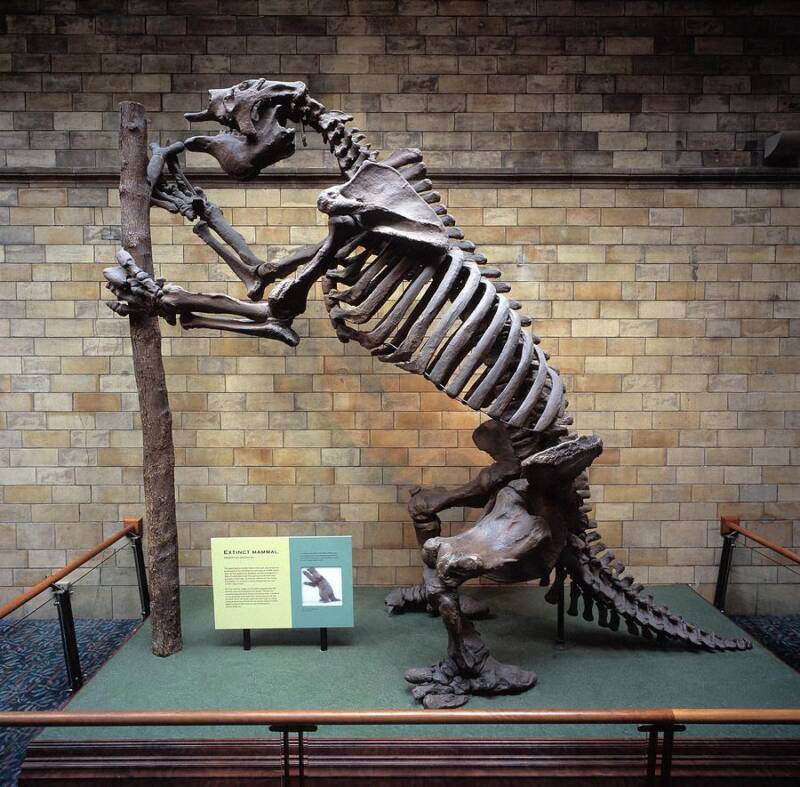
Today’s sloths are small. But the ancient animals that preceded them, called Megatherium americanum, were veritable giants.
Natural History Museum, London
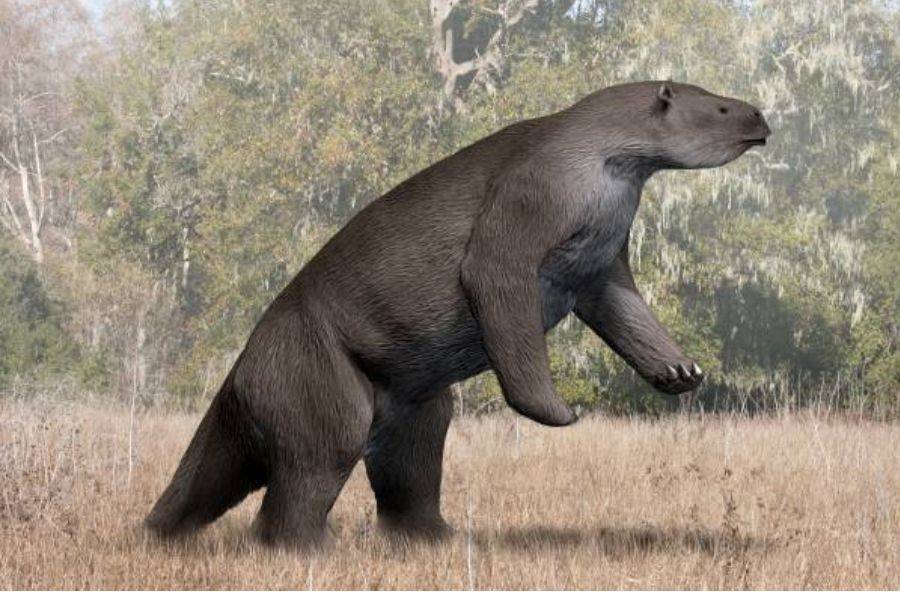
Standing nearly 12 feet tall and weighing upwards of four tons, M. americanum once roamed the jungles of South America. Unlike today’s sloths, which live in trees, M. americanum walked the earth. Fossils found in Argentina, Uruguay, and Bolivia suggest that the beast lived between 400,000 and 8,000 years ago.
advertisement
Though it likely walked on four legs, M. americanum could stretch up to its full height to snatch hard-to-reach leaves. The creature had fearsome claws, but chemical analyses of its teeth suggest that the M. americanum largely stuck to eating leaves and plants.
Like modern-day sloths, however, the M. americanum took its time. It moved slowly, possibly slower than anything else alive at the time. But its size offered plenty of protection, as these prehistoric animals outweighed possible predators like the saber-tooth tiger.
advertisement
So if the M. americanum could find plenty to eat, and didn’t have to worry much about predators, then why did these prehistoric animals go extinct?
Wikimedia Commons
Scientists are unsure. It could have been a climate event, or disease, or possibly the arrival of humans, seeing as some M. americanum bones seem to bear marks consistent with hunting.
Then again, it’s possible that the M. americanum never went extinct at all. Some believe that the creature merely retreated deeper into the jungle once humans arrived on the scene.
People living in the Amazon rainforest have indeed shared stories of a beast they call mapinguari. Said to be a slow-moving, sloth-like beast that stands on its hind legs, the mapinguari does sound suspiciously like the M. americanum.
advertisement
However, legend also states that the mapinguari has a giant mouth on its stomach capable of devouring anything that crosses its path. But scientists have found no evidence of such an orifice among the M. americanum — at least, not yet.
Deinosuchus: The Fearsome Prehistoric Animal Called ‘Terrible Crocodile’
Wikimedia Commons
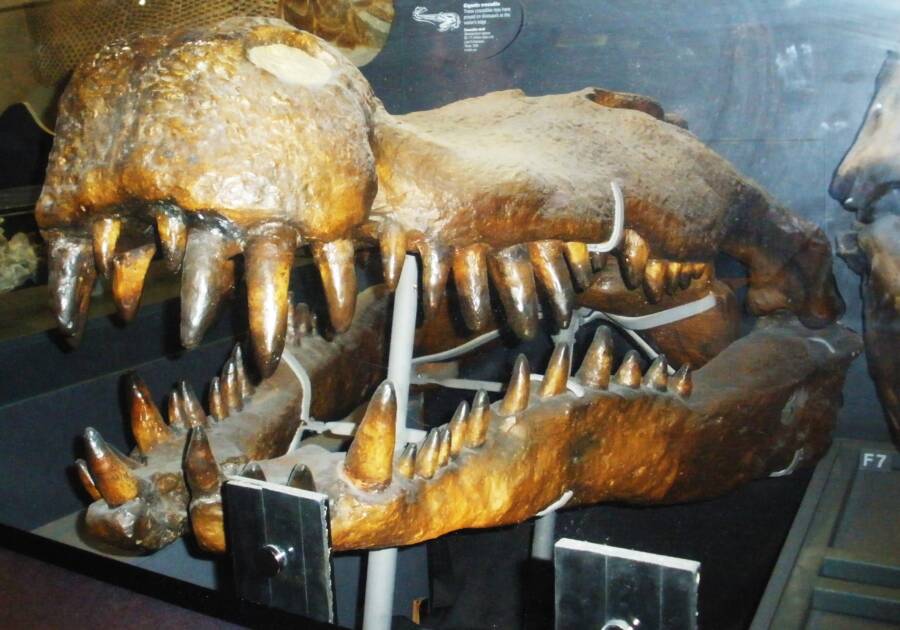
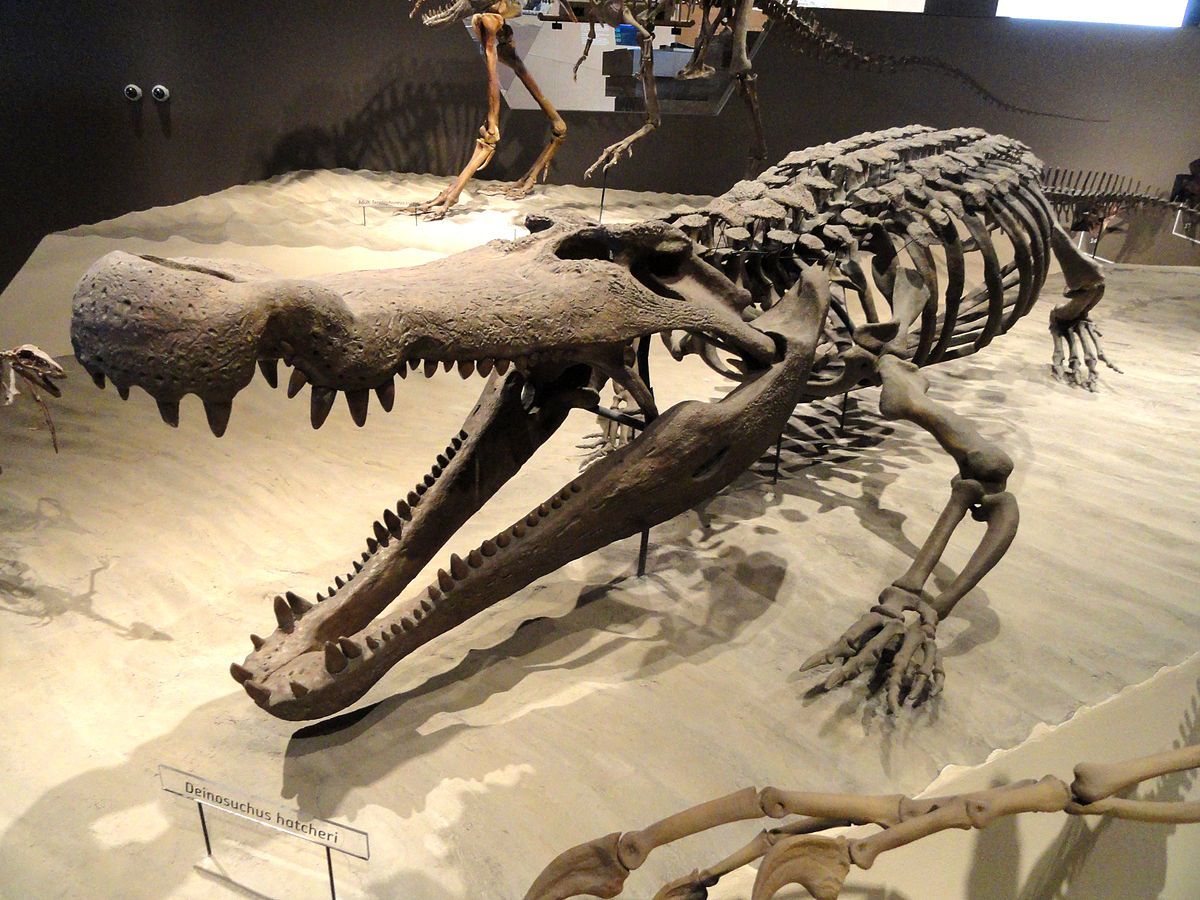
When it comes to prehistoric animals that seem like modern-day monsters, it’s hard to beat Deinosuchus. Stretching 33 feet long and with teeth the size of bananas, Deinosuchus terrified North America during the late Cretaceous period, some 82 to 73 million years ago. Even its name literally translates to “terrible crocodile.”
advertisement
The giant crocs mostly ate sea turtles and shellfish, but sometimes tangled with T. Rex cousins like Appalachiosaurus montgomeriensis and Albertosaurus and left the bite marks to prove it.
“Deinosuchus was a giant that must have terrorized dinosaurs that came to the water’s edge to drink,” explained Adam Cossette, a vertebrate paleontologist at the New York Institute of Technology who has studied the beasts.
These fearsome prehistoric animals lived across the present-day United States and Mexico. Fossils have been found in Utah, Montana, Wyoming, New Mexico, New Jersey, Georgia, Alabama, Mississippi, Texas, and North Carolina.
The monster does differ somewhat from modern-day crocodiles, however. In addition to its massive size, it also has a bulb-like snout with two vents. Scientists aren’t sure what Deinosuchus needed the vents for, but they possibly helped cool the animals down.
advertisement
As with other prehistoric animals on this list, it took scientists a while to understand the full picture of these ancient animals.
Wikimedia Commons
Deinosuchus fossils were originally classified under the genus Polyptychodon, another marine predator, but in 1904, the zoologist and paleontologist William Jacob Holland studied the available evidence and concluded that Deinosuchus was a monster all its own.
Specimens of Deinosuchus, Cossette noted, were few and far between. But the ones that scientists have found are “HUGE.”
For a long time, Deinosuchus was considered the largest crocodile ever discovered. It’s since been dethroned by Sarcosuchus imperator who, at 40 feet long and 17,600 pounds, could have taken Deinosuchus in a fight.
advertisement
Ursus Spelaeus: The Ice Age Cave Bears
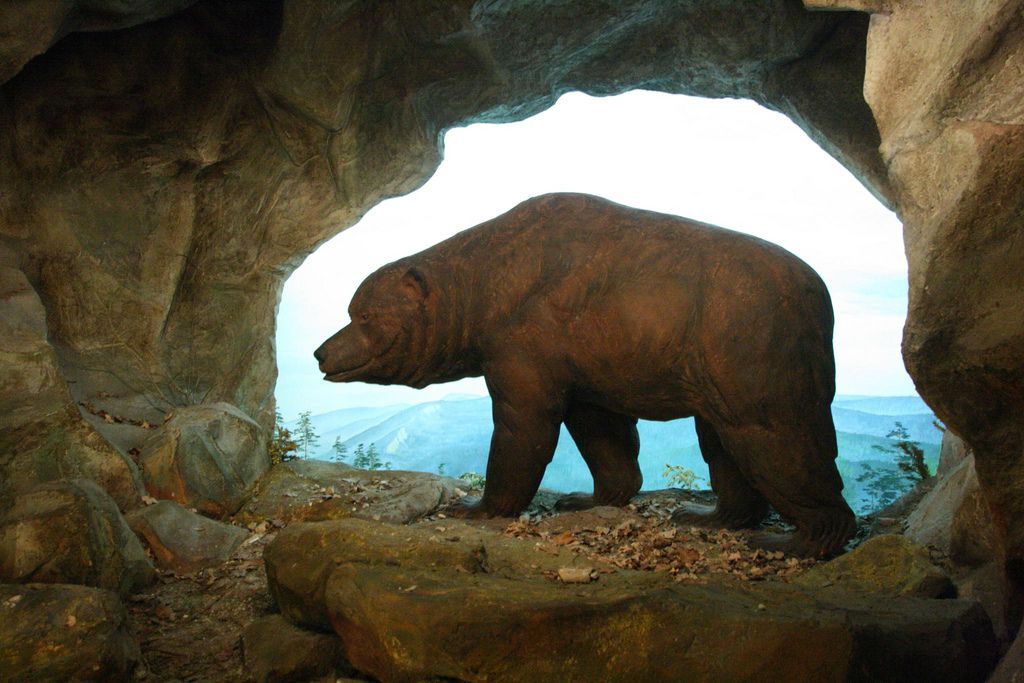
Standing 11 feet tall and weighing up to 2,200 pounds, the Ice Age cave bear, or Ursus spelaeus, must have struck fear into the hearts of early humans.
Wikimedia Commons
But the bear probably wouldn’t have killed — at least not to eat. Scientists think that these prehistoric animals were primarily herbivores and munched on plants, not people.
During the Late Pleistocene era, these bears lived across Europe. Tens of thousands of their fossils have been found in caves across the continent, suggesting that they spent more time in caves than modern-day bears (who often use caves solely for hibernation).
advertisement
They did, however, seem to venture out enough to cross paths with people. Scientists aren’t sure exactly how early humans interacted with the bears, but they have come across some puzzling clues.
In Drachenloch,†‬Switzerland, for example, researchers found seven cave bear skulls seemingly arranged to face the front of the caves, and six more skulls stuck into cave alcoves.
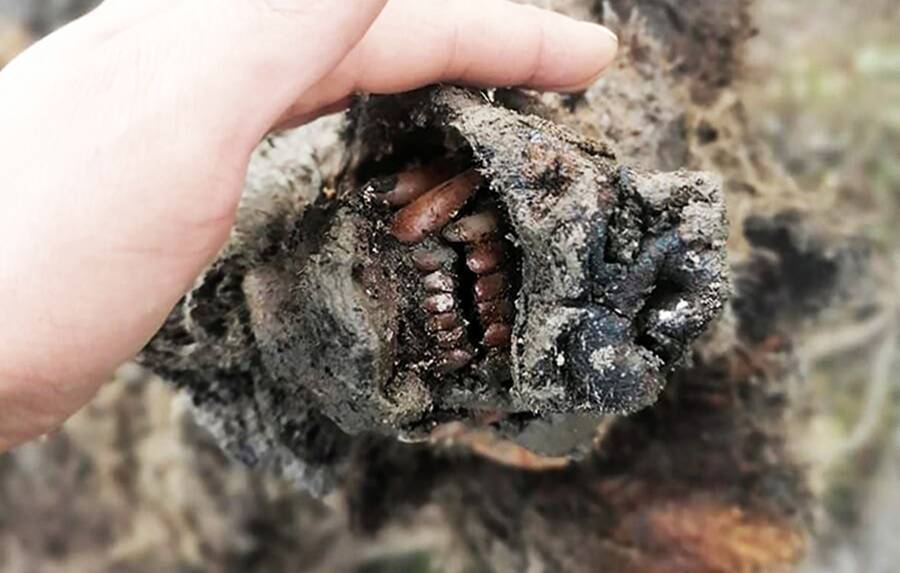
That head-scratching discovery, however, pales in comparison to the nearly intact cave bear found by reindeer hunters in 2020.
NEFU
The hunters came across the bear in the melting permafrost of Bolshoy Lyakhovsky Island in Siberia. Likely between 39,500 and 22,000 years old, the frozen tundra kept it in remarkably good shape. The cold preserved even its internal organs.
advertisement
So, what happened to these Ice Age cave bears? Although their cousins walk the earth today, Ursus spelaeus slowly went extinct starting around 24,000 years ago.
It’s unclear what exactly did them in. Scientists have noticed high rates of disease in cave bear fossils, which could have been a contributing factor. However, changing climate could also have contributed to the extinction of the Ice Age bears.