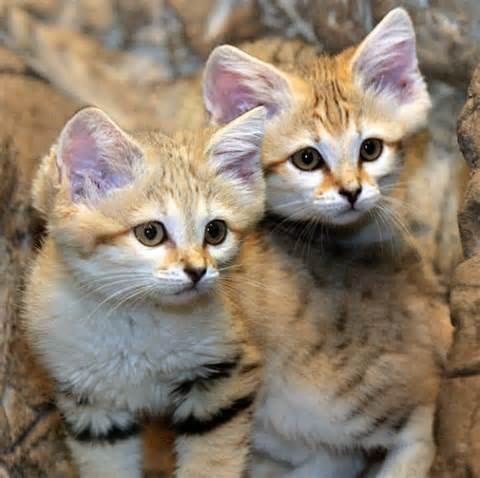
They are also referred to as Sand Dune Cats and are found in various regions of Africa and Asia.
advertisement
The sand cat (Felis margarita), also known as the sand dune cat, is the only cat living foremost in true deserts.
This small cat is widely distributed in the deserts of North Africa and Southwest and Central Asia. Since 2002, it has been listed as near threatened by IUCN because the population is considered fragmented and small with a declining trend
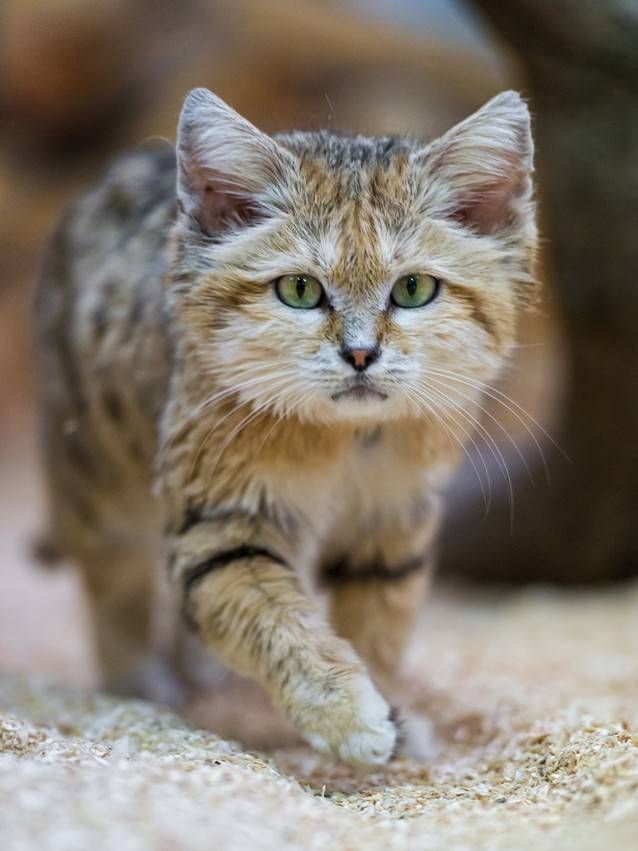
Sand cats are found in both sandy and stony desert, living in areas far from water.
Having thickly furred feet, they are well adapted to the extremes of a desert environment and tolerant of extremely hot and cold temperatures
advertisement
In North Africa, the cats are found marginally in the western regions of Morocco, including Algeria and the former Sahara Occidental.
Their distribution range includes the Sinai Peninsula and extends to the eastern Egyptian rocky deserts. Sightings have been recorded in places like Libya, Tunisia, Niger and Mali. They are also known to occur in Majabat al Koubra and the Adrar mountains.
The central Asian populations are distributed from the eastern parts of the Caspian Sea through the Kara Kum Desert.
Their range includes the Ustyurt Plateau in north-west to the Kopet Dag Mountains, extending to the Kyzylkum Desert and Syr Darya River as well as some regions of Afghanistan in the north.
advertisement
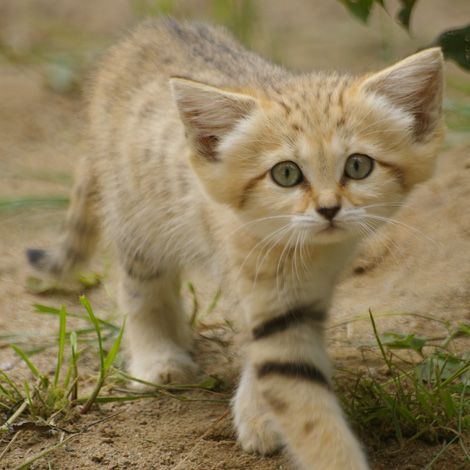
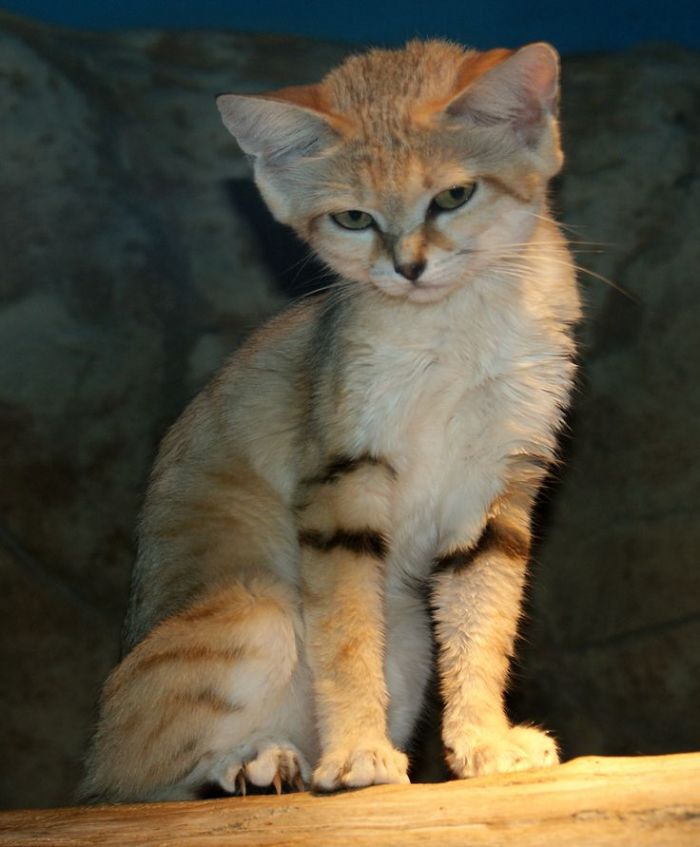
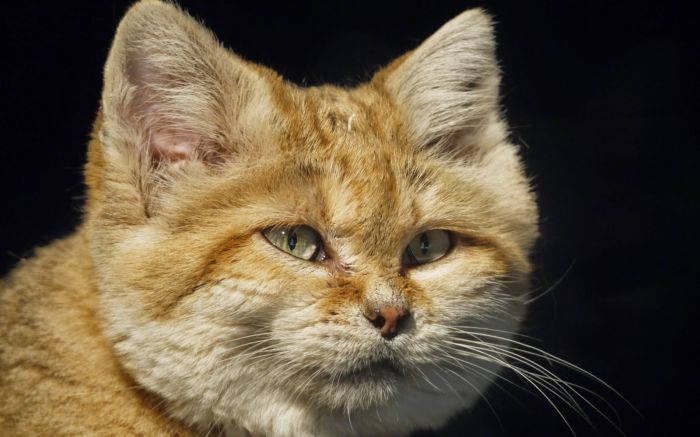
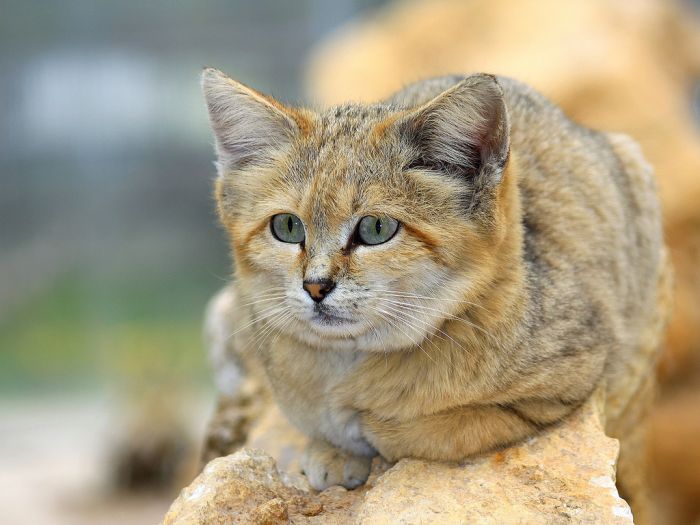
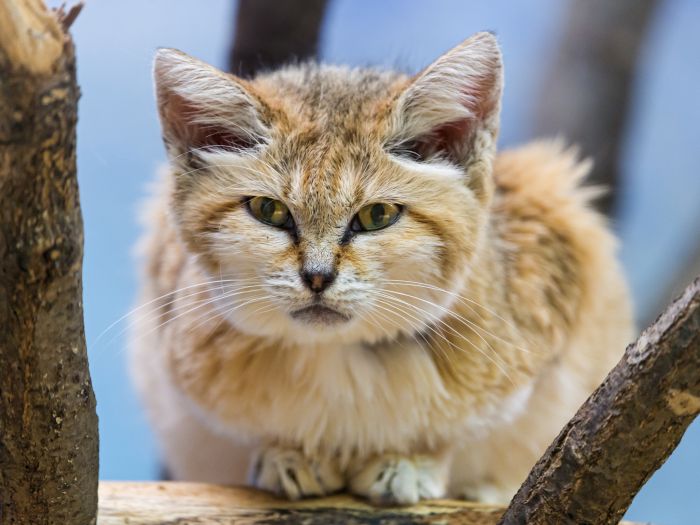
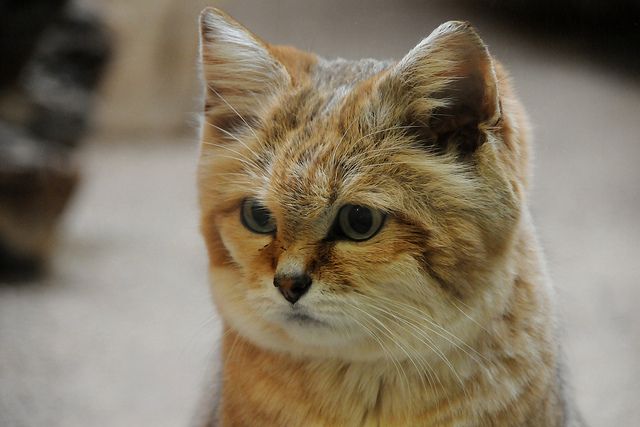
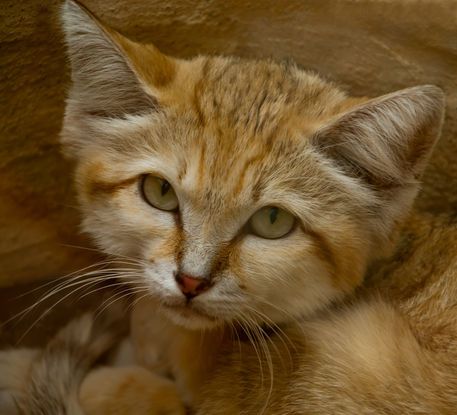
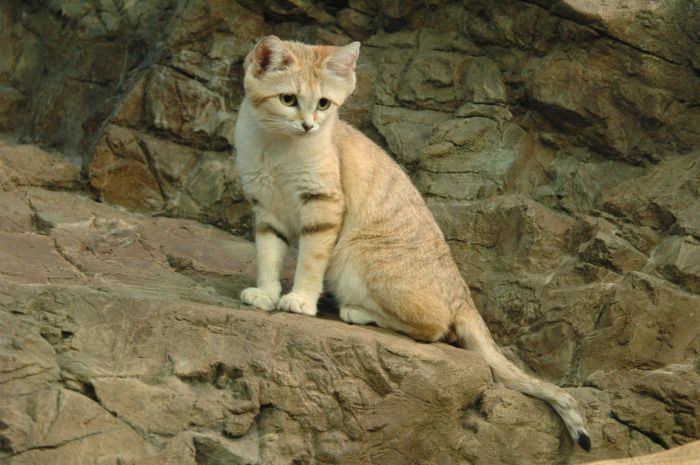
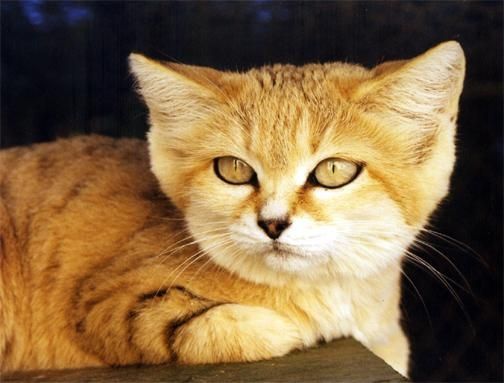
The coat is soft and dense, mostly pale sandy brown to light grey, slightly darker on the back and whitish on the belly.
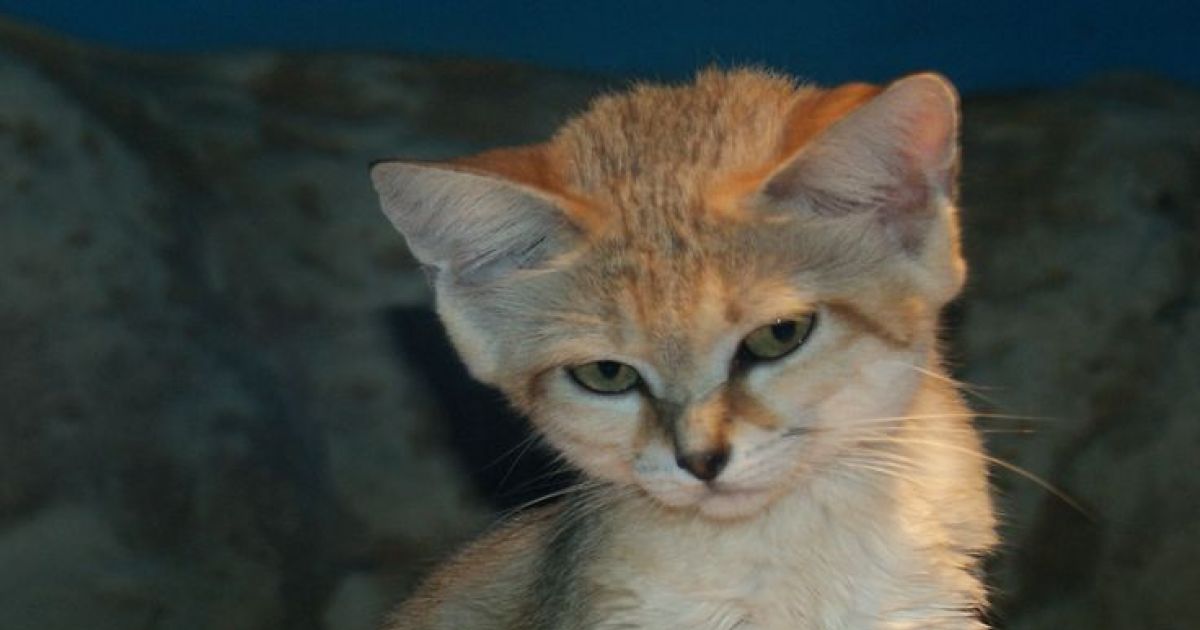
A reddish streak runs across each cheek from the outer corner of the eyes; the lower half of the face and chest is whitish to pale yellow. The tawny reddish ears are black tipped, as is the tail, which also has a few narrow black rings near the tip. The broad head has large eyes placed greatly forward, and low set, large, tapered ears which provide keen hearing for habitat where prey is scarce.
advertisement
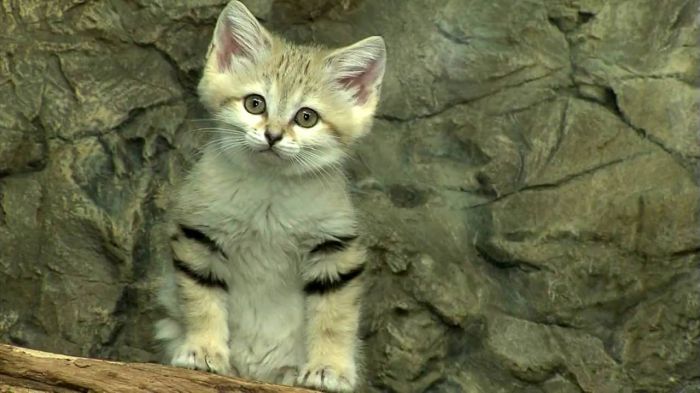
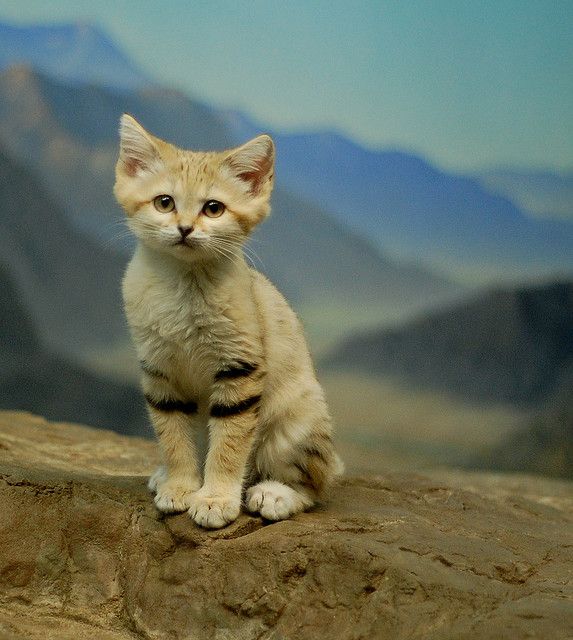
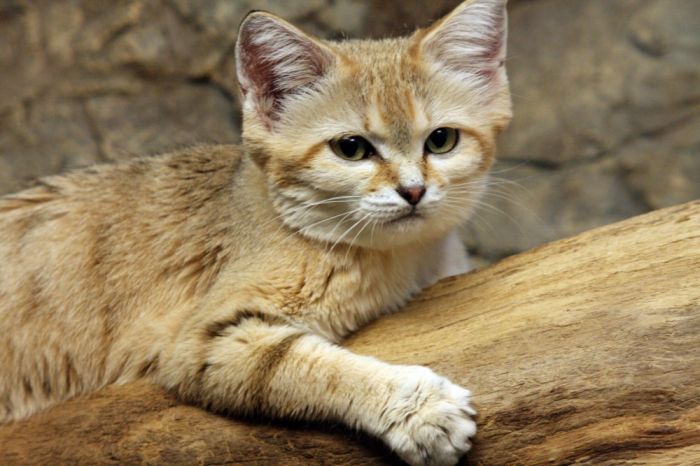
There are pale cross stripes running down the flanks
almost invisible until the legs are stretched out, and indistinct bars on the limbs. Another desert adaptation is the long, dense, hairs covering the soles of the feet, providing insulation from the hot sands and helping them move across shifting surfaces. They have evolved a thick coat which insulates them from the alternating intense heat and cold of a desert environment.
advertisement
They are solitary creatures living alone apart from in the mating seasons.
advertisement
Sand Cats do not leave feces in exposed places like most other felids.
advertisement
They are territorial in nature and use urine spraying and claw marks to mark their territories.
advertisement
The cats dig burrows in the sand or use abandoned porcupine and fox burrows. Sometimes, they may even inhabit rodent burrows after enlarging them.
advertisement
Like most other feline species, these cats remain active during nighttime.
advertisement
During the winter months, they remain in the sun all day, becoming exclusively nocturnal during summer.
Their hunting and eating habits are similar to those of other wild cats. They are known to bury the remains of a prey in the sand and consume it later.
advertisement
The vocalizations made by these cats are similar to those of the domestic cat species.
Additionally, Sand Cats occasionally make loud and high-pitched barking sounds, mainly to attract mates before the mating season. Hearing is also important for intraspecific communication. They make a characteristic short and rasping barks associated with mating activities
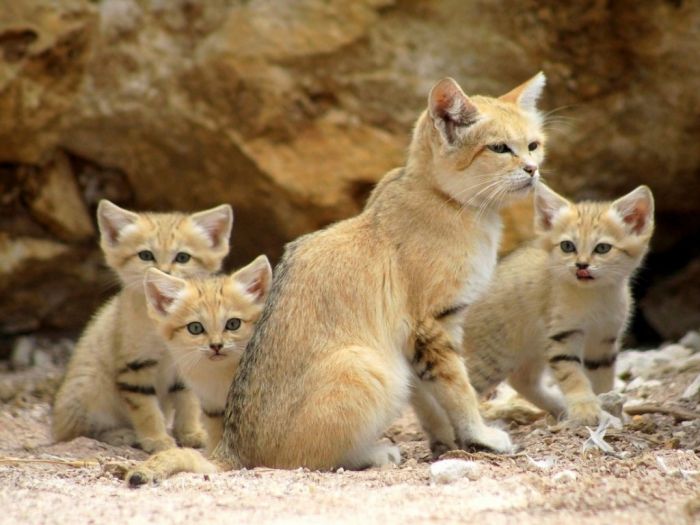
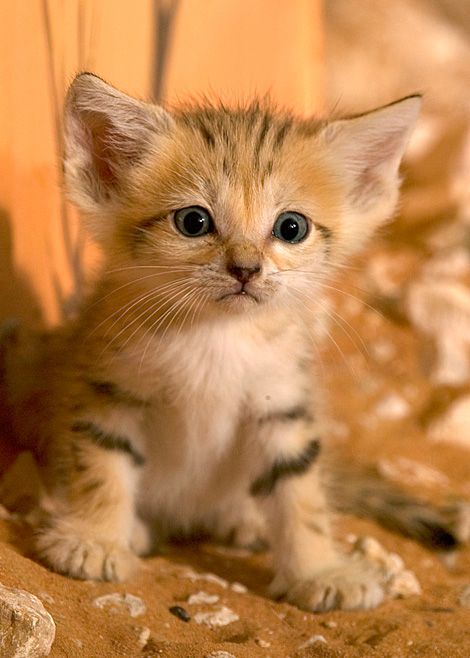
The kittens are born blind and helpless with their eyes opening after about 14 days of birth.
They gain around 12 pounds of weight every day since birth and start walking by the 20th or 21st day. Sand kittens begin eating solid food after 5 weeks while they become partially independent between 3 months and 6 months of age.
advertisement
Their life expectancy in the wild remains unknown; but, they are known to life for up to thirteen years in captivity.
The Sand Cat does not make a good pet as their aggressive temperament makes it quite impossible to domesticate them. Additionally, it is very difficult to provide for them and one needs to have extensive training on how to take care of wild animals in order to keep them.