Everybody loves to ride an airplane. Well, who doesn’t really? You get to enjoy the view, and it’s the closest thing to flying. But no matter how breathtaking the experience can be, the reality is that accidents can happen anytime and plenty of people have already died in an airplane crash.In today’s list, we’ve compiled some of the scariest events in plane crash history. They’re so terrifying that they’re worth remembering.
The Scariest Accidents And Incidents Involving Airplanes
By
Sughra Hafeez in
Heartbreaking
On 21st August 2017
advertisement
#1 1940 Brocklesby mid-air collision
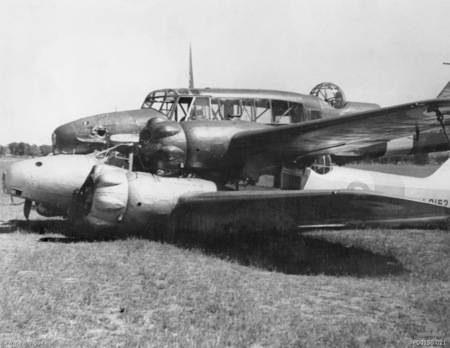
On 29 September 1940, a mid-air collision occurred over Brocklesby, New South Wales, Australia. The accident was unusual in that the aircraft involved, two Avro Ansons of No. 2 Service Flying Training School RAAF, remained locked together after colliding, and then landed safely. The collision stopped the engines of the upper Anson, but those of the machine underneath continued to run, allowing the pair of aircraft to keep flying. Both navigators and the pilot of the lower Anson bailed out. The pilot of the upper Anson found that he was able to control the interlocked aircraft with his ailerons and flaps, and made an emergency landing in a nearby paddock. All four crewmen survived the incident, and the upper Anson was repaired and returned to flight service.
The freak accident garnered news coverage around the world and cast a spotlight on the small town of Brocklesby.In preventing the destruction of the Ansons, Fuller was credited not only with avoiding possible damage to Brocklesby but with saving approximately £40,000 worth of military hardware.
#2 British Airways Flight 5390
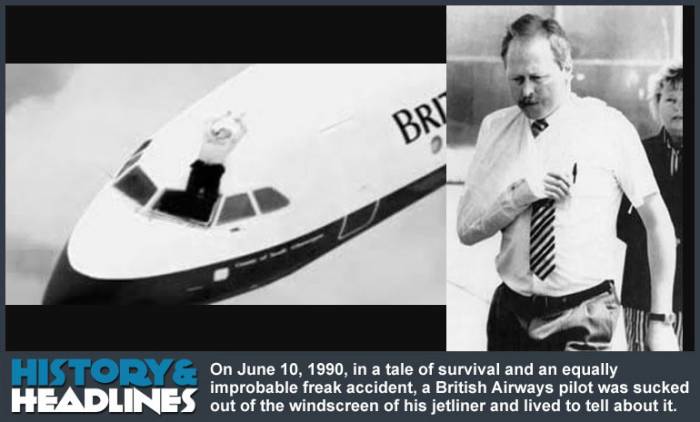
British Airways Flight 5390 was a scheduled passenger flight operated by British Airways between Birmingham Airport in England and Málaga Airport in Spain. On 10 June 1990 an improperly installed panel of the windscreen failed, at 17,400 feet (5,300 m), blowing the plane's captain, Tim Lancaster, halfway out of the aircraft. With Lancaster's body firmly pressed against the window frame for over twenty minutes, the first officer managed to perform an emergency landing at Southampton Airport with no loss of life.
The aircraft, County of South Glamorgan, captained by 42-year-old Tim Lancaster, who had logged 11,050 flight hours, and co-piloted by 39-year-old Alastair Atchison, who had logged 7,500 flight hours, was a BAC One-Eleven Series 528FL registered as G-BJRT. It took off at 07:20 local time, with 81 passengers, four cabin crew, and two flight crew. Co-pilot Atchison handled a routine take-off and relinquished control to Lancaster as the plane established itself in its climb. Both pilots subsequently released their shoulder harnesses, while Lancaster loosened his lap belt as well.
At 07:33, the cabin crew had begun to prepare for meal service. The plane had climbed to 17,400 feet (5,300 m) over Didcot, Oxfordshire. Suddenly, there was a loud bang, and the fuselage quickly filled with condensation.
Eventually, Atchison was able to hear the clearance from air traffic control to land at Southampton, while the flight attendants managed in the extreme conditions to free Lancaster's ankles from the flight controls and hold on to him for the remainder of the flight. By 07:55 the aircraft had landed safely on Runway 02 at Southampton. Passengers immediately disembarked from the front and rear stairs, and emergency crews retrieved Lancaster.
There were no major injuries during the flight. Much to everyone's surprise, Lancaster was found to be alive and was taken to Southampton General Hospital, where he was found to be suffering from frostbite, bruising and shock, and fractures to his right arm, left thumb and right wrist. Flight attendant Nigel Ogden suffered a dislocated shoulder, frostbitten face and some frostbite damage to his left eye. Everyone else left the aircraft unhurt
advertisement
#3 Philippine Airlines Flight 812
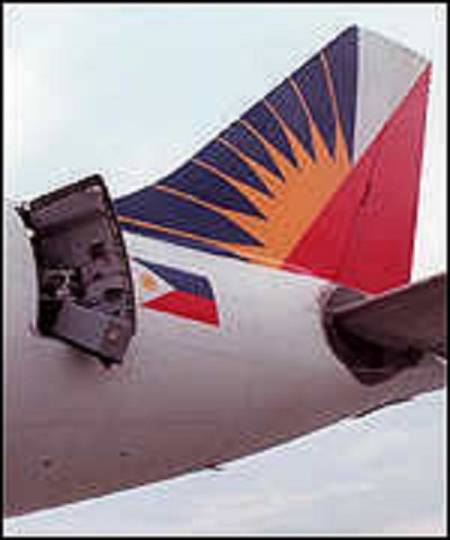
Philippine Airlines Flight 812 was a scheduled passenger flight from Francisco Bangoy International Airport in Davao City to Ninoy Aquino International Airport near Manila. On May 25, 2000, an Airbus A330-301 operating on the route was hijacked by a man later identified as Reginald Chua, just before the airplane was about to land. The flight carried 278 passengers and 13 crew members.
The hijacker had a gun and a hand grenade. He fired a gun into a bulkhead and demanded to be let into the cockpit.When access was refused, he then demanded the passengers place their valuables in a bag before he commanded the pilot to descend and depressurize the aircraft so that he could escape by a homemade parachute. Since it did not have a rip cord, one was made with a curtain sash on the aircraft. Before he was about to jump, he was not able to overcome the gust of the wind from the plane's open rear door, and a flight attendant helped him jump out of the plane.
The hijacker was wearing a ski mask and swimming goggles when he jumped out of the plane together with the valuables he had stolen while the plane was flying at an altitude of 1,800 meters over Antipolo, Rizal. Officials initially identified him as "Augusto Lakandula", based on the name on his ticket. The pilot expressed skepticism that the hijacker would have survived the jump.
Three days after the hijacking, the hijacker was found dead, his body nearly buried in the mud, in the village of Llabac, in Real, Quezon, about 70 kilometers southeast of Manila, near the border with Laguna province. It is speculated that he survived the fall, but drowned shortly after landing. Through his driver's license, "Lakandula" was finally correctly identified as Reginald Chua.
#4 China Airlines Flight 006
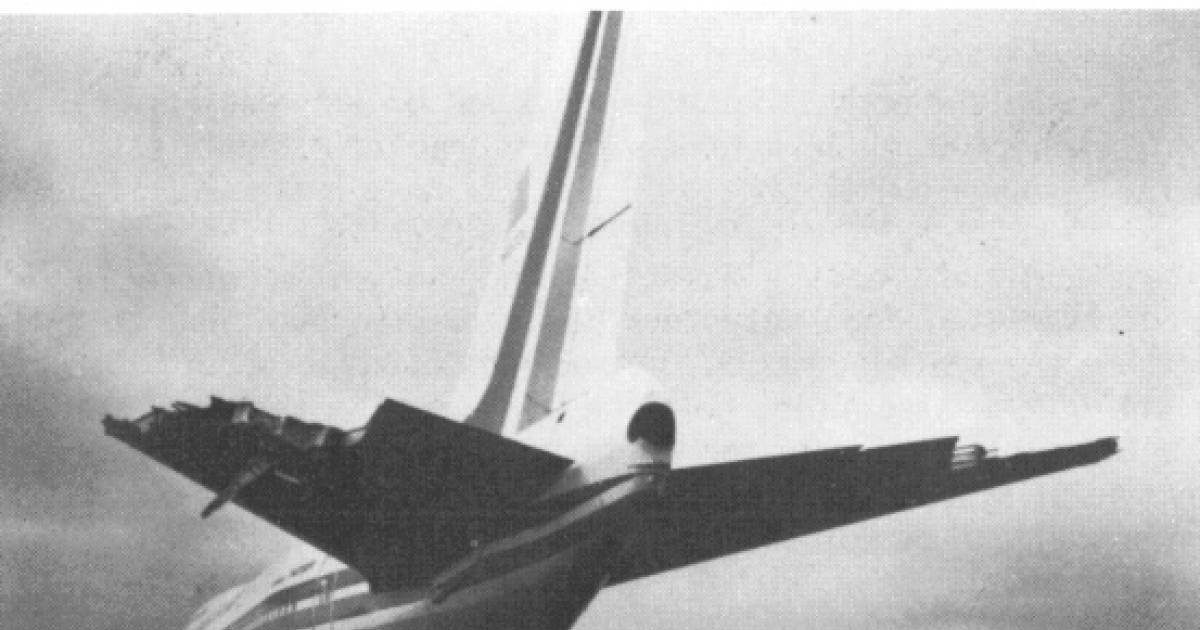
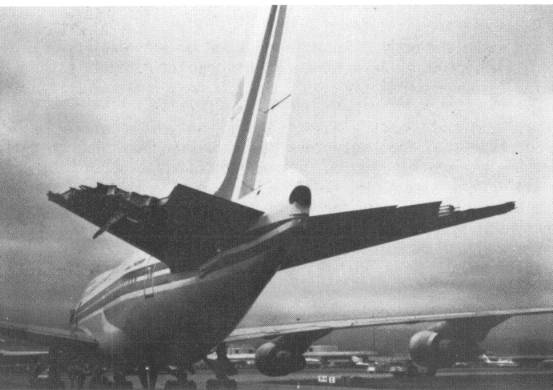
China Airlines Flight 006 (callsign "Dynasty 006") was a daily non-stop flight from Taipei to Los Angeles International Airport. On February 19, 1985, the Boeing 747SP used to conduct the flight was involved in an aircraft upset accident, following the failure of the No. 4 engine, while cruising at FL 410 (41,000 ft.)(12,500 m). The plane rolled over and plunged 30,000 ft (9,100 m), experiencing high speeds and g-forces (approaching 5g) before the captain was able to recover from the dive, and then to divert to San Francisco International Airport.
There were two serious injuries on board: a fracture and laceration of a foot, and an acute back strain requiring two days of hospitalization. The aircraft was significantly damaged by the excessive G-forces. The wings were permanently bent upwards by 2 inches (5 cm), the inboard main landing gear lost two actuator doors, and the two inboard main gear struts were left dangling.Most affected was the tail, where large outer parts of the horizontal stabilizer had been ripped off. The entire left outboard elevator had been lost along with its actuator, which had been powered by the hydraulic system that ruptured and drained.
advertisement
#5 British Airways Flight 9
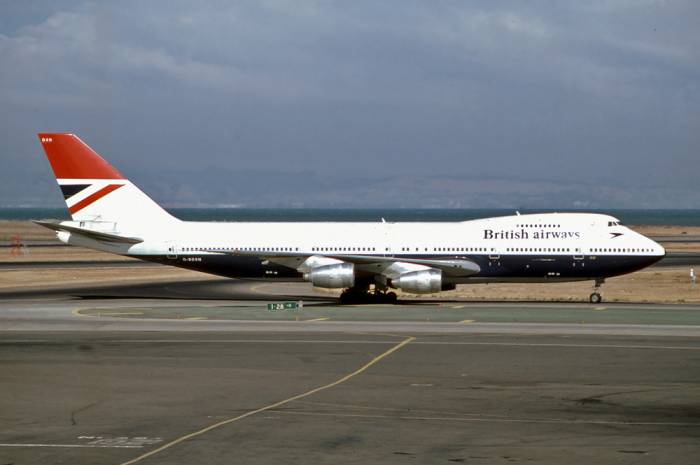
British Airways Flight 9, sometimes referred to by its callsign Speedbird 9 or as the Jakarta incident, was a scheduled British Airways flight from London Heathrow to Auckland, with stops in Bombay, Madras, Kuala Lumpur, Perth, and Melbourne.
The accident featured in the episode "Falling From the Sky" of the Mayday documentary TV series (also known as Air Disasters and Air Emergency in the US and as Air Crash Investigation in various other countries, including the UK)
On 24 June 1982, the route was flown by the City of Edinburgh, a 747-236B. The aircraft flew into a cloud of volcanic ash thrown up by the eruption of Mount Galunggung (approximately 180 kilometers (110 mi) south-east of Jakarta, Indonesia), resulting in the failure of all four engines. The reason for the failure was not immediately apparent to the crew or air traffic control. The aircraft was diverted to Jakarta in the hope that enough engines could be restarted to allow it to land there. The aircraft glided out of the ash cloud, and all engines were restarted (although one failed again soon after), allowing the aircraft to land safely at the Halim Perdanakusuma Airport in Jakarta.
The crew members of the accident segment had boarded the aircraft in Kuala Lumpur, while many of the passengers had been aboard since the flight began in London.
advertisement
#6 Israeli Air Force F-15 and A-4 Midair Collision
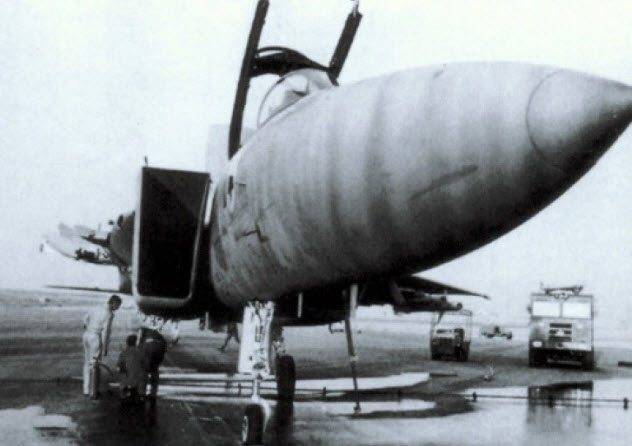
Sometimes in 1933, the Israeli Air Force executed some mock aerial combat exercises over the Negev desert. But during the drill, an F-15 Eagle collided with an A-4 Skyhawk midair. It was then followed by a huge explosion, though the pilot of the Skyhawk ejected. The F-15, on the other hand, went spiraling down. The trainee pilot named Zivi Nedivi didn’t listen to his commanding officers and ignored the order to eject. Instead, he tried to take control of the aircraft.
Interestingly, Nedivi was successful in landing the plane at a nearby airbase. Many thought he was going to die, as the damage on the aircraft proved to be fatal. Even one of the makers of F-15s, McDonnell Douglas, was in pure disbelief. He said that what Nedivi did was impossible, as the aircraft only had one wing.
advertisement
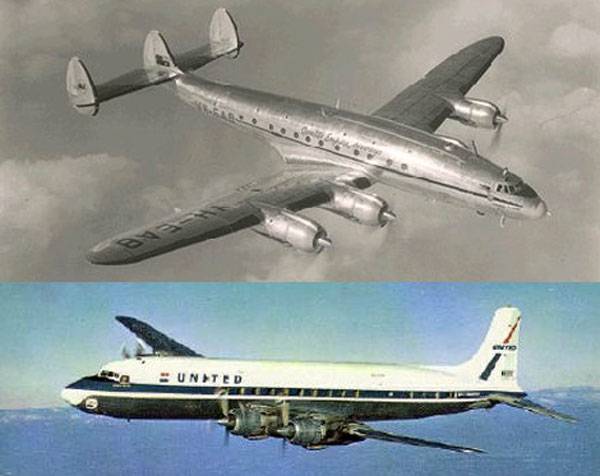
#7 United Airlines Flight 718
The accident spurred a $250 million upgrade of the air traffic control (ATC) system—serious money in those days. (It worked: There hasn't been a collision between two airliners in the United States in 47 years.) The crash also triggered the creation in 1958 of the Federal Aviation Agency (now Administration) to oversee air safety.
However, further improvements would be implemented after a small private plane wandered into the Los Angeles terminal control area on Aug. 31, 1986, striking an Aeromexico DC-9 and killing 86 people. The FAA subsequently required small aircraft entering control areas to use transponders—electronic devices that broadcast position and altitude to controllers. Additionally, airliners were required to have TCAS II collision-avoidance systems, which detect potential collisions with other transponder-equipped aircraft and advise pilots to climb or dive in response. Since then, no small plane has collided with an airliner in flight in the United States.
advertisement
#8 United Airlines Flight 173
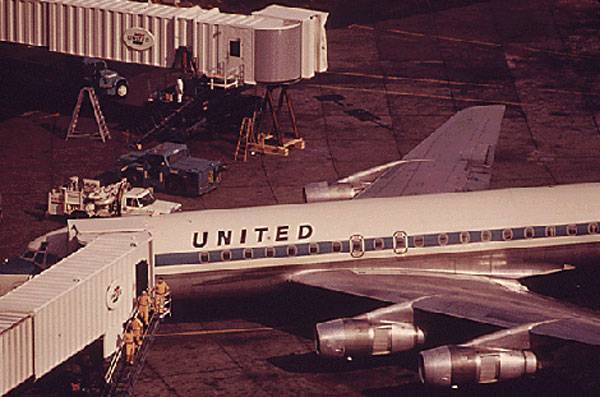
United Flight 173, a DC-8 approaching Portland, Ore., with 181 passengers, circled near the airport for an hour as the crew tried in vain to sort out a landing gear problem. Although gently warned of the rapidly diminishing fuel supply by the flight engineer on board, the captain—later described by one investigator as "an arrogant S.O.B."—waited too long to begin his final approach. The DC-8 ran out of fuel and crashed in a suburb, killing 10.
In response, United revamped its cockpit training procedures around the then-new concept of Cockpit Resource Management (CRM). Abandoning the traditional "the captain is god" airline hierarchy, CRM emphasized teamwork and communication among the crew, and has since become the industry standard. "It's really paid off," says United captain Al Haynes, who in 1989 remarkably managed to crash-land a crippled DC-10 at Sioux City, Iowa, by varying engine thrust. "Without [CRM training], it's a cinch we wouldn't have made it."
advertisement
#9 Air Canada AC 797
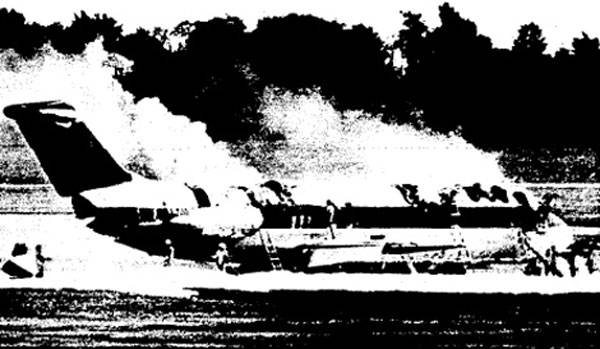
Air Canada Flight 797 was a scheduled trans-border flight that flew from Dallas/Fort Worth International Airport to Montréal–Dorval International Airport, with an intermediate stop at Toronto Pearson International Airport. On 2 June 1983, the McDonnell Douglas DC-9-32 operating the service developed an in-flight fire behind the washroom that spread between the outer skin and the inner decor panels, filling the plane with toxic smoke. The spreading fire also burned through crucial electrical cables that knocked out most of the instrumentation in the cockpit, forcing the plane to divert to Cincinnati/Northern Kentucky International Airport. Ninety seconds after the plane landed and the doors were opened, the heat of the fire and fresh oxygen from the open exit doors created flashover conditions, and the plane's interior immediately became engulfed in flames, killing 23 passengers who had yet to evacuate the aircraft. Blood tests showed some of the passengers had inhaled lethal amounts of toxins from the in-flight fire, likely meaning they were already dead in their seats before the plane touched down.
As a result of this accident, aviation regulations around the world were changed to make aircraft safer, with new requirements to install smoke detectors in lavatories, strip lights marking paths to exit doors, increased firefighting training and equipment for crew, and regular instruction of passengers seated in overwing exits to assist in an emergency evacuation.
At the time of the accident, Air Canada had 41 other DC-9s in its fleet.
advertisement
#10 Aerolinee Itavia Flight 870
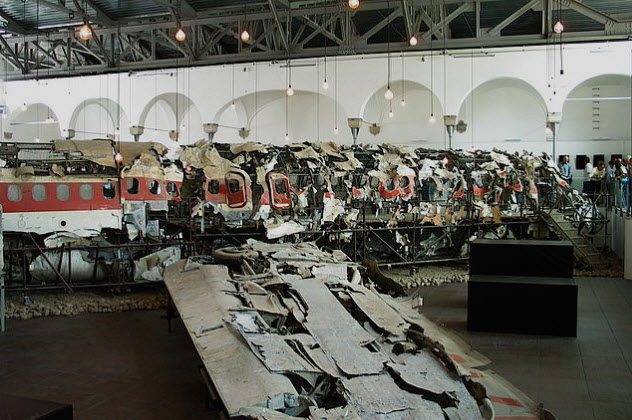
Aerolinee Itavia Flight 870, which was flying from Bologna to Palermo, crashed into the sea near Ustica Island in June 1980. It was deemed mysterious, but it killed all 77 passengers aboard including four crew members. It later earned the nickname “Ustica Massacre.” The authorities pointed out that the cause could’ve either been engine failure or act of terrorism. In 1989, though, it was later found out that a missile shot down the airplane.
Speculations suggested that the aircraft got caught by the aerial fight between the Libyan and NATO planes. The Italian government was also accused of covering up the truth behind the crash. This was most especially after five Italian Air Force officials – all of whom were linked to the unfortunate event – died under strange circumstances.