If you’re one of those lucky, rare specimens called “morning people,” you wake up with the sun, bright-eyed, bushy-tailed, and ready to face the day. For the rest of us plebs, getting going in the morning is an uphill battle, characterized mostly by grumpily going through the motions of showering and dressing while we wait for the caffeine we just guzzled to finally kick in; those of us in this latter category will appreciate these scientifically-proven tips for waking up more easily, courtesy of Business Insider. This simple lifestyle advice may not turn you into a full-on morning person, but it may make A.M. wake-up calls just a little more bearable, and your early-morning persona slightly less reminiscent of Emperor Palpatine on a bad day.

The Science Behind Waking Up Easier, Or At Least Easy-ish
#1“Morning people,”
If you're one of those lucky, rare specimens called "morning people," you wake up with the sun, bright-eyed, bushy-tailed, and ready to face the day. For the rest of us plebs, getting going in the morning is an uphill battle, characterized mostly by grumpily going through the motions of showering and dressing while we wait for the caffeine we just guzzled to finally kick in; those of us in this latter category will appreciate these scientifically-proven tips for waking up more easily, courtesy of Business Insider. This simple lifestyle advice may not turn you into a full-on morning person, but it may make A.M. wake-up calls just a little more bearable, and your early-morning persona slightly less reminiscent of Emperor Palpatine on a bad day.
Some of this advice hinges on working with the body's natural rhythms for sleeping, also known as "circadian rhythms." Circadian rhythms tell us when to be asleep and awake, and they depend largely on light and darkness. Simply put, when it's dark, our bodies think we should be sleeping, and when it's light, our bodies think we should be awake. A contributing factor to this schedule is melatonin, a hormone produced by the pineal gland in the brain that causes sleepiness. When it gets dark, the pineal gland releases melatonin into the body, indicating that it's time to sleep. When it's light, the pineal gland stops releasing melatonin, making it easier to wake up.
Thus, it's especially important to pay attention to how we use light and darkness both when we're trying to sleep and when we're trying to wake. At night, we should put our phones and tablets away and turn off the television otherwise, our bodies can get confused and, thinking it's light outside, our pineal glands may not release the melatonin we need to get good sleep. Conversely, getting some sunshine in the morning will signal to the brain to shut off the melatonin supply, which will help you to wake up.

#2 No Phone ...!
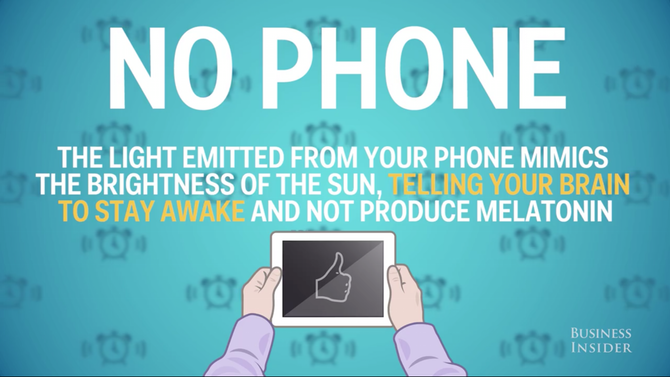
The light emitted from your phone mimics the brightness of sun, telling your brain to stay awake and not produce melatonin .
#3 Sunlight ...
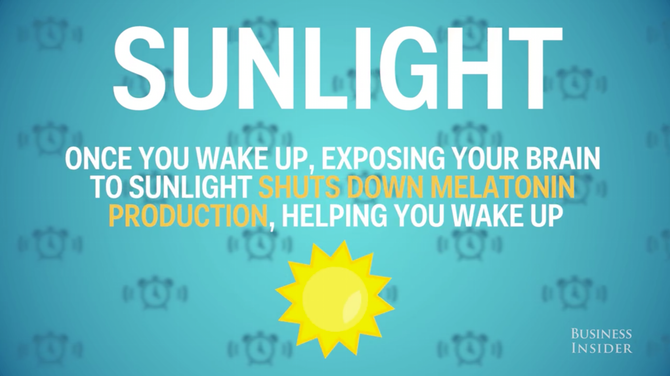
once you wake up, exposing your brain to sunlight shuts down melatonin production, helping you wake up.
#4 Drink water ...
Business Insider also recommends drinking water in the morning to rehydrate after exhaling and sweating (and thus losing water) throughout the night, and getting some exercise even if it's just a few minutes of yoga.

#5 Exercise
A few minutes of basic YOGA can be enough to wake you up.

#6 Make you super grumpy in the morning.
It's also a good idea to avoid eating or drinking alcohol right before you go to bed, both of which can cause sleeplessness (which will, in turn, make you super grumpy in the morning).