We've been chasing after happiness all wrong! New research published by the American Psychological Association has an eye opening approach to finding our joy.

The Secret To Happiness Has Been Turned Inside Out
By
Teresa Thomerson in
Life Style
On 17th August 2017
advertisement
#1 How can we be happy?
We all want to be happy, but what makes us happy? Is it feeling good or just not feeling "bad". Is it something else? Researchers from across the globe came together to search for the answer.
The study was made up of 2,324 university students in eight countries: the United States, Brazil, China, Germany, Ghana, Israel, Poland and Singapore, and published online in the Journal of Experimental Psychology: General. It's the first study to look at the correlation between happiness and experiencing the emotions one desires to have.
The participants were asked which emotions they felt they should have in certain situations, what emotions they actually felt and how much of that emotion, and if they were satisfied with their life (happy) and/or experienced depressive symptoms.

#2 Why look at All the Emotions?
The lead researcher Maya Tamir, PhD, a psychology professor at The Hebrew University of Jerusalem, helps to explain it to us. "Happiness is more than simply feeling pleasure and avoiding pain. Happiness is about having experiences that are meaningful and valuable, including emotions that you think are the right ones to have. All emotions can be positive in some contexts and negative in others, regardless of whether they are pleasant or unpleasant.

advertisement
#3 Too much or too little emotions will make you unhappy.
Regardless of culture, the participants who experienced more of the emotions they wanted to feel have greater life satisfaction and fewer depressive symptoms, no matter if those desired emotions were pleasant or unpleasant.

It was also found that 11 percent of the people studied wanted to feel LESS of the pleasant emotions, such as love and empathy, in order to be happy. Another 10 percent desired to feel MORE unpleasant, like anger and hatred, to become satisfied with life.
#4 How could someone want to feel more anger?
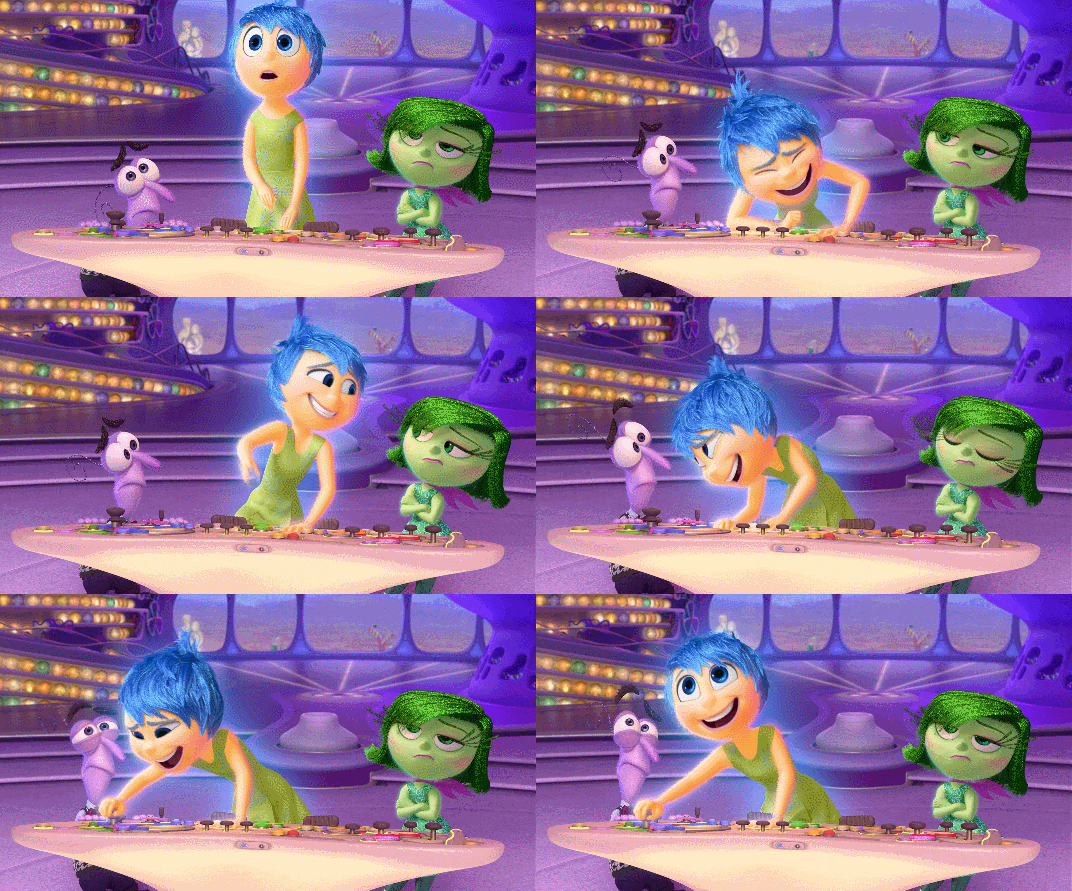
It seems counter-intuitive, but there is a time to be angry, a time to NOT feel good. Some people desire to be more emotional and others less so. Dr Tamir explained: "Someone who feels no anger when reading about child abuse might think they should be angrier about the plight of abused children, so want to feel more anger than they actually do in that moment."
advertisement
#5 So which unpleasant emotions are good?
This study focused the "unpleasant" emotions to be the negative self-enhancing emotions such as hatred, hostility, anger and contempt.

advertisement
#6 Who wasn't on the list?
Sorry Sadness, you weren't on the list. Neither were fear, guilt, or shame. It is also extremely important to note that this study was not on clinical depression. Prof Tamir said the research does not apply to those with clinical depression: "People who are clinically depressed want to be more sad and less happy than other people. That only exacerbates the problem."

advertisement
#7 Where to go from here?
Cut yourself some slack and let yourself feel!

advertisement
#8 Just remember your human and don't set yourself unrealistic expectations.
"People want to feel very good all the time in Western cultures, especially in the United States," Tamir said."Even if they feel good most of the time, they may still think that they should feel even better, which might make them less happy overall."