

After Dr. Mehmet Oz made his first appearance on The Oprah Winfrey Show in 2004, his career took off. His partnership with Winfrey led him to launch The Dr. Oz Show on the Harpo Network in 2009, and now he's a household name—as well as a guy who seems to be constantly trying to sell you a "natural" weight loss pill that works like a "miracle." Let's break down the double life of one of the most well-known doctors in the world.
advertisement
He promises a lot of "miracles"
Dr. Oz referred to Green Coffee Extract as "the magic weight-loss for every body type," and cited "scientists" as agreeing with him. He called Raspberry Ketone "the number one miracle in a bottle to burn your fat," and referring to Garcinia Cambogia, he said, "It may be the simple solution you've been looking for to bust your body fat for good."
For the record, there's no science to back up any of those claimsin fact, studies have indicated otherwise. A 1998 study showed that Garcinia Cambogia didn't notably help participants lose weight; a similar 2013 study proved the same for Green Coffee; and there isn't enough data on Raspberry Ketone to indicate much of anything either way. In fact, the Federal Trade Commission (FTC) sued the company that makes Green Coffee Extract. Sorry, folks, good old-fashioned diet and exercise continue to be the only way to successfully lose weight naturally.

He had to face the Senate
After accusations of misleading his audience about various weight-loss products, Dr. Oz was summoned to face a Senate subcommittee in 2014. He promptly began to backtrack on his claims. While he never referred to his comments as outright lies, he did concede that his language was a little strong (e.g. using words such as "miracle" when referring to a pill that will likely do nothing at all). "I'm in a position where I'm second-guessing every word I use on the show right now," he told Senator Claire McCaskill. "I'm very respectful, I've heard the message, I've told my colleagues at the FTC, I get it."
advertisement
He claims his show is "not medical"
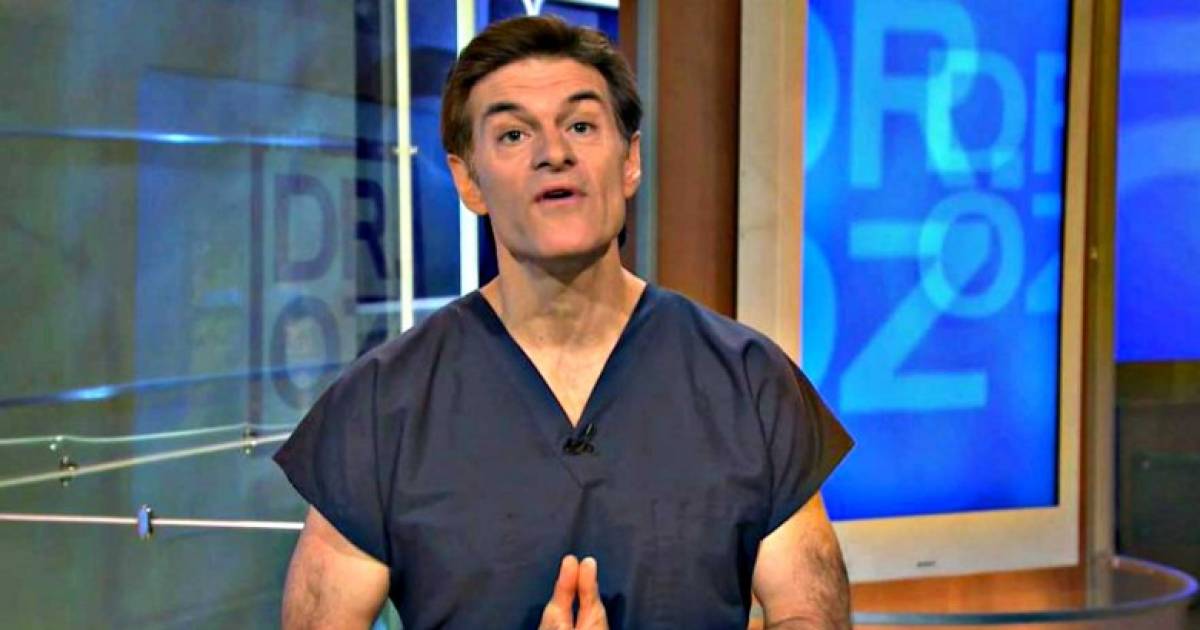
Dr. Oz. said his show is "not a medical show" in response to those who scrutinize the accuracy of the medical advice he dispenses and defended the title by giving a convoluted justification about the logo. "It's called The Dr. Oz Show," he said. "We very purposely, on the logo, have 'Oz' as the middle, and the 'Doctor' is actually up in the little bar for a reason. I want folks to realize that I'm a doctor, and I'm coming into their lives to be supportive of them. But it's not a medical show."

Roughly half of his claims are rubbish
The British Medical Journal performed a study in 2014 examining claims made on Dr. Oz's show and another medical daytime talk series, The Doctors. Its findings revealed that roughly four out of ten claims on The Dr. Oz Show were not supported by evidence or are in direct contradiction to scientific studies. They were only able to find legitimate evidence to support around 46 percent of the recommendations on the show; 15 percent of Dr. Oz's claims were found to be in direct contradiction to scientific evidence, and no evidence was found for the remaining 39 percent.
advertisement
The 'Dr. Oz Effect'
When Dr. Oz tells his millions of viewers to buy a product, they listen. Science Based Medicine calls this phenomenon the "Dr. Oz Effect," noting that when he promoted green coffee bean extract on his show along with "naturopath" Lindsey Duncan, they directed consumers to websites owned and operated by Duncan. Duncan reportedly sold $50 million worth of the "weight-loss supplement" following the segment on The Dr. Oz Show.
advertisement
He's been sued by viewers
Dr. Oz was sued by a consumer who purchased the faulty weight-loss supplement Garcinia Cambogia. The customer claimed Dr. Oz sold the product by saying it could be the "magic ingredient that lets you lose weight without diet or exercise." A representative for The Dr. Oz Show said the lawsuit attacked Dr. Oz's right to freedom of speech and argued that the show "does not sell these products, nor does [Dr. Oz] have any financial ties to these companies."

advertisement
Doctors tried to remove him from Columbia University
In 2015, a group of ten physicians wrote a letter to Columbia University, where Dr. Oz is vice chairman of the department of surgery, asking that he be removed from his post, reported Fox News. "Dr. Oz has repeatedly shown disdain for science and for evidence-based medicine," the group wrote, claiming he's repeatedly "misled and endangered" the public. Columbia refused the request, saying it wouldn't remove Dr. Oz as vice chairman because the school is "committed to the principle of academic freedom and to upholding faculty members' freedom of expression for statements they make in public discussion."
advertisement
He's been accused of selling snake oil
In addition to allegations of lying about numerous weight-loss products, Dr. Oz also been accused of peddling other fraudulent items. According to The Huffington Post, Dr. Oz touted red palm oil as the "miracle oil for longevity," adding, "There's a secret inside the flesh of this fruit, extending the warranty of nearly every organ in your body. This mega-oil may very well be the most the most miraculous find of 2013." He also claimed it could prevent dementia and Alzheimer's, the Post said, despite there being no research to support that claim. In fact, Vitamin E supplements reportedly have no proven effect on these conditions, and a 2004 study shows that an increased intake of saturated fats, such as red palm oil, could potentially lead to cognitive decline.
advertisement
People have come to his defense
Author and journalist Bill Gifford wrote a 2015 column for The New York Times arguing that Dr. Oz was "no quack." He explained that one of the doctors who tried to get Oz removed from his position at Columbia did prison time for Medicaid fraud and argued that even "evidence-based medicine," as referenced in the doctors' letter, was questionable at times. He also argued that the aforementioned study conducted by the British Medical Journal technically proved that only around 11 percent of Dr. Oz's claims have been proven false; not more than half, as previously reported. "The BMJ authors also didn't list the statements they examined and the evidence for or against," Gifford writes, "so it's hard to know how serious these errors might have been."

advertisement