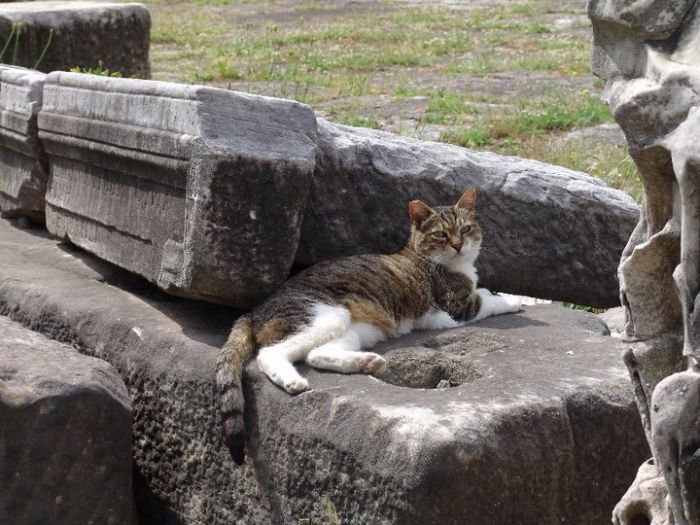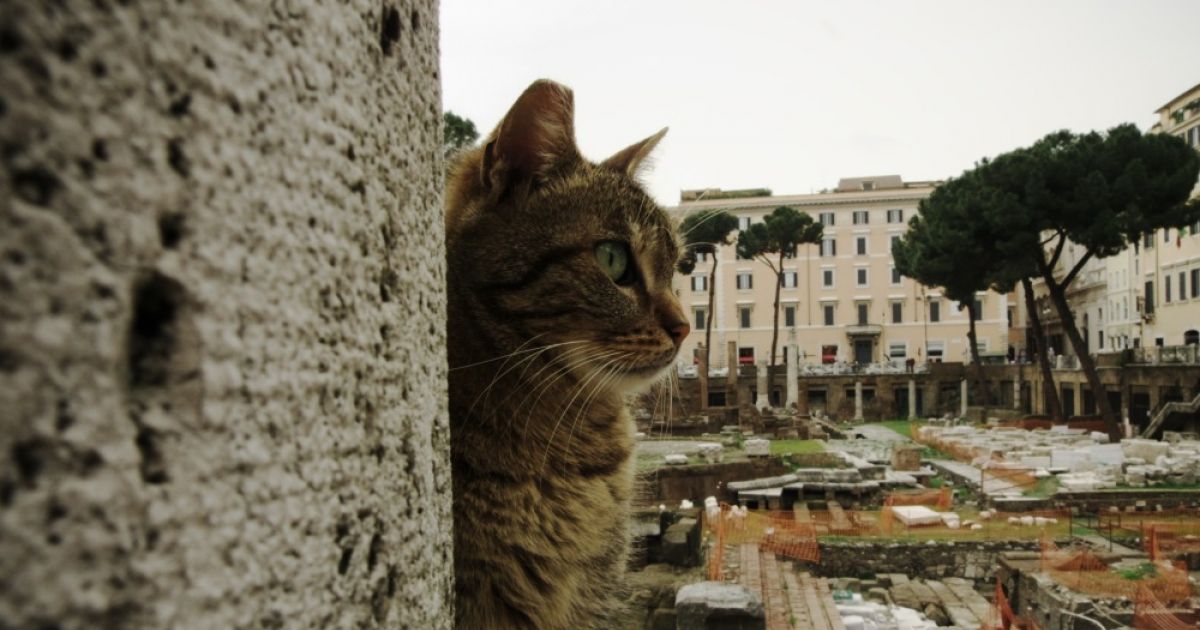
The Site Of Caesar’s Stabbing Has Been Repurposed Into A Cat Sanctuary
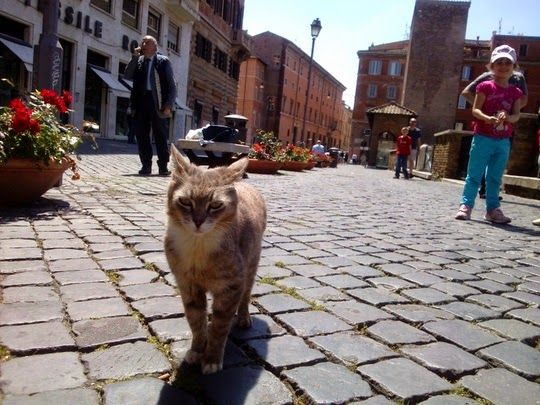
Every tourist visiting Rome senses it: Rome's cats are different.
Unlike the cuddly and sometimes aloof balls of fur you're likely to know and love, Rome's cats, the ones you see, are largely feral, prowling ancient monuments as if they owned them and answering to no one.
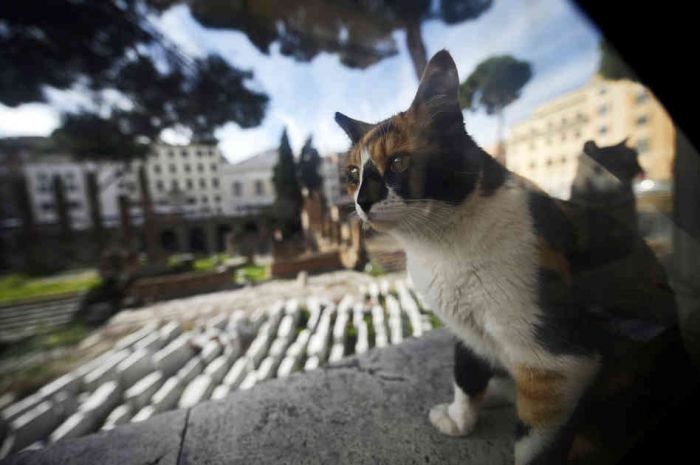
Former Roman dictator and salad namesake Gaius Julius Caesar
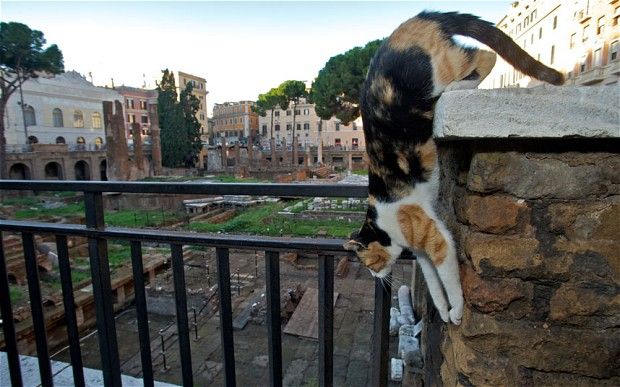
was betrayed and killed by his colleagues at the Theater of Pompey in 44 BC. Now known as Largo di Torre Argentina, this historic site has quite unexpectedly been repurposed into a cat sanctuary.
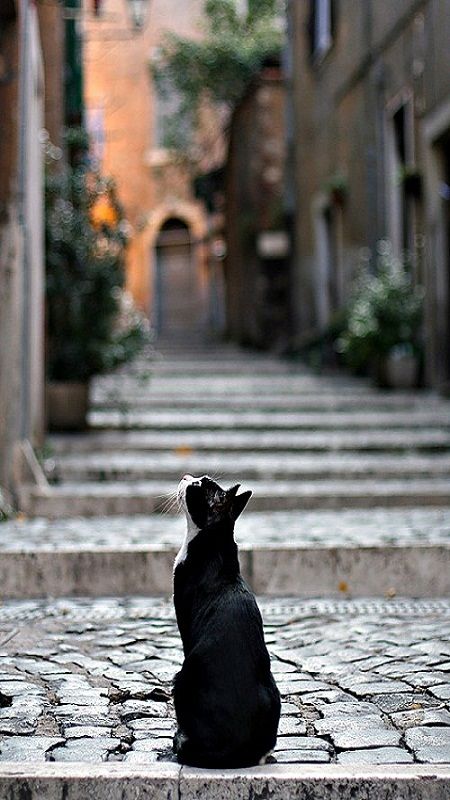
The sacred area of the Torre Argentina, which contains some of Rome's earliest temples, was first excavated in 1929.
Cats moved into the protected below-street level shortly after--to be followed by the "gattare," the most famous of which was Italian Film star Anna Magnani.
The Torre Argentina Cat Sanctuary began later in a "cave like excavated area under the street" which was used as a night shelter for cats and a storage place for food.
Over the next 80 years,
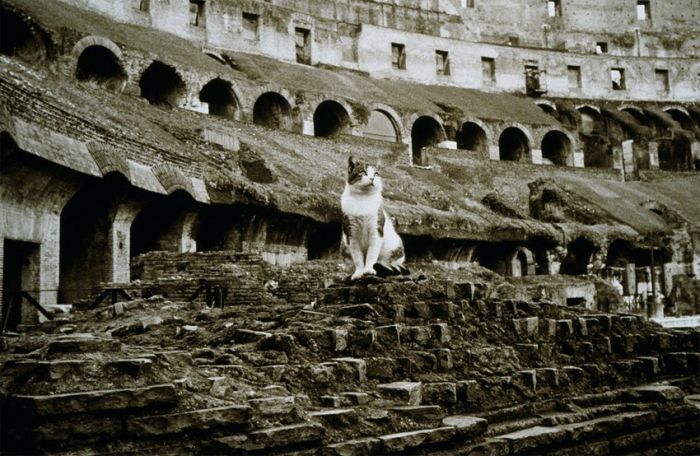
the site of one of history's most notorious murders bore witness to yet another invasionferal cats. The multi-tiered structure was apparently irresistible to the city's many stray cats, and they decided to aggregate within the perfectly sculpted cubbyholes and on top of immaculately shaped colonnades.
Through donations from visiting tourists and fundraising efforts,
the sanctuary evolved into a professional operation, taking care of the cats by feeding, spaying and providing medical assistance while sharing funds with the poorer sanctuaries around Rome when they were available.
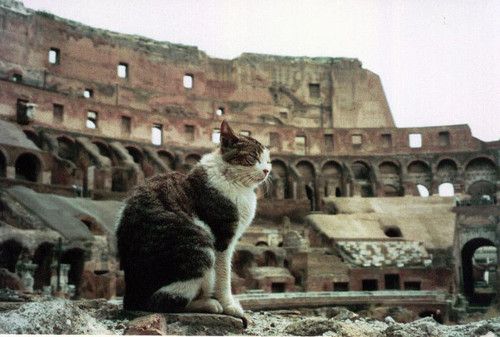
There are estimated to be 300,000 feral cats in Rome living in over 2000 colonies.
You might think that the city fathers would be alarmed by these numbers, but Rome's city council has recently come out in favor of the cat's existence in Rome by citing their ancient heritage: "There is a deep-rooted affection for these cats who have an ancient bond with the city." The city council even went so far as to protect the cats, in 2001 naming cats living in the Coliseum, the Forum and Torre Argentina a part of the city's "bio-heritage."
With so much support, you might wonder about the underlying social interactions between cats and humans in the Eternal City.
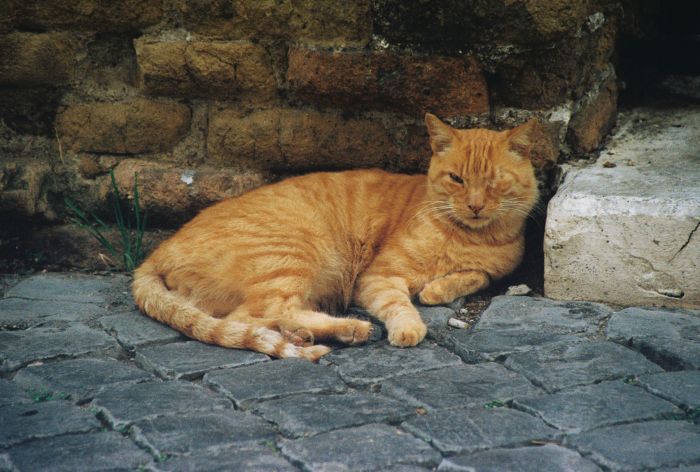
Well, here's the skinny: the fat tabbies lolling at the base of those Roman columns are fed in the lean times by the doting Gattare, or "Cat Women." Not everyone in Rome, of course, holds a fondness in their hearts for their neighborhood Gattara--or for the cats--but it hardly matters to the healthier ones, who augment their meals outside the finest of Rome's eateries.
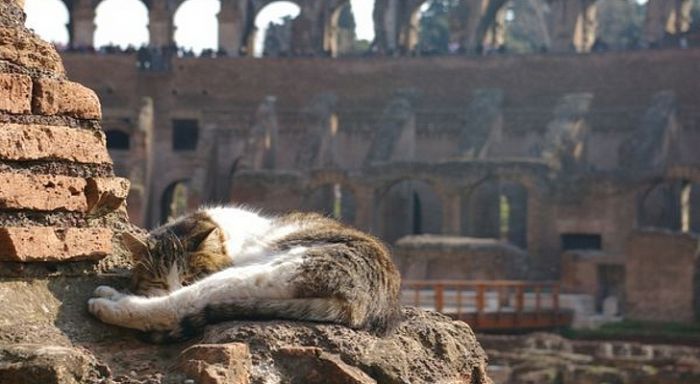
In summer there are pigeons, mice and lizards to be had in the excavations and nearby fields as well.
(In antiquity, the cat was highly valued for just this activity--defending mankind against rodent borne diseases like the plague. In Classical Cats: The Rise and Fall of the Sacred Cat, Donald W. Engels argues that the millions of cats slaughtered alongside the heretics they were associated with during the inquisition may well have contributed to the severity and spread of the plague. So beware of hysteria-borne religious prejudice, the unintended consequences of arbitrary hate can be deadly.)
Luana Stefani of the sanctuary points out that since its foundation in 1995,
the organisation has done much to control Rome's cat population, sterilising some 27,000 cats over the last 17 years.
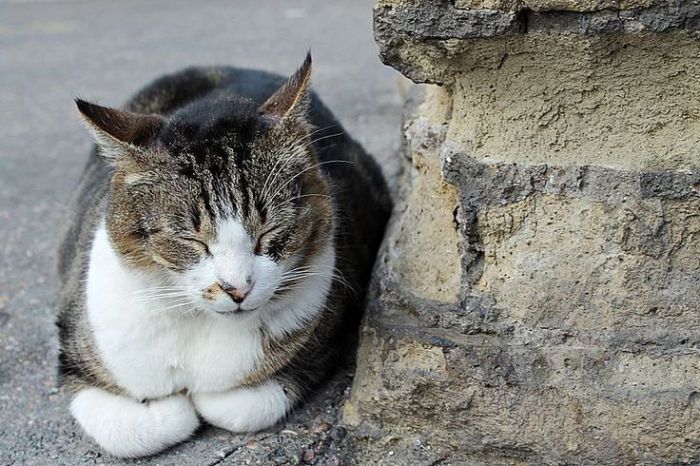
No one may disrupt any place where five or more cats have made their roost.
There are even "Cats of Rome" calendars for tourists.