

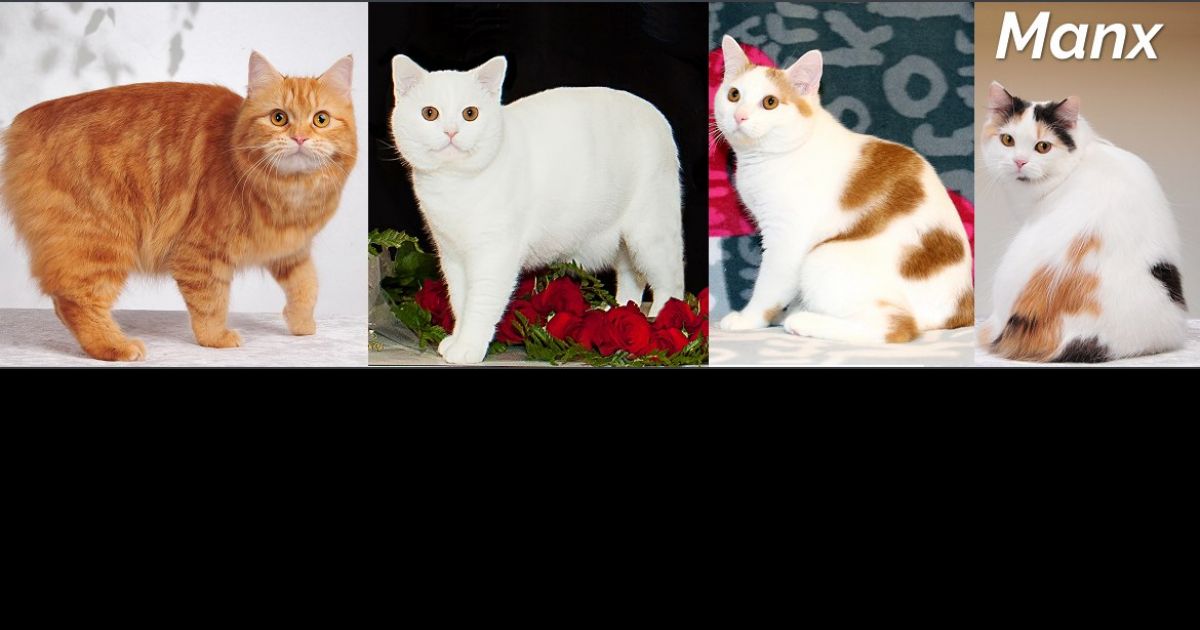
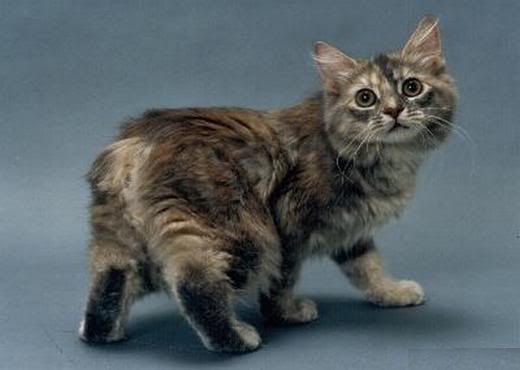
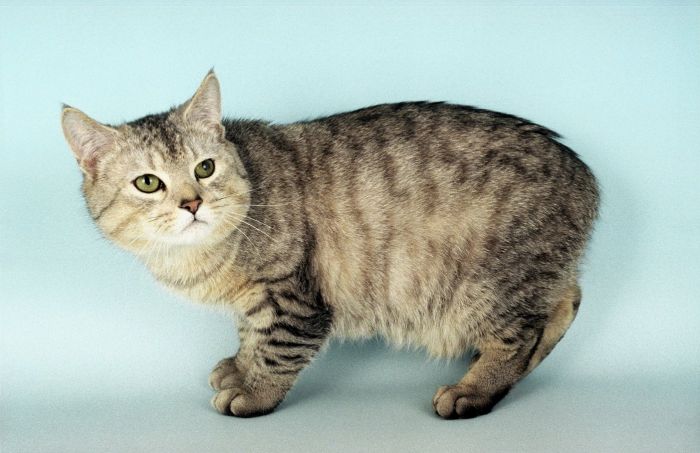
with a naturally occurring mutation that shortens the tail. Many Manx have a small stub of a tail, but Manx cats are best known as being entirely tailless; this is the most distinguishing characteristic of the breed, along with elongated hind legs and a rounded head.
advertisement
Is it really a cat if it doesn’t have a tail?
It is if it's a Manx. There are lots of cats with short tails or no tails, but the Manx (and his sister breed the longhaired Cymric) is the only one specifically bred to be tail-free. Sometimes jokingly said to be the offspring of a cat and a rabbit (however cute the idea, a "cabbit" is biologically impossible), the tailless Manx is the result of a genetic mutation that was then intensified by the cats' remote location on the Isle of Man, off the coast of Britain.
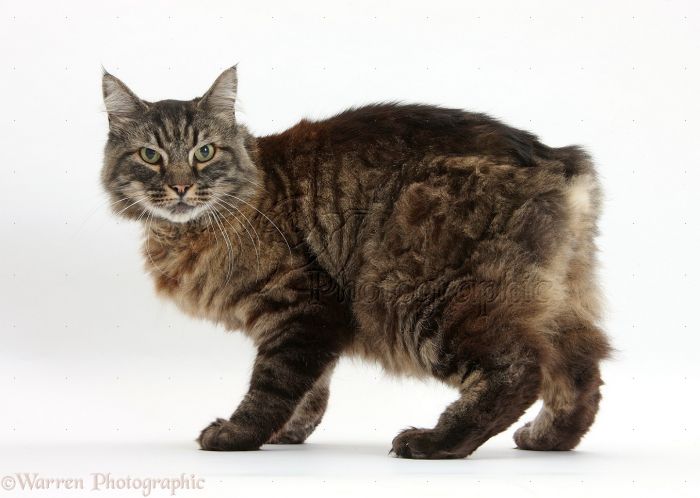
Best-known for its lack of tail, the Manx is native to the Isle of Man, located between England and Ireland. This round, cuddly breed is also fun-loving and friendly, should there be any other household pets.
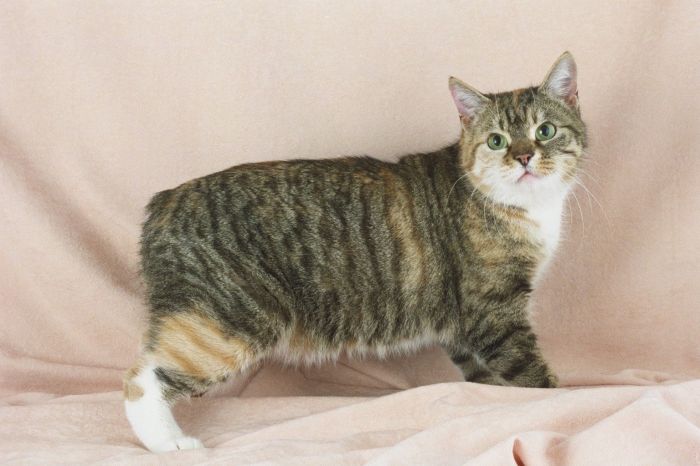
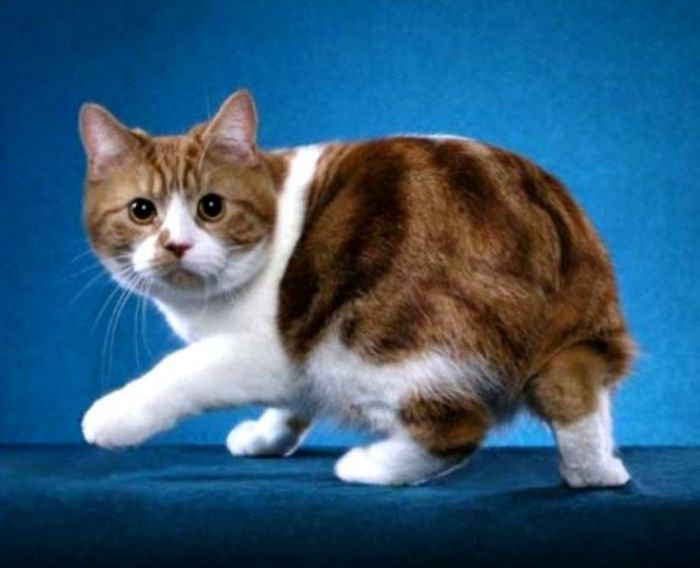
The most striking feature of the cat is its small "stub" of a tail, which is classified into four varieties: rumpy, rumpy-riser, stumpy, and longy. Rumpy tops the popularity charts and is in great demand in show rings: these have no tail, with just a dimple present in its place. Stumpy has a short curved tail while longies -- the least popular -- possess a normal tail.
advertisement
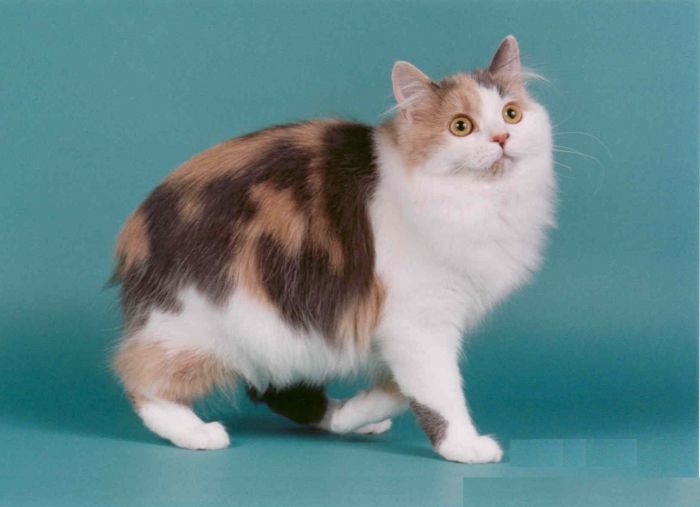
There are also two types of Manx coats: shorthair and longhair (formerly Cymric).
The shorthair's double coat is glossy and padded, while the longhair has a silky and plush double coat. There are many different types of accepted color and varieties, including white, black, brown spotted, silver tabby, and black tipped.
Curiously, the Manx has a rabbit-like gait, appearing to hop around rather than walk.
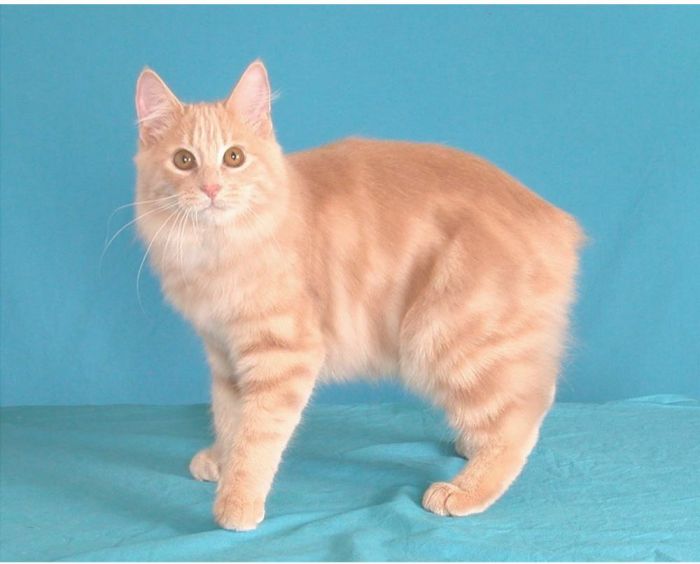
The Manx has a long history and has lived on the Isle of Man -- which lies in the Irish Sea, between England and Ireland -- for centuries. There are several tales of how they first arrived on the island.
According to one story, the cat was traveling with the Spanish Armada when it was wrecked on the Isle of Man in 1588. The cats swam to the island and made it their home. Another story is that they were brought to the Isle by Phoenician traders, who arrived from Japan. Others claim that the cat was introduced to the island by Viking settlers who colonized it.
advertisement
Inhabitants of the isle also have many fanciful tales to account for its lack of tail
which is most often attributed to a spontaneous genetic mutation that occurred many centuries ago. According to one story, the Manx was a result of a cross between a cat and a rabbit. Another imaginative tale narrates how Irish invaders stole the cat's tail to make plumes for their helmets. Yet another interesting story suggests that the Manx was brought to Noah's Ark but since time was short and as they were the last passengers to climb aboard, Noah slammed the door on their tails.
advertisement
Calm and composed, a Manx tends to bond closely with one person or the entire family.
Not a good choice for highly mobile people as this breed does not like being relocated to different homes. But be aware that this is a speedster who is capable of making hairpin turns during play. Look up if you can't find your Manx this breed likes to supervise household activities from top shelves or on top of doors.
advertisement
Sturdy in stature
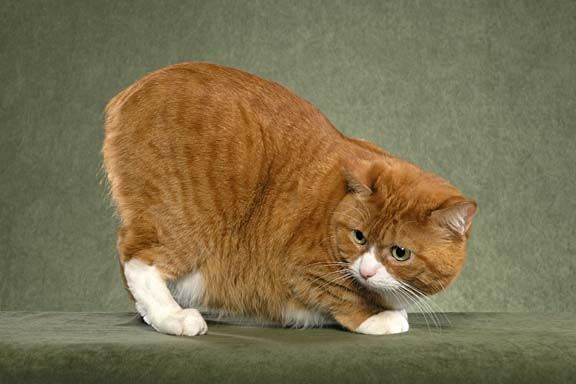
the Manx sports one of the shortest torsos of any feline breed. Its looks are highlighted by a broad chest, round head, and big, round eyes. The ears are wide set and the neck is short and thick. The tailless gene is dominant in both the shorthaired and longhaired versions, but some Manx kittens can be born with a short or a full tail. It depends on the parents. If the egg and sperm both carry the marker for no tail, then the kittens will never develop tails.
advertisement
The shorthaired coat is thick with outer guard hairs that give off a glossy look.
The longhaired coat feels silky to the touch. The coat is available in nearly every color and pattern, with the more popular looks being color pointed, bicolor, solid and tabby.
Females weigh between 8 and 10 pounds and males average between 10-12 pounds.
advertisement
The Manx's personality is probably the reason the breed has won such a strong following despite the physical difficulties and breeding challenges.
Manx cats make great household companions. They are intelligent, active, and fun-loving cats that manage to express themselves very well without tails to swish around. Manx get along well with other pets (particularly dogs), and form strong bonds with their chosen humans. They enjoy a good game of fetch and are fascinated by water, but only on their terms, of course. Manx are exceptional jumpers because of their powerful back legs. No cupboard or shelf is safe with a Manx around.
advertisement
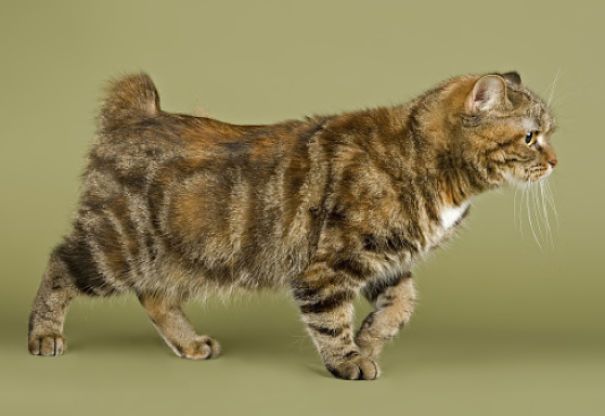
Manx hop
The Manx is known for its unusual rabbit-like gait, known as the 'Manx hop.' While some breeders and fanciers consider the walk to be a result of skeletal abnormalities related to the Manx gene, others consider it merely a result of the short back and the long hind legs as noted in the Manx standard.
advertisement
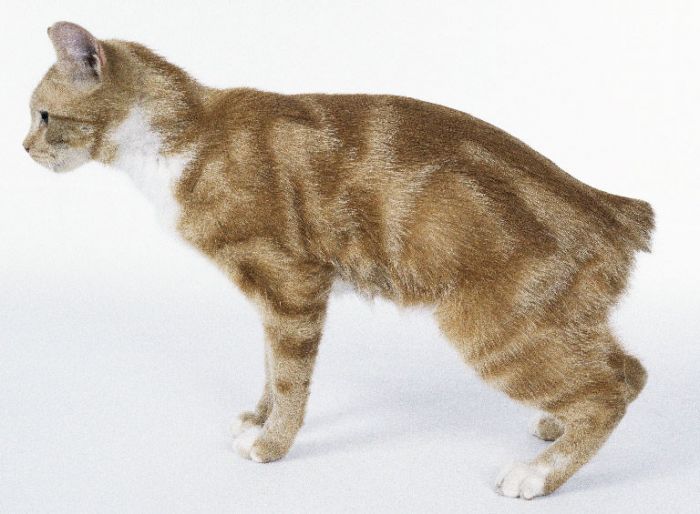
Manx cats come in a wide variety of tail lengths.
The tail types are broken into four classifications: rumpy, rumpy-riser, stumpy, and longy.
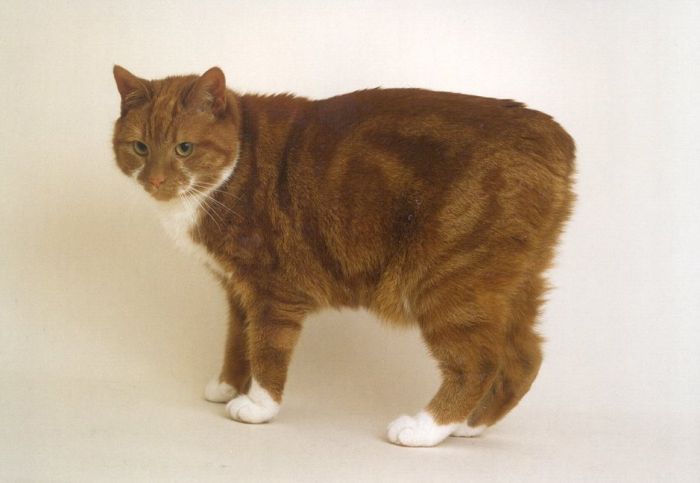
Rumpies compete in the championship show ring and are highly prized by fanciers.
Rumpy-risers have a short knob of tail that consists of one to three vertebrae connected to the last bone of the spine
Stumpies have a short tail stump that is often curved or kinked
Longies have tails that are almost as long as an average cat's.
advertisement
The Manx is gentle and playful.
It's not unusual to find that he enjoys playing fetch or carrying his toys around. He's also smart and dexterous, capable of using his paws to get into cabinets or to open doors. Fond of human company, he will carry on a conversation in a sweet trilling voice. Some Manx give all their love to a single person while others are affectionate toward the entire family, including children.
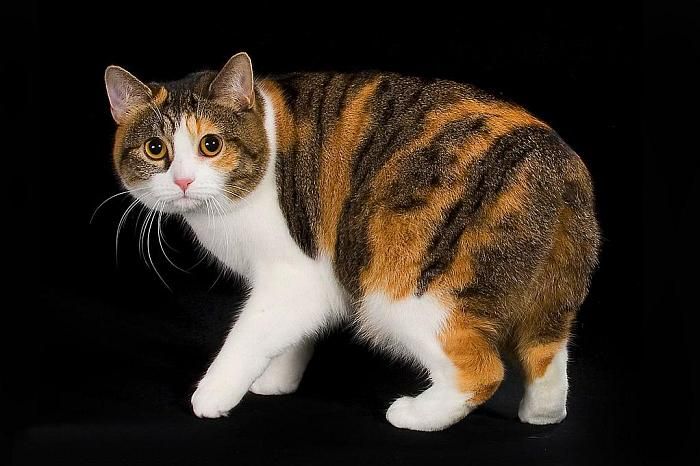
The Manx has a powerful rear end and is an excellent jumper
He might lack a tail, but the Manx has a powerful rear end and is an excellent jumper, even without a natural counterweight to aid his balance. When you see him accelerate through the house and make sharp turns and quick stops, you'll think he's a mini sports car in the shape of a cat.
The Manx is well suited to any home with people who will love him and give his gorgeous coat a weekly combing. Keep him indoors to protect him from cars, diseases spread by other cats and attacks from other animals.
advertisement