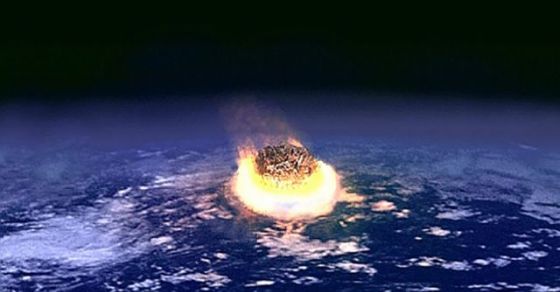
These are the 12 things most likely to destroy the world
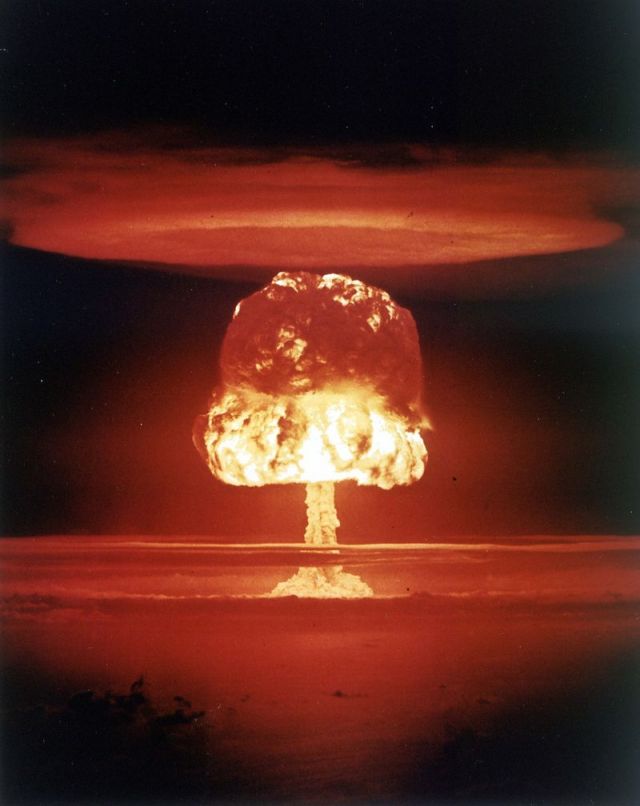
#1 Nuclear war
Why does nuclear war make the list? Because of the possibility of nuclear winter. That is, if enough nukes are detonated, world temperatures would fall dramatically and quickly, disrupting food production and possibly rendering human life impossible. It's unclear if that's even possible, or how big a war you'd need to trigger it, but if it is a possibility, that means a massive nuclear exchange is a possible cause of human extinction.
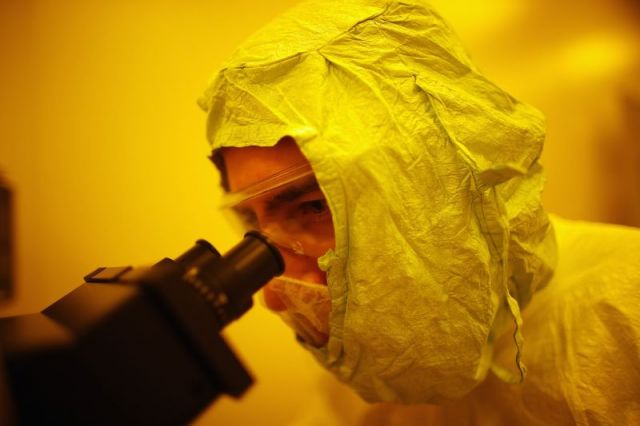
#2 Global pandemic
A pandemic that killed off most of humanity would surely leave a few survivors who have immunity to the disease. The risk isn't that a single contagion kills everyone; it's that a pandemic kills enough people that the rudiments of civilization agriculture, principally can't be maintained and the survivors die off.

#3 Artificial Intelligence
The report is also concerned with the possibility of exponential advances in artificial intelligence. Once computer programs grow advanced enough to teach themselves computer science, they could use that knowledge to improve themselves, causing a spiral of ever-increasing superintelligence.
If AI remains friendly to humans, this would be a very good thing indeed, and has the prospect to speed up research in a variety of domains. The risk is that AI

#4 Nanotechnology
This is another potential risk in the future. The concern here is that nanotech democratizes industrial production, thus giving many more actors the ability to develop highly destructive weapons. "Of particular relevance is whether nanotechnology allows rapid uranium extraction and isotope separation and the construction of nuclear bombs, which would increase the severity of the consequent conflicts
#5 Global system collapse
This is a vague one, but it basically means the world's economic and political systems collapse, by way of something like "a severe, prolonged depression with high bankruptcy rates and high unemployment, a breakdown in normal commerce caused by hyperinflation, or even an economically-caused sharp increase in the death rate and perhaps even a decline in population."

#6 Catastrophic climate change
The scenario that the authors envision here isn't 2ºC (3.6ºF) warming, of the kind that climate negotiators have been fighting to avoid for decades. It's warming of 4 or 6ºC (7.2 or 10.8ºF), a truly horrific scenario which it's not clear humans could survive.
#7 Supervolcano
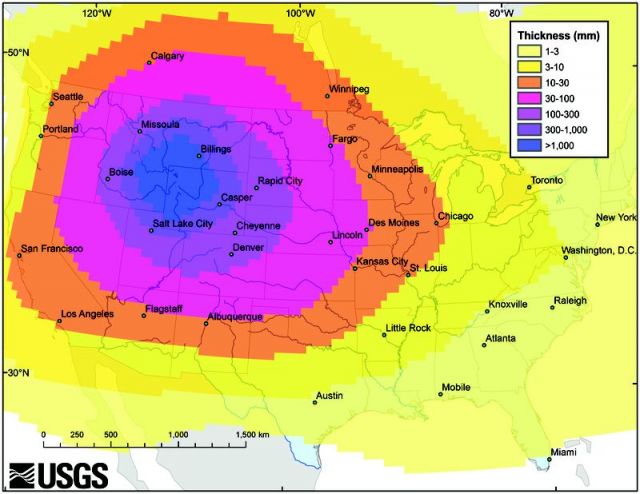
The PermianTriassic extinction event, which rendered something like 90 percent of the Earth's species extinct, is believed to have been caused by an eruption.
Eruptions can cause significant global cooling and can disrupt agricultural production. They're also basically impossible to prevent, at least today, though they're also extremely rare. The authors conclude another Permian-Triassic level eruption is "extremely unlikely on human timescales, but the damage from even a smaller eruption could affect the climate, damage the biosphere, affect food supplies, and create political instability."
#8 Synthetic biology
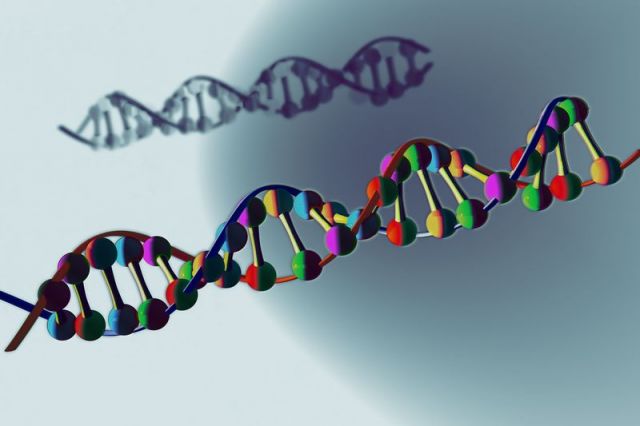
Synthetic biology is an emerging scientific field that focuses on the creation of biological systems, including artificial life.
The hypothetical danger is that the tools of synthetic biology could be used to engineer a supervirus or superbacteria that is more infectious and capable of mass destruction than one that evolved naturally. Most likely, such an organism would be created as a biological weapon, either for a military or a non-state actor.
#9 Future bad governance
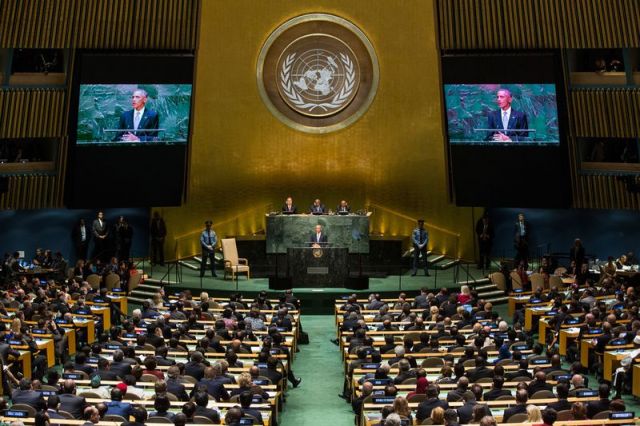
This is perhaps the vaguest item on the list a kind of meta-risk The danger is that governance structures often fail and sometimes wind up exacerbating the problems they were trying to fix. A policy failure in dealing with a threat that could cause human extinction would thus have hugely negative consequences.
#10 Major asteroid impact
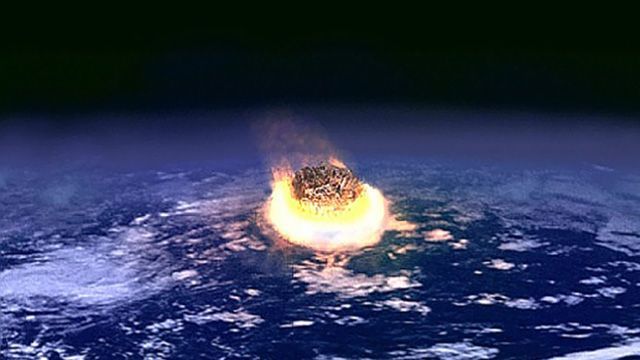
Major asteroid impacts have caused large-scale extinction on Earth in the past. Most famously, the Chicxulub impact 66 million years ago is widely believed to have caused the mass extinction that wiped out the dinosaurs (an alternative theory blames volcanic eruptions, about which more in a second). Theoretically, a future impact could have a similar effect.
#11 Ecological catastrophe
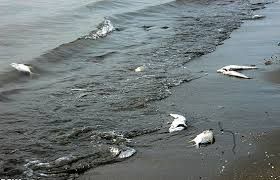
"Ecological collapse refers to a situation where an ecosystem suffers a drastic, possibly permanent, reduction in carrying capacity for all organisms, often resulting in mass extinction," Given that humans are heavily dependent on ecosystems, both natural and artificial, for food and other resources, mass extinctions that disrupt those ecosystems threaten us as well.
#12 Unknown unknowns
The first 11 items on the list are risks we can identify as potential threats worth tackling. There are almost certainly other dangers out there with grave potential impacts that we can't predict. It's hard to even think about how to tackle this problem, but more research into global catastrophic risks could be helpful.