

Ever wondered, what happens to your body when you skimp on sleep, down one too many cups of coffee and go on a crash diet? Or try any health stunts in general? We tell you exactly what, and why it’s not a good idea to try them.

Things Every Woman Should Know About Her Skin
By
Editorial Staff in
Health and Fitness
On 3rd July 2017
advertisement
#1 Own your skin
You probably don't realize it, but your skin is constantly reinventing itself: The outer layer regenerates every month. Your body's biggest organ needs to stay in tip-top shape because it has important jobs to do—like shielding you from pathogens, the elements, and everyday bumps and falls. You can help by giving your skin the TLC it deserves. That means eating the right nutrients, slathering on sunscreen, and checking for suspicious spots, says Jessica Wu, MD, professor of dermatology at the University of Southern California's Keck School of Medicine. Bonus: Those same healthy habits will keep your skin soft, smooth and gorgeous, too.
#2 You Need More Than Sunscreen
“Sunscreen is much less effective than we ever thought,” says Dr. Webb.
Sunscreen is tested in laboratories on people who aren’t sweating, aren’t active and have put on the perfect amount. In real life, on the other hand, many people misuse sunscreen by failing to apply enough and forgetting to reapply as needed. Even waterproof and “sport proof” sunscreens wear off and must be reapplied at least every two hours.
“The sun destroys many of the protective property of sunscreens,” says Dr. Webb. “It literally cooks the sunscreen. I think of it as a shield of armor that has been shot full of holes.”
Sunscreen was developed in World War II for sunburned soldiers working in hot climates, says Dr. Wall. The first sunscreen wasn’t white, but was in fact red petrolatum.
“This wasn’t something designed for people to go out and have fun in the sun,” she adds.
Today’s sunscreen manufacturers have come a long way, but many sunscreens still fail to protect the skin against aging and skin cancers. While a number of sunscreens promise UVB/UVA protection, Dr. Wall says she is surprised to see how few contain the specific ingredients needed to guard against UVA, the rays that age the skin and contribute to skin cancer.
“I tell people to look at the ingredients,” says Wall. “Your sunscreen needs to include zinc, titanium, parsol 1789 or mixoral to protect against UVA rays. If it has one of those, then you’ve got a good sunscreen.”
Still, for the best protection people should seek shade, avoid peak sun hours and wear protective clothing when outdoors. If in the sun, apply a minimum level 30 UVA/UVB sunscreen and reapply at least every two hours, more if you’ve been in water or sweating.

advertisement
#3 Beauty Should Be A Source Of Confidence, Not Anxiety
It's all too easy to stress out about beauty. You have a zit, your skin is oily, you're flaking — whatever it is, just relax. We all have imperfections, and you should feel confident about yourself rather than anxious. "Skin is your largest and most accessible organ. Everybody has their cross to bear when it comes to their skin and the good news is that it’s treatable and reversible, so it’s something that can change your sense of self-confidence and your sense of self," Gohara says.

#4 90 Percent Of Aging Comes From The Sun
"You should be wearing sunscreen every day, regardless of your skin color, regardless of the weather. Even if it’s a cloudy day. The minimum should be SPF 30 or higher," says Gohara. Sun is one of the most damaging things to young skin, so make sure to protect yourself.

advertisement
#5 Check Your Skin Every Month
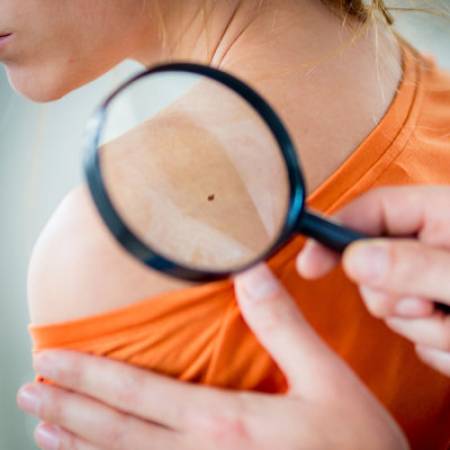
More than half of all cancers are skin cancer, and as many as 1 million people are diagnosed with non-melanoma skin cancer each year, according to the American Cancer Society. Adults should know about the signs of non-melanoma skin cancers, as well as how to spot a melanoma.
Dermatologists recommend a thorough self check once a month in addition to an annual exam with a physician. Begin a skin check by rubbing a towel roughly over the face, hands, arms, trunk, legs and feet. Any spots that bleed easily may raise a red flag. “This kind of buffing is a maneuver that can help people be alert,” says Dr. Webb. “Your skin should not bleed if you rub it hard.”
If anything looks abnormal or seems to be changing, see a doctor right away. Skin cancer of all forms is highly curable when caught early.

advertisement
#6 Wash Your Face Every Night
Don't skip washing your face at night — no matter how tired you are. "Not washing your face at night can create enlarged pores and acne," Gohara says.

advertisement
#7 Smart swaps can give you better skin
While some foods can help prevent UV damage, others can cause problems (from acne to aging). Here, three smart trades to try for healthier skin.
Instead of blended coffee drinks, drink plain iced coffee. Dairy can worsen acne; sugar helps break down collagen, says Dr. Wu, author of Feed Your Face. On the other hand, having four or more cups of coffee a day was associated with a 20 percent lower risk of melanoma in a 2015 Yale study.
Instead of grilled steak, eat salmon. Red meat that's cooked at high temps is more likely to form advanced glycation end products, which can play a role in aging. Salmon is rich in anti-inflammatory omega-3 fatty acids. A study published in 2009 suggests that a serving of oily fish every five days may protect against pre-cancerous changes.​
Instead of lots of citrus fruits, eat watermelon. Citrus contains substances called psoralens, which make your skin more sensitive to UV rays, and have been linked to an increased risk of melanoma. Like citrus fruits, watermelon are chock-full of skin-rejuvenating vitamin C—but they don't have any psoralens.

advertisement
#8 Wrinkles can offer health clues
Got a lot of deep creases? You might be at a higher risk of developing low bone density postmenopause, according to a Yale School of Medicine study. That makes sense, says Debra Jaliman, MD, professor of dermatology at the Icahn School of Medicine at Mount Sinai in New York City, because skin and bone are made from the same type of collagen. Another study, from the Netherlands, found that women with saggier skin had higher blood pressure. "Wrinkles can signal that your body is not making enough of the protein elastin, which helps keep both your skin and blood vessels supple," notes Dr. Jaliman. Wrinkles could also be a hint that you need more shut-eye: Women who received five or fewer hours a night had more fine lines than those who logged a full night's sleep, according to a 2013 study. When you skimp on rest, your body has less time to do its nightly repair work on collagen and elastin, explains Dr. Jaliman

advertisement
#9 Taking Care Of Your Skin Doesn't Have To Be Expensive
Skincare doesn't have to be synonymous with high-maintenance or high-price. "There’s so many products, so many claims, so many things to know — and so I actually want people to bring it back to the basics and remember that you don’t have to spend a lot of money to make your skin look healthy and beautiful and young. If you stick to those basic tenets, it won’t be overwhelming. That’s really important, because people spend tons of money that you can get very reasonably and they do the exact same thing," Gohara says.
advertisement
#10 You sweat for a reason
What you need to know about embarrassing perspiration issues.
First of all, why do we perspire? It's your body's way of regulating your temperature, says Dr. Jaliman. There are two types of sweat glands: eccrine, which are found all over your body, and apocrine, which are located in areas with a lot of hair follicles, like your armpits and groin. Your eccrine glands produce mostly odorless water and salt; your apocrine glands, however, churn out a milky fluid that combines with skin bacteria to create BO.
How can I prevent rashes and breakouts caused by sweat? Start by wearing looser workout gear, since rashes can be a result of friction from damp clothing, says Dr. Wu. And shower as soon as you can after each workout (or wipe down your face, chest and back with salicylic or glycolic acid pads). If the problem persists, try applying antiperspirant on your inner thighs and under your breasts to stave off rashes and chafing.
My palms drip when I'm nervous. What can I do? About 3 percent of people in the United States have hyperhidrosis, which means they sweat too much, often from one or two areas of the body (usually the underarms, palms, feet or head), according to Malcolm Brock, MD, director of the Johns Hopkins Center for Sweating Disorders. If you're diagnosed with the condition, there are a number of treatment options, including prescription deodorants and Botox.

advertisement
#11 It’s Never Too Late
Think your skin is beyond hope? Think again.
Dr. Wall talks about her husband’s years as a lifeguard in New Jersey, a stint that brought its fair share of blisters and peeling skin. Today Wall’s husband, also a dermatologist, is nearly 40 and shows very little signs of aging. Despite early skincare transgressions, he took great care to protect his skin as an adult and has essentially short-circuited much of the sun’s damage.
“The good news is that the skin repairs itself,” says Dr. Webb. “People say, ‘I can’t do anything about that now.’ The fact is that you can. If you mend your ways in a diligent fashion you can undo some of the damage.”
Skin renews itself every two weeks, and while gravity and age do take their toll, women today have helpful tools to help mend what nature cannot. Webb encourages women to eschew the miracle potion of the month and instead look for gentle skin products that feel good and don’t cause excessive tightness or peeling. Beyond basic skincare, women can try a number of effective therapeutic options.
Prescription strength retinoids like Retin-A and Tazorac sit at the conservative end of the spectrum of treatment, helping to increase the skin’s cellular turn-over rate. Moving along the spectrum, women can explore laser treatments and chemical peels as well.
One popular laser treatment referred to as IPL (intense pulse light) can get rid of red patches, capillaries, brown spots. Although it doesn’t get rid of wrinkles, it can make a visible difference, says Webb. IPL is a simple “lunchtime” procedure that involves no downtime. Meanwhile, more aggressive lasers do help with wrinkles but require longer recovery periods.
Botox injections and collagen fillers are also safe ways to relax frown muscles and plump the skin, but only under the care of a qualified practitioner. Dr. Wall encourages women to research their options, looking for doctors with board certification and specialized training in cosmetic procedures. She encourages people to ask questions like, “How many procedures have you done?” and “What is your training in this particular device?”
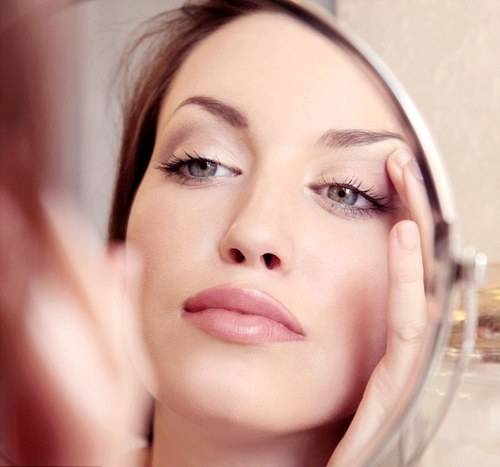
Each woman requires an individual approach, say both Drs. Webb and Wall. “I ask women, ‘What is the first thing that draws your eye when you look in the mirror?’” says Dr. Webb. “The key is identifying the issues and choosing the appropriate treatment for that person.”
advertisement
#12
Although a good face wash and lightweight sunscreen are great tools in your skincare arsenal, there are a lot more ways you can maintain a healthy glow. Try these five surprising tips to get a smooth complexion that will last for years to come.