
All too often, we are told to link the milestones of our personal and professional lives (your first real job, your first real relationship, turning 30) to the possession of certain material items. You have not truly made it, according to this model, if you do not yet own your own home; you are not yet a man if you do not drive the coolest or most stylish sort of car.
advertisement
#1
All too often, we are told to link the milestones of our personal and professional lives (your first real job, your first real relationship, turning 30) to the possession of certain material items. You have not truly made it, according to this model, if you do not yet own your own home; you are not yet a man if you do not drive the coolest or most stylish sort of car.
This narrative may well benefit real estate agents and car manufacturers, but is it working for you? After a brief post-recession hangover, personal debt levels in the United States are again hitting record highs: In 2013, the average American carried $15,279 in credit card debt. Here at AskMen, we love the finer things in life, but we recognize that their enjoyment requires a certain freedom: When a car, a house, or even a whiskey preference becomes something whose maintenance produces anxiety, all pleasure is lost.
With that in mind, we have assembled this list of things that you might think you need -- but that you all-too-possibly don't.

10. A Home Theater
Back in 2009 and 2010, we all thought we needed 3D televisions. Some unfortunate souls actually purchased them, maintaining hopeful little bowls of folded glasses for screening parties that were never to be held. In 2013, we see this for the hype-fueled bubble that it was, but still maintain a certain curiosity regarding 4K Ultra HD (8 million pixels for $16,999! At five pixels per penny, it practically buys itself!). We loved Breaking Bad as much as the next guy, but we don't like the thought of working overtime in order to get a better view of Bryan Cranston's pores. Watching TV is fun and relaxing, but it's also passive, asocial and isolating. Dropping your hard-earned cash -- or worse, unearned credit -- on high-end stuff-you-do-by-yourself-in-the-dark infrastructure will not make your life better.

advertisement
9. A Chance At Millions
Gambling, according to no less an expert than Michael Jordan, "is not a bad thing if you do it within the framework of what it's meant to be, which is fun and entertaining." It is easier for things to remain fun, however, when losing $126 million means the mere postponement of a diamond earring purchase. For the rest of us, gambling losses (and when you tally the final score, it's almost always a loss) are significantly harder to absorb. We're still gaming, though: In 2013, the casino industry posted record rates of post-recession growth, and online gambling generated $95 billion in revenue over 2012. Considering that this industry only thrives to the degree that its patrons receive nothing for something, its current prominence shouldn't imply that you need to get in on the action. Statistically, it's far better to leave it be.

8. Your New Hobby
We don't like to be overly cynical about New Year's resolutions. While some (read: most) of them might be destined for failure, we think self-improvement is a worthy goal, and applaud any holiday, ritual or circumstance that allows us a chance to take stock of who we are and who we want to be.
It is all too easy, however (and all-too-thoroughly-advertised), to mistake purchasing for doing, and acquisition for enthusiasm. While we think it's great that you want to take up cycling, you don't need that $8,000 Pinarello just yet. One of the worst (and most comical) things about failed resolutions is their physical detritus: the abandoned weight-machines, dusty power-tools and unridden racing bikes that mock us from our garage walls. Before buying pro-level gear, work on pro-level commitment.

advertisement
7. Labels
Why do you have a Ferrari bath robe? Does it possess any of the qualities that distinguish Ferraris from other cars? Curvaceous Pininfarina styling, perhaps? Or a throaty 12-cylinder gurgle? Does it go fast?
Why does your T-shirt read "Armani Exchange?" Is it reflective of the unlined, unstructured suits that catapulted the Italian design house to international fame in the mid-1980s? Does it use traditional materials in unexpected contexts, reflecting the creative re-contextualization with which Giorgio Armani first made his mark?
Fashionable people know about fabrics, cuts and styles. Nakedly aspirant people know about labels. You don't need flashy labels to dress well.

advertisement
6. Space
Between 1950 and 2004, the average American house ballooned from 983 to 2,384 square feet -- as a nation, we clearly love our personal space. Before deciding that you require a walk-in closet, a football-ready yard or a "man cave," however, it might be worth it to question how much of your life needs to take place on your own property. In job-rich cities like New York, San Francisco, Boston, and Washington, D.C., the average rent for a two-bedroom apartment is already north of $3,000 per month; in an environment like this, do you really need that much breathing room? Do you really need a yard when you have Central Park? A home theater when you have Grauman's Chinese? A "man cave" when you already have an actual home? In 2013, the trend is toward decreased private space and increased enjoyment of the city itself. Given sky-high rents and stagnant wages, it might be a better idea to make more out of less.

advertisement
5. A Job You Hate
In order to keep up with the Joneses, materially-speaking, you need a good job. Unfortunately, "a good job" has come to mean "a well-compensated job," leaving things like personal satisfaction, overall well-being and the sense that you are not wasting the only moments of consciousness you may ever possess on things like TPS reports as something of an afterthought. In 2013, 70% of U.S. employees reported being either "not engaged" or "actively disengaged" with their jobs, and the more debt (or status-anxiety) you have, the more tied to that dispiriting series of tasks you are. While we may not have only one life, even reincarnation-proposing Buddhists believe that human existence represents the most rare and fortunate state of being in the universe. So why spend most of it in a cubicle? It can only increase your chances of returning as a donkey.

advertisement
4. Date-Night Douchery
Everybody knows that, as a first-date location if not a hangover cure, Denny's leaves much to be desired. But have you ever considered that taking her to Per Se (or Alinea, or The French Laundry -- you get the idea), could be just as much of a misstep? The idea here is that ultra high-end, "night of your life"-type date destinations are kind of like conversational name-dropping -- they are approval-seeking (and therefore insecurity-revealing) choices. It is far better, on a date as in the rest of life, to make choices that reflect your individual passion and knowledge, rather than relying on secondhand social cachet. All of the restaurants we mentioned above are amazing places, but they're also very famous, and could easily be read as grandiloquent. You do not want to be the man calling in magnums of Veuve, or requesting superfluous truffles: That man needs validation, and can be spotted a mile away.

advertisement
3. A Black Card
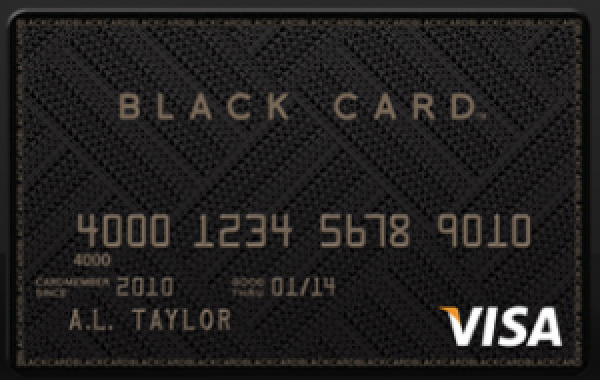
If you are the sort to base your personal finance decisions on the boasts contained in Jay-Z lyrics, you may have considered upgrading to the recently launched Visa Black Card. At first glance, it could seem like an appealing signifier of a certain kind of financial prowess -- the card itself, for instance, is made of stainless steel. While this may solve your issues with credit card rust (très déclassé), the card itself is gaining a reputation as something of a joke. Modeled after American Express' Centurion card -- a product only available to those with over 16.3 million in assets -- Visa's Black Card has apparently been created to impress people who don't know the difference. Offering fewer rewards than a comparable AmEx Platinum, and commanding a hefty $495 annual fee, the Visa Black signifies status anxiety rather than wealth, and should be avoided.
advertisement
2. A (Cool) Car
There is no consumer product that is more comprehensively associated with the over-spending young man than the (cool) car. For a lot of guys, it's the first thing they get after signing their first "real job" contract; for some, a starter lease on a low-end BMW or Audi can even justify remaining in Mom's basement for a few more years ("Well, I have a separate door -- so it's pretty much an upside-down loft").
Unsurprisingly, this is one of the easiest ways to get in over your head, financially-speaking. Buying a high-end car was once the reward for years of hard work, but arguably exploitative loan structures have now placed these luxury signifiers within reach of the merely ambitious. There are few things sadder than watching someone drop $3 of gas into a $75,000 BMW.

advertisement
1. Homeownership
The greatest signifier of adulthood, for many, is the owning of one's own living space. In the years prior to 2008, sub-prime and variable-rate mortgages enchanted many with their offers of capital-free home ownership and then brought down the entire economy. The idea that a mortgage payment represents personal stability and achievement, however, is still around, and the tempting-if-improbable financial structures that allowed nearly anybody to get on the hook for one are slowly returning.
We don't think homeownership is a bad idea in and of itself, but given our penchant for following jobs across the country, and considering the very real possibility that we are again in a real-estate bubble, tying oneself to a specific piece of property might not be the paragon of personal responsibility that we have long assumed it to be.