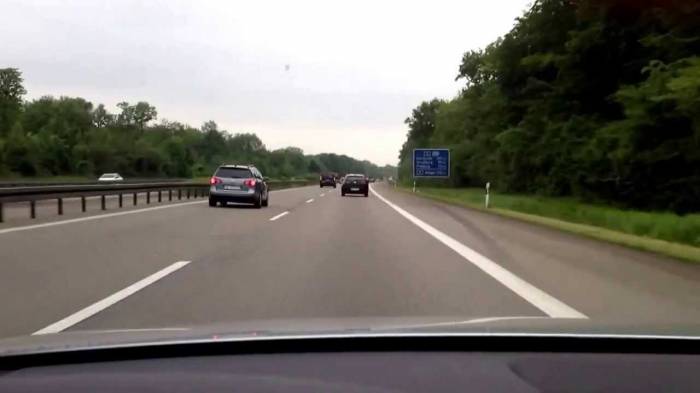
American’s dream place to go and be a reckless driver. But most people don't know that the Autobahn still has rules and limits. Bummer. There are actually speed limits and speed minimums, so don't think that you can mosey along if you decide to drive on this famous highway. It also wasn't a design by Hitler, as most people believe, but was constructed during his time. In addition, in spite of all of the supercars available today, the speed record for the Autobahn was set by a Mercedes-Benz in 1938 and has yet to be broken. There are all sorts of things that people didn’t know about the Autobahn, and these are just the start…
advertisement
#1 It's Actually Very Safe
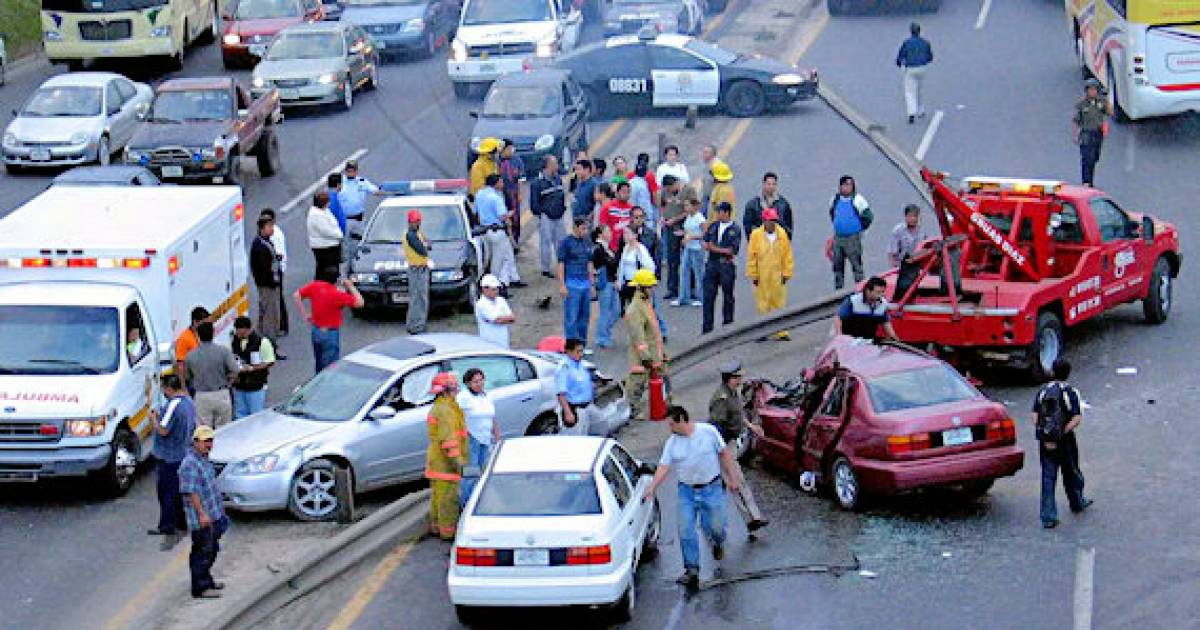
The Autobahn is very well maintained and constructed. the Autobahn is far safer than freeways in the U.S. because of all the added safety features and the fact that roads and bridges in the U.S. go without maintenance for decades. Fatalities on the German Autobahn are at 4.3 per hundred thousand while in the United States that number is 11.5 for every hundred thousand drivers. You'll get fined heavily if you run out of gas on the highway so there are stations every 30 miles and telephones placed every 2 miles.
#2 The Left Lane Is The Fast Lane… Period
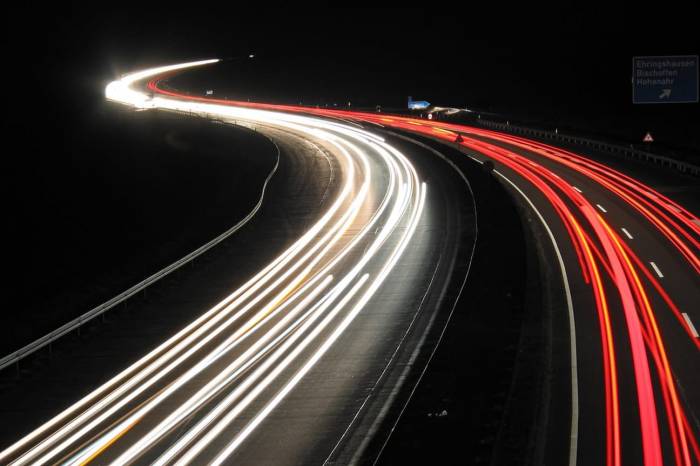
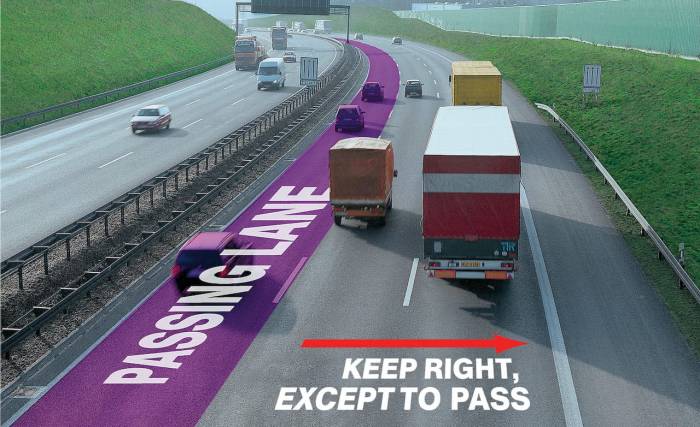
As in the US, the left lane is for passing only. You'll get arrested for doddling along in that lane and most cars are traveling at about 150mph when passing in the fast lane. You have to keep up with the flow of traffic because if you speed up and tailgate, the fine is $500. with a suspended license and ban from the Autobahn for 3 months. The setup of the Autobahn is surprisingly built around safety, in spite of the intense speeds. Given that, one must never pass on the right. It is most certainly illegal.
advertisement
#3 Germans Are Trained For The Autobahn
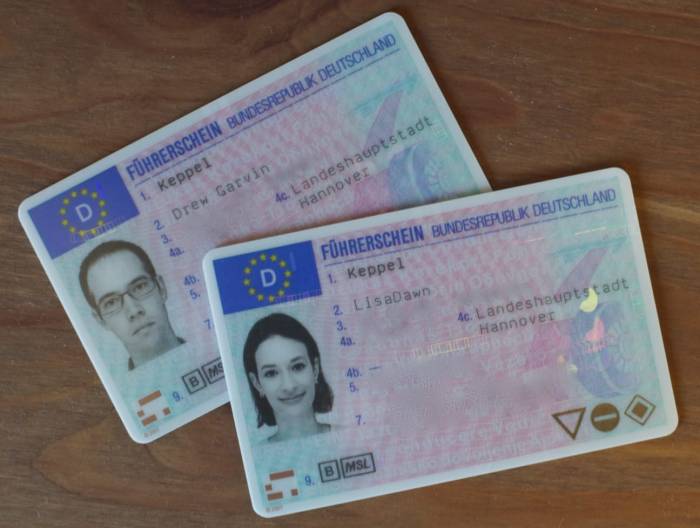
Getting a German drivers license is a bit more difficult than it is in the U.S. Drivers are required to first get training in first aid in case of an accident. They are REQUIRED by law to stop at any vehicle in distress to assist if needed. This includes people who are just visiting Germany as well. High-speed car-driving courses must be taken in order to get a license. Not to mention that there are fourteen required theory lessons and at least a dozen in-car driving lessons. Anyone going to Germany just to check out the Autobahn must take the same courses.
#4 Not Only Traffic But Construction Moves Quickly
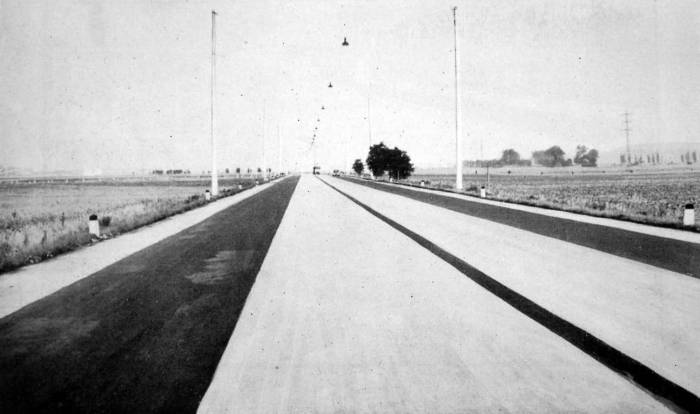
The Autobahn is known as the world's first motorway and was constructed between 1913-1921 on a stretch of land in Berlin. By the end of World War II, the Autobahn stretched a staggering 2,128km and had gone from 2 lanes to 10 lanes in some areas. We're talking about a time period when the materials for building roads were not as readily available and advanced as they are today, and look at the US roads today with all the advances. Considering all the other problems Germany had to deal with during that time, it's amazing the efficiency and quality with which the Autobahn was built.
advertisement
#5 Built During The 3rd Reich, But Not Hitler’s Idea
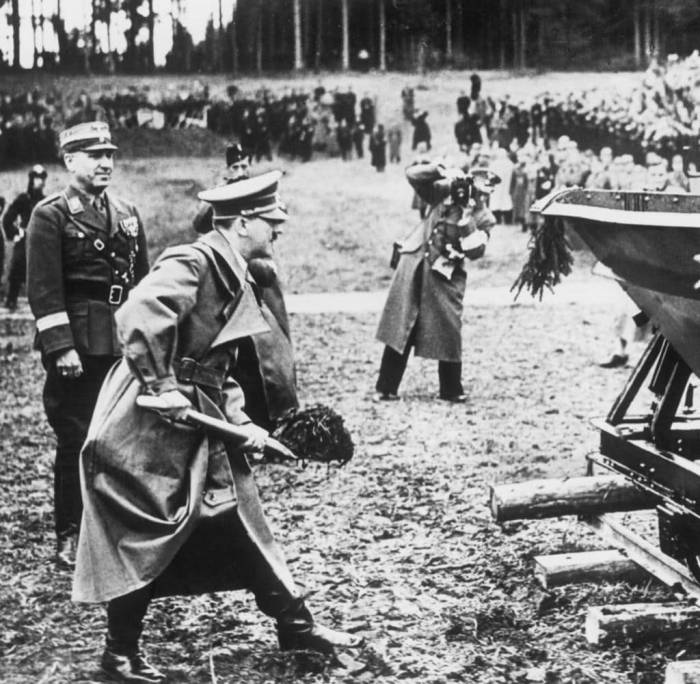
Throughout history, people have assumed that the Autobahn was Hitler's idea. He was said to have built it for troop movements and transportation of weapons.The first Autobahn was the Avus experimental highway, and as stated above, created between 1913 and 1921, most of which time Hitler was simply an aspiring painter. Of course once in power, he used the road to his advantage. By 1936, over 130,000 people were involved in the building of the motorway. The first official section of what was then called the Reichsautobahn (highway of the Reich), was opened up in 1935 between Frankfurt and Darmstadt.
advertisement
#6 Yes, There Are Speed Limits
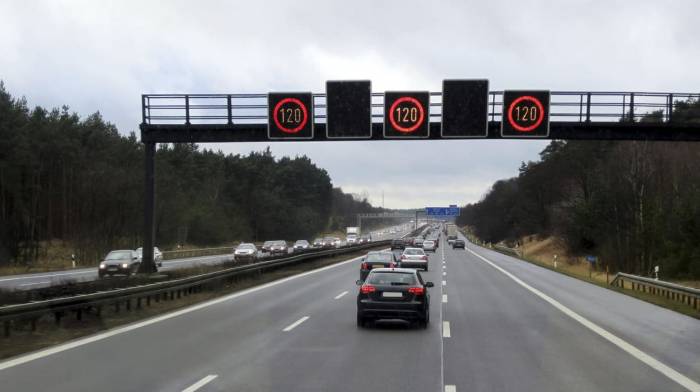
The belief that someone can drive on the Autobahn and just fly from city to city without a care for the speed limit it simply not true. There are limits. There is actually a government-recommended speed of 80MPH and about 60% of the highway does not have a posted speed limit. Many visitors to Germany, who just want to experience the thrill of driving as fast as possible, were getting into serious accidents. The government asked German officials to place a limit, but the law failed. People of Germany were used to going over 100MPH. However, in the posted areas of 80MPH, a $1,000 fine can be imposed if you're caught.
advertisement
#7 This Includes A Minimum Speed Limit
With over 40% of the Autobahn under a speed limit, they also have a speed minimum requirement. Makes sense. That limit is 60MPH. However, you must keep up with the flow of traffic, so if the cars around you are going 120MPH and you're doing 60, it can be a bit unsettling. While the speed limits are rarely enforced on the Autobahn, the minimum speed usually is, as it can cause serious rear-ending and crashes.
advertisement
#8 The VW Golf & Jetta Are The Most Frequently Used
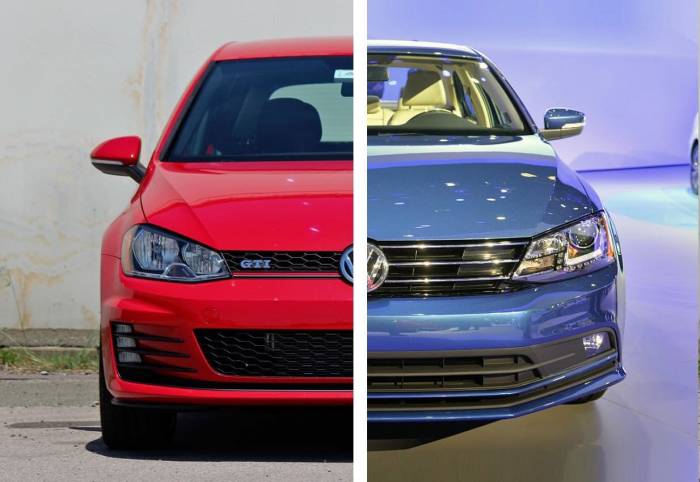
The most frequently used cars on the Autobahn, by a large margin, are Volkswagen Golf and the Volkswagen Jetta. Both German made cars. There are over 2,500 of either of these two cars on the highway at any given time. One might think that supercars like the Bugatti Veyron, or the Lamborghini Veneno would be used much more frequently, given the ability to really open up the cars on the freeway. However, it's clear that, like in so many other stereotypical ways, the Germans are incredibly practical and efficient.
advertisement
#9 The Speed Record Is 268.8mph… From 1938
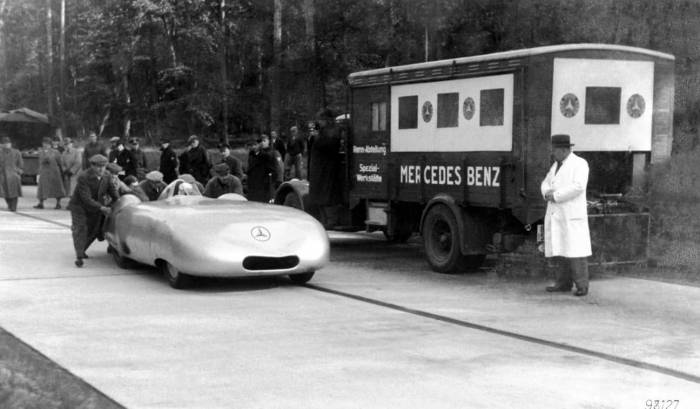
The Autobahn speed record was set in 1938, and no one has broken it since. That was in 1938. Though many have tried to break that record since, certain lanes of the highway have to be shut down for people wishing to give it a try. Rosemeyer got close in his V-16 Auto Union, which had a twin supercharged V16 engine and 513 brake horsepower. However, it would be Rudolf Caracciola, in his Mercedes-Benz W125 Rekordwagen, which had a twin supercharged V12 and 736 brake horsepower, who managed to take the record.
advertisement
#10 Largest Pileup Involved 259 Cars
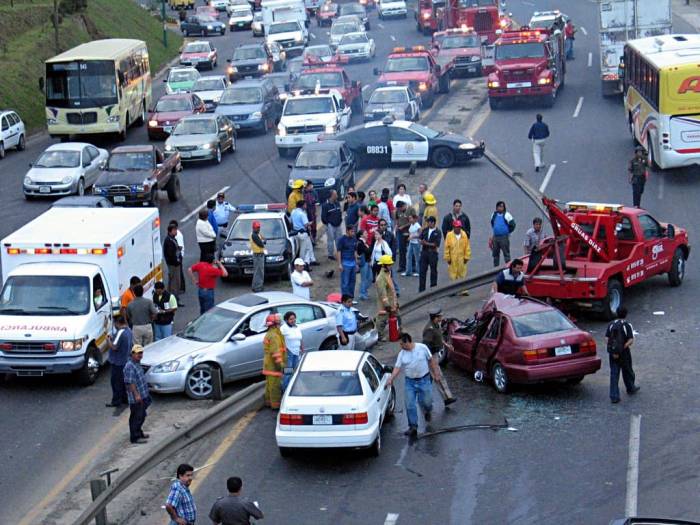
Accidents occur less frequently than they do in the United States, UK or Canada, but when they happen, they break records. In Braunschweig, in July of 2009, there was a heavy rain which clearly resulted in the failure for some to handle the high speeds of the motorway, and 259 cars collided. The incident resulted in two million dollars of damages and took three helicopters, forty ambulances, and three hundred and fifty firefighters to deal with the whole event. Astonishingly no one died. Another horrific accident was in 2007 when a fuel truck was swiped off a bridge by a drunk driver and it landed in the center of the Autobahn and exploded, destroying the bridge causing over three hundred and fifty million dollars worth of damage and killing one person. The truck driver.
advertisement
#11 The Autobahn Doesn’t Just Exist In Germany
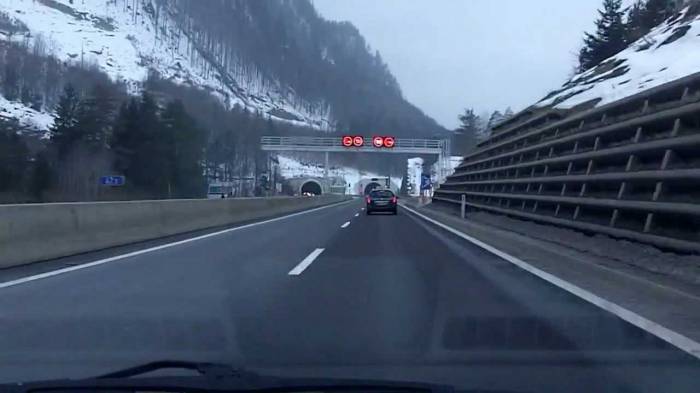
The direct English translation of Autobahn is simply ‘car road'. In proper translation, the term means highway. All modernized countries have highways. In fact, there are stretches of German-built Autobahn in today's Poland and the Czech Republic. In addition to that, and to no surprise, Austria calls their highways Autobahns. This makes total sense as Austria is a German-speaking country. Croatia, the Czech Republic, and Switzerland all have variations of the German Autobahn but not as well constructed or with such high-speed limits.
advertisement
#12 Stretches Of The Reichsautobahn Still Exist
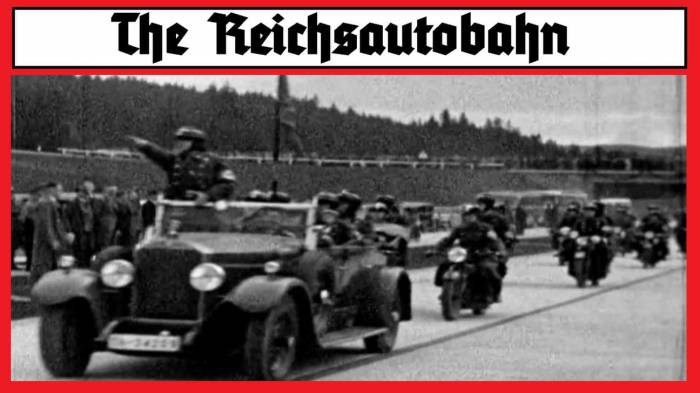
As a reminder of Hitler and the Third Reich, the Reichsautobahn is simply what the Autobahn was referred to during the Third Reich, and translates to ‘highway of the Reich'. It is still in use in parts of Europe, but not in Germany. It exists in Poland, Austria, and the Czech Republic. Clearly renamed, the original stretches themselves still exist. Over half a century on, it's incredible to think that not only are there still these reminders of the Third Reich but also that they are still structurally sound and driven on daily. They sure knew how to build infrastructure.
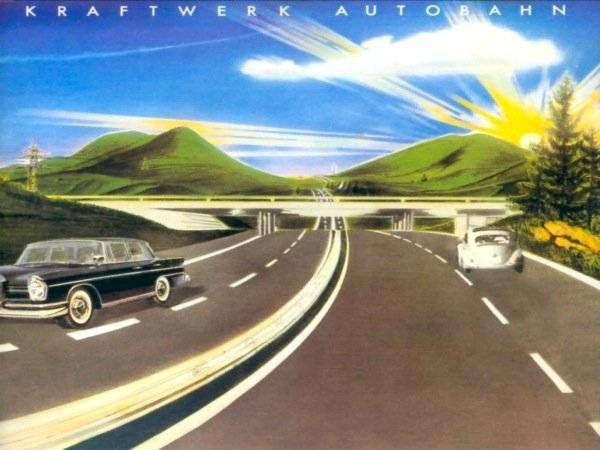
#13 There’s A 1975 Hit Song About The Autobahn. It’s 22min Long
Kraftwerk is an electronic band from Germany that formed in 1969 and is actually still going strong based on the coattails of their one hit song, Autobahn. The 22-minute song was cut to 3 minutes in 1974 for a single to be played on American radio and reached the number 24 spot on the charts. The song was number one in 1975 across Europe and the writer says that 'the Third Reich was heavily responsible for the greatest lengths of the highway.' That's why the song is so long, as it tells the story of how it all happened. No, thanks.