More than 30 years after his death, the man in the trademark white suit and black string tie who pioneered Kentucky Fried Chicken’s “finger-lickin’ good” secret recipe remains the public face of the fast-food chain. AGAIN!
Things You May Not Know About the Real Colonel Sanders
By
Editorial Staff in
Amazing
On 12th September 2015
advertisement
#1 Colonel Sanders
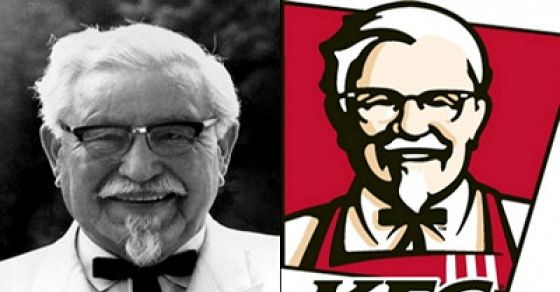
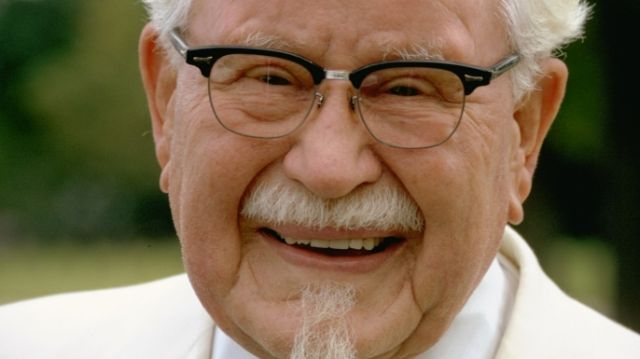
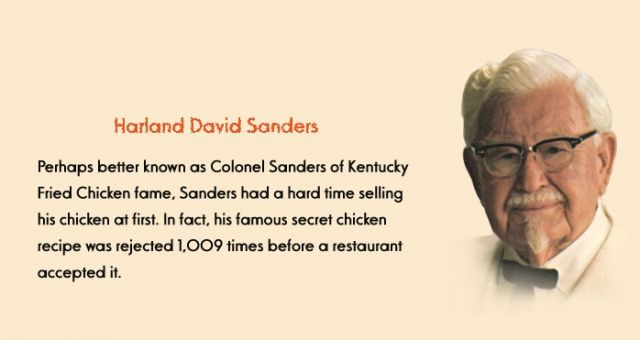
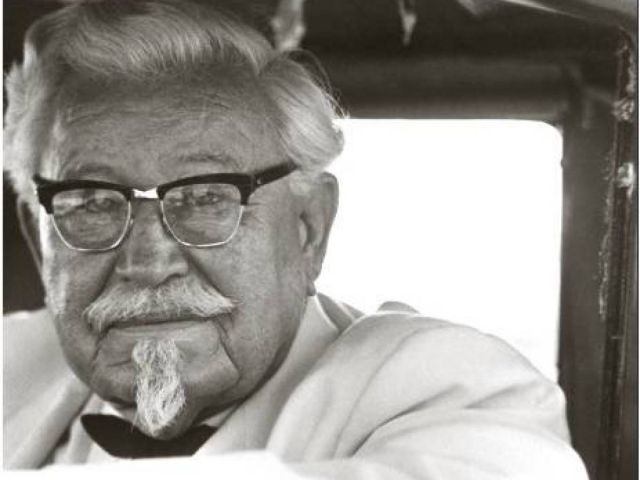
On September 9, 1890, Colonel Harland Sanders was born on a farm outside Henryville, Indiana. More than 30 years after his death, the man in the trademark white suit and black string tie who pioneered Kentucky Fried Chicken's "finger-lickin' good" secret recipe remains the public face of the fast-food chain. Check out eight surprising facts about the fried-chicken tycoon.
#2 The ORIGINAL Recipe
So you remember when Ronald McDonald helped invade Cuba in 1906? Oh, no wait. That's right he didn't. Because while Ronald hadn't even been dreamt of yet, the real life Harlan David Sanders was storming the Caribbean islands with Teddy Roosevelt.
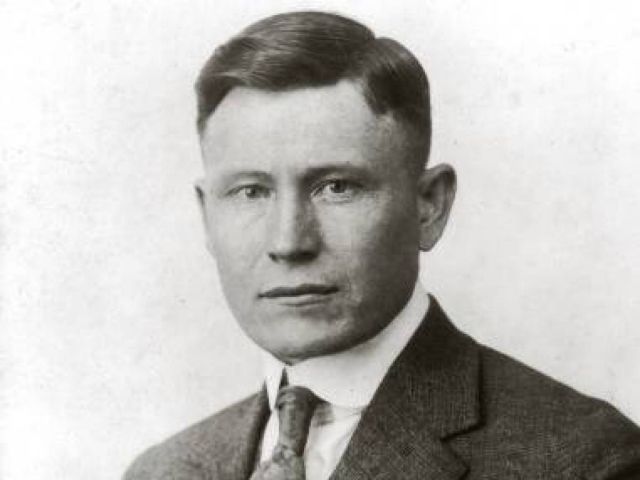
Sanders had been born to a butcher and housewife in Henryville, Indiana only sixteen years previously in 1890. But after his father's death and his mother's re-marriage to an unpopular stepfather, pre-teen Harlan moved away and worked as a farmhand and railway conductor before blagging his underage way into the U.S. Army.
advertisement
#3 Crispy First Jobs
After his army stint, he returned to the mainland for temporary careers as railway labor and an insurance salesman. He was fired from bothfor punching out a co-worker at the railroad and for "insubordination" to his superiors at the insurance office.
Despite his occupational issues, he persuaded his first wife,Josephine King to marry him in 1909 and juggled his young kids, a job as a fireman, and night school in order to get his law degree. A law degree he promptly threw away after a court room brawl with his own client cost him his legal career.
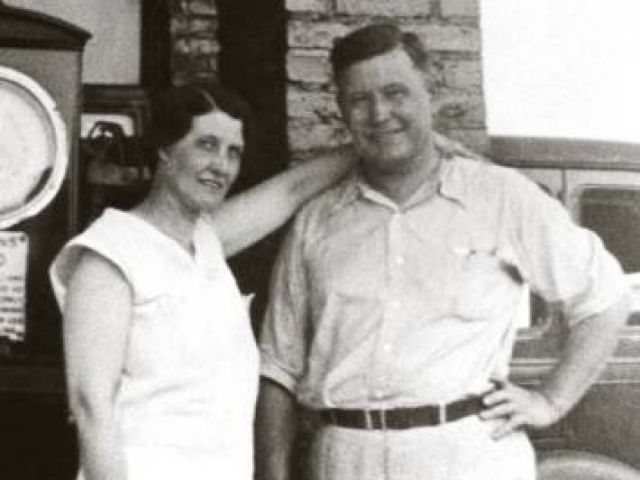
#4 No Sale On Fried Chicken
He went on to try running a ferry boat company, manufacture lamps, and sell tires before he finally found steady success during the Great Depression as a most excellent proprietor of gas stations.
advertisement
#5 Oil, Gas & Chicken Wings
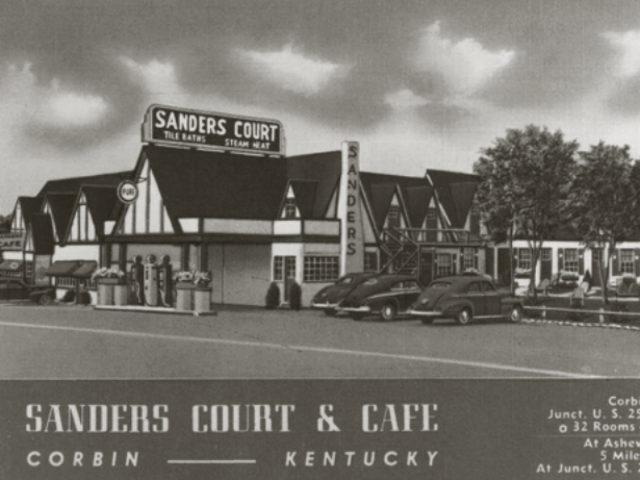
He had also been a bit of a dab-hand in the kitchen, and at the new Corbin, Kentucky gas station he managed, he started selling food to weary travelers first from the back of the stationand then from a larger dining room across the street. His food gained rapid popularity among the locals and travelers alike. His patrons included Kentucky Governor Ruby Laffoon, who in 1935 awarded him the title of "Kentucky Colonel"an honorary position gifted from the state of Kentucky to those who have given great service (or in this case, great chicken) to the community.
advertisement
#6 The Chicken Dream Continues
During World War II, Colonel Sanders had his mistress and soon-to-be second wife Claudia Ledington-Price manage the main restaurant while he worked his way around the government's food service bureaucracy.
After a brief stint as a supervisor in Seattle, Sanders found himself managing some of the cafeterias at Oak Ridge, Tennesseehome of the Manhattan Project. Which means that he was the one feeding up all of those existentially concerned scientists like Einstein, Fermi, and Oppenheimer who were faced with building the atomic bomb. Imagine the dinner conversations and cafeteria banter he was privy to.
advertisement
#7 French Fried Franchises
His country ham and steak dinners proved so popular, however, that he soon opened Sanders' Café across the street and began to serve chicken fried in an iron skillet. Food critic Duncan Hines included the restaurant in his 1935 road-food guide, and it was there in 1939 that the colonel used pressure cookers to perfect his quick-frying chicken coated in his secret recipe of 11 herbs and spices.
The Colonel's nomadic habits as a hard to employ loose canon served him well when it came time to expand his business. He knew what people in different regions wanted and how to market the seemingly "exotic" southern food to other states and countries.
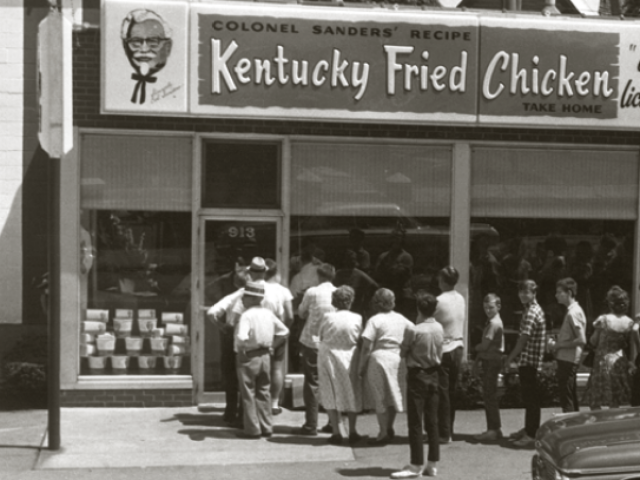
The first franchise opened in Utah in 1952 under the official re-branded name of "Kentucky Fried Chicken." The new name was not the Colonel's clever concoction but rather the work of an ambitious sign painter. By the mid-1960s, there were over 600 Kentucky Fried Chicken franchises in the U.S., UK, Canada, Mexico, and, oddly, Jamaica as well.
advertisement
#8 Franchising Takes Off
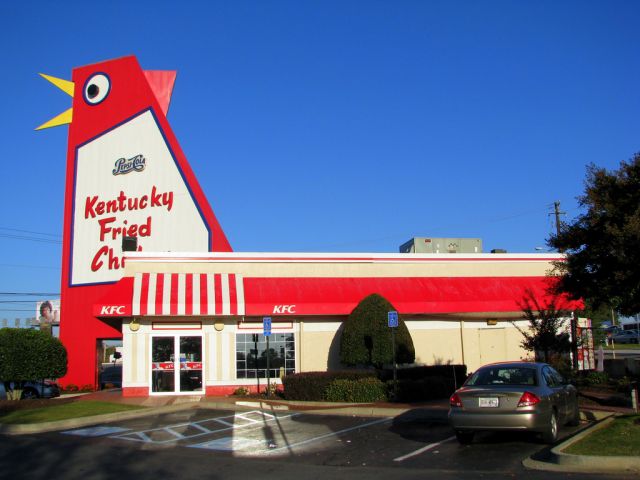
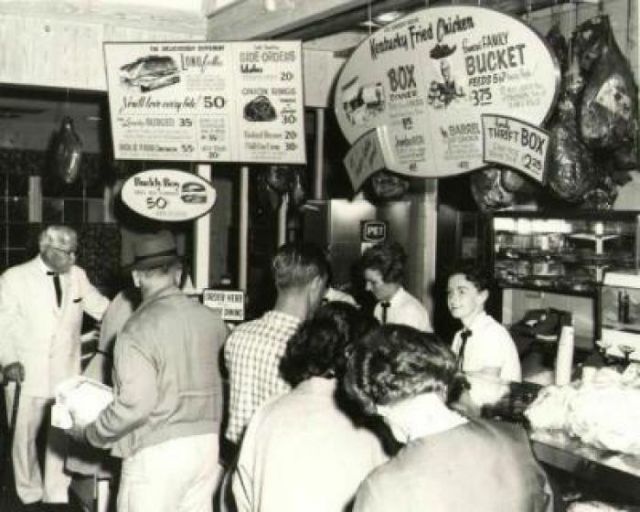
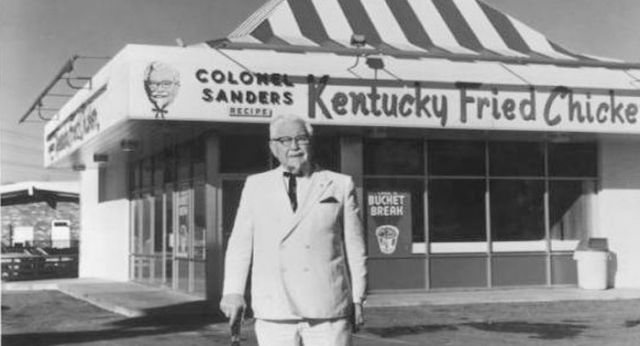
One of the first restaurants, they were later replaced by the famous red & white roofed stores that were popular for over 40 years.
advertisement
#8 The Bucket & The Box
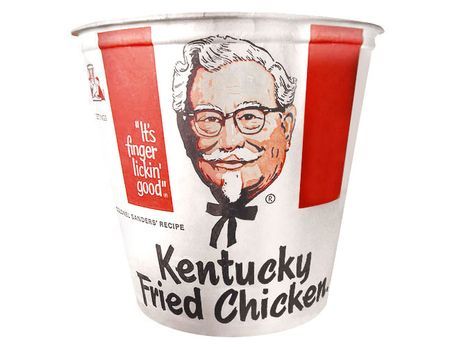
Originally sold in a little box, served with his famous home made coleslaw and mashed potatoes, the Colonel figured out that a bucket would sell to families trying to get dinner without cooking. It was a take-out favorite.
advertisement
#9 The Regretted Sell Out
But the Colonel was quite tired by this point. He was after all, in his 70s. And so when the opportunity to sell came knocking, he answered the door gleefully and sold out for $2 million dollars and a salaried role as the KFC spokesman.
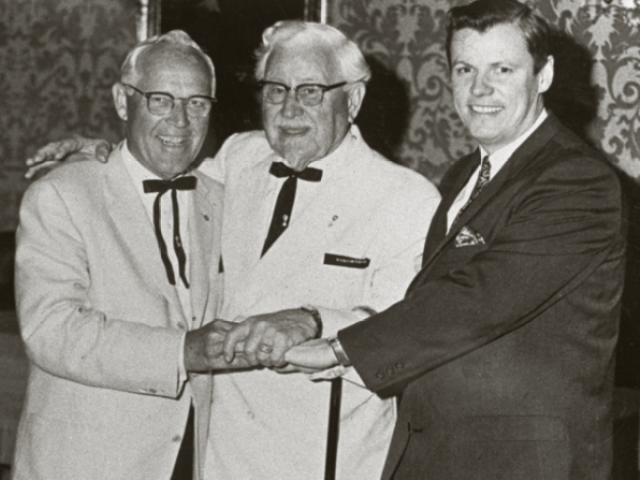
Things between Sanders and his new colleagues John Y. Brown, Jr. (who would go on to become a governor of Kentucky) and Jack C. Massey went swimmingly for awhile, but eventually things soured. And over the next decade Sanders, Brown, and Massey spent a lot of time suing each other. Sanders sued them for misuse of his image. Brown and Massey sued the Colonel for opening a competitor restaurant called Claudia Sanders, The Colonel's Lady which served the same recipes and for defamation when the Colonel infamously told the press that their gravy tasted like wallpaper paste.
advertisement
#10 After selling the company, the colonel sued Kentucky Fried Chicken for $122 million
Sanders sold Kentucky Fried Chicken in 1964, and after food conglomerate Heublein purchased the company in 1971, the cantankerous colonel began to deride the chain's gravy as "slop" and its owners as "a bunch of booze hounds." Although still the public face of the company, Sanders so disliked Kentucky Fried Chicken's food that he developed plans to franchise "The Colonel's Lady's Dinner House" restaurantwhich he opened with his wife in Shelbyville, Kentucky, in 1968as a competitor. When Heublein threatened to block the plan, Sanders sued for $122 million. The two sides settled out of court, with Sanders receiving $1 million and a chance to give a cooking lesson to Heublein executives in return for his promise to stop criticizing Kentucky Fried Chicken's food. The renamed "Claudia Sanders Dinner House" was allowed to remain open and is still in operation.
advertisement
#11 Just Desserts
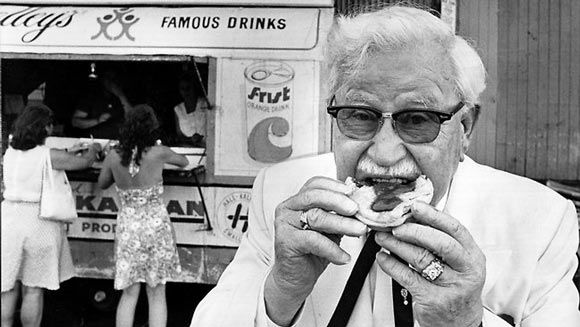
In the summer of 1980, at age 90 Colonel Sanders was diagnosed with acute leukemia. But it was a bout of pneumonia that winter that would ultimately carry him off to fast food heaven.
#12 Kentucky's Favorite Cousin
He was buried in his classic costume after his body lay in state in the rotunda of the Kentucky State Capitol in Frankfort, and a huge funeral ceremony. Over 1,000 local Kentuckians attended, all wishing to pay their respects to America's first celebrity chef. He may not have been born in Kentucky, but Kentucky had long since claimed him as her own and gave him a proper send off.
advertisement
#13 The Buy Out of the Buy Out Means CHANGE
In the early 1970s, KFC was sold to the spirits distributor Heublein, who were taken over by the R.J. Reynolds food and tobacco conglomerate, who sold the chain to PepsiCo. The chain continued to expand overseas however, and in 1987 KFC became the first Western restaurant chain to open in China. The chain has since expanded rapidly in China, which is now the company's single largest market. PepsiCo spun off its restaurants division as Tricon Global Restaurants, which later changed its name to Yum! Brands.
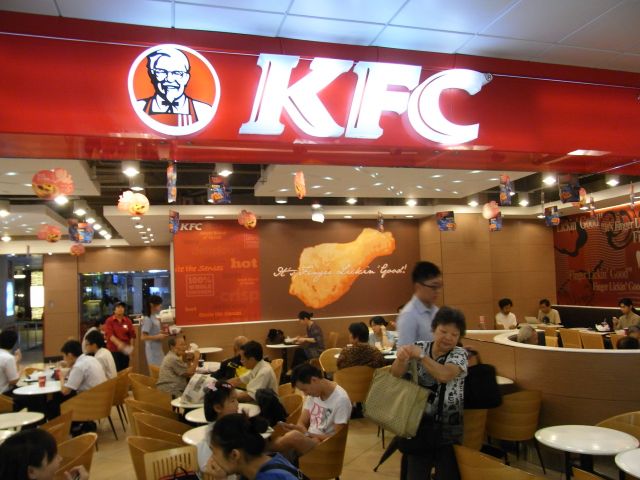
The company believed that by dropping the Kentucky Fried Chicken name and rebranding to KFC, thus dropping the Colonel, it would fit better with a hipper marketplace. The change did not do as well as expected.
#14 Dropping the "Fried" From The Fried Chicken Name
KFC's original product is pressure fried chicken pieces, seasoned with Sanders' recipe of 11 herbs and spices. The constituents of the recipe represent a notable trade secret. Larger portions of fried chicken are served in a cardboard "bucket", which has become a well known feature of the chain since it was first introduced by franchisee Pete Harman in 1957. Since the early 1990s, KFC has expanded its menu to offer other chicken products such as chicken fillet burgers and wraps, as well as salads and side dishes, such as French fries and coleslaw, desserts, and soft drinks, the latter often supplied by PepsiCo. KFC is known for its former and current slogan "Finger Lickin' Good", which was replaced by "Nobody does chicken like KFC" and "So good" in the interim.
advertisement
#15 The Colonel Was King and Still Is
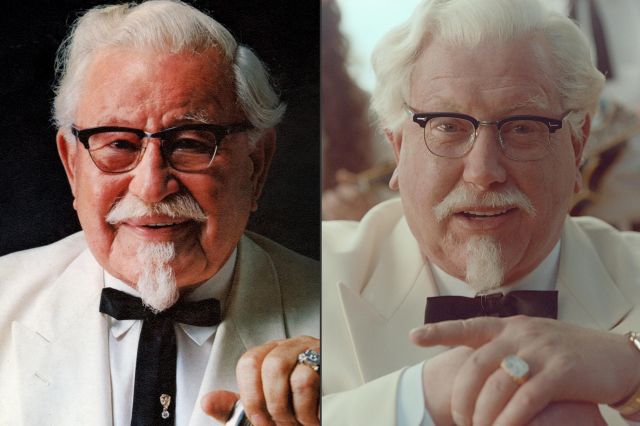
By 2014, the company was struggling, having lost business to other retailers and being surpassed by Chick-fil-A as the leading chicken retailer three years previously. To combat this, the company launched a new initiative with a plan to revamp its packaging, decor and uniforms, as well as expanding its menu. Additionally, beginning in May 2015, a new series of advertisements was launched featuring Darrell Hammond as Colonel Sanders.
#16
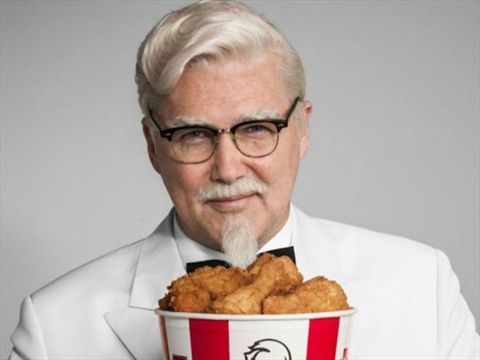
After a backlash on social media over how the Colonel was portrayed in the new commercials by Hammond, the company quickly revamped the icon and cast Norm Macdonald in the role for all future advertising.
advertisement
#17 The Original Restaurant and Museum
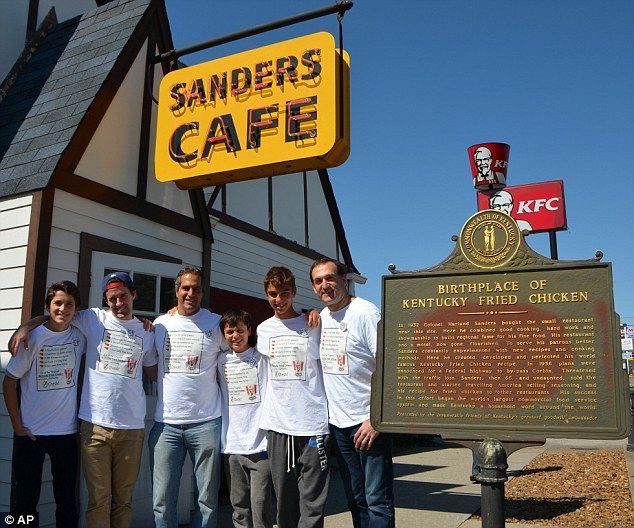
Fans of KFC can visit what is being known as the birthplace of Kentucky Fried Chicken at the Harland Sanders Cafe and Museum - Corbin, KY, United States.