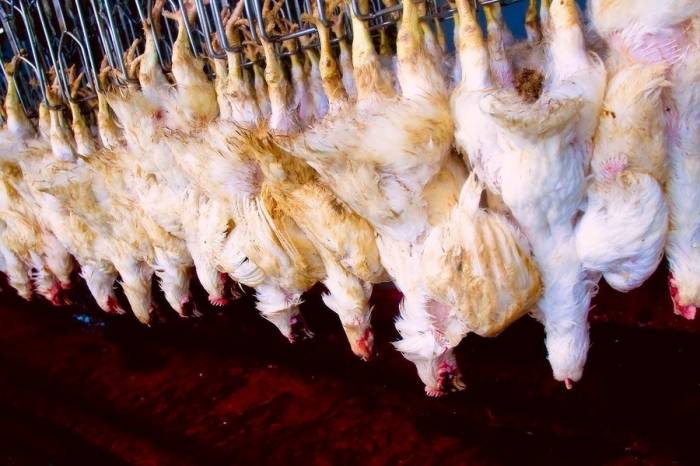
There's nothing wrong with not being a vegetarian or a vegan, as long as you understand that eating meat should fall in line with your ethical and environmental values.
This Is What Happens To Chicken Before It Reaches Your Supermarket
By
Editorial Staff in
Facts
On 1st September 2016
advertisement
#1
Eating meat shouldn't be taken lightly, and this post is full of images that prove it. If you're going to consume things like beef, pork, or poultry, you should know the harsh realities of factory farming, and hopefully then, find alternatives in the meat section at the grocery store.
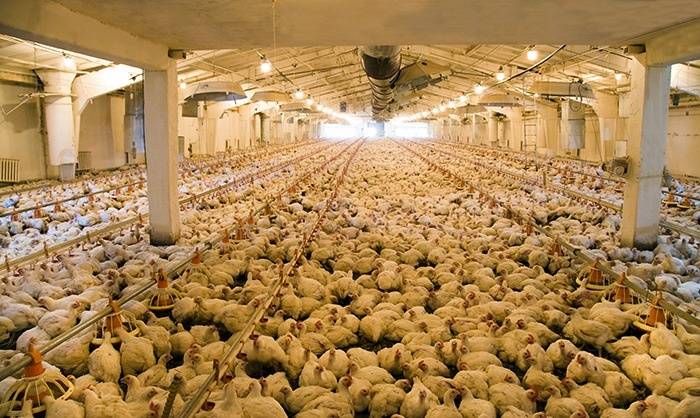
Factory-farmed chicken live incredibly dark, brief lives, all so they can end up on your dinner table in less than two months time. The process they go through is inhumane, and definitely makes the case for obtaining your meat from smaller farms where animals are treated well, fed healthy organic diets, and allowed to graze and practice their natural animal habits before being humanely slaughtered. As you'll see, that's totally different from what happens to factory farmed chickens, and the reality of their lives is hard to see.
#2
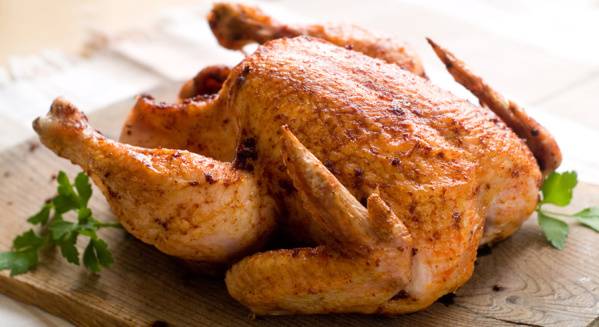
Many people wouldn't argue with a roasted chicken being placed on the dinner table. And while we're not here to pass moral judgment on those who eat meat or choose not to eat meat, there are some harsh realities of factory farming that we should all know about.
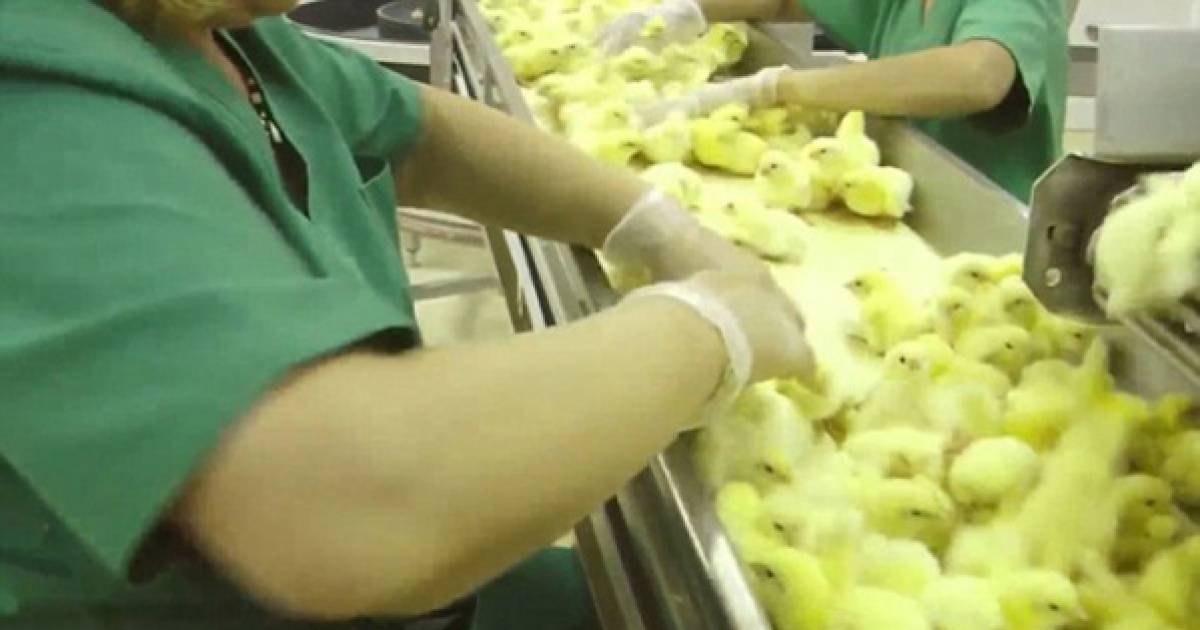
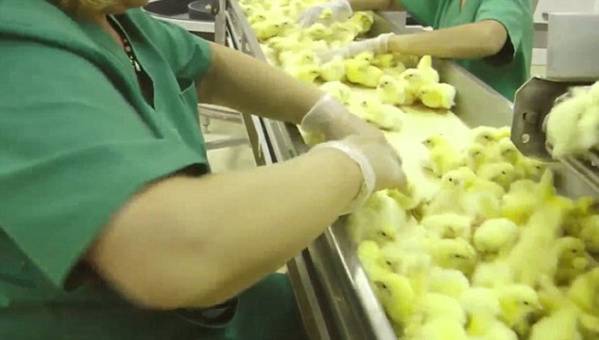
Images like this come in the wake of the allegations at Tyson Chicken earlier in the month, wherein workers were documented abusing the animals. This footage is from another factory chicken farm, taken secretly by an animal rights worker on the conveyor belt line.
advertisement
#3
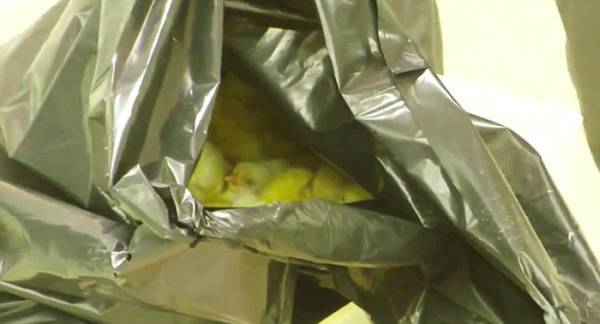
The first part of the process is especially tough. Workers sort through thousands of chicks during "quality" control. The heads of weaker chicks are torn off while the baby chicks are still alive and thrown into a trash bag. Sadly, some of them aren't even dead before they are thrown away.
#4
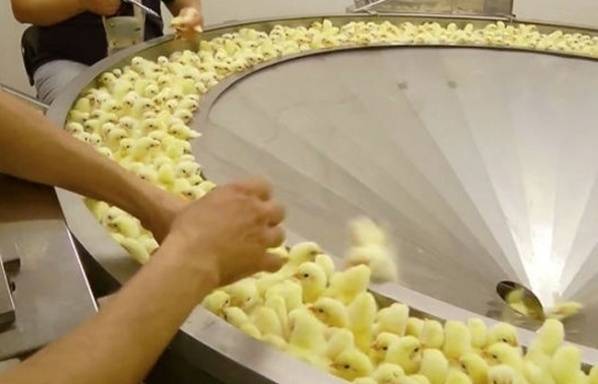
The ones who make it to the conveyor belt are the "lucky ones." But as you'll see later, they really aren't lucky at all.
advertisement
#5
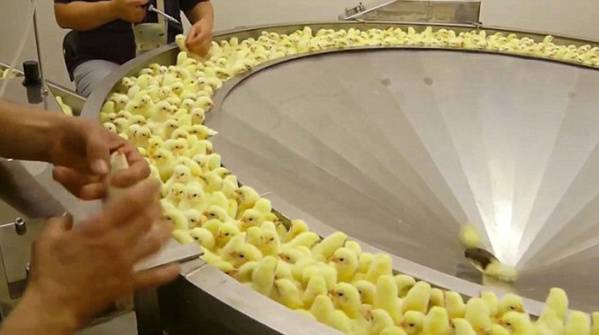
Each chick gets a vaccination shot. Then they're thrown down a rotating hole for sorting.
advertisement
#6
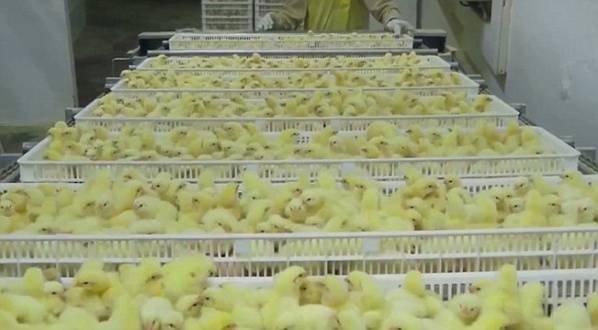
After that, they are packed by hundreds in crates. The chicks are packed in so tightly, none of them can really move.
advertisement
#7
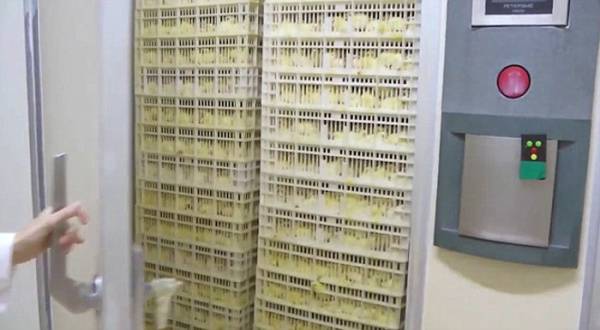
Then, the crates are "stored." All of the chicks are stored in dark cupboards the first day, and then sent to industrial farms and pumped with growth hormones to grow into full-size chickens in just 40 days.
advertisement
#8
It's hard to process this harsh reality, but there are some positive things to consider. If you love chicken and want to eat meat, there are ways to obtain it that have nothing to do with factory farming. Organic-fed, humanely-raised chickens might be a bit pricier, but it definitely helps assuage some of the guilt of consuming these animals.
advertisement
#9
The other thing we can do as consumers is speak out. If you think that factory-raised chickens don't deserve the short and brutal life they lead, or if you want to make sure that the chicken you're eating is raised in good conditions in safe environments, it's important to get in touch with the USDA.