

A TikTok video has gone viral which shows the effective way of collecting garbage in Switzerland. Every hour, each bin's waste level is digitally measured, and when they need to be emptied, control centers are automatically notified.
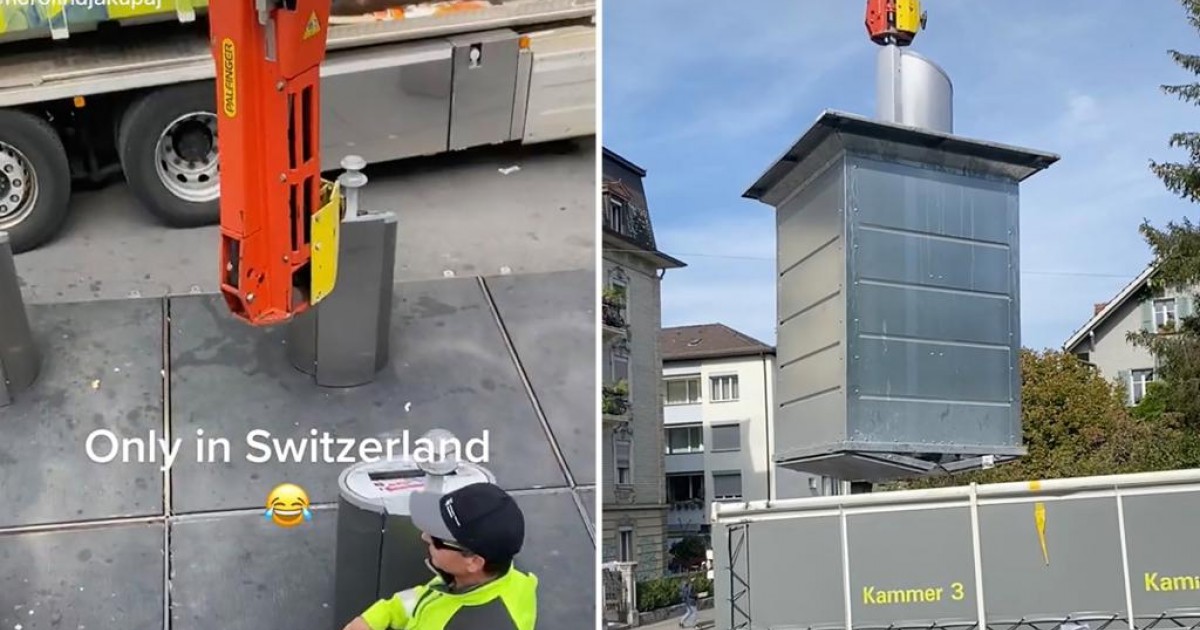
TikTok Of Switzerland's Underground Garbage System Goes Viral
By
Haider Ali in
Cool
On 29th September 2022
advertisement
People from all over the world have been in awe of the innovative way some European nations empty their public trash cans.
While Australian councils send workers to manually empty common trash cans enclosed in metal structures, other countries, like Switzerland, have a radically different strategy.
Large trucks with an associated mechanical crane arm are used to dump enormous underground public garbage reserves, as was recently shown in a TikTok video.
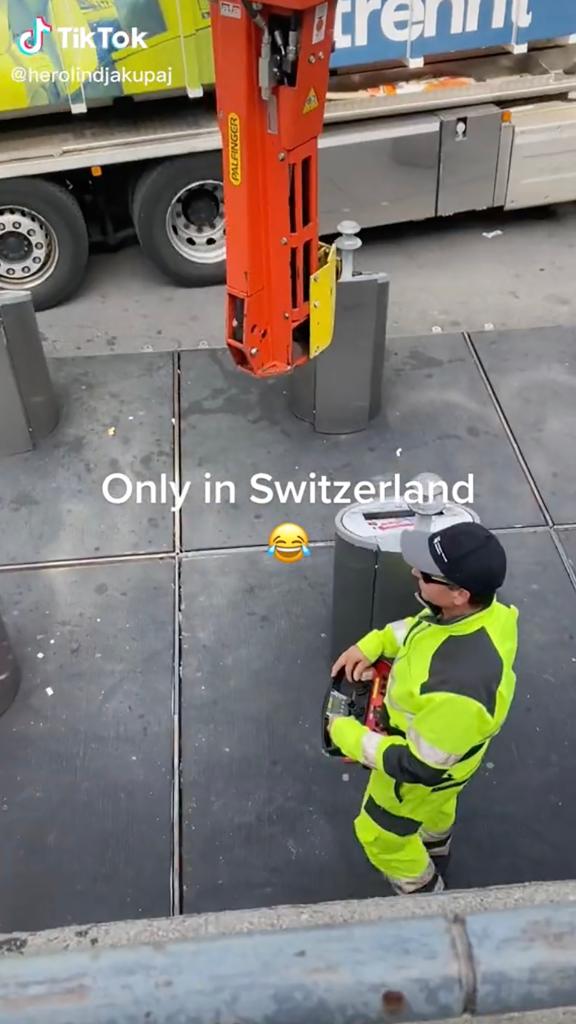
TikTok / herolindjakupaj
In the video, the arm is shown pushing on a relatively short pole to uncover a large metal container packed with trash from the general public.
The shocking video illustrates how small the bin's visible portion is in comparison to what is concealed beneath the footpath.
Massive amounts of trash may be stored and collected using the clever underground system while still taking up no more room than a typical street bin.
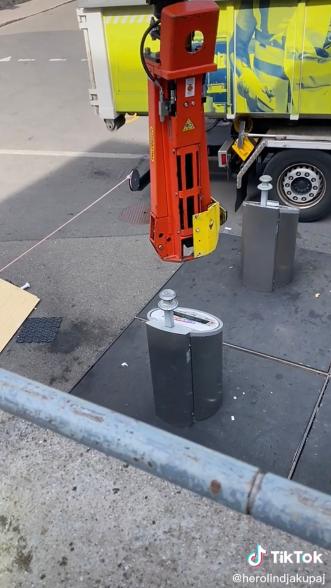
TikTok / herolindjakupaj
advertisement
Areas are also less likely to experience unpleasant odors because just a small amount of garbage is kept at street level.
Over 50,000 places in Europe have Sulo Iceberg underground garbage systems, each of which can hold 5000 liters of waste.
“On average, only 1/3 of the area of conventional container zones is needed,” the company boasts on its website.
“This opens up exciting design space for planners, while residents enjoy additional space, hygiene, and safety.”
Each bin's waste level is digitally measured every hour, and control centers are automatically notified when they need to be emptied.
advertisement
This makes it possible to only empty the trash when necessary and prevents bins from being emptied when they are only half full.
In just three days, the video with the caption "Only in Switzerland" has received close to 10 million views.
Numerous others rushed to inform the writer that it was truly in operation in several additional European countries, including Portugal, Scotland, Finland, Norway, and Germany.