

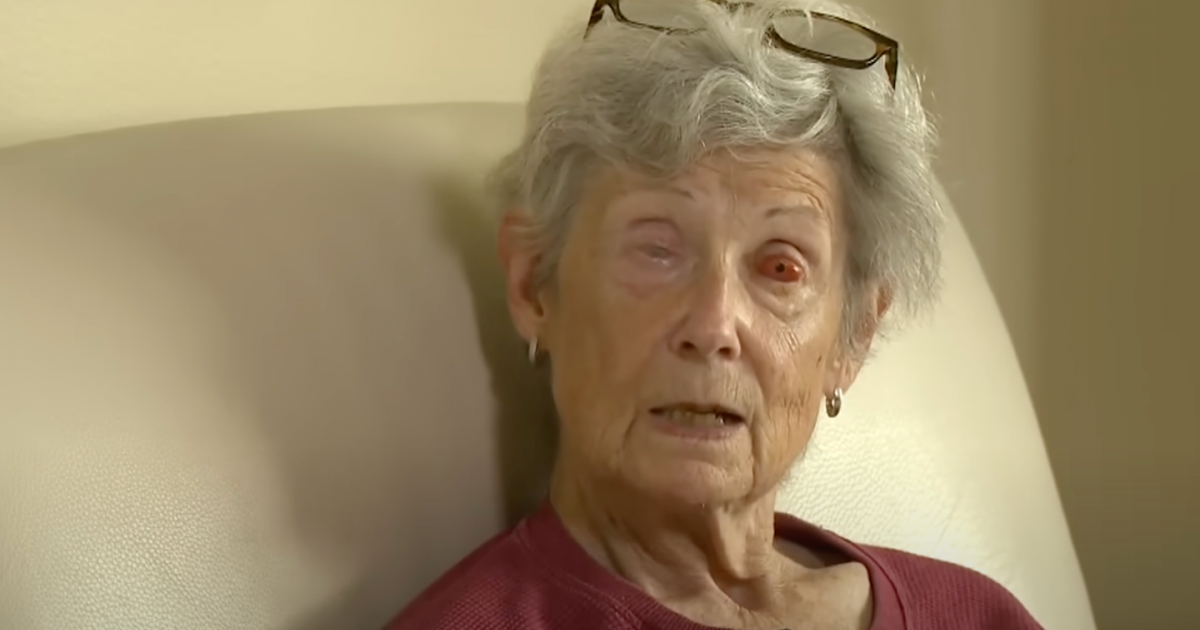
For the first time in years, Gail Lane can look at her dog — and so much more
advertisement
A woman who had been blind for a decade has finally had her vision restored, thanks to what she describes as a ‘miracle’ procedure.
Gail Lane has made Canadian medical history by becoming the first person in the country to regain her sight through a remarkable treatment known as ‘tooth-in-eye’ surgery.
The official name is osteo-odonto keratoprosthesis, but that’s a bit of a mouthful — especially before the tooth involved was removed.
The 75-year-old gradually lost her vision ten years ago after complications from an auto-immune disorder caused scarring across her corneas, leaving her unable to see.
Living in Victoria, British Columbia, Lane was one of just three patients to undergo this groundbreaking procedure in Canada back in February.
"I can see lots of color and I can see outside now. The trees and the grass and flowers, it's a wonderful feeling to be able to see some of those things again," she told CBC News.
Now, six months later, Lane admits she still can’t see exactly as she once could. But she says the progress she’s making is exciting, and she’s embracing the fact that it’s a gradual process.
advertisement
"I'm starting to see facial features on other people as well, which is also pretty exciting," Lane explained.
"I'm hoping to have more mobility and independence in terms of short trips and walks here and there where I don't always have to have someone's arm for me to grab onto."
"I'm just looking forward, really, to seeing what I can do or do again - and trying to just be patient and let my brain adjust a bit because that's another big part of this."
She also shared: "It's been a long, it's been a long wait, but well, well worth it."
Among the most heartwarming moments for Lane has been slowly recognizing the facial features of her partner — someone she met after losing her sight, so she had never actually seen him before.
She’s also able to make out her black Labrador, Piper, whose face she’s longed to see again.
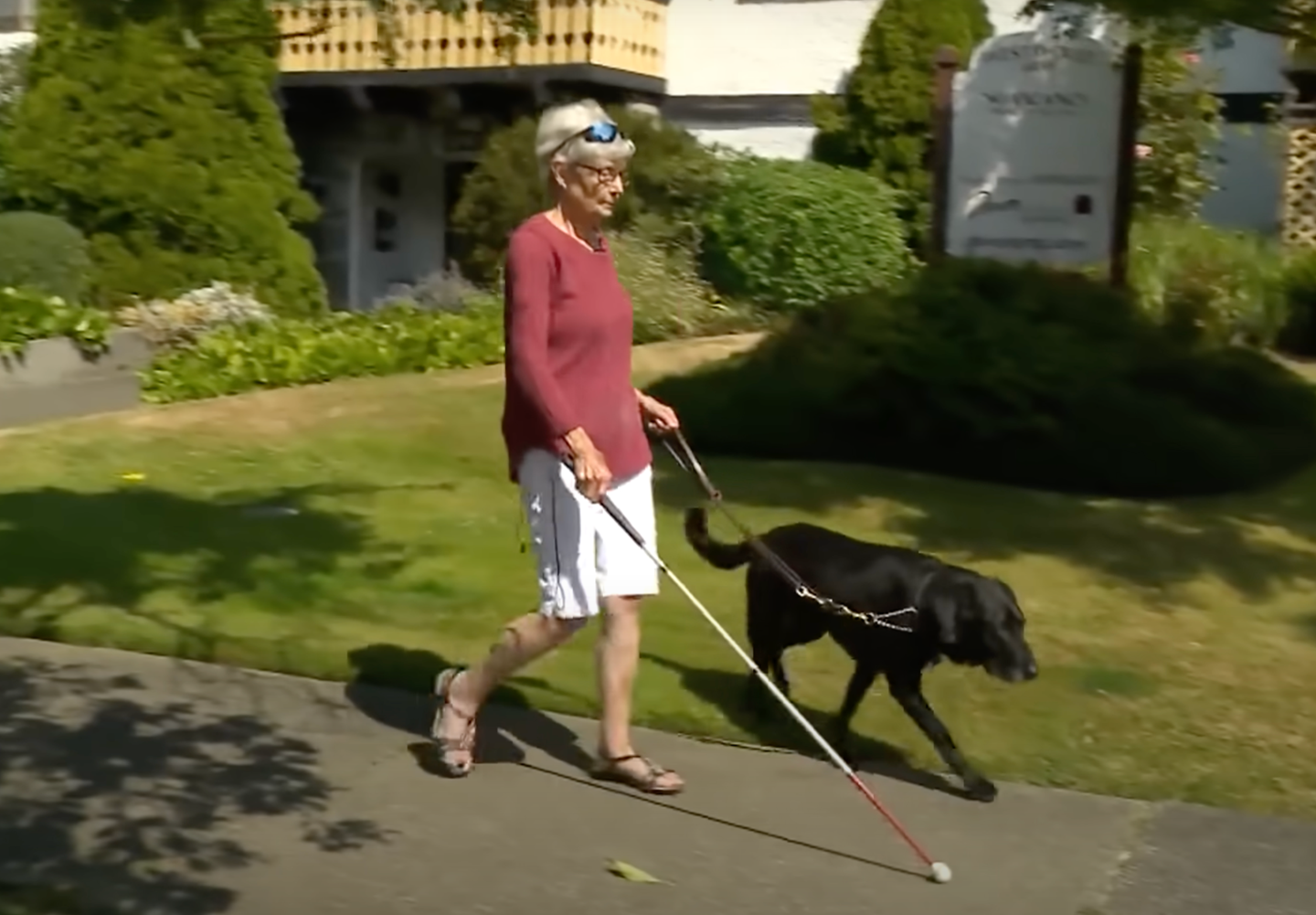
Gail Lane had never seen her dog Piper prior to the surgery
YouTube/Global News
advertisement
The complex operation was done in two stages, and soon after it was complete, Lane could already detect light and even watch her dog’s tail wagging with joy.
She’s now waiting for a new pair of glasses, which she hopes will allow her to finally see her own reflection again for the first time in years.
The innovative work was led by Dr. Greg Moloney at Mount Saint Joseph Hospital in Vancouver. He modeled the technique after similar surgeries he has observed in other countries.
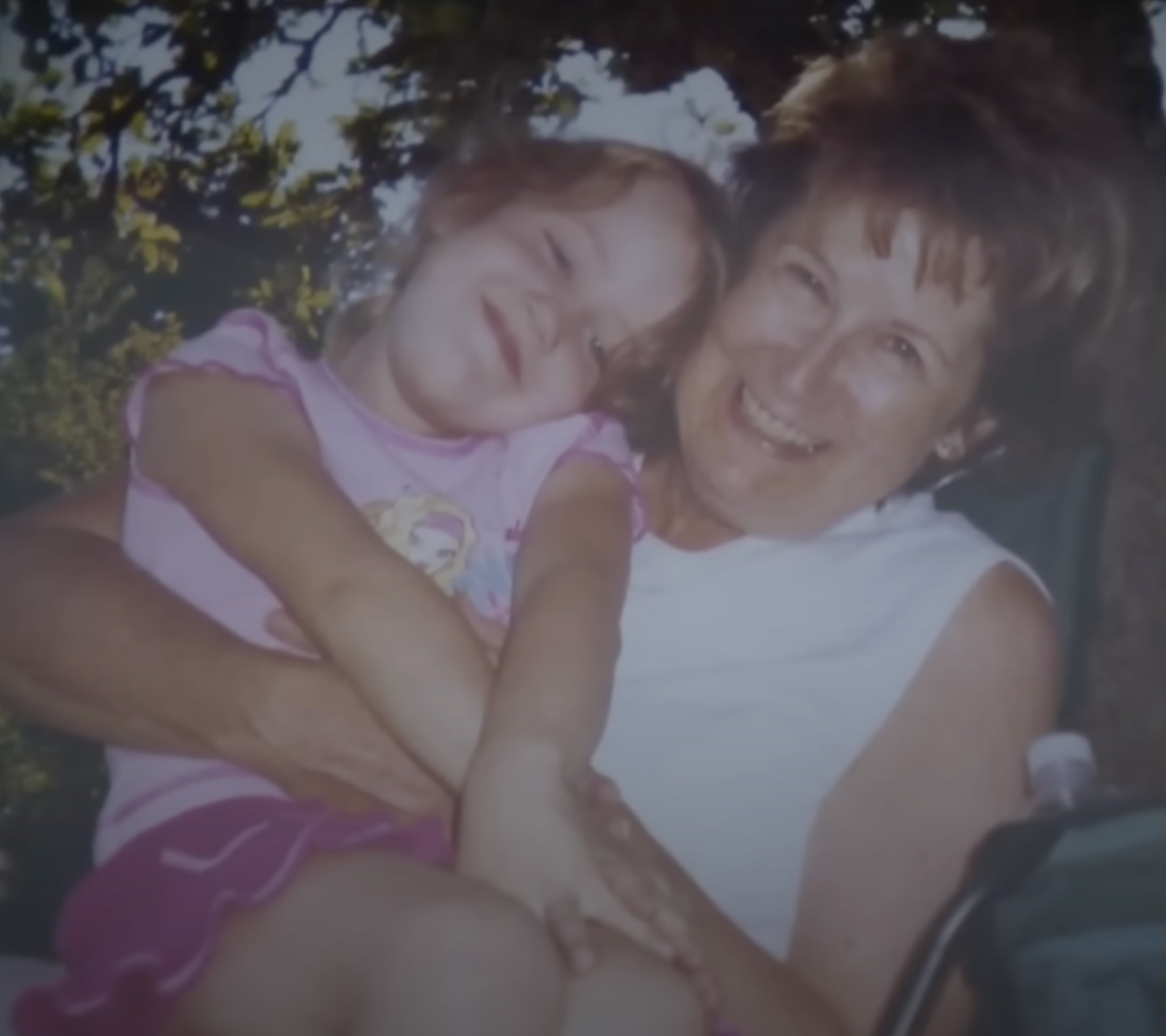
Lane pictured when she could see prior to the auto-immune disorder, decades ago with her daughter
YouTube/Global News
advertisement
How does tooth-in-eye surgery work?
The ophthalmologist explained: "It's a complex and strange operation, but it basically involves replacing the cornea."
Dr. Moloney described the process, which begins with removing one of the patient’s teeth. That tooth is then implanted into the cheek, where over the course of several months it becomes covered with strong connective tissue.
Once ready, the tooth is taken out again and fitted with a tiny lens. The connective tissue holds the structure together, and both the tooth and lens are then stitched into the patient’s eye socket, allowing light and images to pass through.
advertisement
"We need a structure that is strong enough to hold onto the plastic focusing telescope, but is not going to be rejected by the body," Dr. Moloney added.