

The Toraja people of South Sulawesi, a mountainous region of Indonesia, take care of their loved ones long after they die.
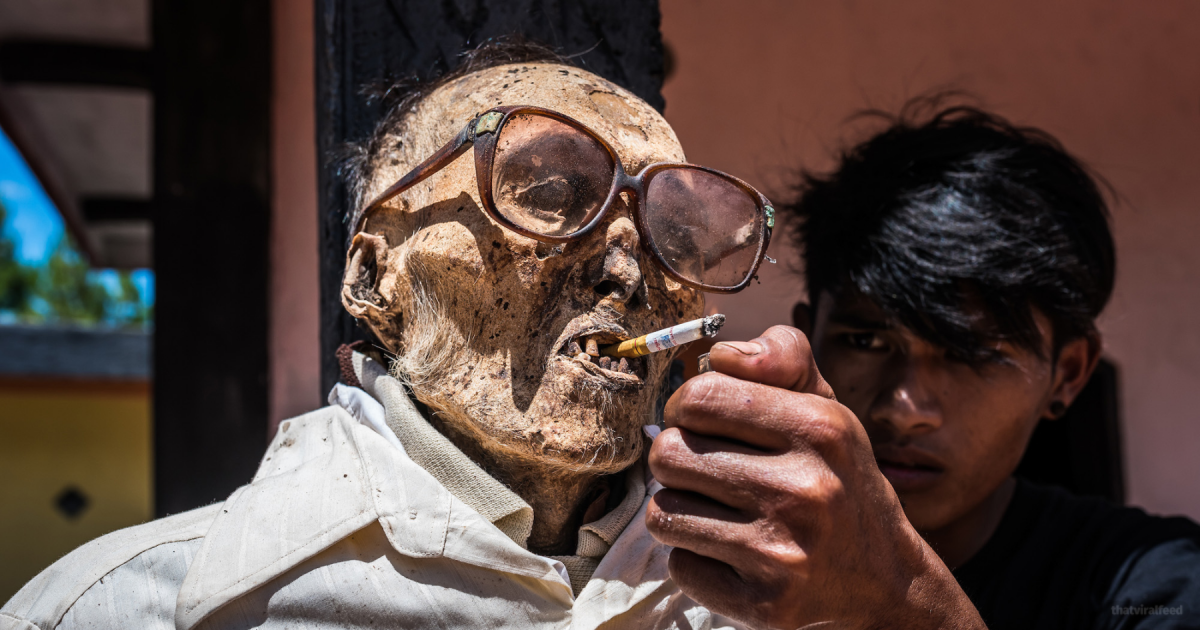
Villagers Dig Up Dead Relatives And Dress Them In Bizarre Ancient Ritual
By
Haider Ali in
Weird
On 17th August 2022
advertisement
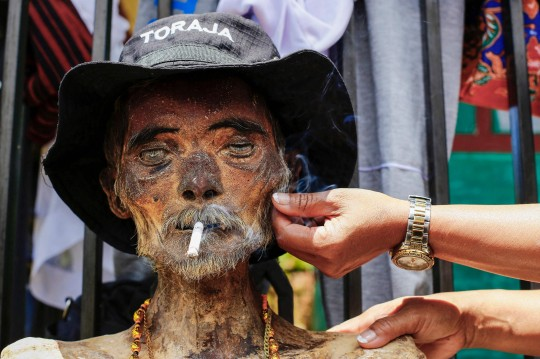
In Indonesia, families dress up their deceased loved ones for a ceremony in which they even put cigarettes in their mouths.
The Torajan people participate in the historic Ma'nene ceremony on Southern Sulawesi, one of the nation's largest islands.
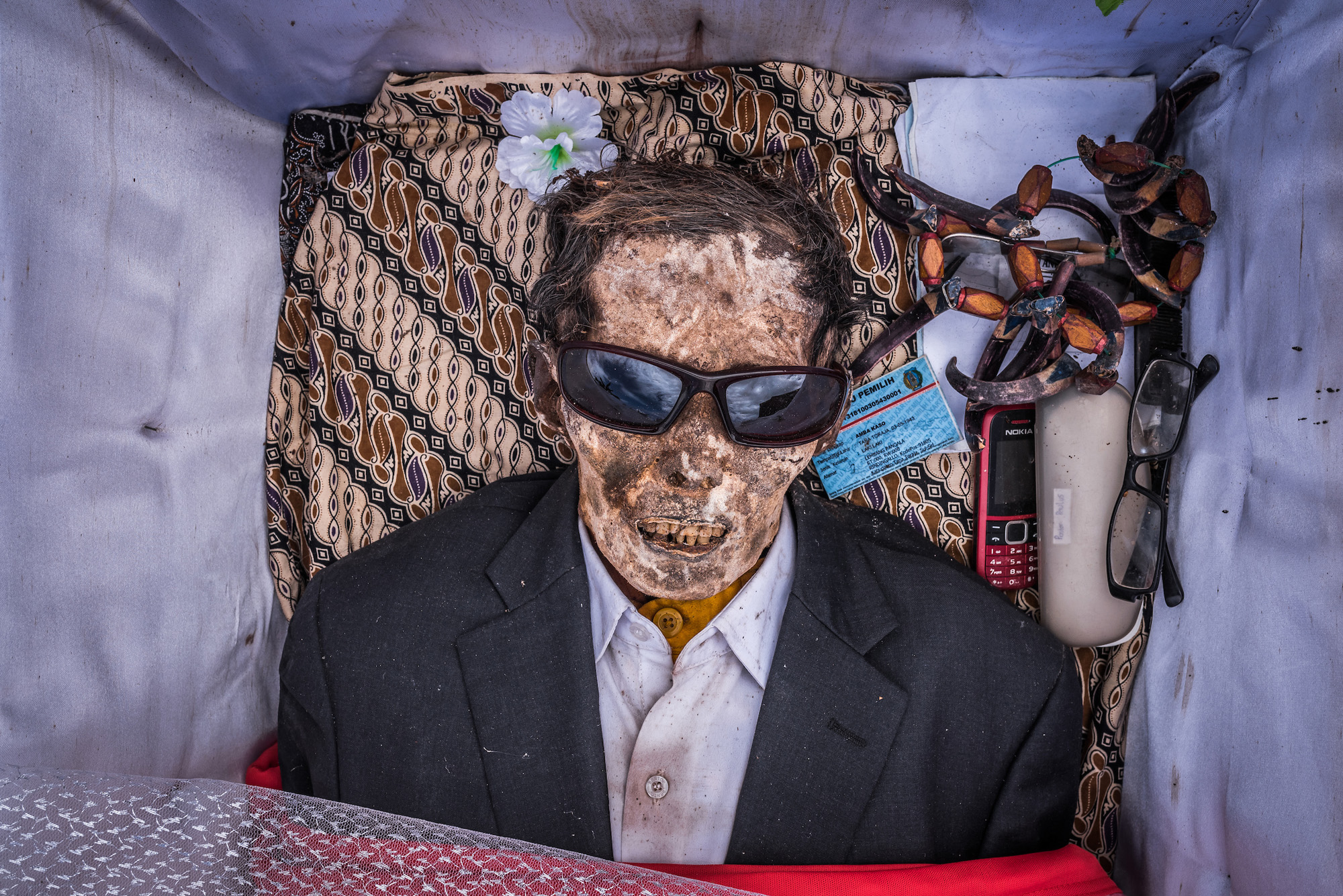
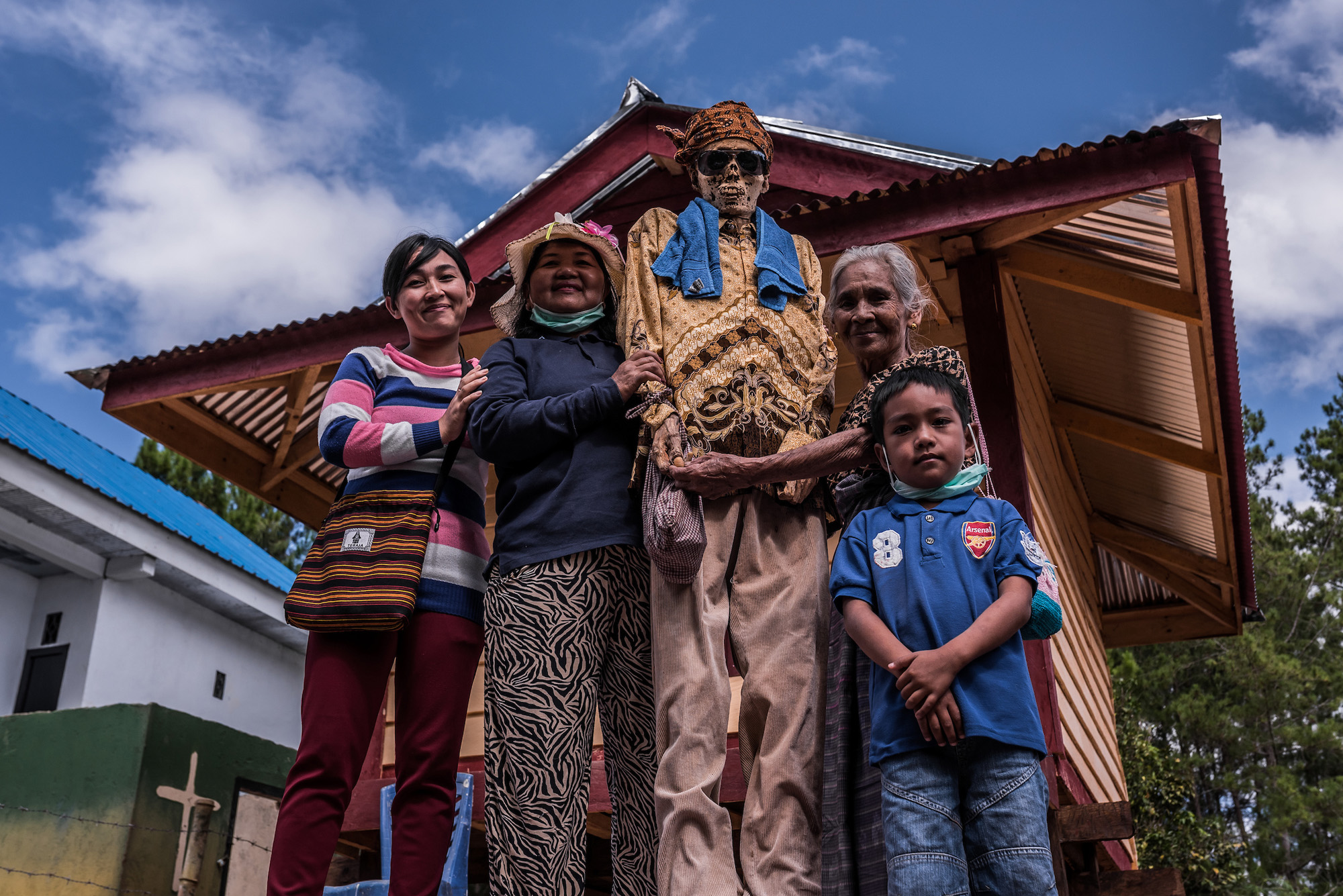
Grandpa "Ne Pua" was buried with his favorite possessions including his mobile phone and glasses.
Barcroft
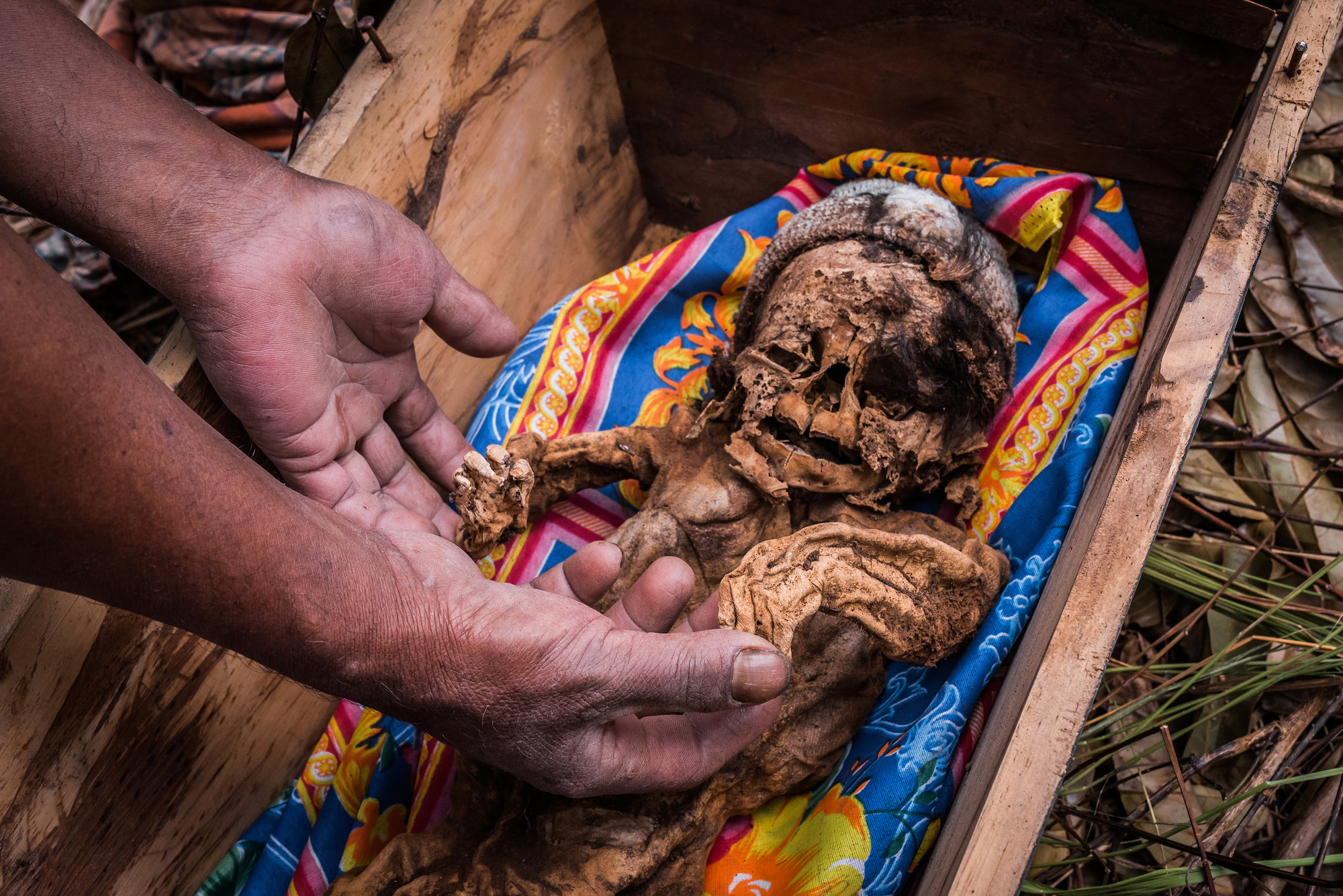
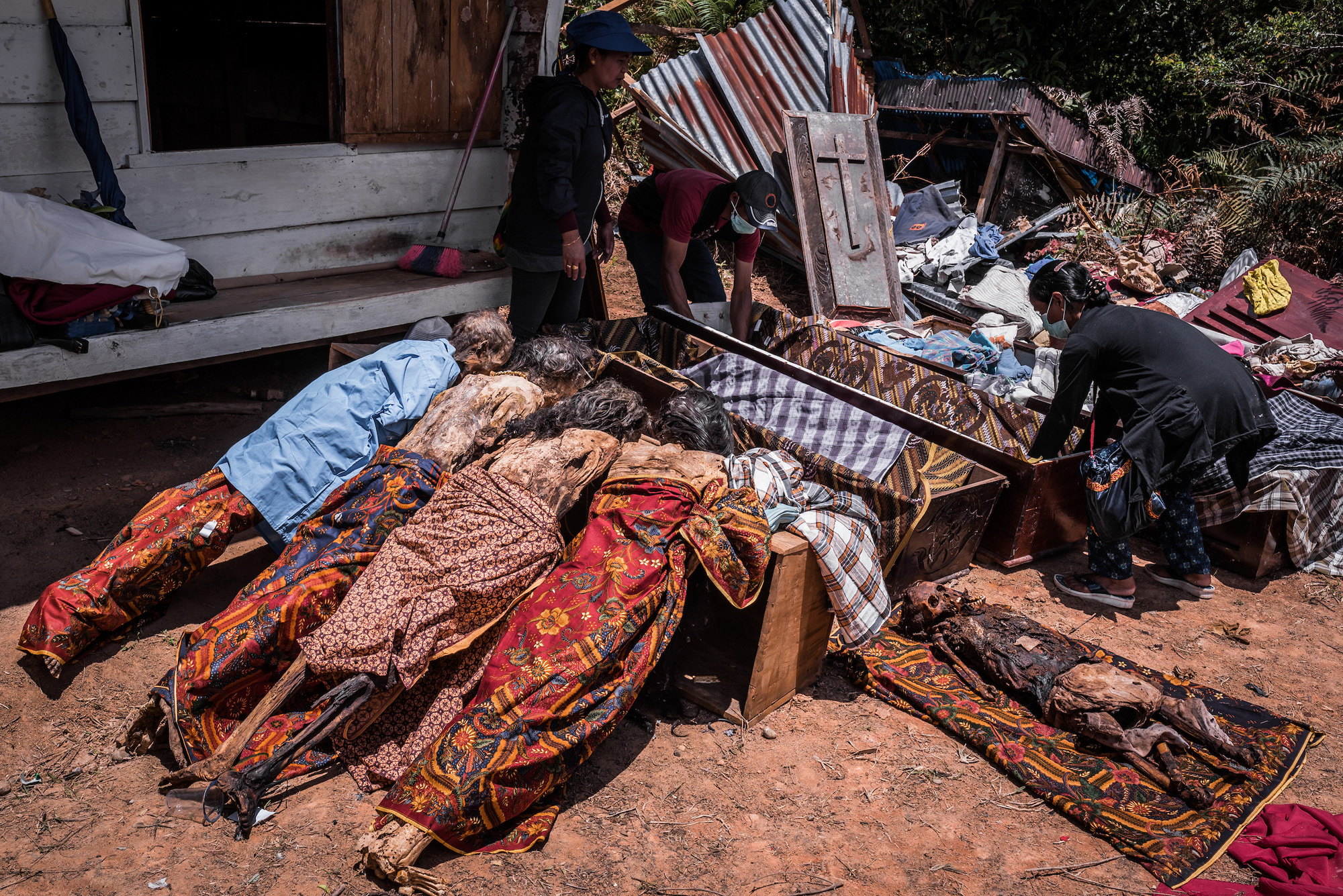
The ritual includes cleaning, dressing, and exhuming the bodies of deceased relatives.
advertisement
According to tradition, the event honors departed family members and ensures a good crop the following year.
Ma'nene, like many other ancient rites, has its origins in legend. According to some stories, the ceremony was initiated by a hunter by the name of Pong Rumasek who discovered and cared for a dead body in the jungle.
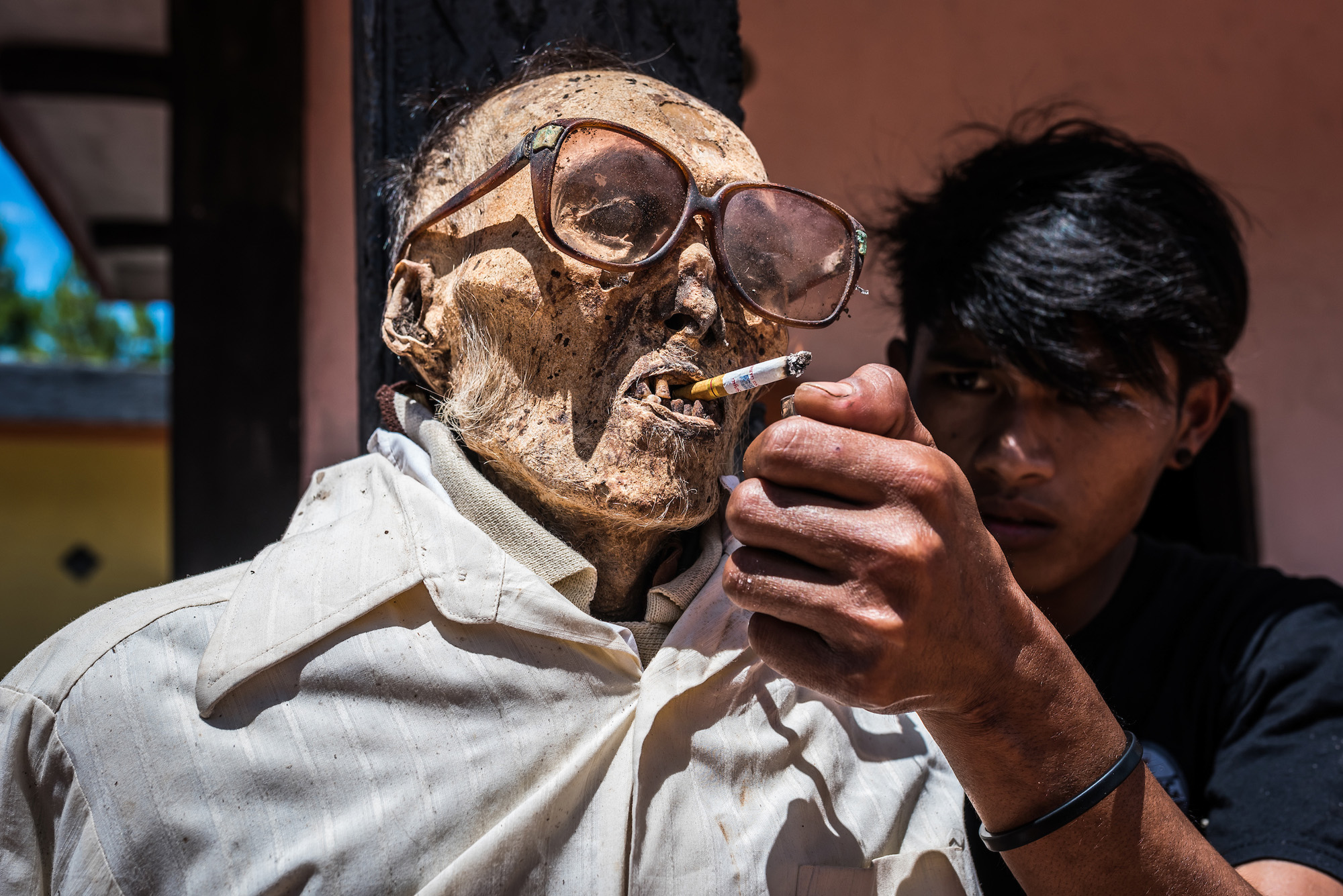
Sam lights a cigarette for the corpse of his grandfather, Songa, who died in 1977.
Barcroft
Because of the hunter's generosity, he received good fortune and subsequent abundant harvests.
advertisement
However, a Torajan photographer named Endy Allorante told The New York Times that it was hard to pinpoint the ceremony's beginnings saying:
"Nobody knows when, where and how exactly the tradition was first invented."
advertisement
Barcroft
advertisement
Although the practice may seem unusual to outsiders, the locals have a very unique perspective on death and consider dressing up the bodies of their loved ones as a reason to celebrate.
Tourists visiting the area can witness corpses being paraded around the streets while fully dressed during the ritual, which normally lasts three days.
advertisement
Barcroft
advertisement
The dead are carried through a road in the village that is associated with a supernaturally powerful spiritual being called a "Hyang."
According to legend, the path keeps the neighborhood blessed and enables the deceased to enter the afterlife.
advertisement
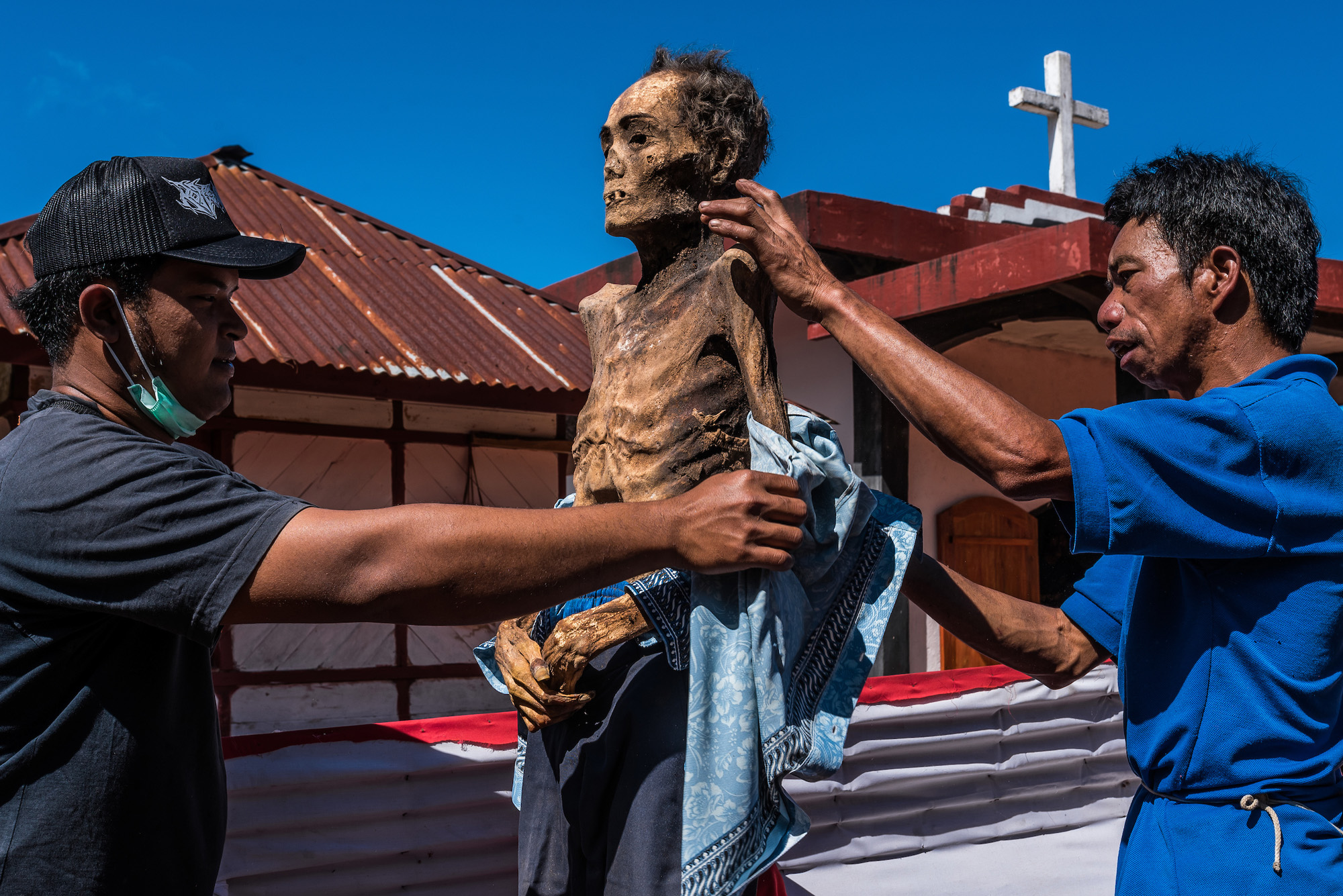
Relatives clean the corpse of Ne Todeng, who died in 2009.
Barcroft
advertisement
Outsiders might find the event disturbing, but the locals find it to be a joyous occasion; in fact, crying and grieving are strictly forbidden.
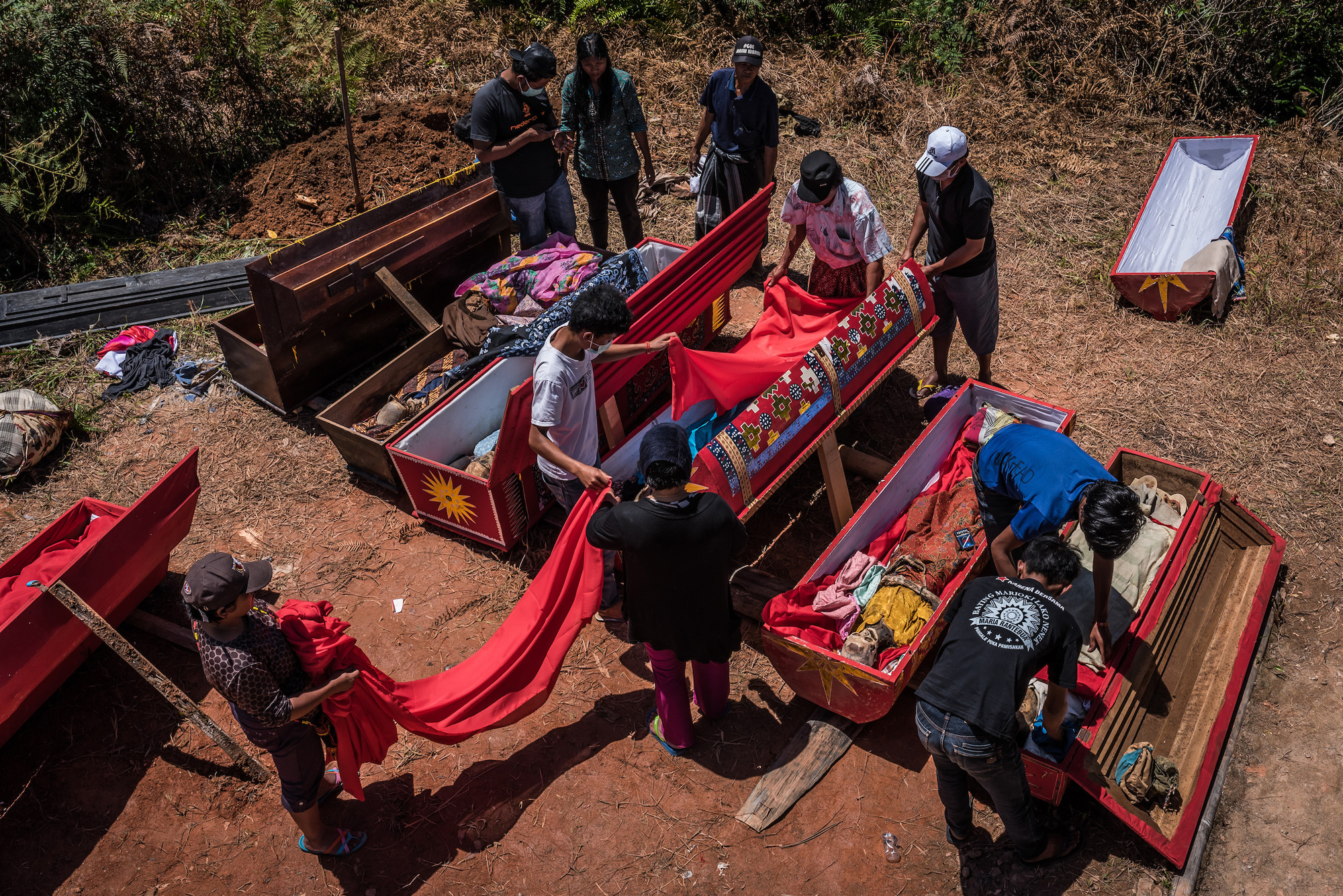
Following the ceremony, coffins are fixed following the walk with the dead, and they are dressed nicely before being buried once more until the following Ma'nene.
advertisement
Barcroft
The family decides whether to hold the event everyone, two, or three years.
Barcroft
advertisement
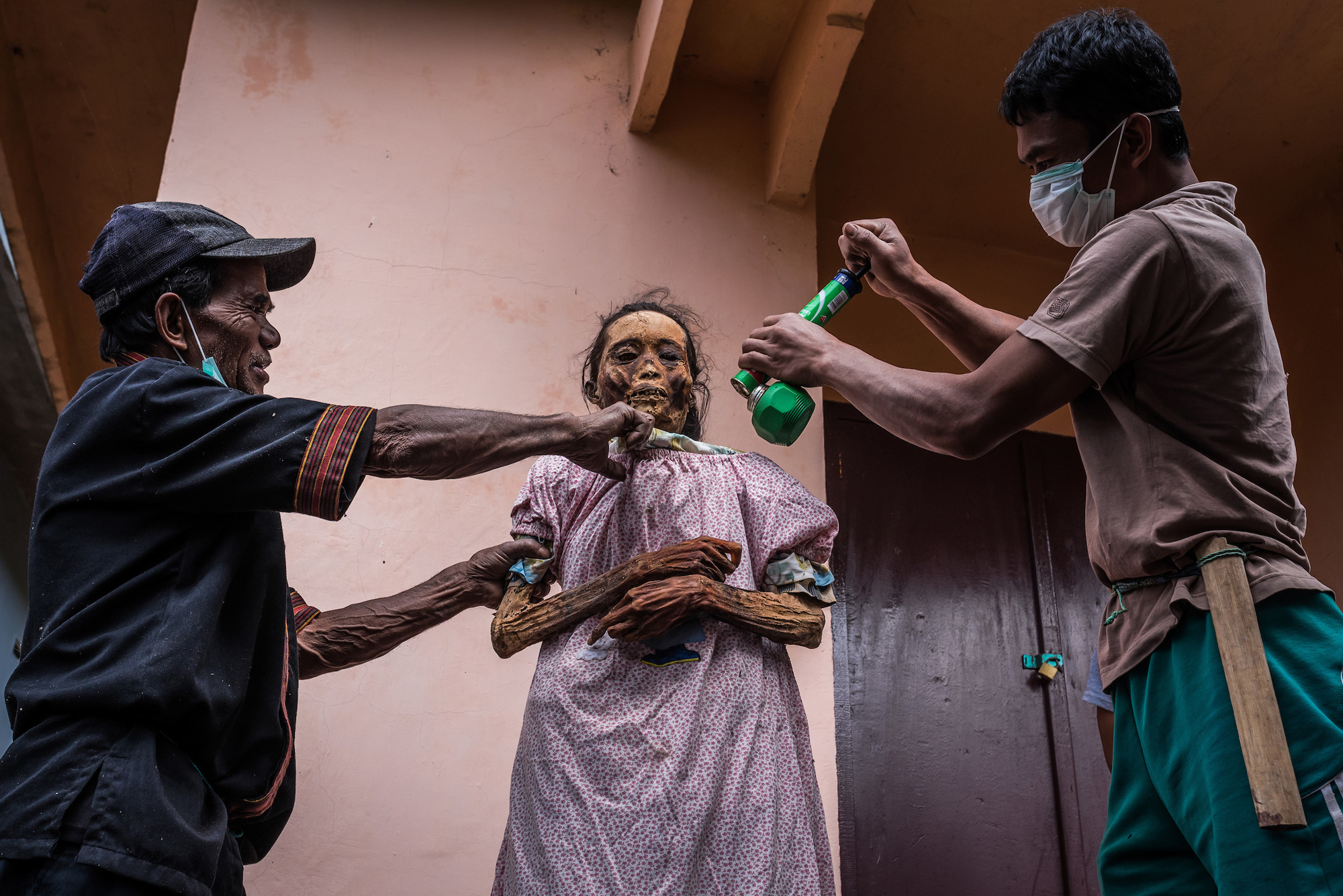
Relatives clean the corpse of Nene Datu, who died 35 years ago.
Barcroft
Photographer Claudio Sieber, who spent time capturing the ceremony in 2017, told Huck Magazine that, "after maybe two or three days, he got extremely comfortable with the environment."
"I changed my perspective about it because for them it’s the life that goes beyond death. It’s not a sad moment," he said.
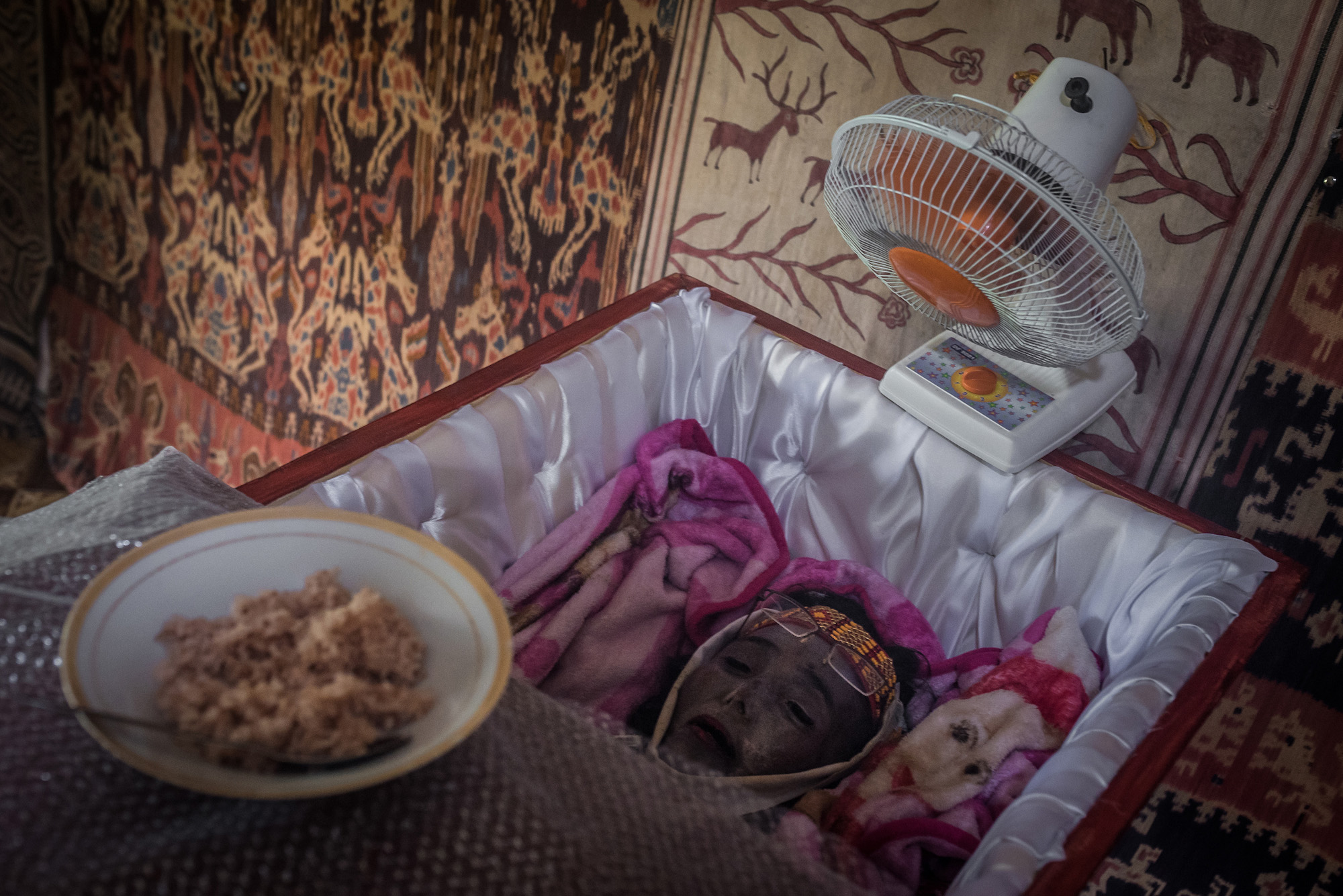
Barcroft
advertisement
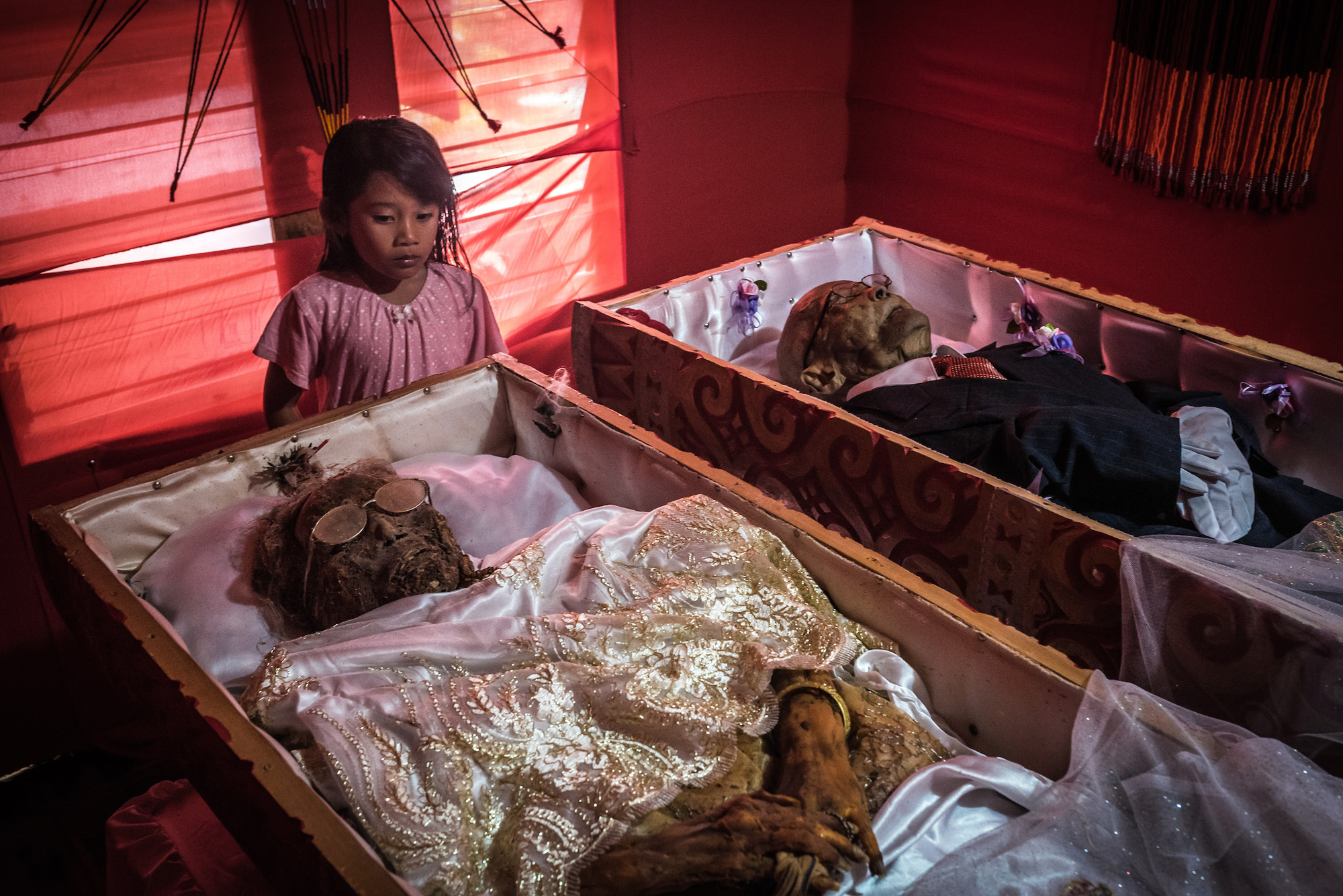
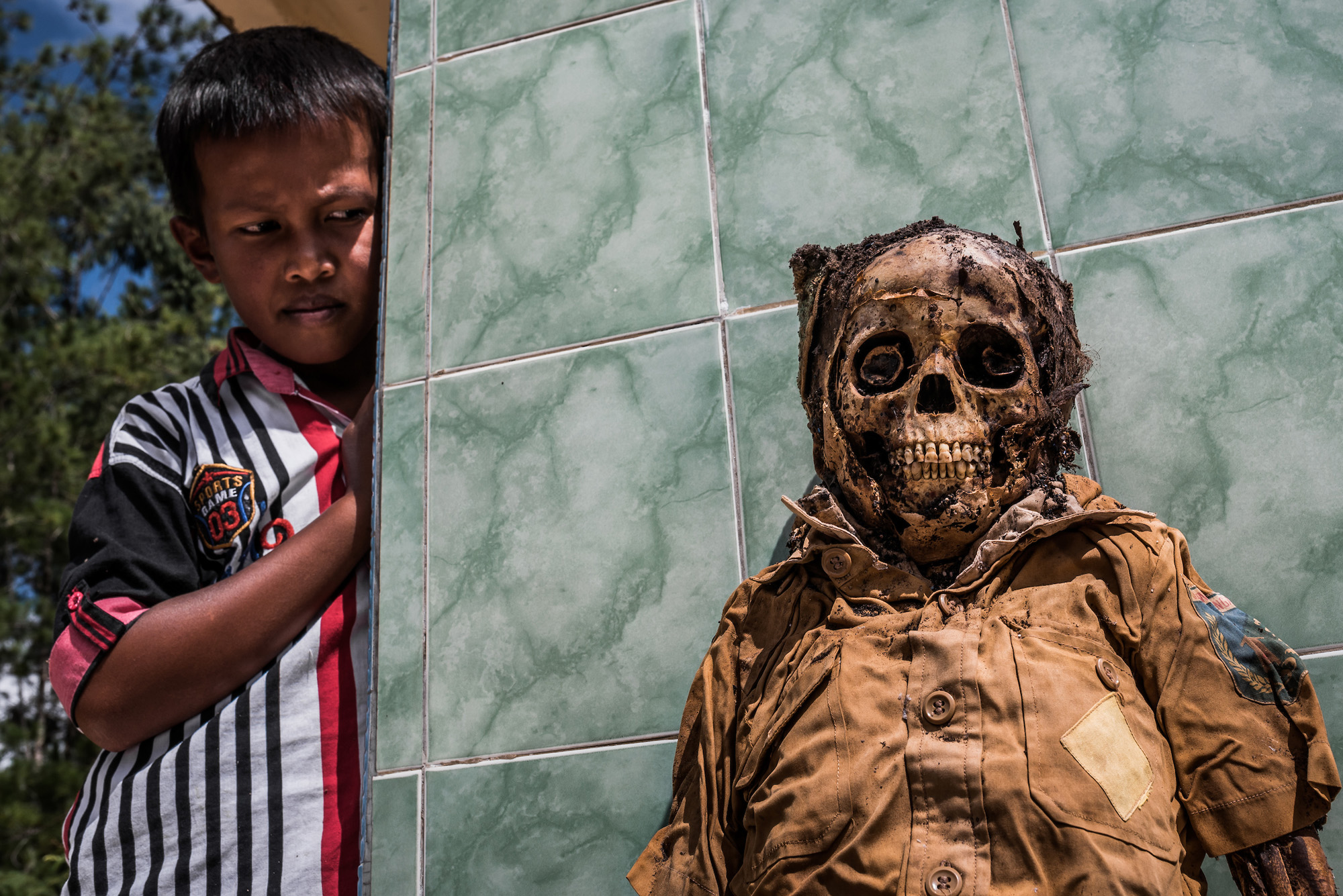
A grandchild stands next to the corpses of her grandparents.
Barcroft
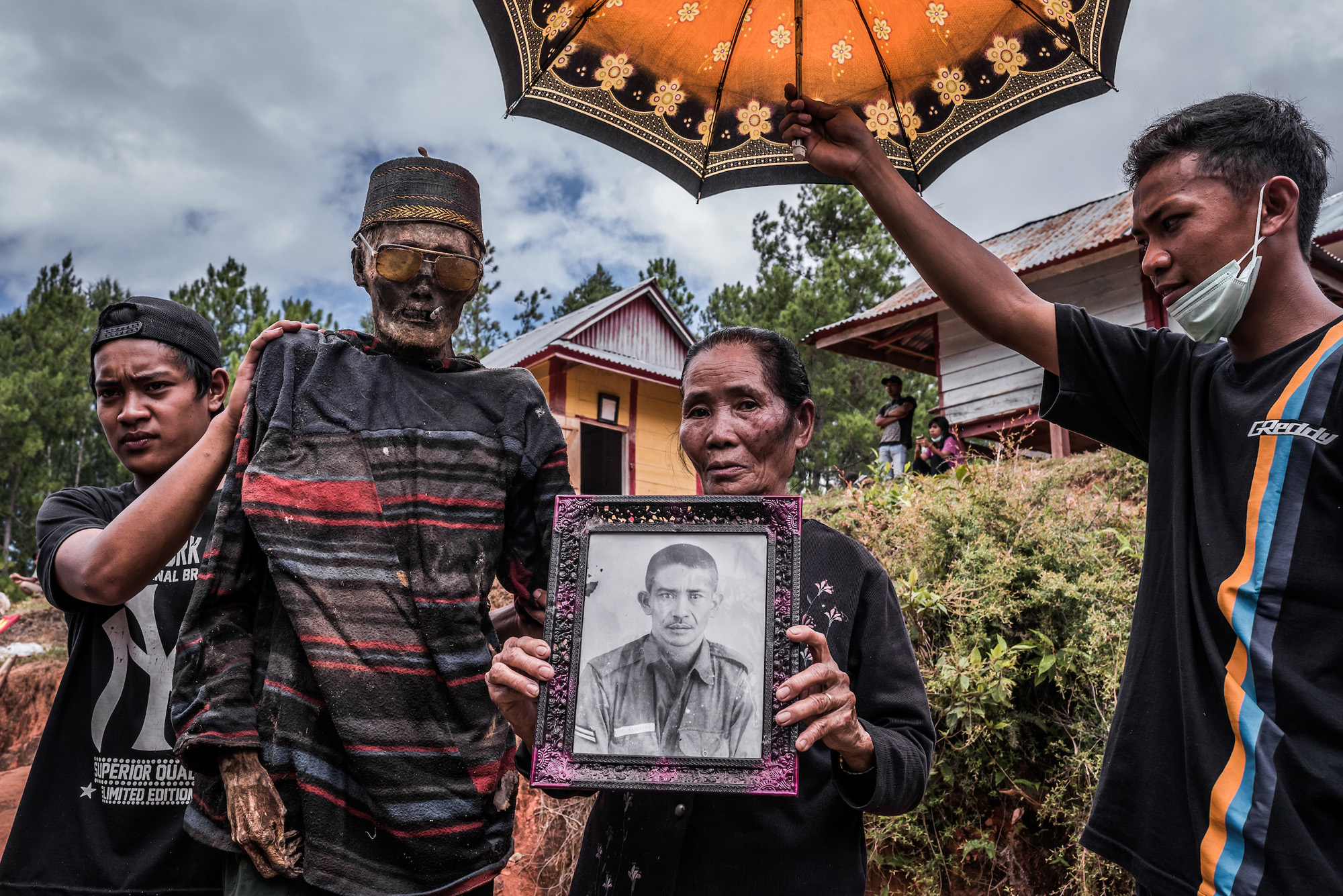
A family presents the corpse of Djim Sambara, who died two years ago at the age of 90.
Barcroft
advertisement
Barcroft
Barcroft
advertisement
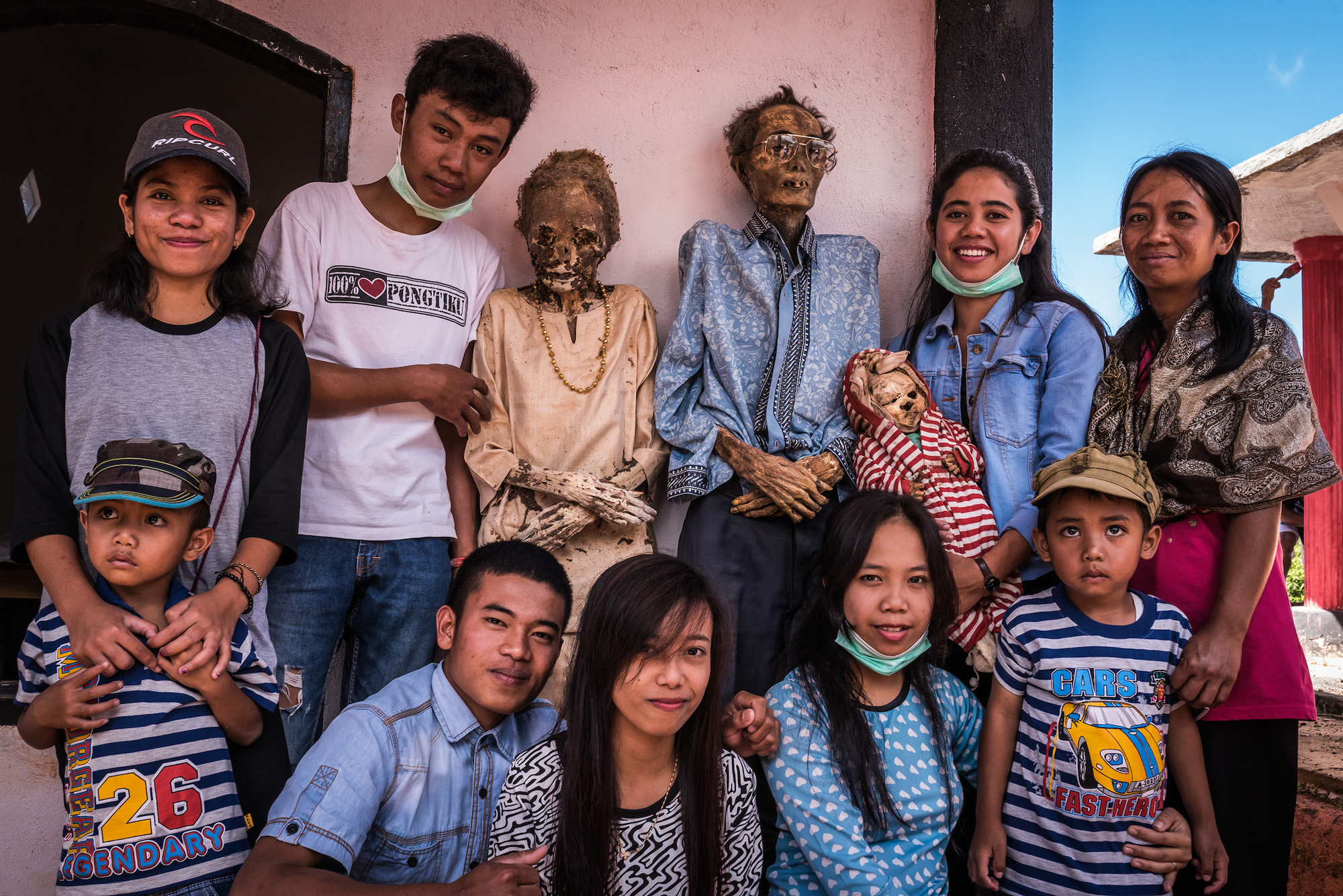
A family poses for photos with their deceased relatives Todeng (blue shirt), who died in 2009, Nene "Marta" Duma, who died in 2008, and their unnamed baby.
Barcroft