

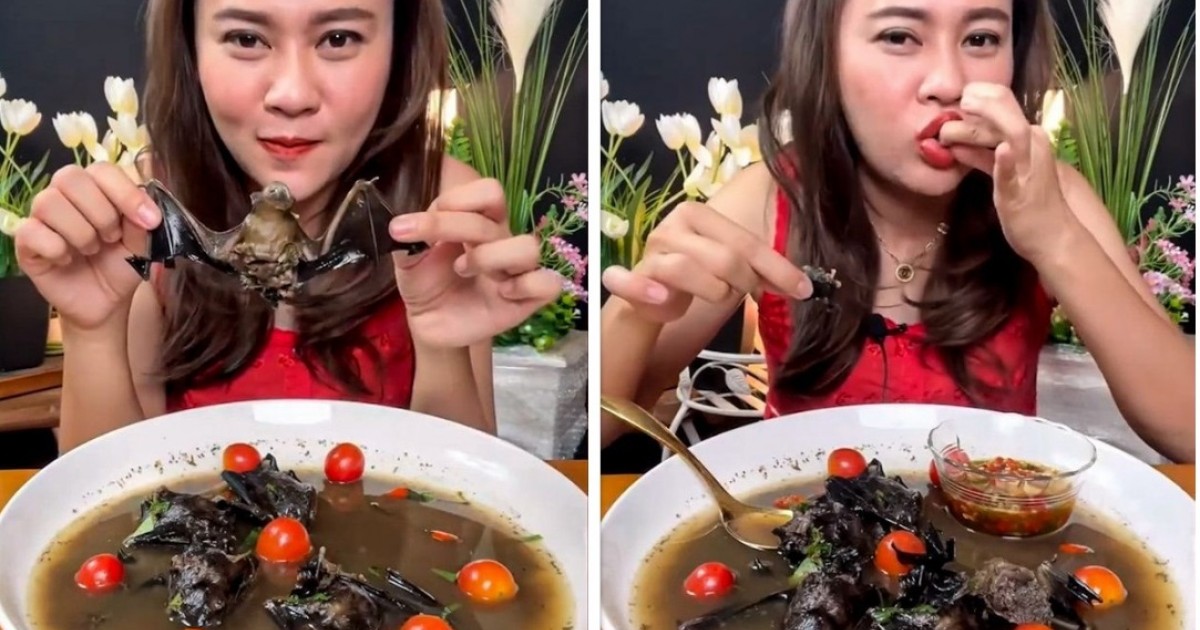
After posting a YouTube video of herself eating a protected species of bat, food blogger Phonchanok Srisunaklua was detained and issued an apology to her admirers.
advertisement
Despite bats being known hosts of Covid, a bony food vlogger was detained after video herself devouring one.
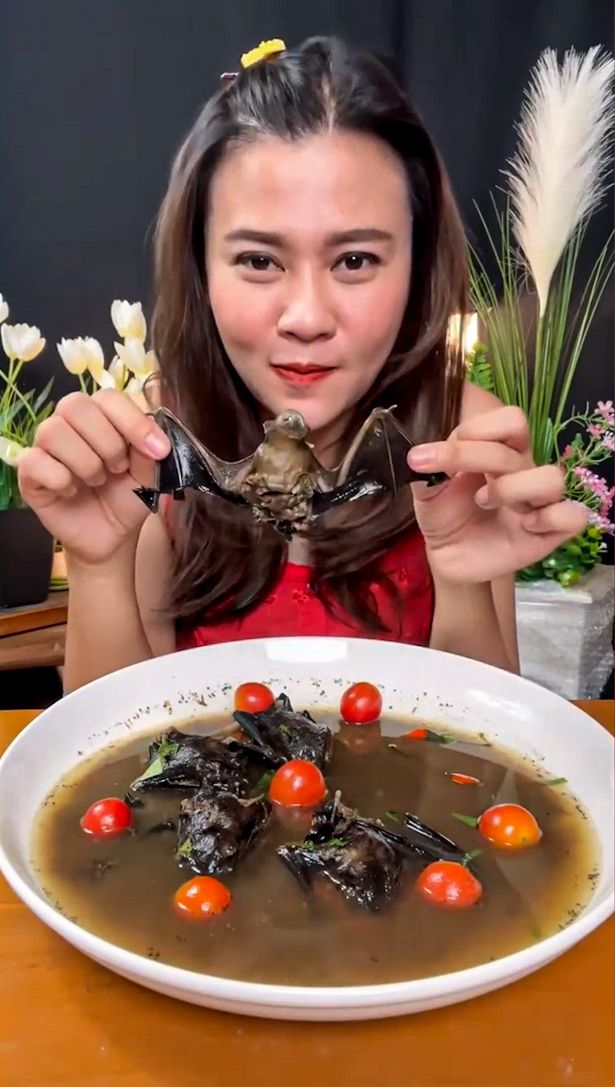
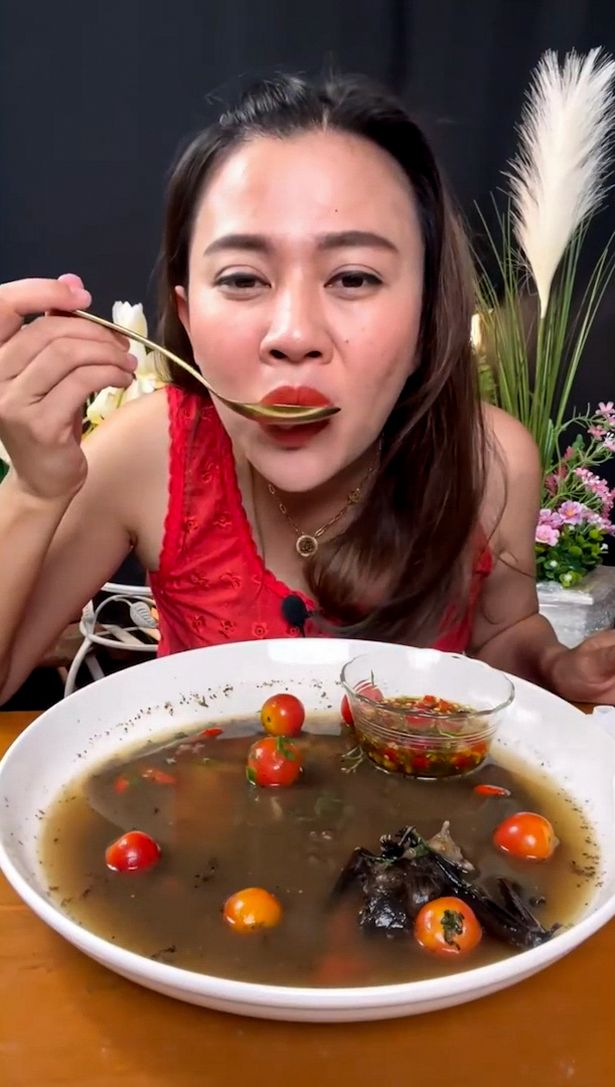
After posting a video on YouTube showing her torn fried bat flesh soaking in a murky brown soup with cherry tomatoes, Phonchanok Srisunaklua removed it and apologized.
(Image: ViralPress)
The Thai culinary content creator, whose channel's name is Gin Zap Bep Nua Nua, or "Eat spicy and delicious," was heard forcefully chomping down on the flying mammal's bones after holding it in front of the camera.
The lesser Asiatic yellow bat, a protected species, was used in Phonchanok's culinary stunt, according to police.
(Image: ViralPress)
advertisement
She said: "I'm very sorry to everyone. I don't think what I did was reckless, but it might be a bad thing and I apologize to all the followers who are disappointed with me.”
"I'm sorry for making you feel bad about what I've done. I don't know if you will forgive me for what I have done. I didn't think about it before. I'm really sorry. I'm very sorry. I'm sorry to society. I'm wrong."
(Image: ViralPress)
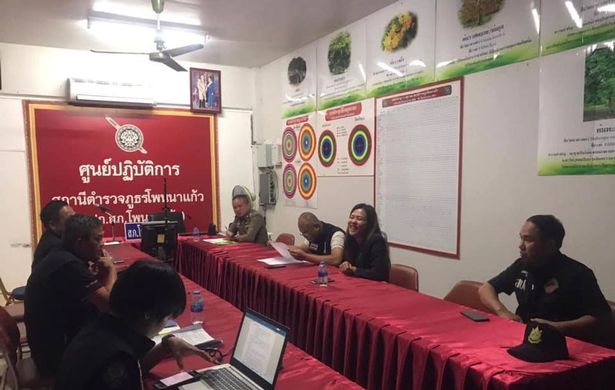
According to Phonchanok, she purchased the creature from a market close to the Thai-Lao border. The animal has been connected to the Covid-19 pandemic's start.
“I was astonished to see it in the clip now”, according to veterinarian Pattaraphon Manee-on, head of the animal health management group at the Department of National Parks, Wildlife, and Plant Conservation.
"Because the incident should not happen both in Thailand and around the world, it is very risky behavior, especially as bats have a lot of pathogens.”
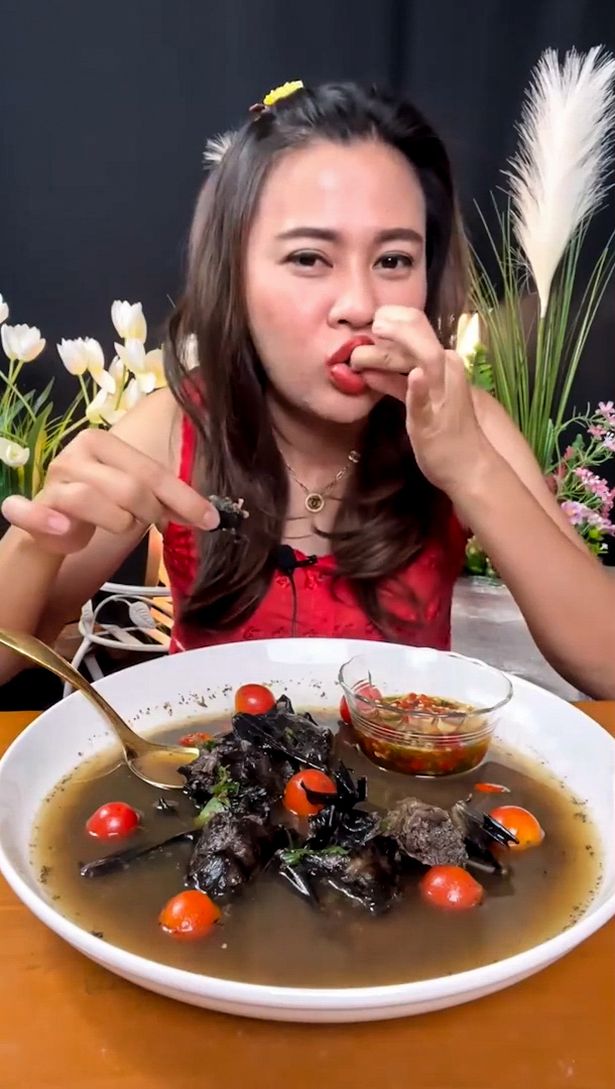
(Image: ViralPress)
advertisement
"There is no proof that the hot water temperature will actually kill the germs. Just touching the saliva, blood, and the skin is considered a risk.”
"Besides the concern about the disease in bats, this woman could be guilty of breaking the Preservation and Protection and Wildlife Act, B.E. 2019, because bats are protected animals."
The novel coronavirus, first known as 2019-nCov, was previously attributed to bats when it was asserted that the virus came from a wet market in Wuhan, China.
advertisement
Then, other films of locals consuming bats and other strange animals emerged.
Covid-19 may have been a man-made virus that escaped from a lab, although it has never been proven that the virus came from the wet market.
Rangsarit Kanchanawanit of Chiang Mai University's Department of Medicine noted that despite carrying a variety of viruses and illnesses that could potentially infect humans, bats are still potential disease vectors.