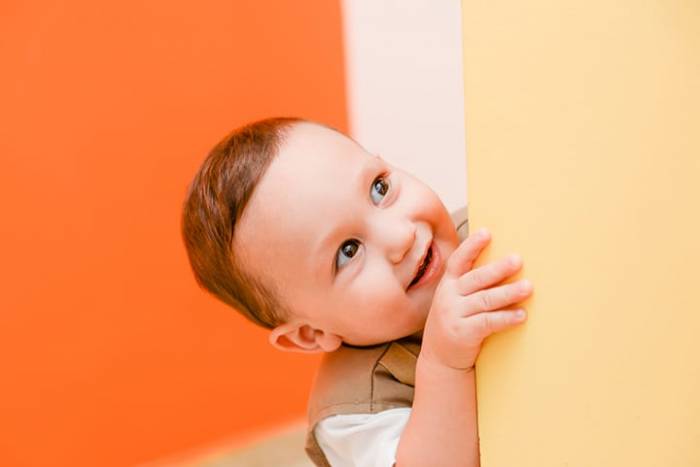
By the time your baby can actually speak it has probably already learned more words than you might realize. It turns out the children are able to understand words much better than they are able to speak. Their brains start early on in life learning to understand the meanings of words and save them for later use.
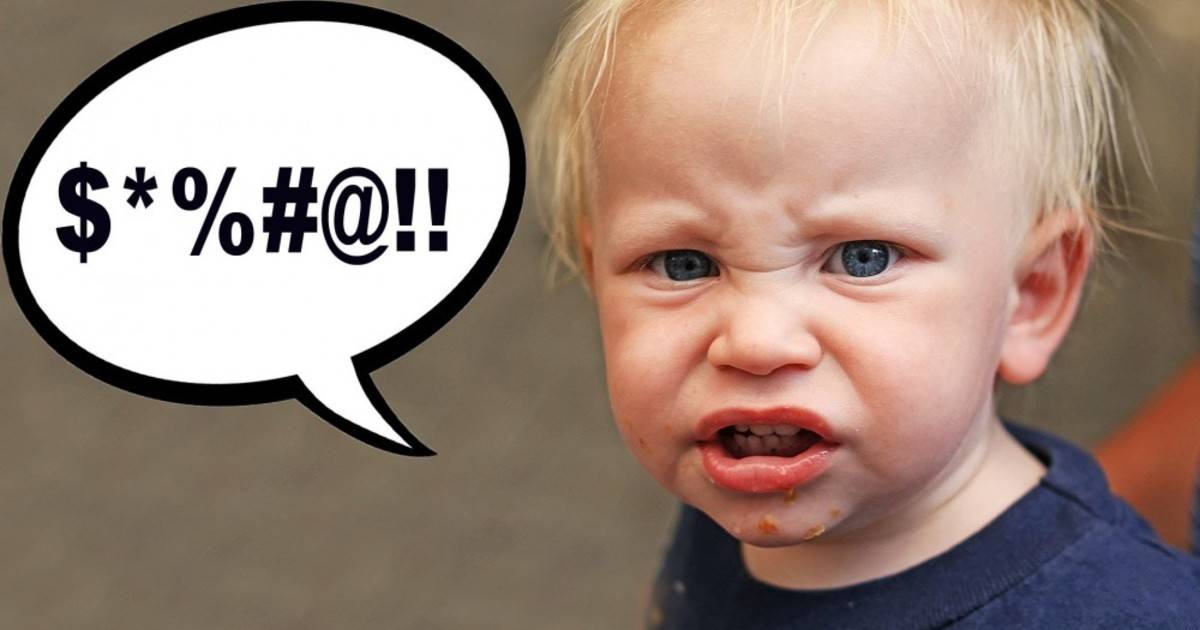
WARNING PARENTS!!!! Your Baby Understands Everything You're Saying, Long Before They Can Say It!
By
Michael Avery in
Life Style
On 28th November 2017
advertisement
All babies have a built-in signaling system that they use to understand and send messages. Their system consists mostly of different facial expressions along with vocalization. Using this system they are able to convey their feelings albeit in a crude fashion.
Children start learning to understand you long before they have any idea what language is. They understand what you are saying to them by your facial expressions and tone of voice. Various studies have learned that saying kind words with a pleasant tone such as "cutie," "sweetie," and "please" are registered differently by children than angry or sad words such as "hate," and other negative words.
What you should understand from all of this is that your child starts to learn more than just language at a very young age. That's exactly why you want to be very careful what you say around them. They are always listening and even though it might seem your words fell on deaf ears they are actively storing everything they hear.
advertisement
Very early on your kids begin to save those words said around them as a way of building up their own vocabulary. Dr. Elika Bergelson of Duke University is fascinated by the findings. Dr. Bergelson said: "I think it's especially intriguing that we find evidence that for infants, even their early words aren't 'islands': even with a very small vocabulary they seem to have a sense that some words and concepts are more 'similar' than others. While they still have a lot to learn before they show adult-like or even toddler-like levels of comprehension, this gives us a peek into how those early words and concepts are organized."
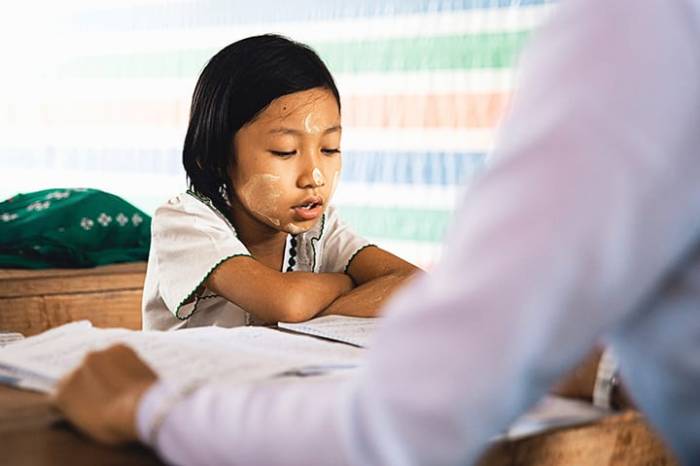
To reach their findings, Dr. Bergelson and a group of researchers studied 6-month-olds to find out if they kept the connections that associated a word with an object instead of recognizing only the words alone. For example, the word "bed" was mentioned around a child and the child would begin to look at the bed. To complete the study the team used technology that would track the infant's eye movements. Using this tool they were able to determine that children retain more information that we originally thought.
advertisement
The studies author said that "Infants may know enough about a word’s meaning to tell it apart from the unrelated referent but not the related one. . . . That is, perhaps infants know ‘car’ cannot refer to juice, but not whether stroller is in the ‘car’ category.”
The team also used home videos to strengthen their argument. The videos were said to prove that young children can understand words much better when they are able to associate an object with those words.
advertisement
How often a word is used while around the object it refers to has a much greater impact on a child's understanding of the word than the word itself. Dr. Bergelson says: “I think before figuring out how to enhance vocabulary development, we need to better understand how it proceeds 'typically' - this paper is a first step in that direction. That said, I think one thing suggested by our work is that talking more with young babies, and focusing in on what they're looking at and caring about certainly won't hurt - and it might even help - with early language development.”
advertisement
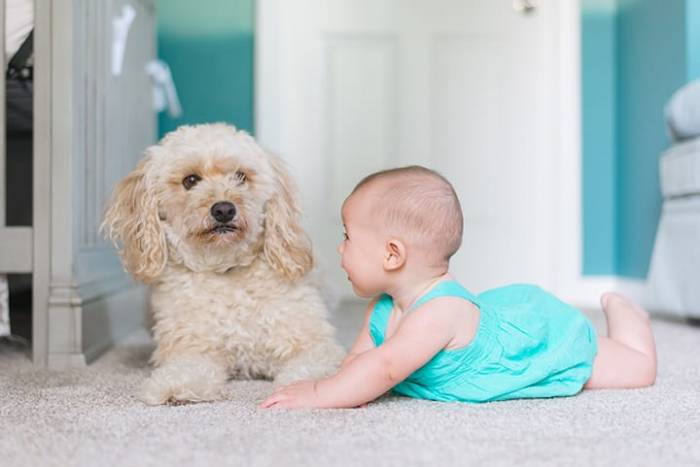
When using that very logic it's very interesting to attempt to study how parents can help their children learn via emotions. If a child is happy when you have the family dog around them and you say "You are excited about pup jumping around you" or if your baby hates how a medicine tastes and you say "You found that medicine to bitter, didn't you?" it will help them not only learn the words but also give a name to what they are feeling.
advertisement
Dr. Dana Suskind studies how to assist parents in improving language development at the University of Chicago. In an email to Reuters Health, she said: "From my standpoint, this work continues to reaffirm the critical importance of early and intentional parent language and interaction from day one and that learning doesn't start on the first day of school but the first day of life! Treat your baby like a real conversational partner...even young infants are listening and learning about words and the world around them before they start talking themselves, and their caregivers make that possible.”
advertisement
To sum it all up, the next time you talk to your infant you should leave out the baby talk and talk to them like you would anyone else. It will be very helpful later on in their lives. Look at it this way, it will be worth it once they finally say their first words. Kids talk nonstop anyone so you might as well arm them well so they have something to talk about.
advertisement
If you do this, it will seem like your child is the brightest kid in the bunch. Parents seem to love it when they can tell their kids to do something and they fully understand what they are asked even when they are really young. Just remember, kids, are always listening so if you don't want them to pick up certain words you might want to refrain from using them when they are around.