

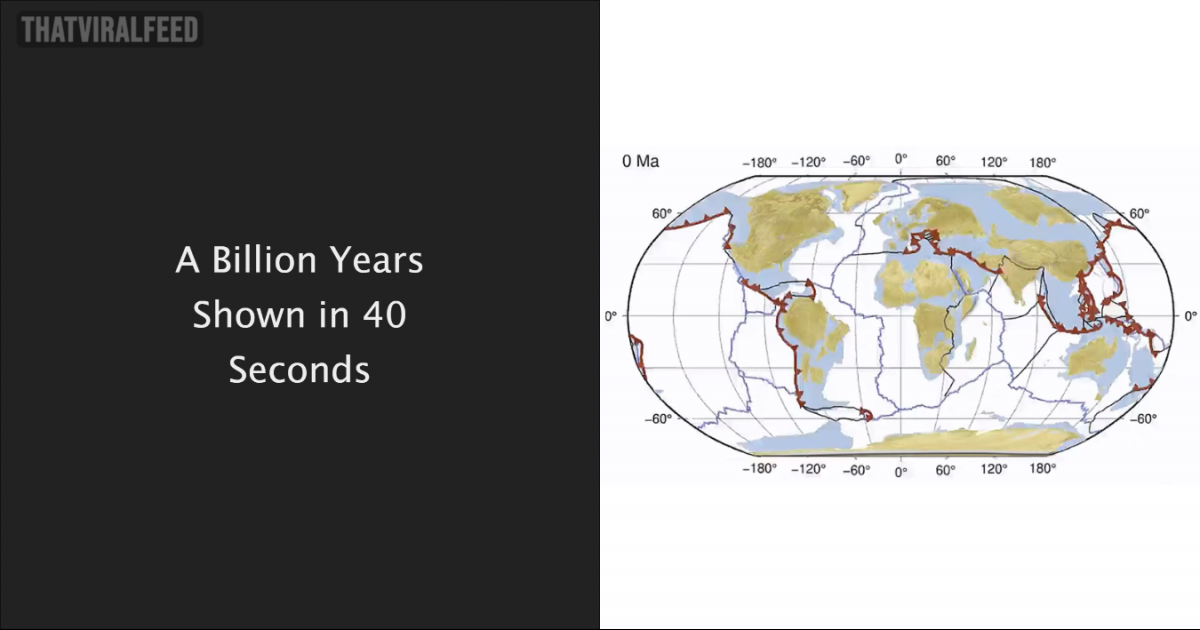
The world has changed much in the past Billion years. From supercontinents forming and scattering, it's taken a long time to come where we are today. This study by Merdith et al. charts for the very first time, how these continental movements actually took place.
advertisement
If you were to grab a map and identify the continents laid out before you, it wouldn't be difficult to point out where each of them lies. But that's not how they always used to look.
You’ve probably read about the supercontinent ‘Pangea’ where the continents used to rub shoulders until they drifted away by virtue of plate tectonics to finally settle where they are today.
Pangea however was only one such supercontinent.
advertisement
A study into these models called ‘Extending full-plate tectonic models into deep time: Linking the Neoproterozoic and the Phanerozoic’ (Merdith et. al, 2021) attempts to chart the trajectories of these continents across deep time. Deep time in simple terms refers to events that may have taken Millions or Billions of years ago.
As one may wonder, deep-time being so long ago, most studies in continental drift have been largely speculative. Merdith et al. felt that the reconstructions of continental drift from the Neoprotozoic and Cambrian eras were disconnected from recent studies.
Their deep-time reconstruction attempts to fill that gap.
advertisement
In their research, they introduced a first-ever ‘full-plate’ model which represents the movement of continents through time across 1Ga (Giga Annum or a Billion years ago).
advertisement
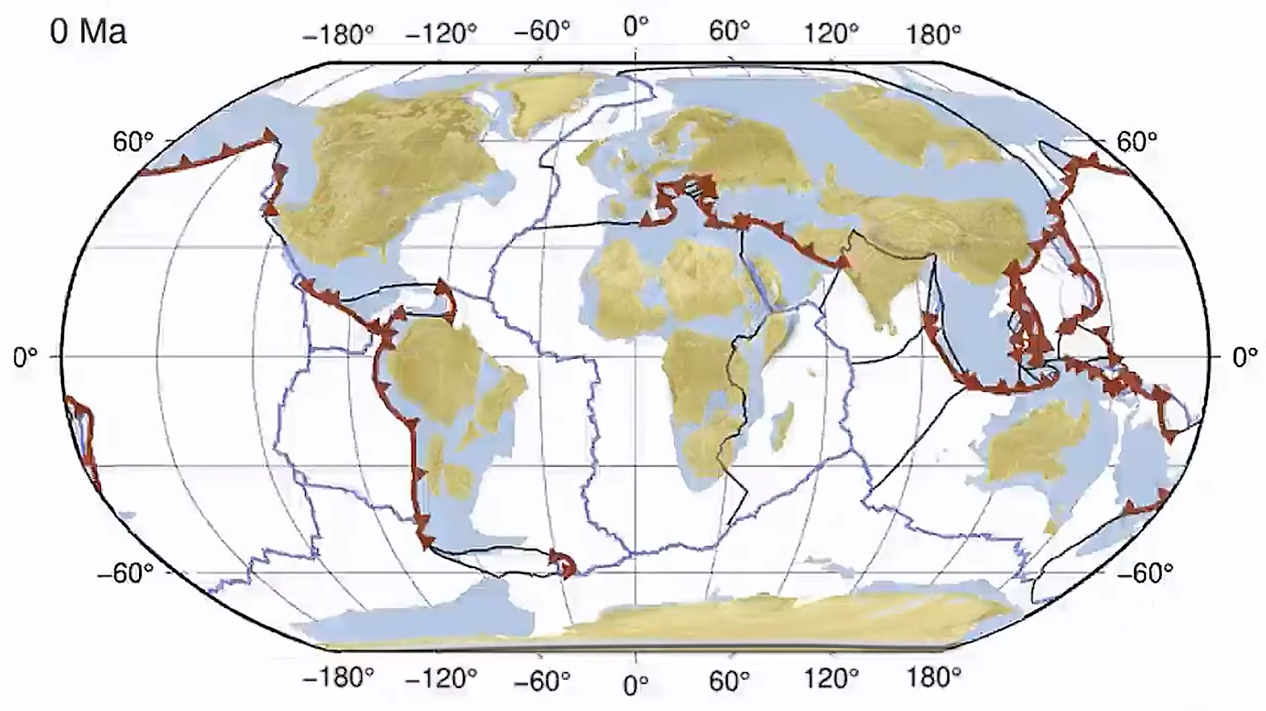
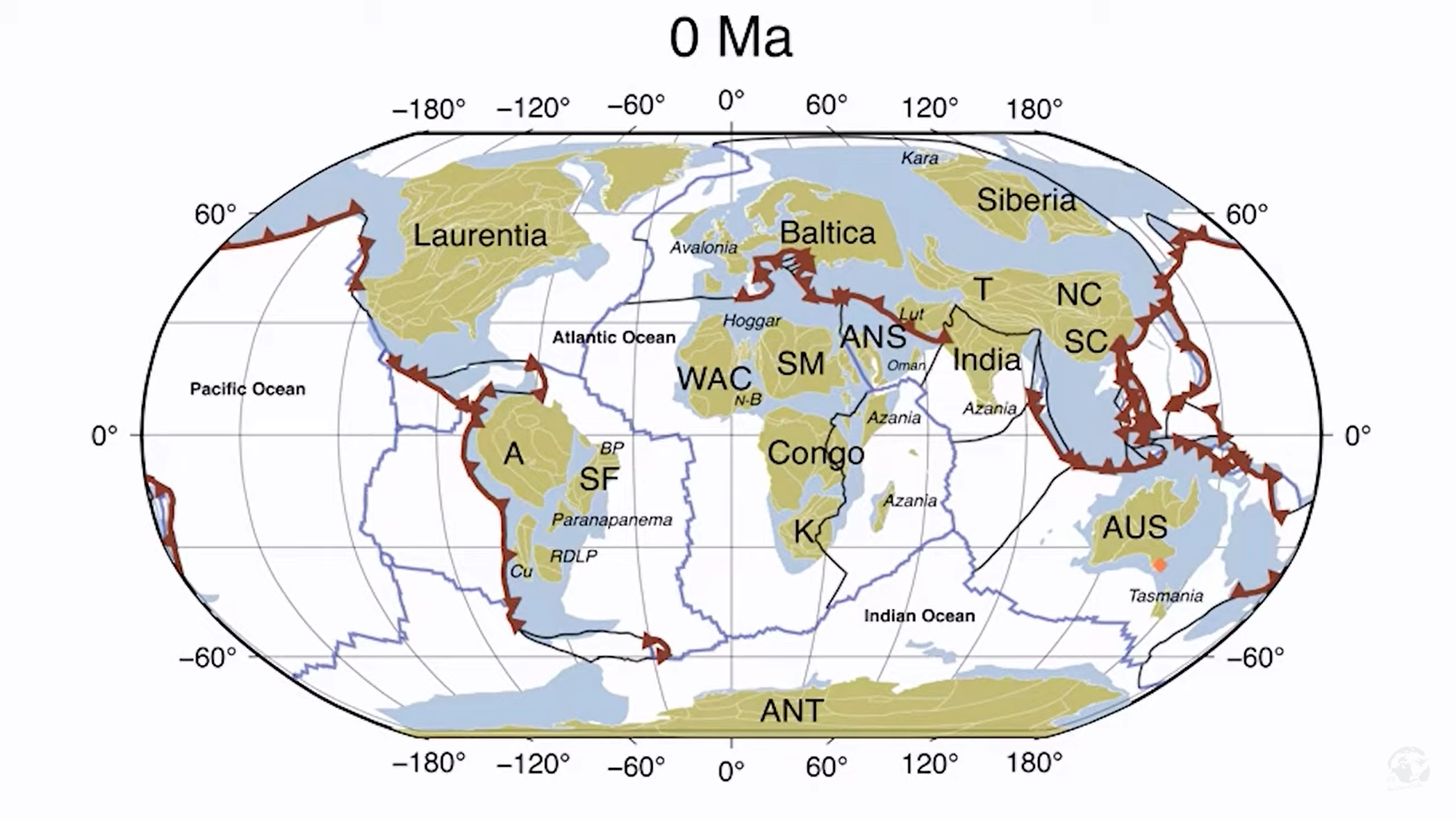
This map represents the tectonic plates laid over our current continental positions. The lines across these continents represent plate boundaries. The red lines represent convergent boundaries where two plates overlap over one another. The blue lines however are divergent or where they drift apart.
advertisement
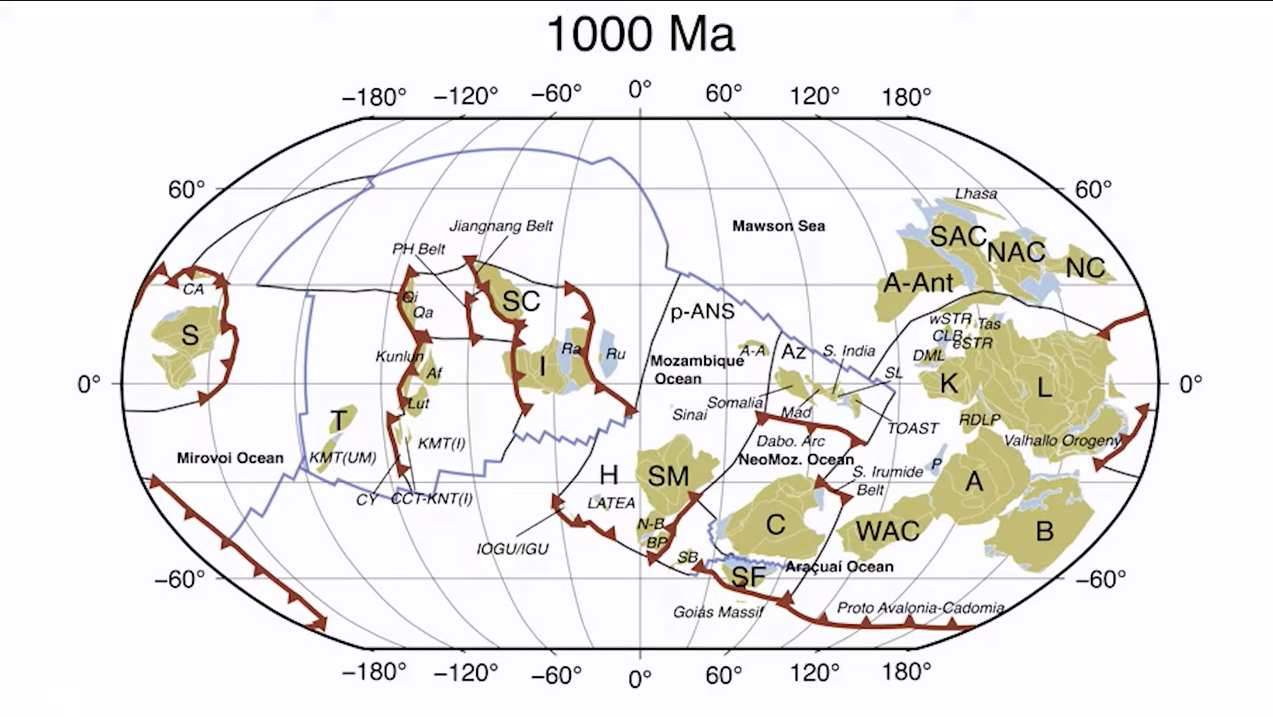
If we were to then move backward in time to 1Ga (Billion years ago), we see an entirely different picture.
What we know as Canada and Southern USA were to the right of the globe and rotated. These formed Laurentia which was a small part of what was then a supercontinent by the name of Rodinia.
advertisement
Fragments of China, Australia, and Antarctica were also north of Laurentia. Europe and South America had drifted to the south of this place.
advertisement
Over the next 500Ma (Million years), this supercontinent Rodinia broke apart and scattered during the Neoproterozoic era which occurred between 1000-541Ma.
This was a highly significant period of time in Earth’s history when it almost froze over several times. This was also when multicellular life came into being for the first time.
advertisement
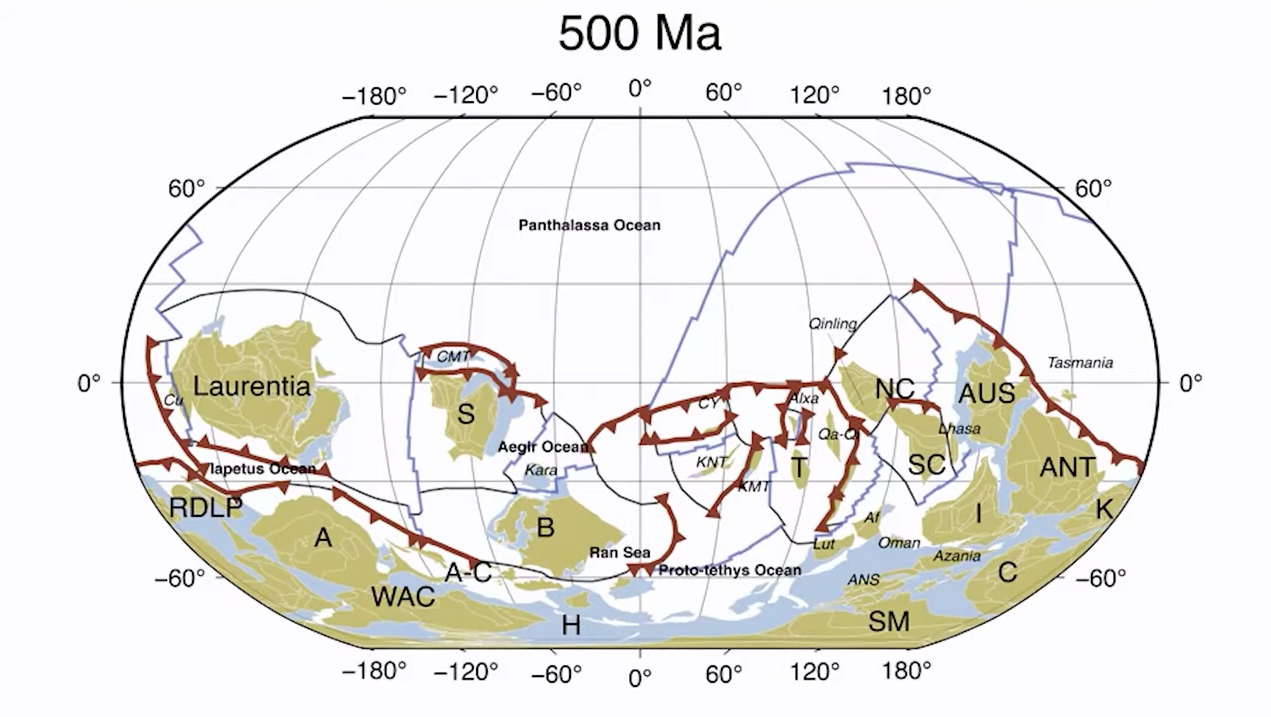
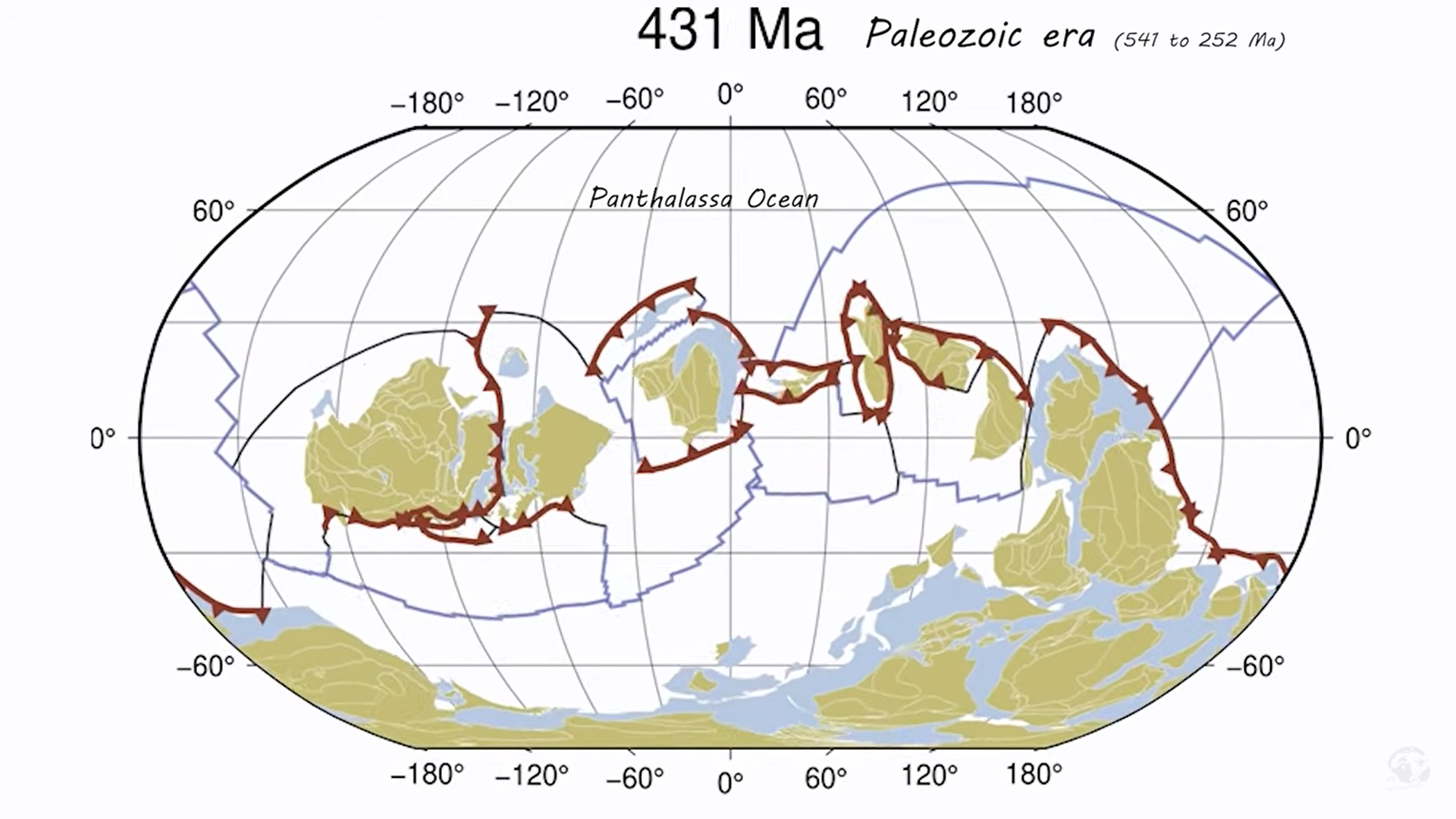
Stopping time at around 500Ma things have moved even further with the continents huddled to the south in what was called ‘Greater Gwondanaland or ‘Panotia’. This was capped in the north by a super ocean named Panthalassa.
advertisement
This was also when the Paleozoic era which lasted from 541Ma to 252Ma as Gondwana scattered even further encroaching into the Panthalassa. At about 400Ma Laurentia had moved westwards transforming into a supercontinent by the name of Laurussia which contained Laurentia and Europe.
advertisement
In just another 100Ma at around 311Ma, Laurussia and Gondwana started coming together once again to form what we know as Pangea.
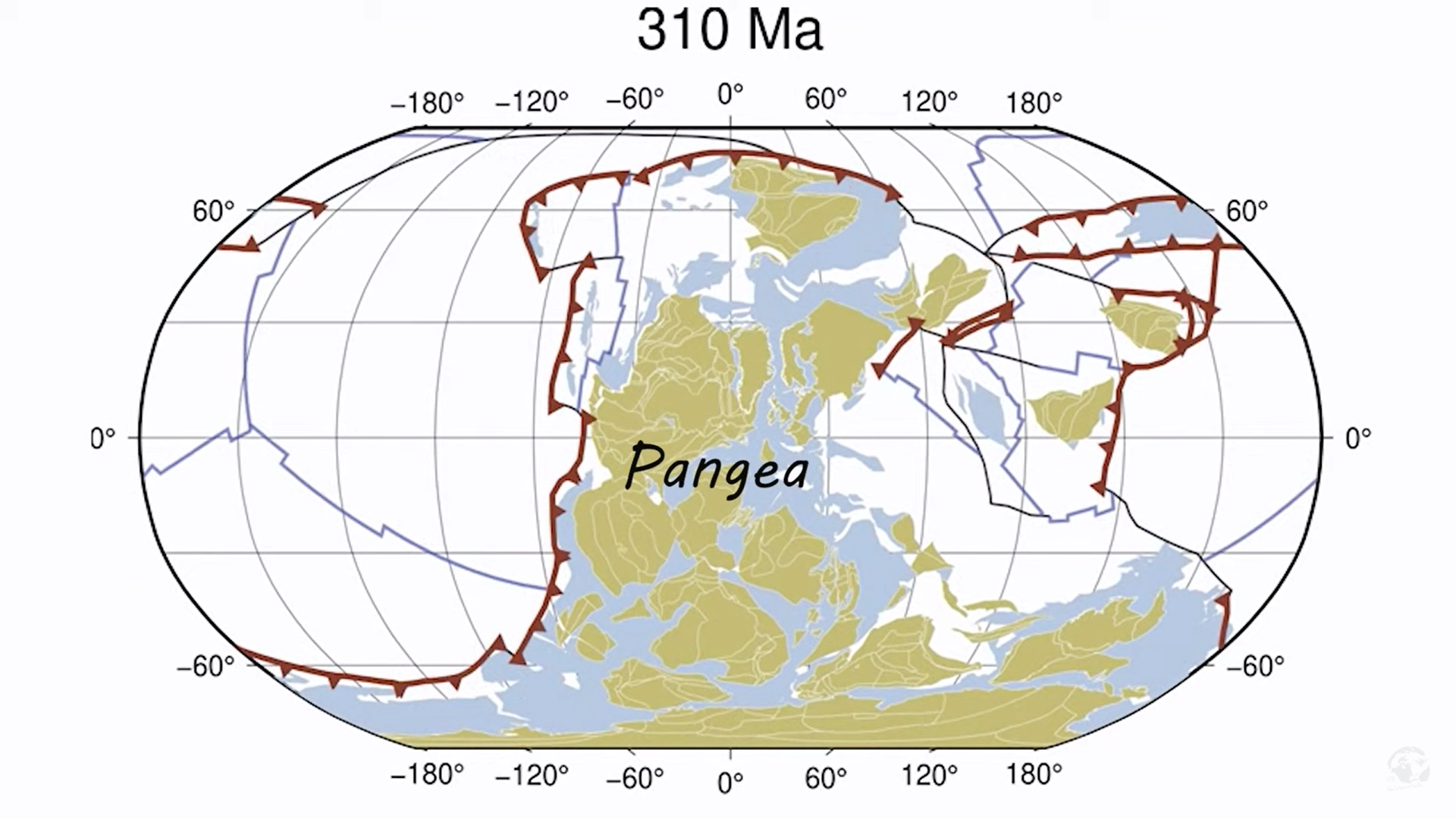
To the west of Pangea, the Pacific Ocean had started forming while to the east was a new seaway by the name of Tethys.
advertisement
Eurasia started taking shape to the north of Tethys over time. The opening of the Atlantic Ocean over 200Ma was one of the biggest changes that led to the formation of the continents as we know today.
Laurentia and Gondwana began drifting apart to make what would be the Central Atlantic, Gondwana was then split in two at around 110Ma as the South Atlantic started taking shape, separating it into what we now know as South America and Africa.
North America and Europe were formed when what was Laurentia was pushed apart by the formation of the North Atlantic.
advertisement
It was only 50Ma that India which was formerly part of Gondwana drifted from the south to join up with Asia. Other fragments of Gondwana formed Australia and Arabia.
What was interesting about this study was how it accounted for transitionary periods of continental drift across a supercontinent cycle.
Who knows how much the world could change even further for we are but a blip in time when it comes to the earth’s lifespan of Billions of years.
advertisement
You can watch the video of their reconstruction here.