

When those strange wiggly lines show up in your vision, they can be distracting — and a little worrying
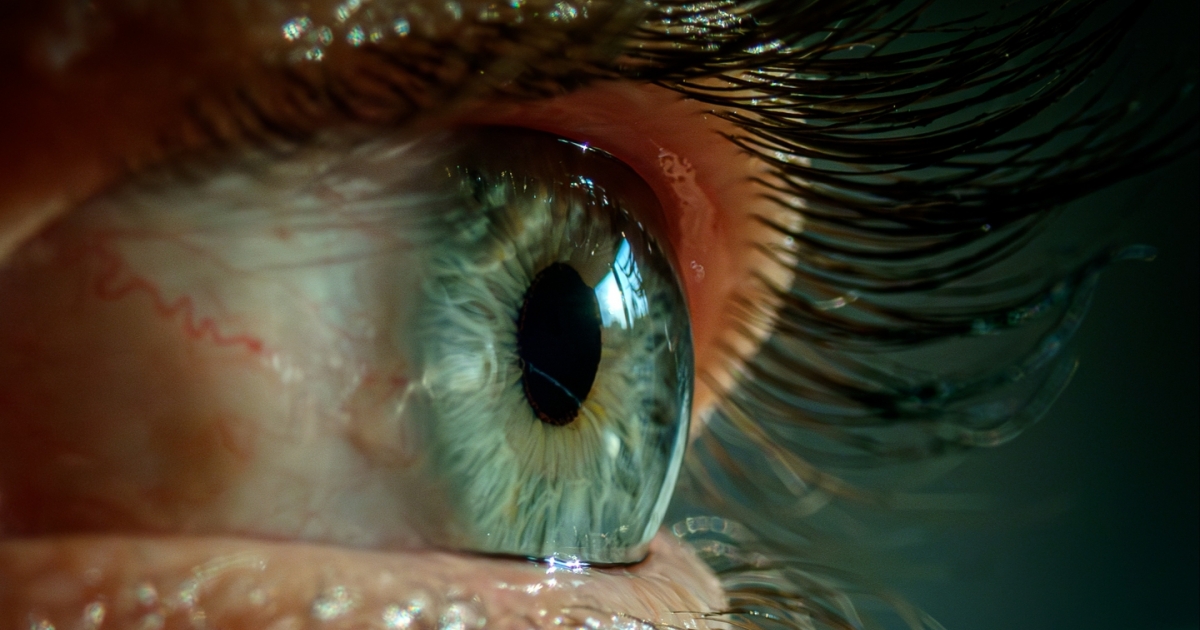
Eye Specialist Explains What To Do If You Start Seeing 'Floaters' Drifting Across Your Vision
By
maks in
Health and Fitness
On 28th October 2025
advertisement
That frustrating moment when you suddenly notice small moving shapes or lines floating in your vision can catch anyone off guard. They seem to drift around, especially when you look at a bright surface or clear sky, and it’s easy to wonder what’s really going on.
Most people assume those faint shadows are just temporary or caused by tired eyes, but in reality, they’re a common eye occurrence known as floaters. Even though you might hope they’ll vanish quickly, the truth is that they rarely go away completely.
Instead, your eyes adjust over time, and your brain learns to tune them out, making them less noticeable — though not entirely gone.
"I say [to patients], 'These floaters will get less obvious with time'. Then I say, 'I didn't say they would go away. I mean it when I say they'll get less obvious with time, but if you look at a blue sky or a white sheet of paper, you'll still see them. If you look at a blank computer screen, you'll still see them'," retinal specialist Dr. Steve Charles explained to Eye World.
The reassuring news is that floaters are usually harmless. However, experts caution that if they persist, worsen, or appear alongside other changes in your vision, they could signal a deeper issue that needs attention.
Dr. Daniel Polya, a member of the Royal Australian and New Zealand College of Ophthalmologists, described eye floaters as small specks, dots, or thread-like shapes that drift across your field of vision — often moving when your eyes move.

Does this view look familiar?
Getty Stock Images
advertisement
These floaters are caused by tiny clumps of collagen or cells that form inside the vitreous — the clear, gel-like substance that fills the center of your eye and helps it keep its shape.
"It's the condensation of the collagen fibres. Large molecules of collagen clog together and cast shadows on your retina, which you perceive as eye floaters," Dr. Polya explained in an interview with Daily Mail Australia.
What floaters can mean for your eye health
In most cases, floaters appear due to a condition called posterior vitreous detachment (PVD). This is a natural part of aging where the gel inside the eye begins to shrink and separate from the retina. It’s generally harmless and doesn’t cause lasting problems, though it can be alarming when it first happens.
However, in rare cases, a sudden appearance of new or large floaters can be an early sign of something more serious — such as a retinal tear or detachment. These conditions can lead to permanent vision loss if not treated quickly, which is why doctors stress the importance of early detection.
"What's really disappointing is when someone will come in with retinal detachment from a posterior vitreous detachment that hasn't been examined earlier," the expert added, emphasizing the risks of delaying an eye exam when symptoms first appear.
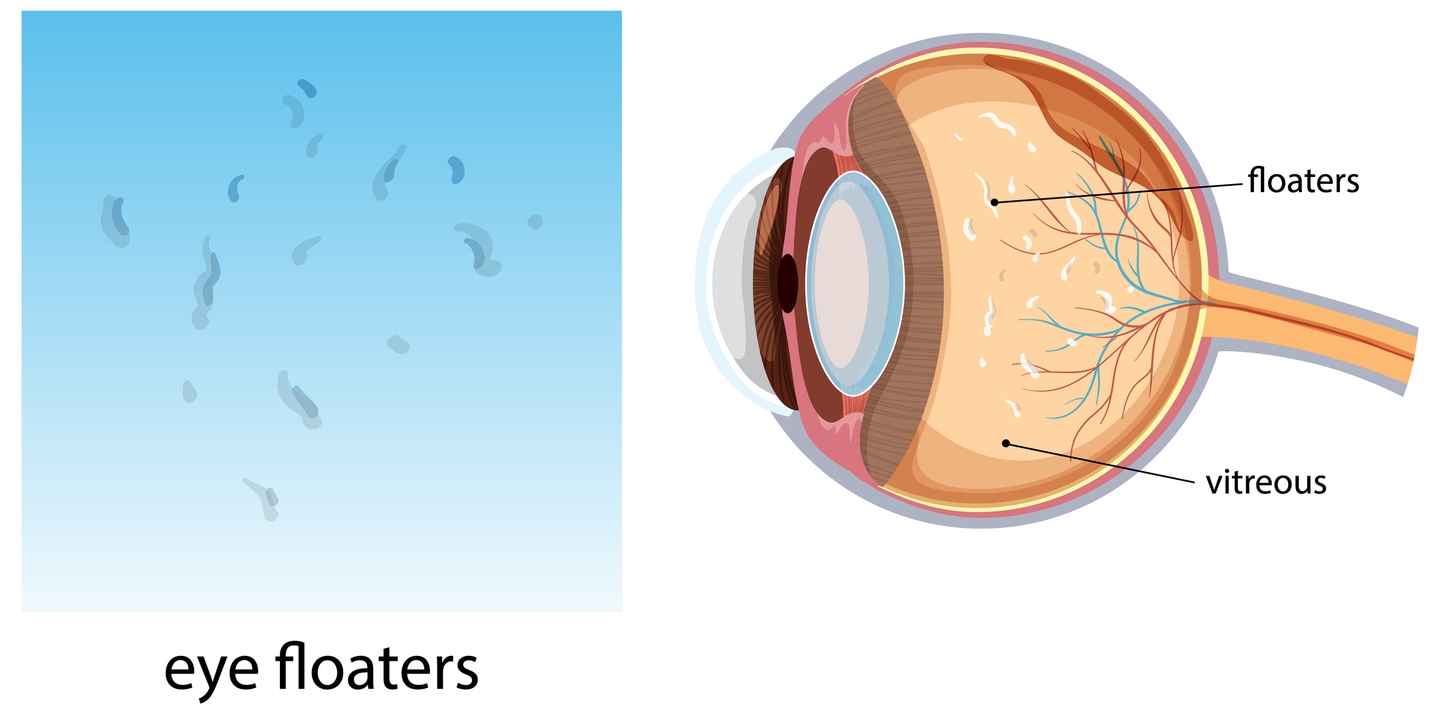
Approximately between 30 per cent and 76 per cent of people have reported seeing eye floaters, according to a study published by the NIH
Getty Stock Images
advertisement
"For those that get PVD, there's a five per cent chance it's developing a tear in the retina, and if a tear does occur, there's a 50 per cent chance of retinal detachment."
"PVD is common and not that disappointing to see, whereas retinal detachment is disappointing to see in a patient who could have had an earlier exam when they first got floaters."
advertisement
When you should see an optician
According to Dr. Polya, it’s essential to book an eye exam as soon as you notice a floater for the first time. Even though most are harmless, only a professional can confirm that it isn’t linked to a more serious condition like a retinal tear or detachment.
"Very rarely patients are persistently bothered by floaters," he said, explaining that while most people learn to ignore them, a small number remain bothered by persistent floaters.
"Laser surgery can also be performed to break up big, problematic floaters, but it has risks associated." he added, noting that while laser treatment can reduce large floaters, it does come with certain risks and should be carefully considered.