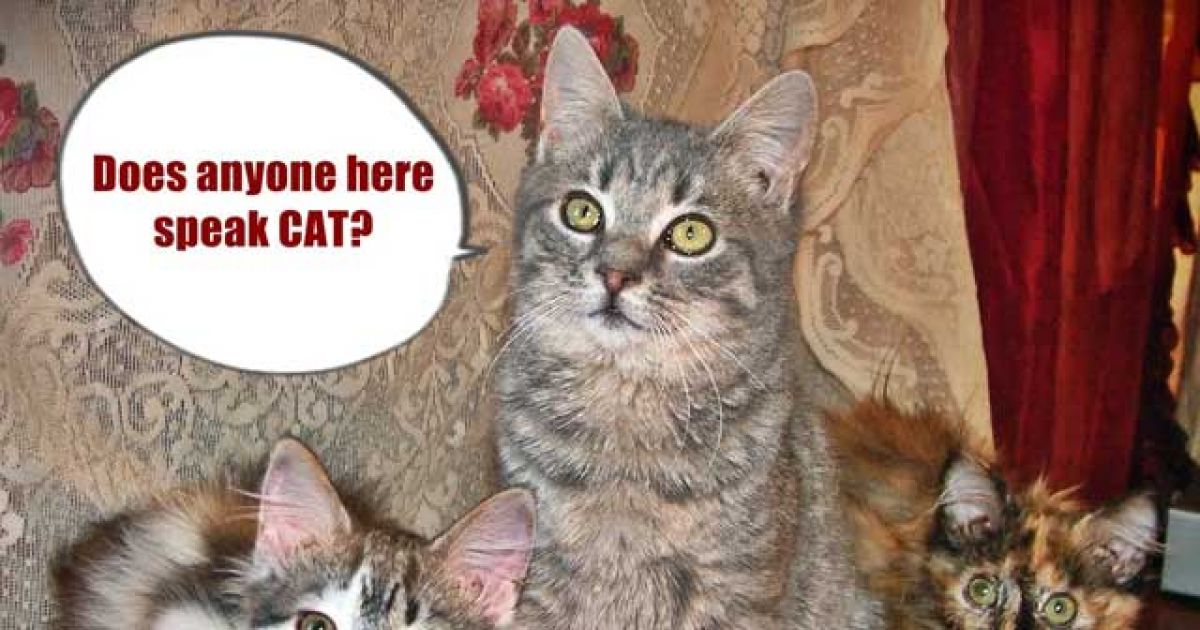
Cat talk and cat language puzzles us. Cats have been regarded for centuries as mysterious, solitary, unpredictable creatures because we can’t understand what they're saying. But savvy cat owners can decipher cat language. While people rely primarily on speech to communicate, “felinese” is predominately a silent language. Cats speak by using complex combinations of sign language, vocalization and scent cues. Learn how to recognize cat language basics, and figure out the most common combinations, to understand what your cat is saying to you, and to the other fur-kids.
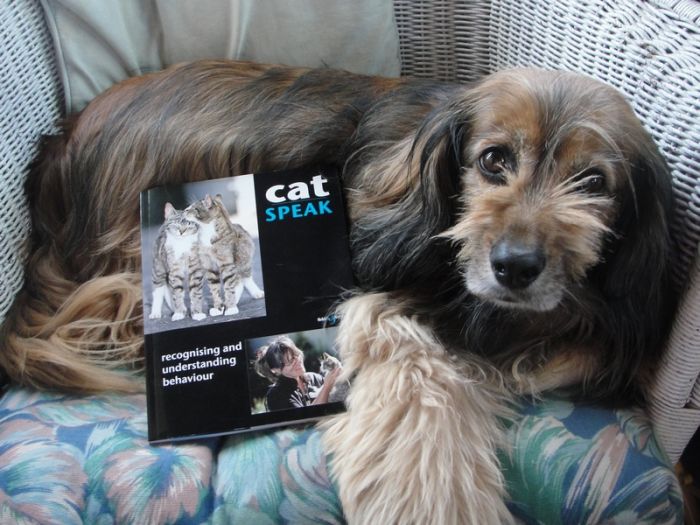
Cats communicate with each other mostly through scent, although facial expressions, touch, and body language also play a part. Vocal communications include caterwauls when mating, hissing to repel threats, and chattering when cats come across prey. Meowing, however, is all about talking to us.
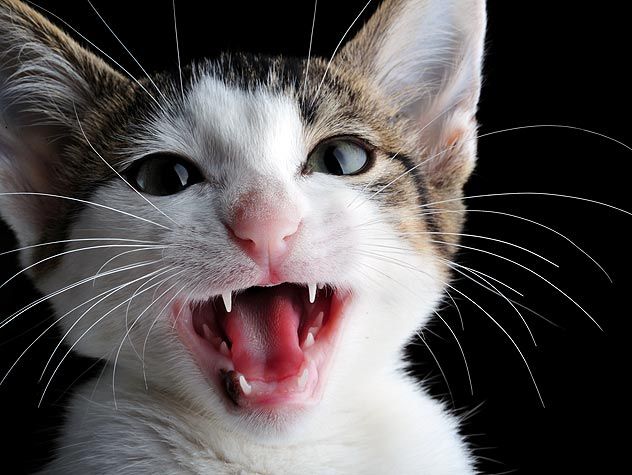
Meowing
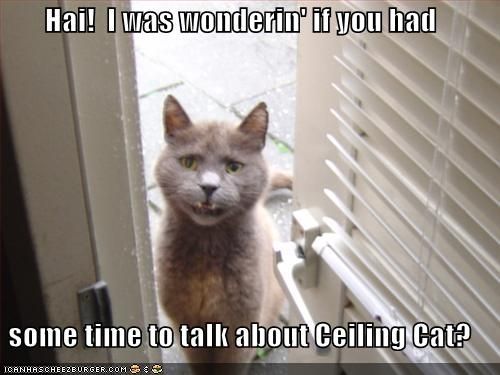
Cats meow to people because meows work. Your cat is dependent on you, so she quickly learns what type of vocalizations and body language get you to do what she wants. It makes sense their sweet talk usually works but there's more to meowing than just asking for food. A meow could be a request to be petted, let out, or any of a dozen other things your cat would like you to do.
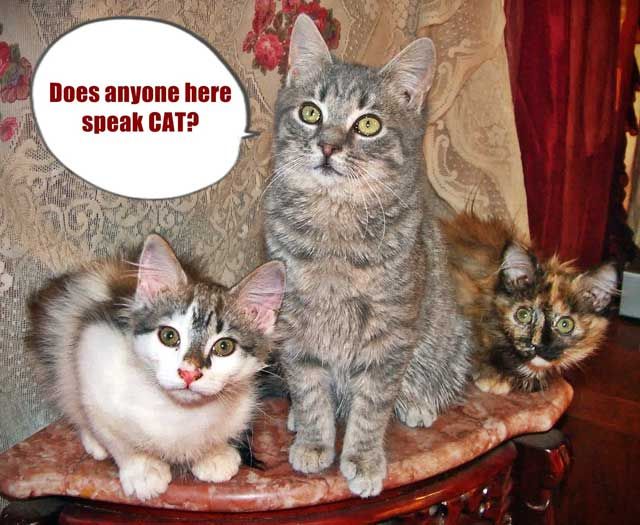
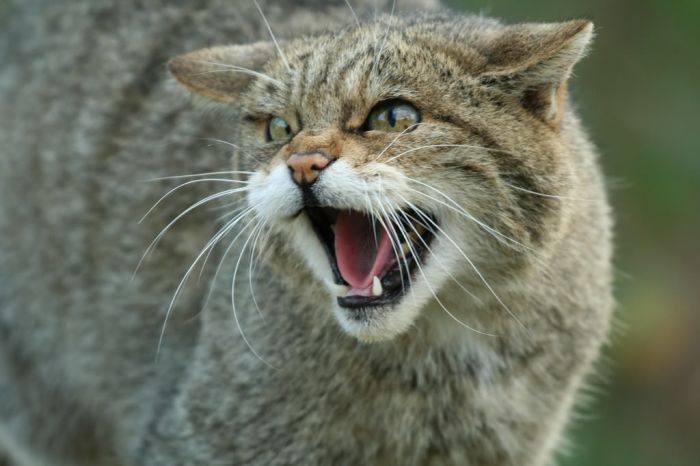
On top of their usual meows, cats also use harsher, louder meows for demands, reprimands, or to express annoyance. These meows have a lower pitch and are not all that pleasant. Cats rarely use these meow
Purring
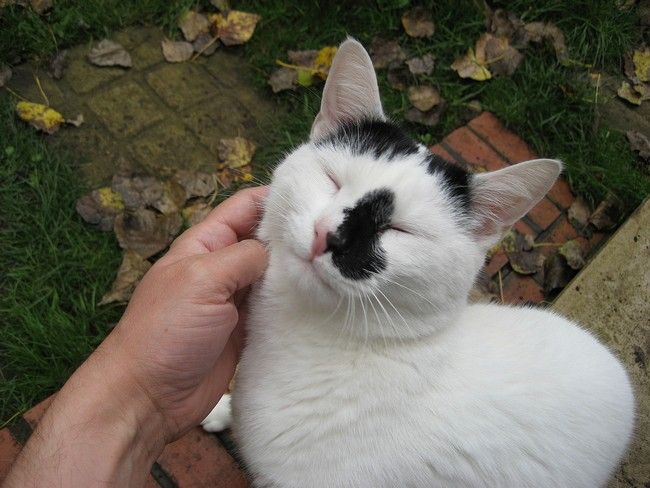
We think of purring as signifying contentedness, but cats who are sick, injured, or scared will also purr, Sharon Cromwell-Davis a professor of veterinary behavior at the University of Georgia told New York Magazine. Since cats don't know how to ask for help, purring may be more of a solicitation for care, or a self-soothing behavior when they're uncomfortable.
Purring may also contribute to bone health — cats in the wild spend lots of time waiting to hunt, and vibrations are known to help stimulate tissue regeneration.Of course cats purr when they’re happy, too!
Nonverbal communication lasts longer—sign language can be sustained nearly indefinitely with no need to stop and take a breath. The silent semaphore language of cats is done via facial expressions and body positions.
Tails, Ears and Whiskers
The primary purpose of a cat's tail is for survival in the wild both for balance when walking out on a limb, and to help them flip their bodies over in the air and land on their feet if they fall off that limb.
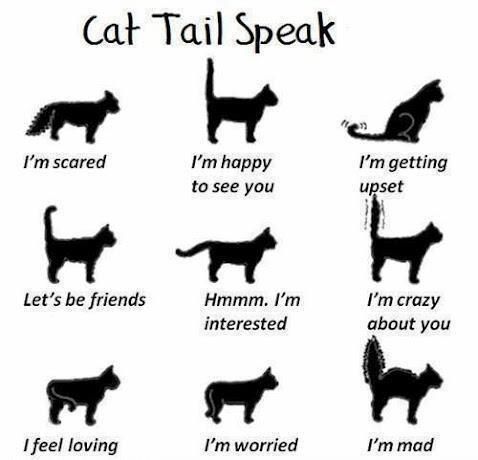
But domesticated cats use their tails mostly to communicate with their owners and other cats.
Cats often use their tails to communicate their intentions in order to avoid conflict. A cat who is being petted will tell you she's ready for you to stop by using a slow swish of her tail. This means "Back off!" If the unwanted petting continues, most cats will either bat you with a front paw or get up and walk away.
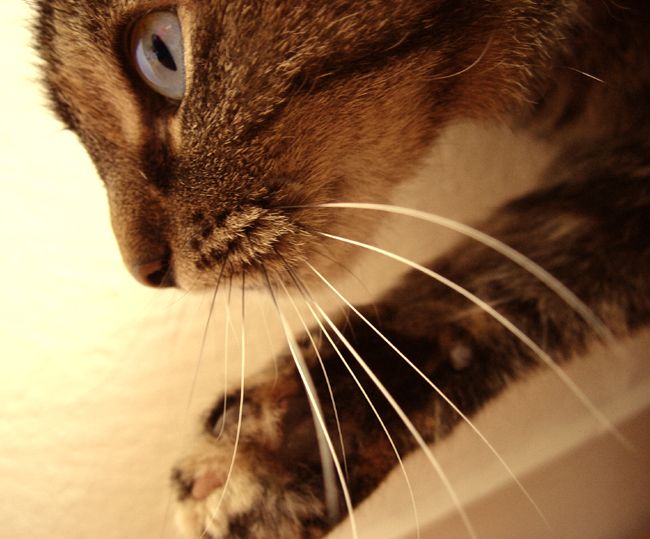
Cats even use their ears and whiskers to convey meaning. Stay away from a cat whose ears are flat because she probably feels threatened. Whiskers that are relaxed and positioned to the sides indicate a calm, happy kitty.
Facial Expressions
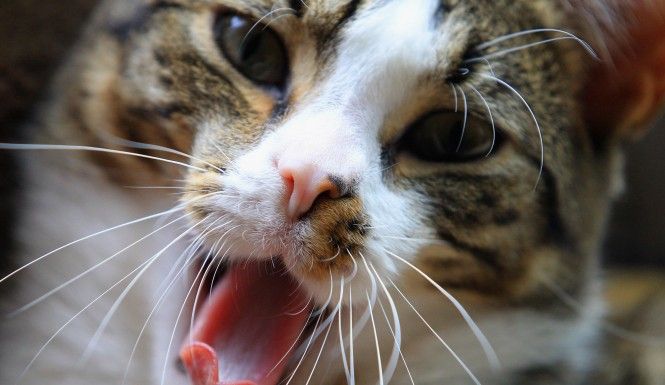
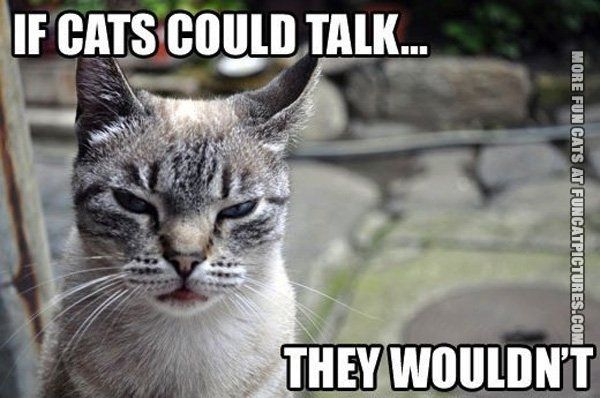
You may not pay much attention to them, but you've probably noticed that your cat can express her emotions in her face as well as the rest of her body tense facial muscles when she's stressed and relaxed facial muscles when she's more relaxed.
Rubbing
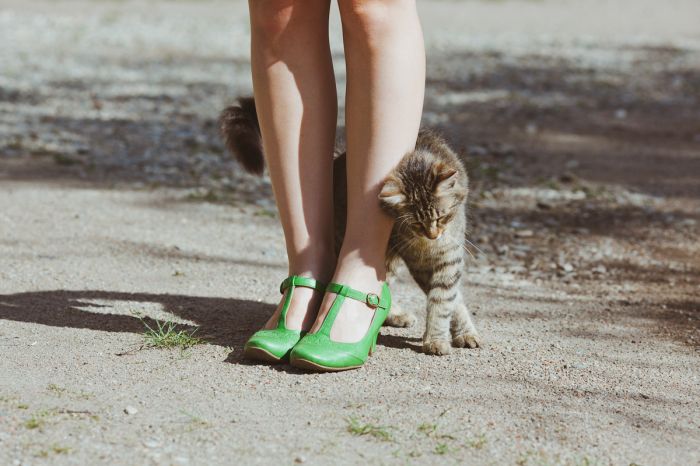
When your cat rubs up against you, it may mean that they want something from you, but it could also be that they're just happy to have you around.
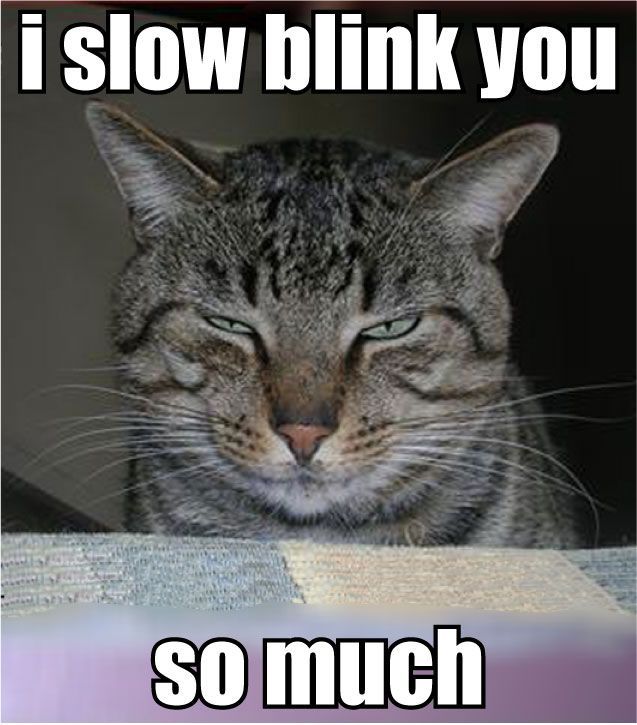
Cats talk with their eyes. What they say is determined by the position of the eyelids and dilation of the eyes. The messages vary from subtle to overt, and can be incredibly powerful. Kitty doesn’t need to vocalize to get her message across, although the intent often is reinforced with tail talk, ear positions, and fluffed fur.
Cat Fur Talk
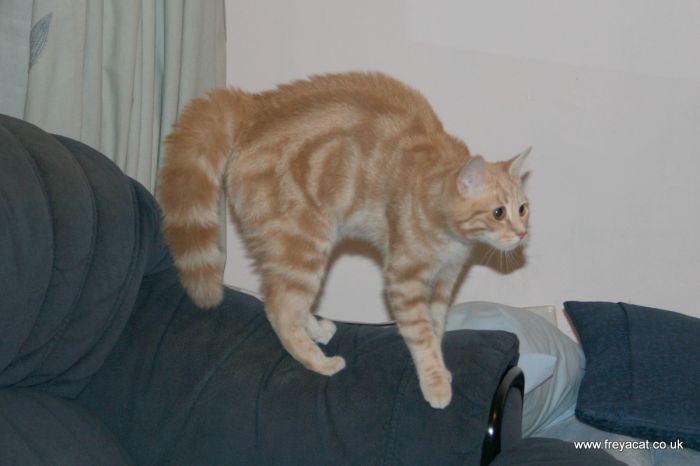
A relaxed cat's fur hugs her body in smooth layers. But cats who are uncertain or afraid use piloerectionfluffed up furto make themselves look bigger than they are. The fluffed fur strives to make the cat look more impressive and imposing, in an effort to bluff her way out of the situation.
Jutting a Paw or Leg Out
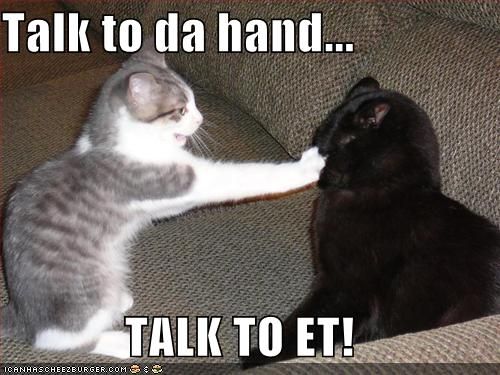
This is an indication your cat desires some sort of attention or affection. Even if your cat does not show any other signs of need, this is often the biggest way for some cats to show they need some serious love.
Q-tip Communication
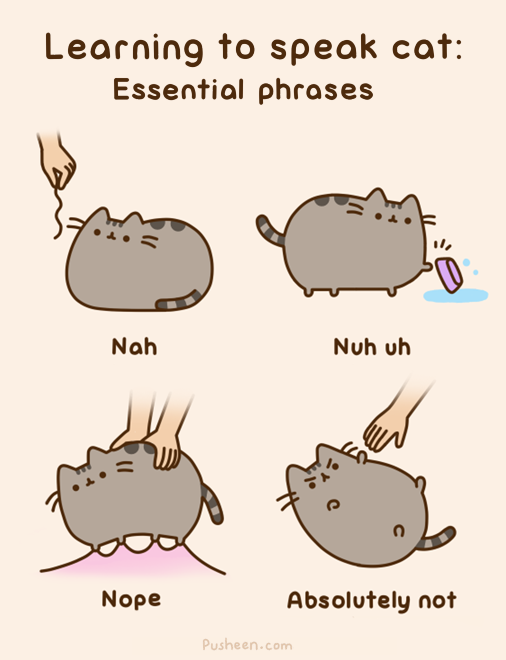
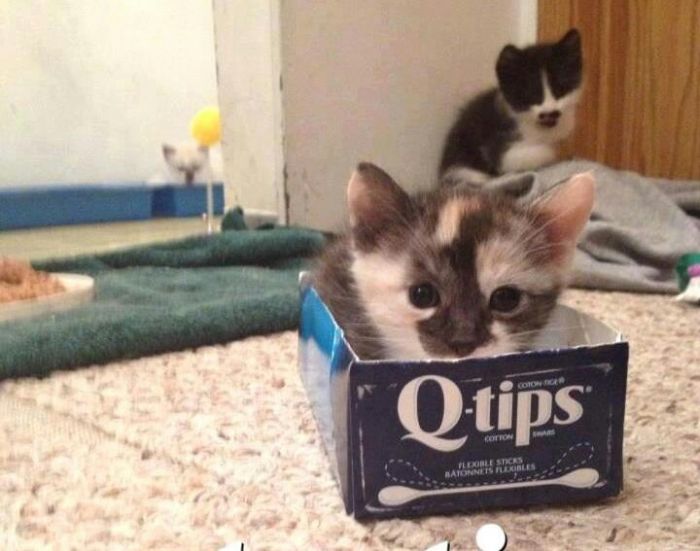
Q-tip communication can be a little gross, since you end up finding Q-tips, store receipts, and little pieces of plastic your cat fished out of the garbage in the water bowl or other locations. These are actually signs that your cat communicating with you at a very high level. If you find a Q-tip in the water bowl, this means the water is not fresh or that it needs to be refilled.
Turning Its Back to You
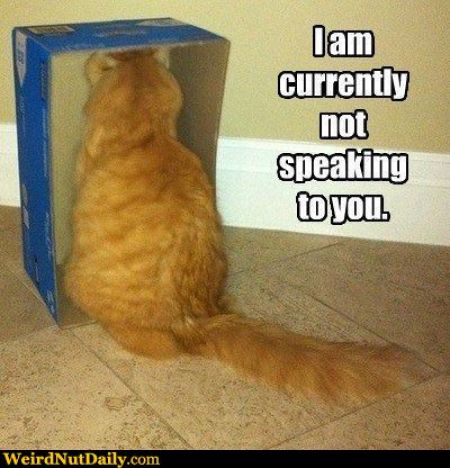
Your cat is mad at you. Cats tend to do this also especially if you have gone away on vacation. They feel they missed you too much and you have put them through an emotional roller coaster. Don't worry. This should end in a day or two. Your cat soon won't be able to resist your lovin'!
Dead Birds and Mice
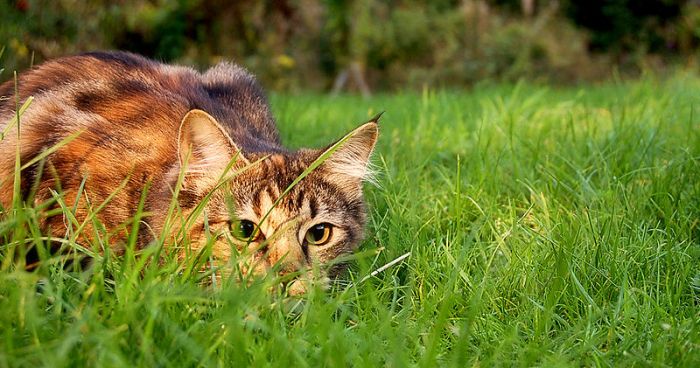
Your cat is trying to give you a present. By bringing in its catch, it is giving you a gift and doing its fair share to support the household. Keep in mind that when some cats are young, their moms teach them to hunt. Your kitty will be surprised when instead of praise, you chastise them for their prize. All your cat wanted to do was impress you. Bear in mind that your cat might have spent the last few hours or days thinking of a strategy to wow you with their special gift. This is possibly the biggest area of miscommunication between human and cat.
Changes in Temperament
If you wake up to find your cat staring at your face every morning when this was not the case for perhaps a decade, this could indicate emotional distress or physical illness. Take stock of your cat and bring it to the vet if necessary. Generally speaking, healthy cats are a bit stand-offish, some more so than others.

Though you might enjoy the sudden attention, if your cat is suddenly very affectionate, this could indicate a problem. Remember that even if your cat is stand offish and rejects you, they still love you. Distress can often make them realize that you are the one who loves them the most and can help them. So take heart, take stock, and have the vet check them out.