

Nearly all birthmarks are harmless and painless. But it's important to have a doctor check all birthmarks, just to be sure they are okay.
Why Doctors Need To Check All Birthmarks
By
Editorial Staff in
Health and Fitness
On 25th January 2017
advertisement
What causes birthmarks?
There are many kinds of birthmarks. They can be any size or shape and can be different colors, such as blue or blue-gray, brown, tan, black, pink, white, red, or purple. Some birthmarks are smooth, and some are raised or lumpy.
Some birthmarks are from extra color (pigment) in the skin. Other birthmarks are blood vessels that are bunched together or don't grow normally.
It's not clear why some children have birthmarks and others don't.
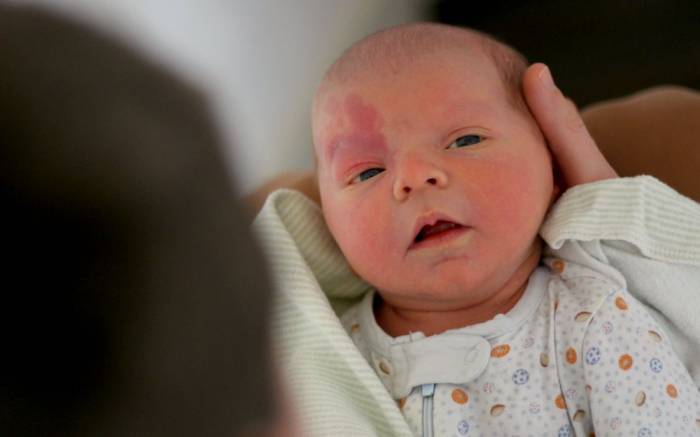
Though they can cause complications or are associated with other conditions in rare cases, all birthmarks should be checked by a doctor.
#1 Port wine stains
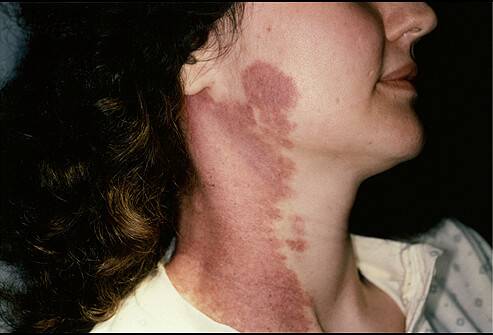
Port-wine stains are birthmarks that are pink-red at birth and then become a darker red-purple. Port-wine stains are blood vessels that didn't grow normally. They can be small, or they can cover a large area of the body.
advertisement
#2 Congenital nevi
Congenital nevi are moles that appear at birth and the surface may be flat, raised, or bumpy. These moles can grow anywhere on the body and vary in size from less than an inch to over 8 inches. They occur in 1% of newborns. Though most moles are not dangerous, congenital nevi, especially large ones, have an increased risk of developing into melanoma, the deadliest type of skin cancer. All moles should be monitored for changes.
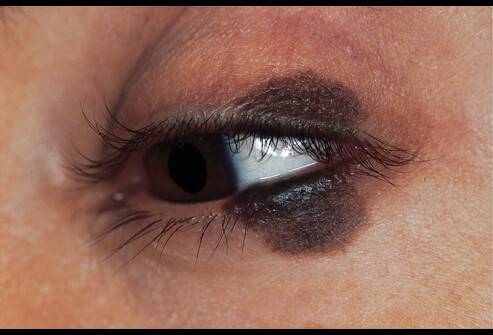
Though most moles are not dangerous, congenital nevi, especially large ones, have an increased risk of developing into melanoma, the deadliest type of skin cancer. All moles should be monitored for changes.
#3 Salmon patches
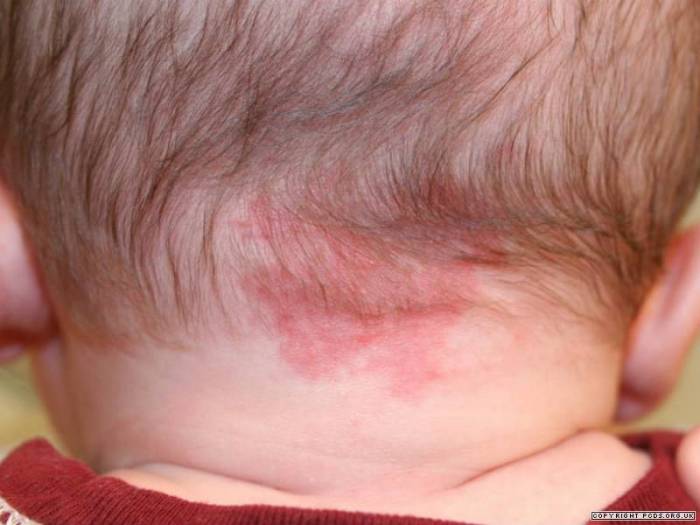
Salmon patches are nests of blood vessels that appear as small, pink, flat marks on the skin. They can appear on the back of the neck ("stork bite"), between the eyes ("angel's kiss"), or on the forehead, nose, upper lip, or eyelids. They occur in one-third of newborn babies. Some fade as baby grows, but patches on the back of the neck usually do not go away. They require no treatment.
advertisement
#4 Mongolian spots
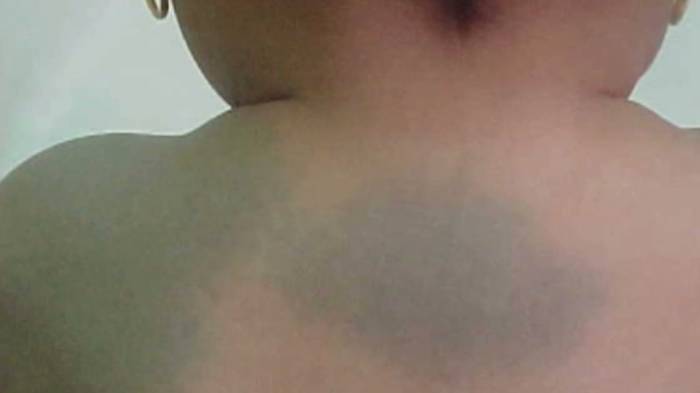
Mongolian spots are flat, smooth marks that are present from birth. They may resemble a bruise. They are usually found on the buttocks or lower back. They are typically blue, but can also be bluish grey, bluish black, or brown and are most common on darker-skinned babies. They usually fade by school age, but may never disappear entirely. No treatment is required.
advertisement
#5 Cafe au laitmeans
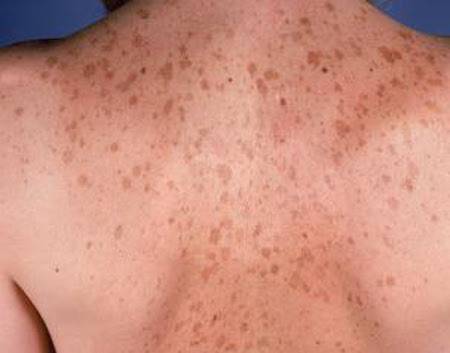
Cafe-au-laitmeans "coffee with milk" in French. So, the spots are smooth and oval and range in colour from light to medium brown. They are typically found on the torso, buttocks, and legs.They may get bigger and darker with age, but are generally not considered harmful. However, having several spots larger than a quarter is linked with neurofibromatosis and the rare McCune-Albright syndrome. Consult a doctor if your child has several spots.
advertisement
#6 Strawberry hemangiomas
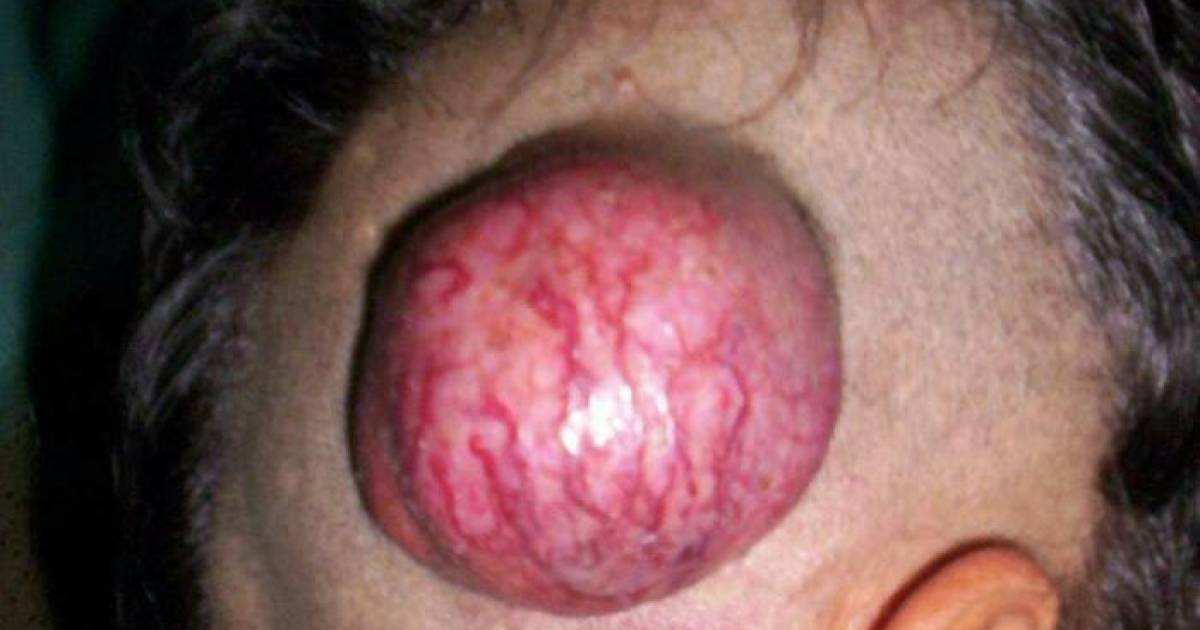
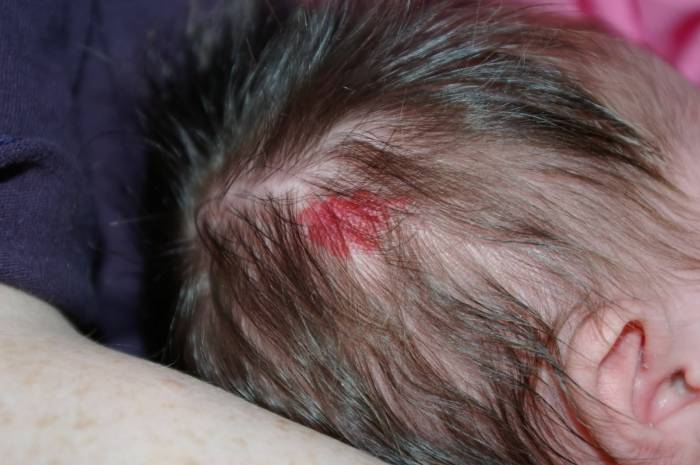
Hemangiomas are a collection of small, closely packed blood vessels. Strawberry hemangiomas occur on the surface of the skin, usually on the face, scalp, back, or chest. They may be red or purple and are often raised, with sharp borders. These occur in two of every hundred babies. They usually develop a few weeks after birth and grow rapidly through the first year before disappearing around age 9. Some slight discoloration or puckering of the skin may remain at the site. No treatment is required, but when they develop near the eye or mouth, or in a location that can bleed or become infected, they need to be treated or removed.
advertisement
#7 Cavernous hemangiomas
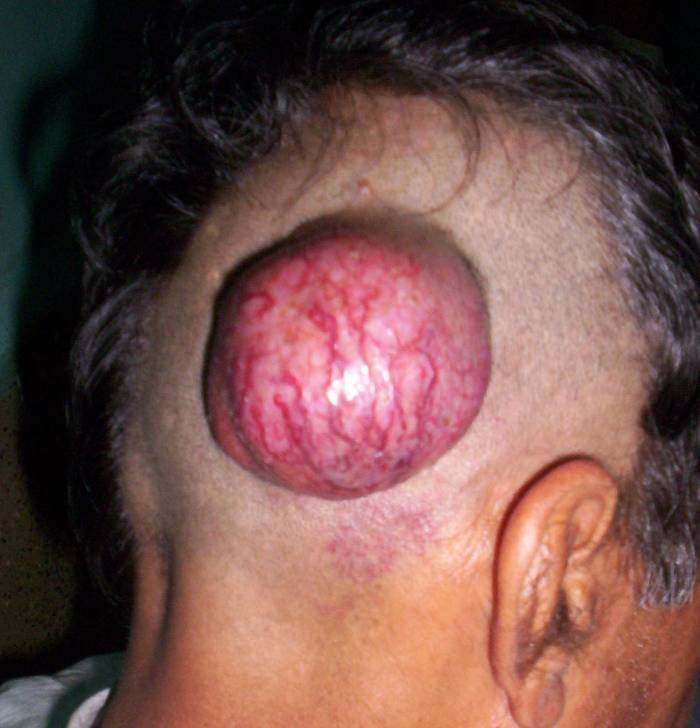
Cavernous hemangiomas typically appear on the head or neck.They are present at birth and most disappear by puberty. Cavernous hemangiomas just under the skin appear as a bluish spongy mass of tissue filled with blood. If they are deep enough, the overlying skin may look normal. A combination of cavernous and strawberry hemangioma can also occur.
advertisement
#8 Venous malformations
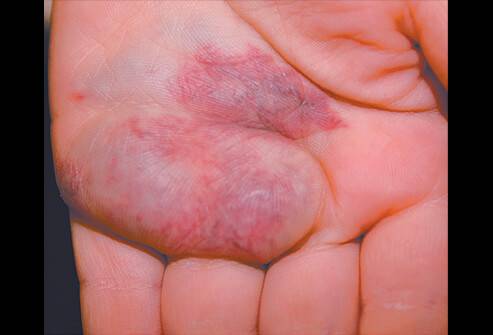
Venous malformations are caused by abnormally formed, dilated veins and appear in 1% to 4% of babies. They are often found on the jaw, cheek, tongue, and lips.Although present at birth, they may not become apparent until later in childhood or adulthood and continue to grow slowly with time. Surgery or sclerotherapy may be necessary for pain or impaired function.
If you see a birthmark on your baby, make sure that a doctor has seen it. Although most birthmarks are harmless, some aren't.
If a birthmark grows, bleeds, hurts, or gets infected, see a doctor to have it checked.