

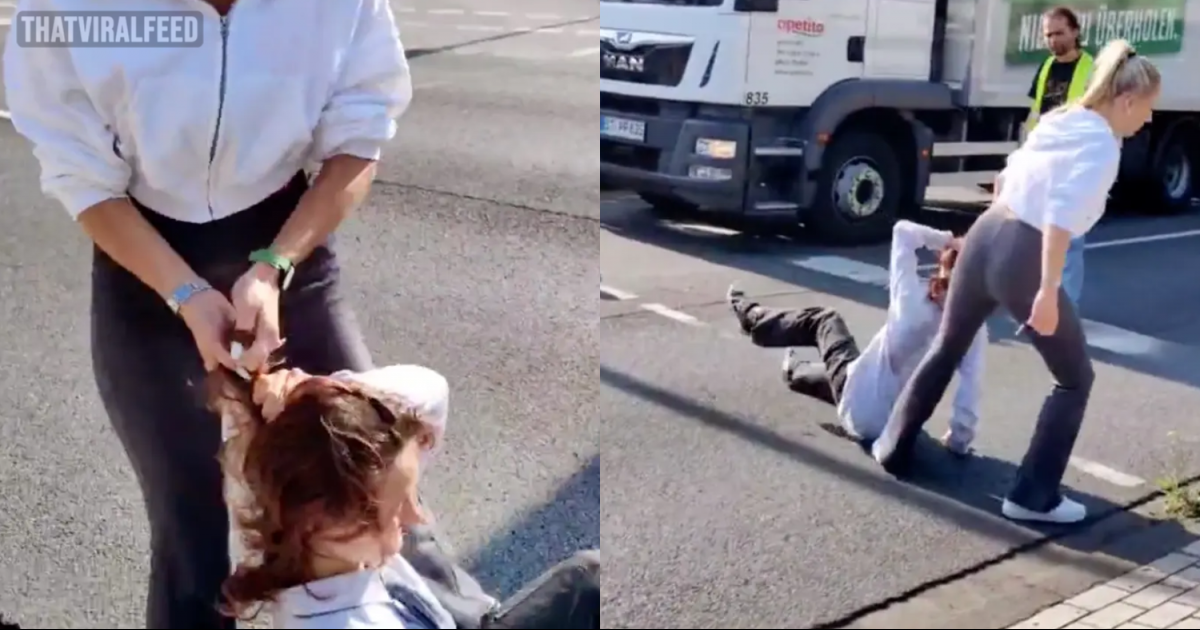
In Germany, a woman received media attention for her conduct at a climate change rally. Frustrated by the frequent roadblocks caused by activists, she used her hair to drag an activist away from the traffic. The incident made her the "brutal blonde" moniker in European media, showing the public's growing dissatisfaction with such protests.
advertisement
In Bottrop, Germany, a video captured a woman confronting a climate change protester who was blocking a road.
The woman yelled at her to move, but when the protester persisted, she pulled her by the hair, moving her to the roadside.
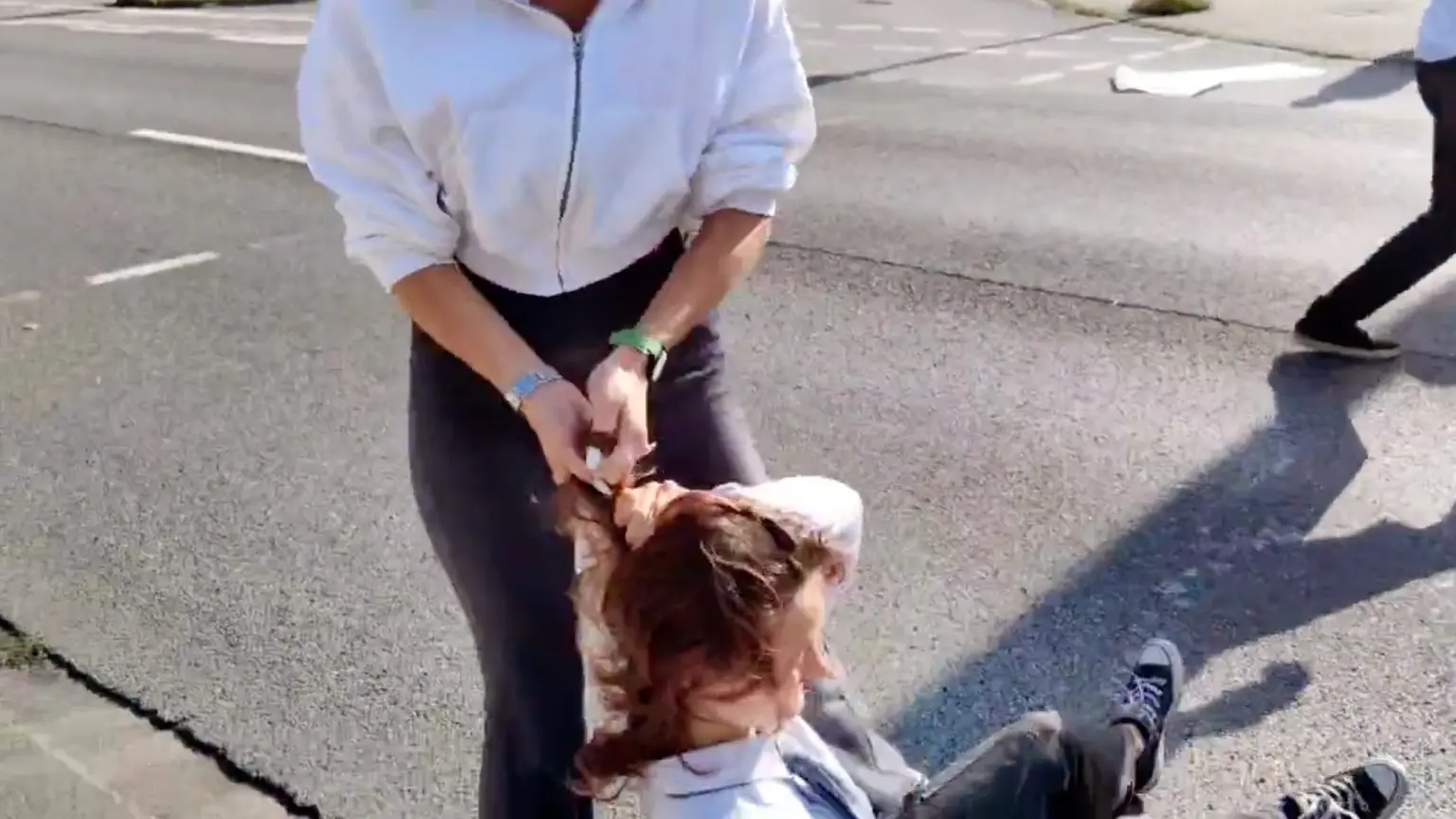
A woman dragged a climate change activist from blocking traffic.
Letzte Generation/Twitter
Even after the protester returned to block the road again, the woman dragged her by the hair again.
Unfortunately, the activist sustained minor injuries during the incident, as reported by the Recklinghausen police.
advertisement
Now, the police are reviewing videos and photos of the incident to determine if any criminal actions occurred during the confrontation.
In the meantime, the climate activists involved have been taken into custody.
In Germany, the Letzte Generation, also known as "The Last Generation," has been organizing climate change protests that have been putting the public's patience to the test.
Recently, they shared a video featuring the "brutal blonde" incident, which further fueled discussions about their protest actions.

The climate activists were members of the Letzte Generation.
Letzte Generation/Twitter
advertisement
The activist organization "Letzte Generation" recently published videos on their Twitter account depicting interactions with angry drivers.
Drivers have abandoned their cars to shout, berate, and physically remove activists from the road. There have also been reports of drivers driving into protesters, causing people to tumble.
advertisement
Furthermore, the activists have taken to affixing their hands to the road's surface, making removal difficult without the intervention of the fire department, which must chisel away the cement beneath their hands.
advertisement
As the situation on the roads worsens, these protest acts have raised worries and drawn attention.

The woman was dubbed a “brutal blonde” by European media.
Letzte Generation/Twitter
A distressing video on Twitter showed an activist screaming in pain as responders attempted to free his hand, which was glued to the road during a protest.
advertisement
In another demonstration, group members blocked plane traffic at two airports by gluing themselves to the runways.
Their protest aimed to bring attention to mass transit pollution, but this action resulted in hours of delays and numerous flight cancelations.
advertisement
The group's tactics continue to create significant disruptions and spark debate about their methods.
As the first day of school summer vacations began in Hamburg, Germany, the activist protest significantly impacted the city's air travel.
advertisement
According to German outlet DW, a total of 46 flights were delayed, canceled, or diverted due to the demonstration at the airport.
advertisement
The timing of the protest coinciding with the start of summer vacations added to the disruption and challenges faced by travelers and authorities.
"The Last Generation isn't protecting the climate; they're engaged in criminal activity," Transport Minister Volker Wissing said.
advertisement
In April, the same activist group carried out a similar protest in Berlin, where they glued themselves to the streets to block traffic heading to the Alps.
Once again, they aimed to disrupt the holiday plans of both residents and travelers.
This recurring pattern of disruptive actions by the group has drawn attention to their cause but also raised concerns about the impact on public safety and inconvenience caused to others.
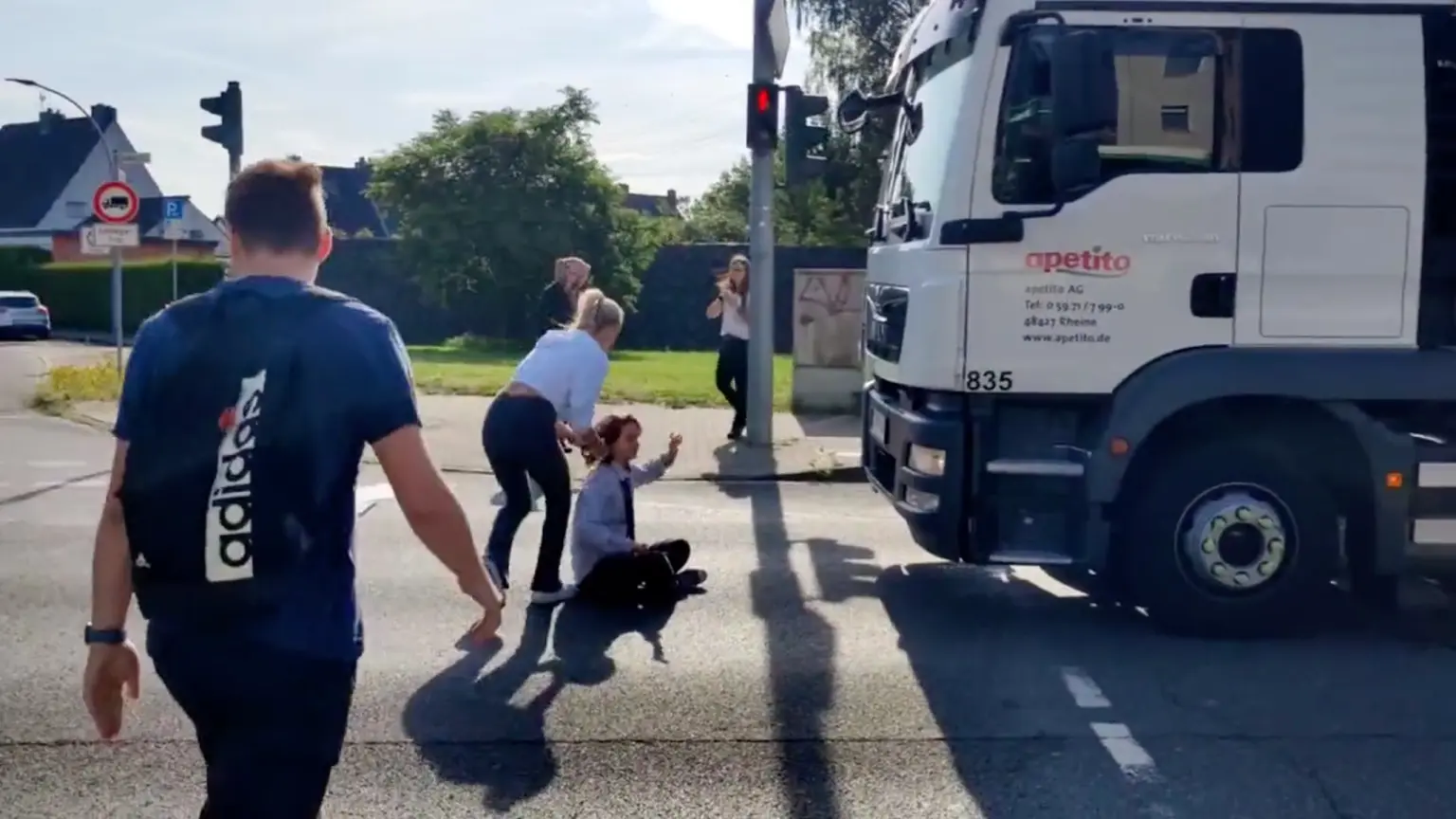
The Letzte Generation have been staging protests that have tested the German public’s patience.
Letzte Generation/Twitter
advertisement
"Instead of presenting a concrete plan to prevent this and to reach the emissions-reduction target called for by law, the Transport Ministry is relying on 'technological flexibility,'" the group wrote in a statement following the airport protests.
The activist group that recently blocked runways at Hamburg and Dusseldorf airports is making a bold demand.
They are calling on the German government to completely eliminate all man-made emissions by the year 2030.
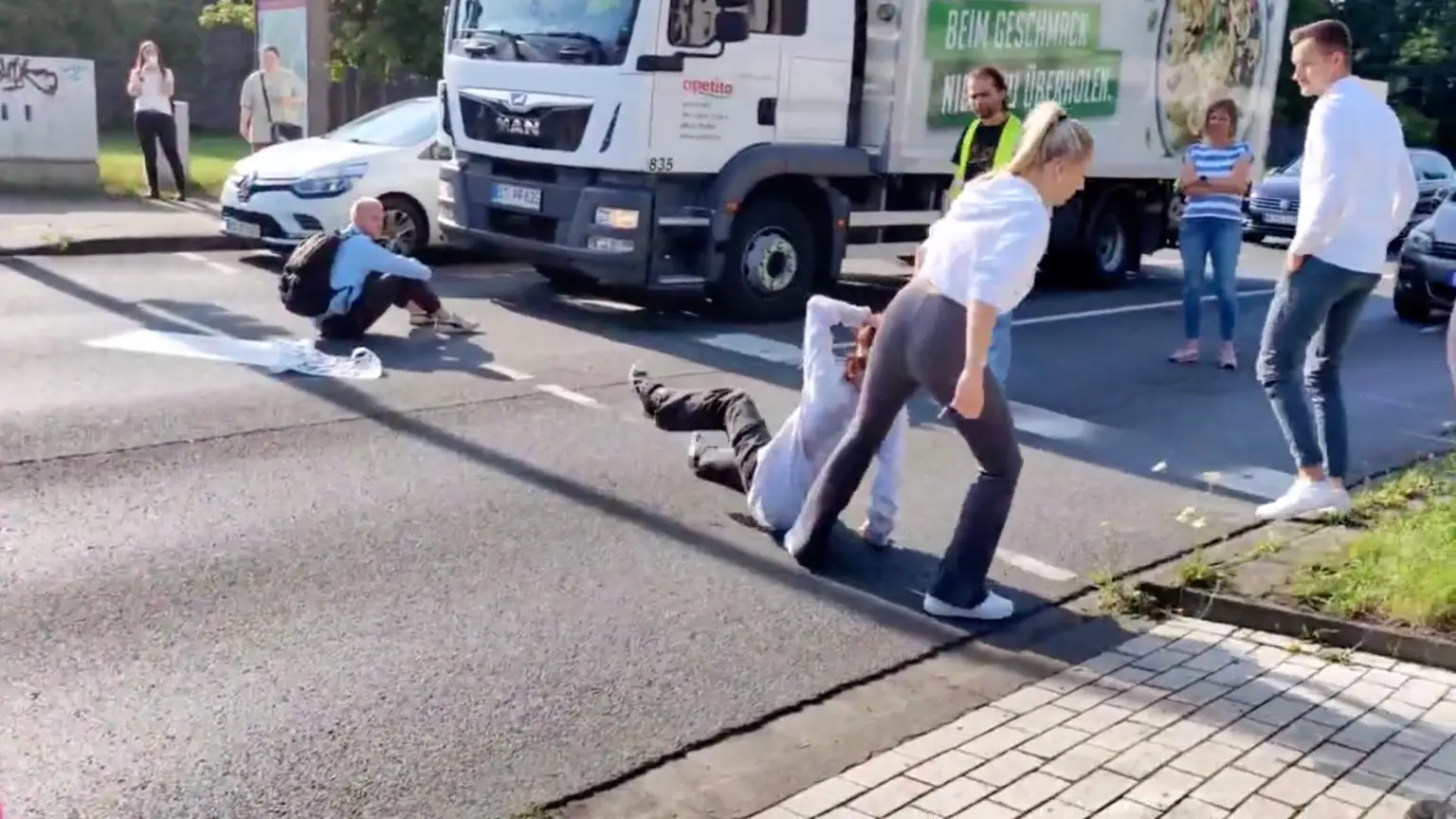
Angry drivers got out of their vehicles to yell, berate and forcibly remove the activists.
Letzte Generation/Twitter
This target is set two decades earlier than the current climate change goal of 2050.
By pushing for more immediate and drastic action, the group aims to accelerate efforts in combating climate change and reducing environmental impact.