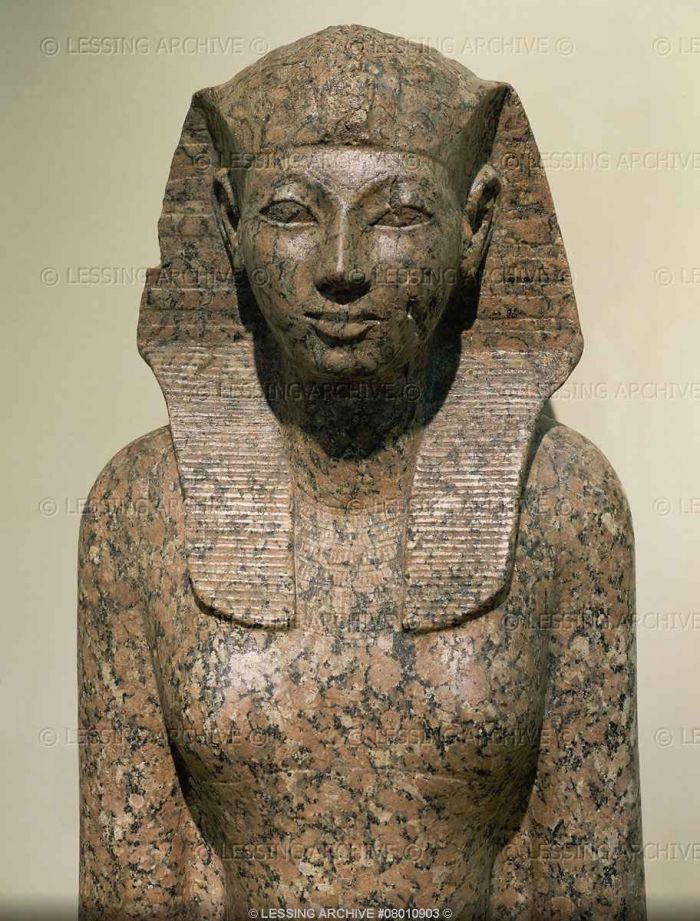
Hatshepsut
Hatshepsut was the longest reigning female pharaoh in Egypt, ruling for 20 years in the 15th century B.C. She is considered one of Egypt's most successful pharaohs.
Born circa 1508 B.C., Queen Hatshepsut reigned over Egypt for more than 20 years. She served as queen alongside her husband, Thutmose II, but after his death, claimed the role of pharaoh while acting as regent to her step-son, Thutmose III. She reigned peaceably, building temples and monuments, resulting in the flourish of Egypt. After her death, Thutmose III erased her inscriptions and tried to eradicate her memory.
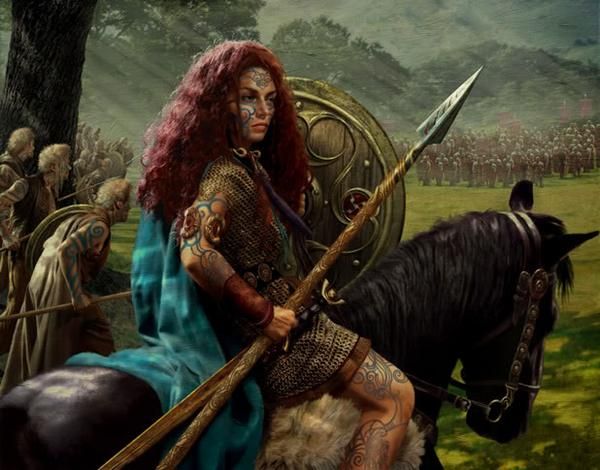
Boudicca, the Celtic Queen that unleashed fury on the Romans
"We British are used to women commanders in war; I am descended from mighty men! But I am not fighting for my kingdom and wealth now. I am fighting as an ordinary person for my lost freedom, my bruised body, and my outraged daughters.... Consider how many of you are fighting and why! Then you will win this battle, or perish. That is what I, a woman, plan to do! let the men live in slavery if they will."
These are the words of Queen Boudicca, according to ancient historian Tacitus, as she summoned her people to unleash war upon the invading Romans in Britain. Boudicca, sometimes written Boadicea, was queen of the Iceni tribe, a Celtic clan which united a number of British tribes in revolt against the occupying forces of the Roman Empire in 60-61 AD. While she famously succeeded in defeating the Romans in three great battles, their victories would not last. The Romans rallied and eventually crushed the revolts, executing thousands of Iceni and taking the rest as slaves. Boudicca's name has been remembered through history as the courageous warrior queen who fought for freedom from oppression, for herself, and all the Celtic tribes of Britain.
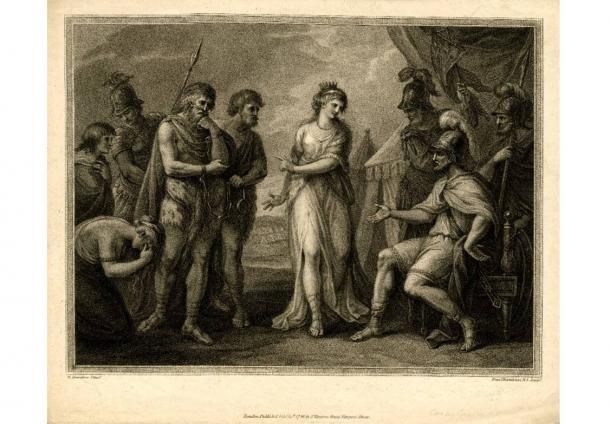
Mighty Cartimandua, Queen of the Brigantes Tribe and Friend to Rome
Cartimandua was Queen of the Brigantes tribe, which occupied the region known today as northern England, said to be the largest tribe on the British Isles. When the Romans under the emperor Claudius invaded Britain in A.D. 43, the Brigantes tribe became a client kingdom of Rome, whose loyalty to the empire ensured its autonomy.
In A.D. 57, a quarrel arose between Cartimandua and her consort, Venutius. This resulted in a civil war when Venutius, angered by the capture of his brothers and relatives by Cartimandua, invaded her territory. The Romans decided to interfere by sending military aid, first auxiliaries, and then a legion, to their client. As a result, Cartimandua was able to secure her throne, and it seemed that the queen and Venutius were reconciled for the time being.
However in A.D. 69, Roman emperor Nero died and the Roman Empire was plunged into chaos. The time was ripe for Venutius to settle old scores, and Cartimandua had to act swiftly. Venutius led a revolt against Cartimandua. Once again, Cartimandua sought the Romans for help. This time, however, the Romans could only afford to send auxiliaries, as the legions were busy fighting in other part of the empire. Although she lost her throne, Cartimandua managed to flee to the Roman fort at Deva (modern day Chester). From that point on, the once mighty queen simply vanished from the historical records, her fate unknown.
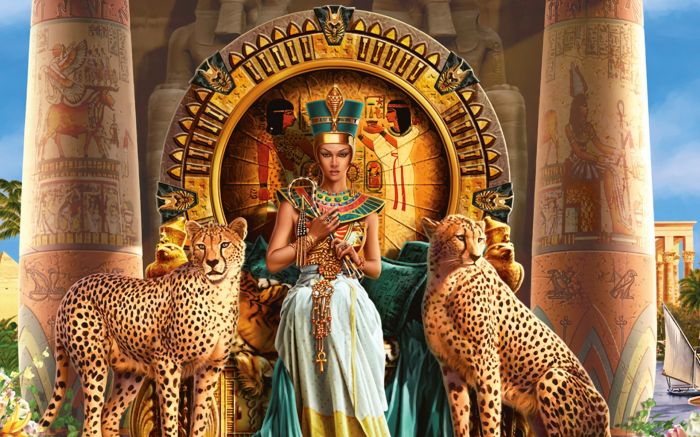
Cleopatra
Cleopatra VII Philopator (69 BC August 12, 30 BC) was an Egyptian Queen and the last pharaoh of Ancient Egypt. Embroiled in the internal politics of the Roman Empire she was the lover of both Julius Caesar and Mark Anthony.
For a time Cleopatra's reign brought relatively stability to the region, bringing a degree of peace and prosperity to a country bankrupt by civil war. Although brought up to speak Greek like her family, she made an effort to learn Egyptian and later only spoke only in Egyptian. In 44BC, Julius Caesar was assassinated and the years following Caesar's death led to a great power struggle between Mark Anthony and Caesar's adopted son Octavian.
The antagonism grew into civil war, and in 31BC, Cleopatra joined her Egyptian forces with the Roman forces of Mark Anthony and fought Octavian's forces on the west coast of Greece.
Cleopatra and Mark Anthony were decisively beaten in battle, and scarcely escaped back to Egypt. However, Octavian's forces pursued the couple and captured Alexandria in 30BC. With no chance of escape, Mark Anthony and Cleopatra both took their own lives, committing suicide on 12 August 30BC. Octavian later had their son Caesarion strangled, ending the Cleopatra dynasty. Egypt became a province of the Roman Empire, and Cleopatra proved to be the last of the Egyptian Pharaohs.
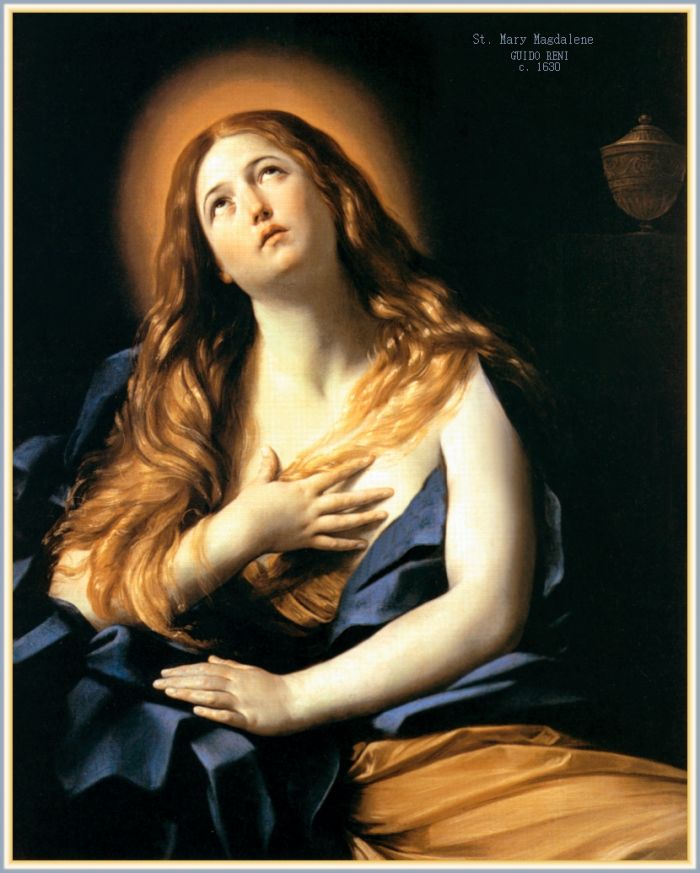
Mary Magdalene
Mary Magdalene is mentioned four times in the Gospels as a close devotee of Jesus Christ. She was with Jesus during the crucifixion and the first person to see Jesus after the resurrection. Due to a sermon by Pope Gregory the Great in the sixth century, she developed a reputation as being a prostitute and repentant sinner. However, there is no evidence she was, and it appears there was confusion with other Marys mentioned in the Bible. In the Bahai religion and Eastern orthodox tradition, she is considered a great saint.
Information about the life of Mary Magdalene come from Canonical gospels included in the New Testament, plus other texts, which were not included when the New Testament was finalised. Gnostics also believe there was a gospel of Mary, which may have been written by Mary Magdalene or some later follower.
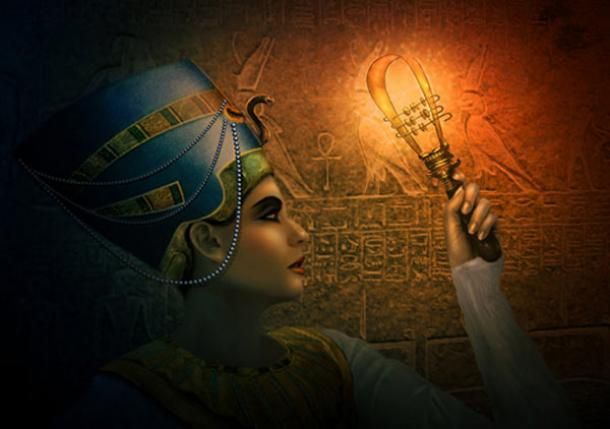
Nefertiti, Queen of the Nile
Nefertiti was the chief consort of the Egyptian Pharaoh Akhenaten (formerly Amenhotep IV), who reigned from approximately 1353 to 1336 BC. Known as the Ruler of the Nile and Daughter of Gods, Nefertiti acquired unprecedented power, and is believed to have held equal status to the pharaoh himself.
Nefertiti was married to Amenhotep IV around 1357 BC and was later promoted to be his queen. In the fourth year of Amenhotep IV's reign, the sun god Aten became the dominant national god. The king led a religious revolution closing the older temples and promoting Aten's central role. Nefertiti had played a prominent role in the old religion, and this continued in the new system. She worshiped alongside her husband and held the unusual kingly position of priest of Aten. In the new, virtually monotheistic religion, the king and queen were viewed as "a primeval first pair," through whom Aten provided his blessings. They thus formed a royal triad or trinity with Aten, through which Aten's "light" was dispensed to the entire population.
During Akhenaten's reign (and perhaps after) Nefertiti enjoyed unprecedented power, and by the twelfth year of his reign, there is evidence that she may have been elevated to the status of co-regent, equal in status to the pharaoh himself. She is often depicted on temple walls in the same size as him, signifying her importance, and is shown alone worshiping the god Aten.
In the regal year 12, Nefertiti's name ceases to be found. The reason for her disappearance from the historical record continues to remain a matter of speculation and debate.
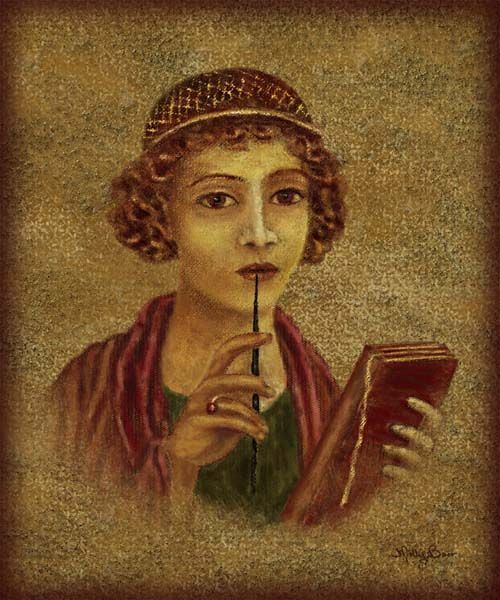
Sappho
Sappho was a female ancient Greek poet who wrote lyrical poetry famous for its intense passion and description of love. Being born on the Isle of Lesbos she is also referred to as the first Lesbian poet.
Little is known of her actual life, though she was born around 620BC, and died approximately 50 years later.
Unfortunately, much of her poetry has been lost, although some poems have been painstakingly pieced together through surviving fragments.
Details of her life are hard to piece together as there are few reliable sources. For example, historians are unsure about whether to take her poetry as reliable autobiographical evidence.
However, evidence from the period suggests she was temporarily exiled to Sicily because of political troubles on the island of Lesbos.
Sapphos is sometimes referred to as a lesbian. The word lesbian is actually derived from her place of birth lesbos. However, there is no hard evidence about her sexuality. Her poems expressing great passion for a variety of people both men and women may have been autobiographical or not.
Hell hath no fury like the Trung Sister freedom fighters
Throughout history, Vietnamese women have been instrumental in resisting foreign domination. The most well-known of these heroines are the Trung sisters, who led the first national uprising against their Chinese conquerors in 40 AD.
TrÆ°ng Trắc and TrÆ°ng Nhá»Â‹ were born sometime around the year 12 AD to a powerful lord in Giao Chá»Â‰ province. During the era in which the sisters were born, all of Vietnam was under the control of the Chinese Han Dynasty. The Trung sisters grew up in a household where they studied the art of warfare, learned fighting skills, and were well-versed in martial arts. In 39 AD, the Trung sisters took a revolutionary path to oppose the Han Dynasty's oppressive rule. They rallied supporters many of whom were women to fight against the Chinese. The sisters rode into battle upon the backs of elephants, and within a few months their forces overtook more than 65 citadels from Chinese control.
For more than three years, the Chinese fought to retake control of Vietnam, but the Trung sisters' forces fought them off and retained control until 43 AD, when they were eventually overcome. Rather than accept defeat at the hands of the Chinese, the sisters committed suicide. Their courageous spirit has served as an inspiration to the people of Vietnam for nearly two thousand years and their legacy remains firmly embedded in the culture and national identity of the country to this day.

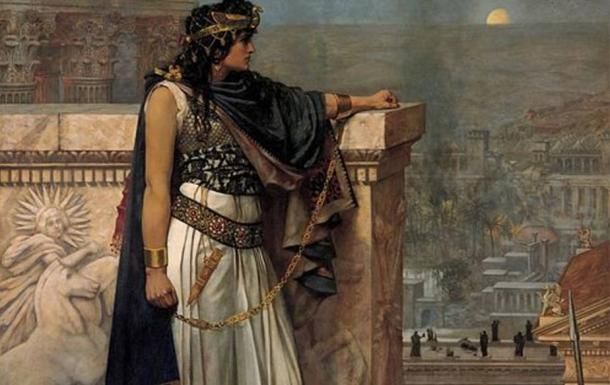
Zenobia, the Warrior Queen of Palmyra, Syria
Zenobia was a Palymerene queen, born around 240 AD in Palmyra, at that time a Roman province. She was married at the age of 18 to Septimius Odaenathus, an influential member of Palmyrene society. However, only 9 years later, he and his son from his first wife were assassinated. Zenobia's son, Vaballathus, became king of Palmyra, whilst Zenobia ruled as regent. As Rome was gripped by the Crisis of the Third Century, it was the perfect opportunity for Zenobia to extend Palmyrene rule.
In 269 AD, Zenobia sent her general, Zabdas, to claim the Roman province of Egypt as her own. With help from their Egyptian ally, Timagenes, the Palmyrenes were able to defeat the Roman prefect of Egypt. To consolidate her position in Egypt, she claimed that she was a descendent of Cleopatra. Following the conquest of Egypt, Zenobia then marched her army into Anatolia, conquering Roman territory as far west as Ancyra. She then moved on to conquer Syria, Palestine and Lebanon using a blend of military might and ideological propaganda.
Initially, the Palmyrene Empire was recognised by the new Roman emperor, Aurelian, who was occupied with the campaign against the Gallic Empire in the west. However, having defeated the Gallic Empire, Aurelian turned his sights on the East, eventually defeating the Palmyrenes and capturing Zenobia, whose final fate is unknown.
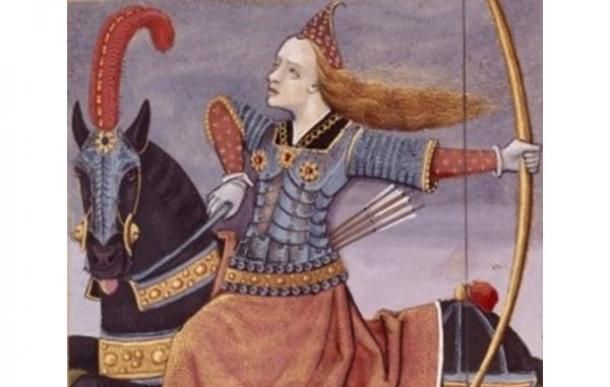
The Dramatic Life and Death of Penthesilea: Queen of the Amazons
Penthesilea was a Queen of the Amazons, a legendary race of warrior women. The Amazon women were so dedicated to being warriors, that they were known to cut off one of their breasts so that they would be better able to wield a bow. While hunting one day, Penthesilea accidentally killed her sister Hippolyta with a spear. This caused Penthesilea a great deal of grief, and led her to wish for death. However, as a warrior, and an Amazon, she could only die honorably and during battle.
Penthesilea's reign as queen was during the years of the Trojan War. The Amazons did not take a particular side in the war, and Penthesiliea made an effort to stay away from the conflict. However, when Achilles killed the Trojan prince, Hector, and upon the accidental killing of her sister, Penthesilea decided that it was time for the Amazons to intervene, so she led the Amazons into war.
It is written that she blazed through the Greeks like lightning. She wanted to prove that the Amazons were great warriors. She wanted to kill Achilles to avenge the death of Hector, and she wanted to die in battle. Although Penthesilea was a ferocious warrior, her life came to an end, at the hands of Achilles. While he was drawn to her with the intention of killing her, he fell in love with her upon seeing her eyes and as his sword struck, Achilles was overcome with enormous grief and regret.