

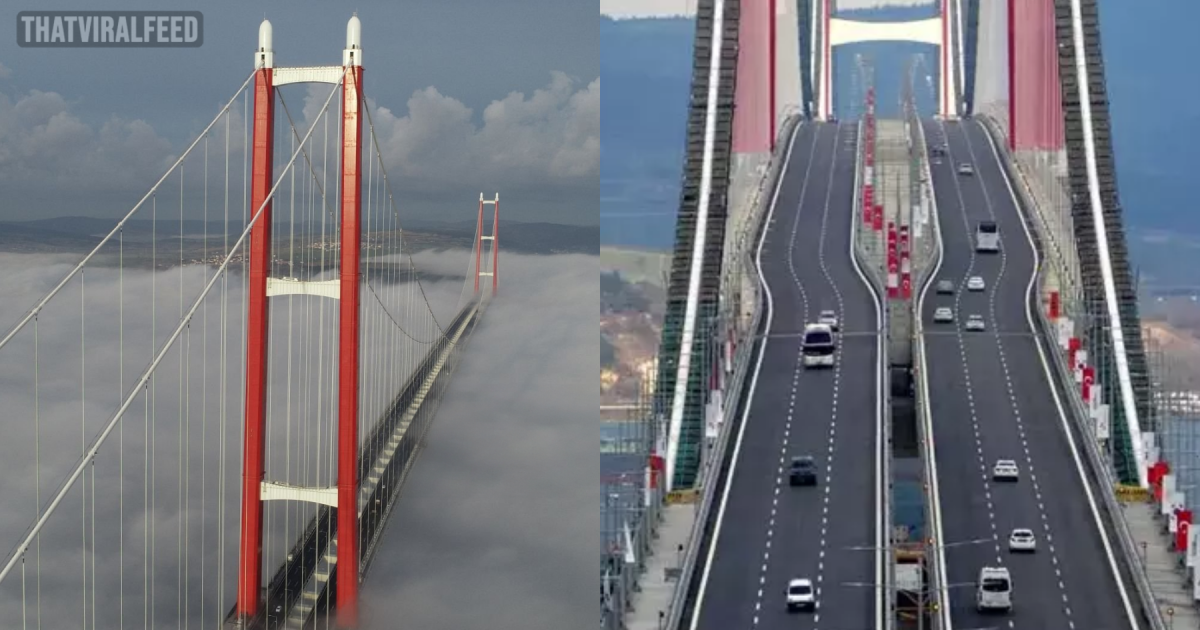
Have you ever heard about the remarkable bridge that forms a direct connection between the continents of Europe and Asia?
advertisement
Indeed, it's true! The 1915 Çanakkale Bridge, known as the world's longest suspension bridge, spans the Dardanelles Strait.
This significant waterway links the Aegean Sea to the Sea of Marmara in Turkey, playing a crucial role in the region.
This architectural marvel bridges the gap between Europe and Asia, effectively eliminating the previous necessity for a ferry ride, which used to take around ninety minutes to cross the same distance.
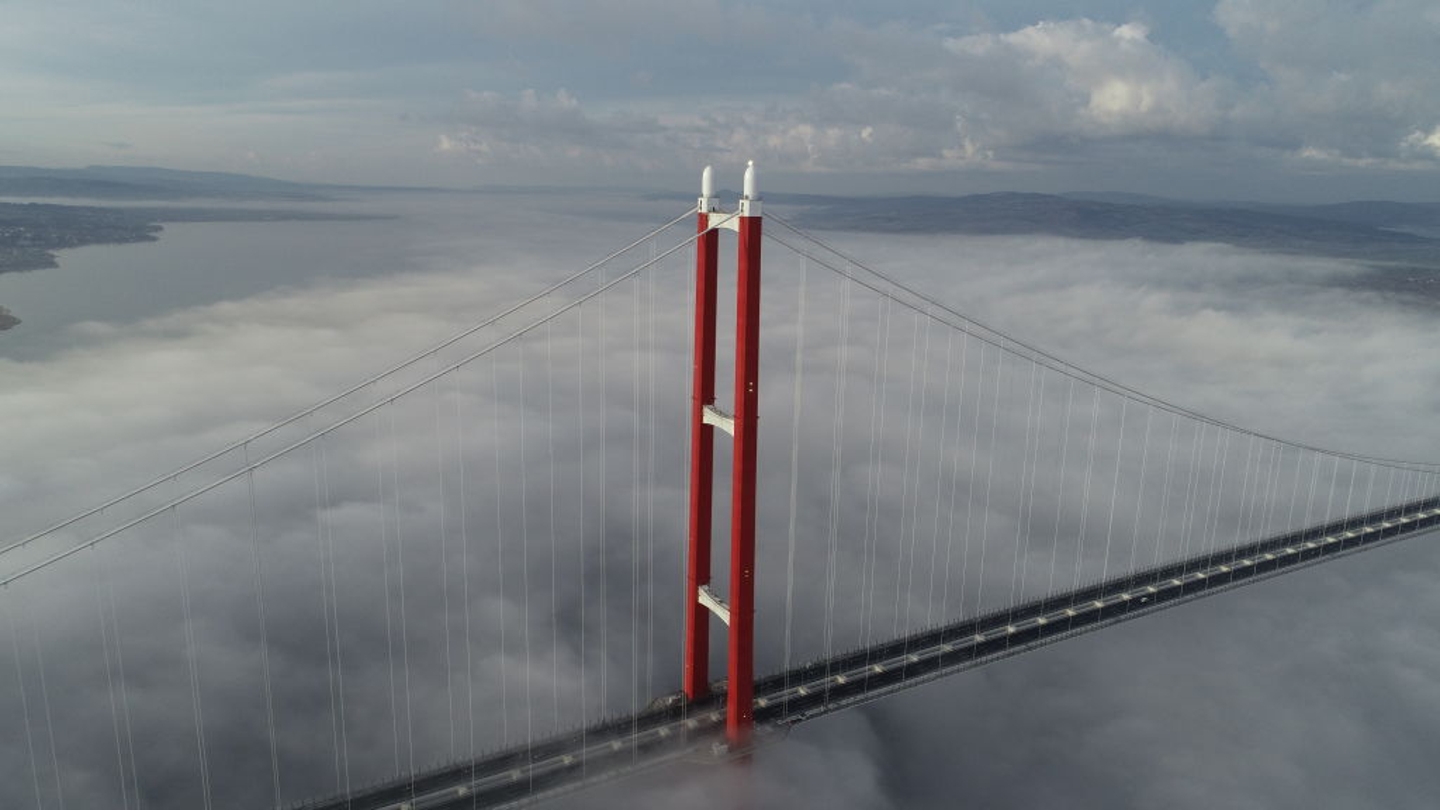
The bridge connects Europe and Asia.
Credit: Burak Akay/Anadolu via Getty Images
The construction of this bridge was an ambitious project that took almost five years to complete, involving a collaborative effort between Turkish and South Korean companies.
advertisement
Linking the town of Gelibolu on the European side to Lapseki on the Asian side, this bridge stands as a testament to modern engineering and international cooperation.
The project, which came with a hefty price tag of $2.7 billion, has dramatically slashed the crossing time to a mere six minutes, showcasing the bridge's efficiency and the technological advancement it represents.
During the bridge's opening ceremony, President Erdogan proudly announced:
"Turkey has overtaken Japan, which has the longest bridge in the world in terms of the midspan, and has taken the first place."
advertisement
Echoing the sentiment of unity and progress, South Korean Prime Minister Kim Boo-kyum remarked:
"The 1915 Canakkale Bridge will leave this history of collision and conflict behind and will be a bridge between East and West, starting a new era of peace and prosperity."
The bridge isn't just a feat of engineering; it's also rich in symbolic significance.
advertisement
Its length of 2,023 meters deliberately references the year 2023, marking the centenary of the Turkish Republic's foundation.
Additionally, the towers of the bridge reach a height of 318 meters, symbolizing March 18, a date of great national importance in Turkey, as it commemorates the soldiers who sacrificed their lives during the Gallipoli campaign.
advertisement
The discussion around why similar bridges haven't been constructed in other parts of the world has been a topic of interest among experts.
One might wonder, for instance, why there isn't a bridge spanning the 4,000-mile expanse of the Amazon River.
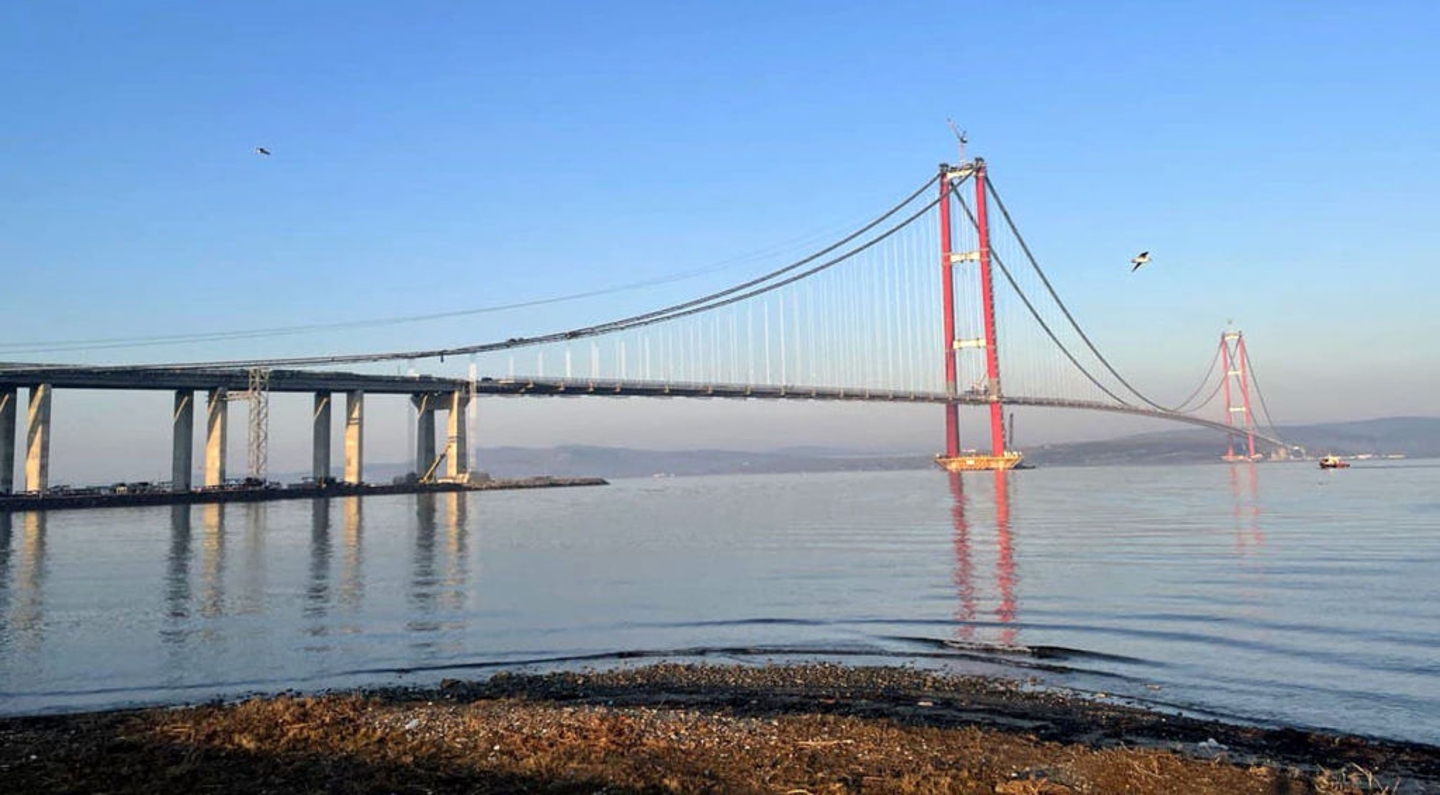
The height of the bridge's towers is 318 meters. Burak Akay/Anadolu Agency via Getty Images
The challenge with the Amazon, unlike smaller rivers that can be easily crossed with the aid of a few large stones, is its formidable size.
advertisement
The river's width varies significantly, ranging from two to six miles across in different areas and expanding up to 30 miles wide during the wetter seasons.
Walter Kaufmann, the chair of Structural Engineering (Concrete Structures and Bridge Design) at the Swiss Federal Institute of Technology (ETH) Zurich, provided a straightforward rationale:
advertisement
"There is no sufficiently pressing need for a bridge across the Amazon."
He pointed out that, despite the Amazon's impressive length, the regions adjacent to the river are relatively undeveloped and sparsely populated, which means there are few major roads that would require connection via a bridge.