

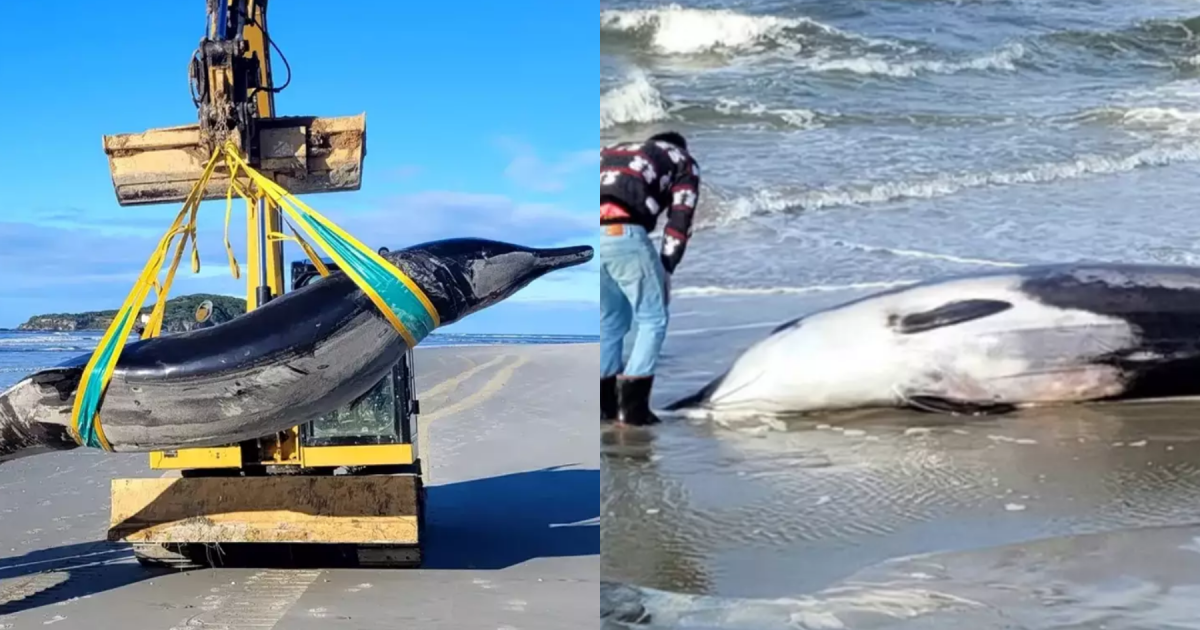
An Otago beach in New Zealand has seen a whale suspected of being the 'world's rarest' species wash ashore.
'World's Rarest Whale' Washes Up On Beach And It's Only The Sixth Sighting In History
By
Haider Ali in
News
On 25th July 2024
advertisement
A whale that came ashore on a beach in New Zealand is thought to be one of the "world's rarest" species.
The Department of Conservation (DOC) of New Zealand was notified on July 4 that a whale had washed up on the sand and dispatched to a beach in Otago, close to Taiari Mouth.
Department personnel soon realized that this might not simply be any kind of whale, but rather a "whale so rare only six specimens have ever been known to science" after they arrived at the scene.
According to a media statement from the Department of Conservation Te Papa Atawhai, marine-mammal experts from Te Papa and the DOC visited the beach.
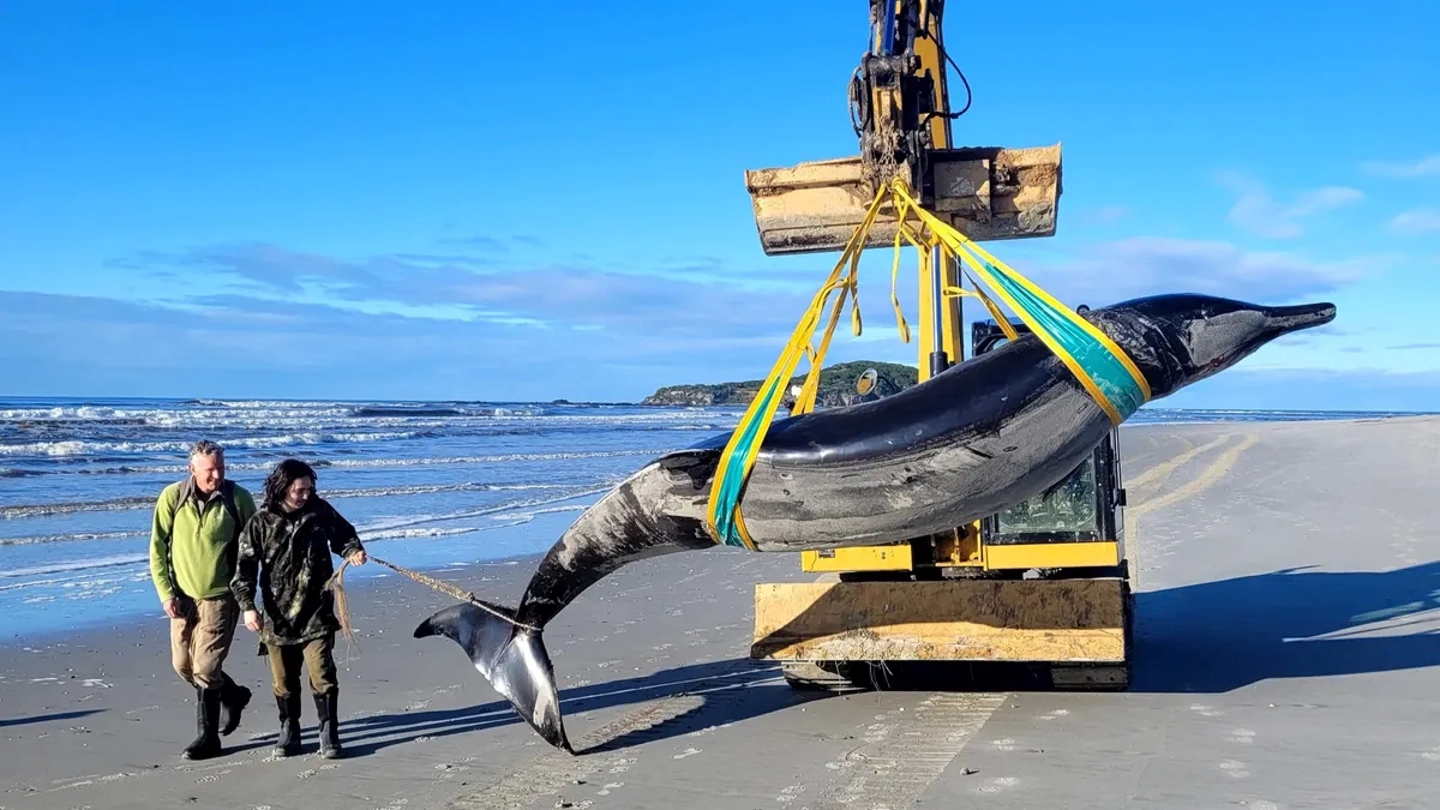
The whale was found ashore a beach in Otago, New Zealand
DOC
The whale is five meters long and was instantly identified as male.
advertisement
Based on the colour patterns and structure of its teeth, head, and beak, it may have belonged to the rarest species of beaked whale, the spade-toothed whale (Mesoplodon traversii).
"A species so rare next to nothing is known about them," the report emphasises.
Early in the 1870s, a partial jaw was found on Pitt Island, New Zealand, leading to the initial discovery and naming of the species.
In the 1950s, a portion of a skull thought to be from a different spade-toothed whale was discovered on White Island, New Zealand, and in 1993, another was discovered on Robinson Crusoe Island, Chile.
advertisement
2010 saw the discovery of the first complete specimens of the species when a mother and calf were discovered abandoned on Opape Beach in the Bay of Plenty region of New Zealand.
Furthermore, only six samples' have been 'recorded internationally' since the 1800s, claims Gabe Davies, the DOC's Coastal Otago Operations Manager.
advertisement
"Two more recent findings, in Bay of Plenty and north of Gisborne, helped describe the colour pattern of the species for the first time," DOC added.
Davies said: "Spade-toothed whales are one of the most poorly known large mammalian species of modern times. [...] From a scientific and conservation point of view, this is huge."
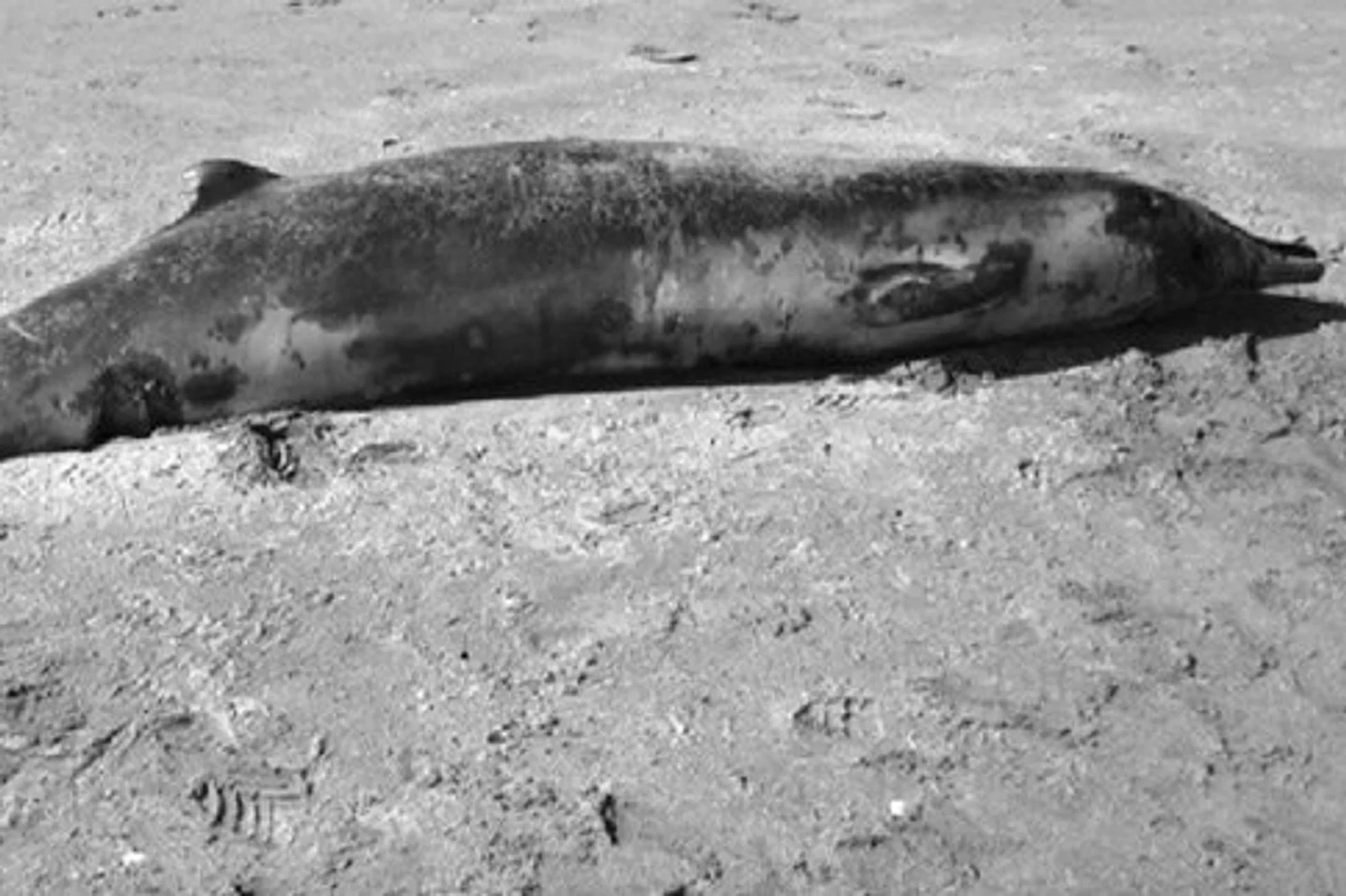
A female spade-toothed whale was found washed ashore in 2010
Kirsten Thompson et al / Current Biology
To verify that the whale is spade-toothed, the DOC and Te RÅ«nanga Å ÅŒtÄkou have obtained genetic samples from it and submitted them to the University of Auckland for DNA examination.
advertisement
To preserve it, the whale was taken off the shore and put in cold storage.
Chairperson of Te RÅ«nanga Å ÅŒtakou, Nadia Wesley-Smith, said: "It is important to ensure appropriate respect for this taoka is shown through the shared journey of learning, applying mÄtauraka MÄori as we discover more about this rare species."