

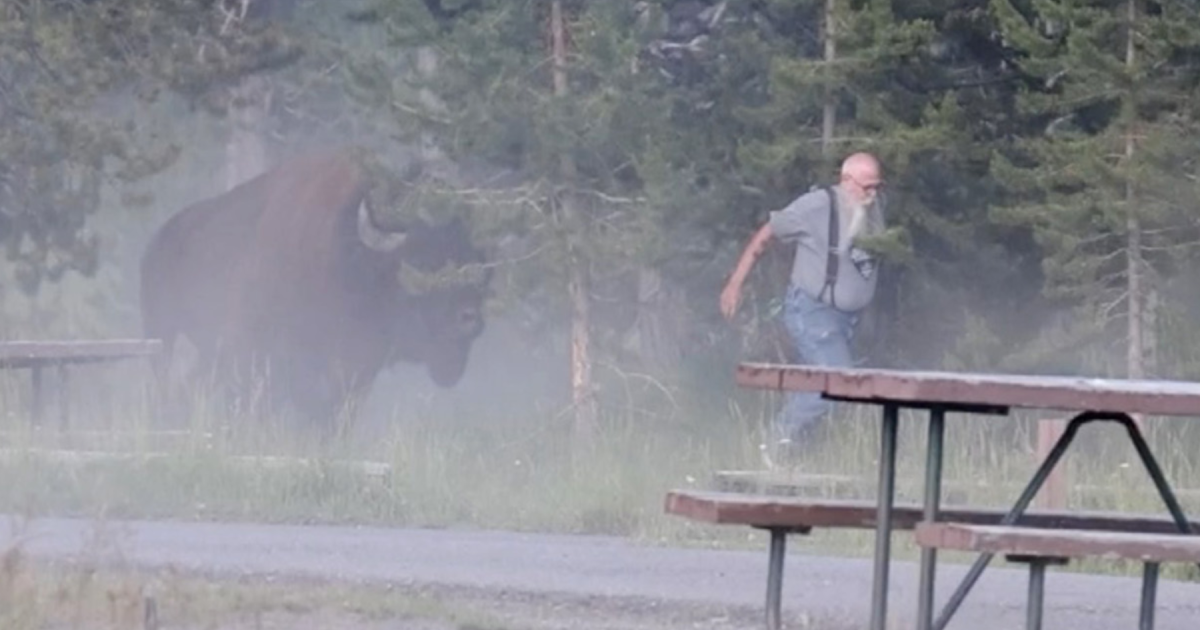
A bull bison sent a Yellowstone visitor flying during a sudden campground attack that left witnesses scrambling to protect and help him.
advertisement
A quiet walk through Yellowstone's Bridge Bay Campground turned violent when a bull bison charged an unidentified tourist and threw him about 8 feet into the air. Footage captured the man spinning above the ground before landing hard, Cowboy State Daily reported.
The tourist had been walking with his grandson at the Wyoming campground on Friday when the powerful animal came toward them. The incident unfolded in seconds, leaving the older man little time to escape once the bison fixed its attention on the pair.
The force of the impact made the man appear almost weightless as he was launched from the ground. Although bison are plant-eating animals, adult bulls can weigh well over 1,000 pounds, move with surprising speed, and cause severe injuries when they charge.
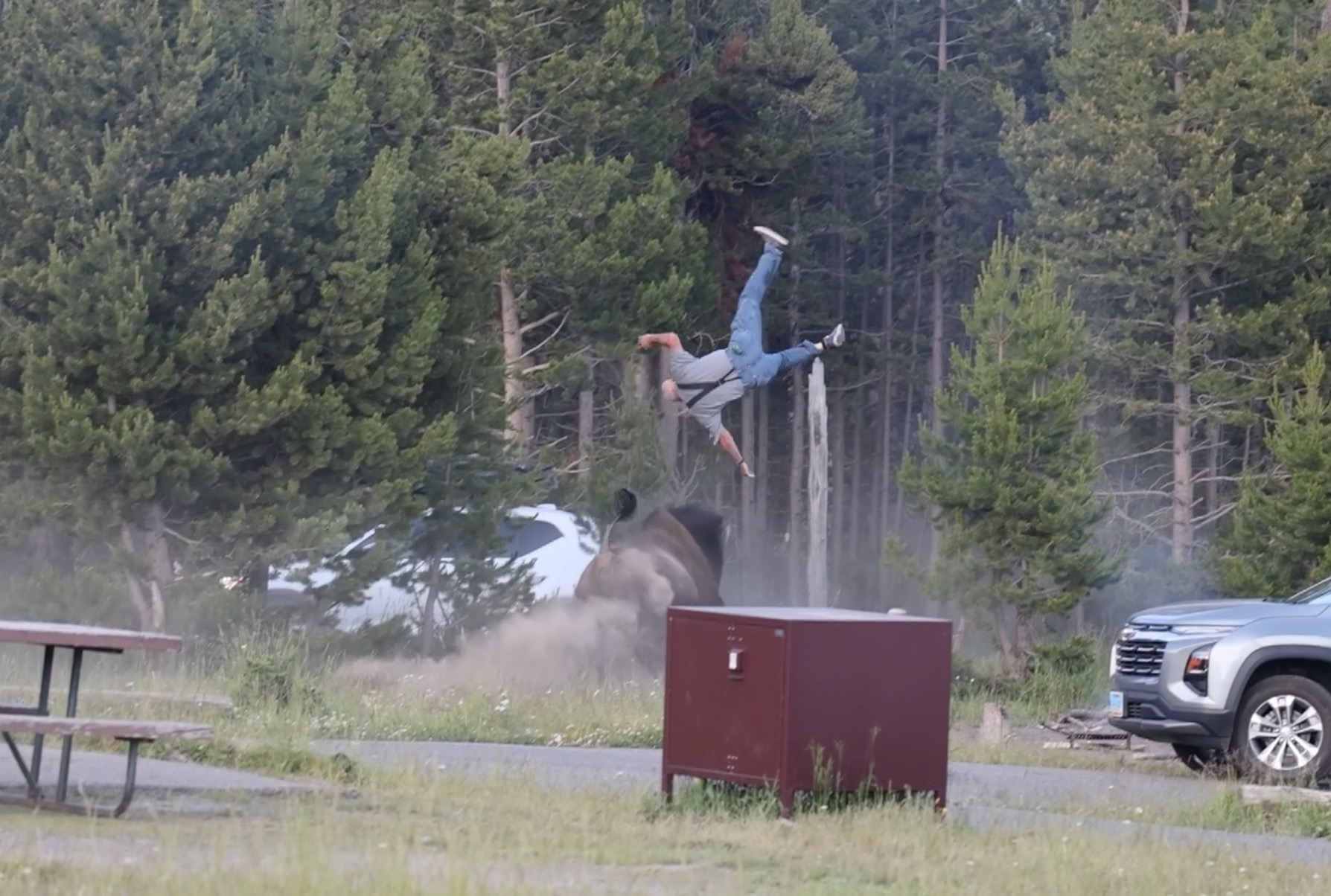
Mike MacLeod/NewsFlare
The bull showed signs of agitation before the attack
Montana photographer Mike MacLeod had been watching the animal before the encounter. The bison had been rolling in the dirt, a common behavior known as wallowing or taking a dust bath, while MacLeod tried to capture dramatic images of it.
A dust bath does not always mean an attack is about to happen. Bison roll on the ground for several reasons, including skin care, insect relief, and social behavior. The danger came when the animal left that spot and began moving through an area occupied by campground visitors.
MacLeod later said the speed and aggression of the charge changed his own view of how quickly a bull could become dangerous during that part of the year. The encounter also showed why watching a wild animal through a camera lens can make it harder to notice how fast the distance is closing.
advertisement
The video shows the man moving around a small group of pine trees as he tries to keep the trunks between himself and the bull. Moments earlier, the bison had appeared occupied with its dust bath, but its behavior changed once it began advancing through the campground.
The bull rushed at the two visitors before driving its head into the older, bearded man. The blow lifted him from his feet and sent him tumbling through the air, with no barrier left between his body and the ground.
MacLeod, who took photographs of the encounter, said the sudden charge caught him off guard: "I was just trying to get some dramatic footage of that bison having a fit. It's changed my idea of what to expect from these guys at this time of year, because I would not have predicted that happening,"
MacLeod said the bull had started moving through the campground toward a group of young people who were taking photos from what appeared to be a reasonable distance. He recalled, "He [the bison] started walking through the campground. He was coming up to this group of kids, who were taking pictures on their cellphones from a good distance away, and then the buffalo charged these kids,"
Once the tourist had been knocked down, MacLeod feared the bison might return and use its horns against the injured man. He stopped recording and moved toward the animal in an effort to draw its attention away from the person on the ground.
Describing why he took that risk, MacLeod said, "I had to get the bison's attention. I was really afraid he was going to gore the guy on the ground, so I stopped videotaping and ran at the bison, yelled loud, and was trying to be as big and intimidating as possible," His actions were intended to give the injured man time and space while the bull was still close enough to attack again.
advertisement
Running toward a bison is not standard safety advice
MacLeod acted because he believed the man faced immediate danger, but visitors should not treat his response as normal guidance for a wildlife encounter. A person who approaches or challenges a bison may become the animal's next target, especially when it is already charging.
The National Park Service advises Yellowstone visitors to stay at least 25 yards away from bison and other large animals. If a bison moves closer, people should turn around and move away rather than wait for it to pass beside them.
Park officials also warn that bison can run around three times faster than a person. Trees, cars, and solid buildings may provide useful barriers, but trying to outrun an animal across open ground is not a safe plan once it begins charging.
advertisement
After the bull finally moved away, MacLeod and several other people rushed to the victim. Their first concern was keeping him still, checking for visible bleeding, and watching the area in case the animal turned back.
The man was said to be in severe pain, with much of it centered around his hips and the leg that took the force of his fall. Despite the height of the throw and the hard landing, the people helping him could not see an open wound or obvious external bleeding.
MacLeod described how the strangers divided the emergency tasks between them: "One guy held his hand. Another guy pulled security on the outside to make sure that the bison didn't come back. A gal in a car was on the phone with 911, and another gal did a blood sweep, but we couldn't find any blood," Their response included comforting the man, calling 911, checking him for blood, and keeping watch for the bison.
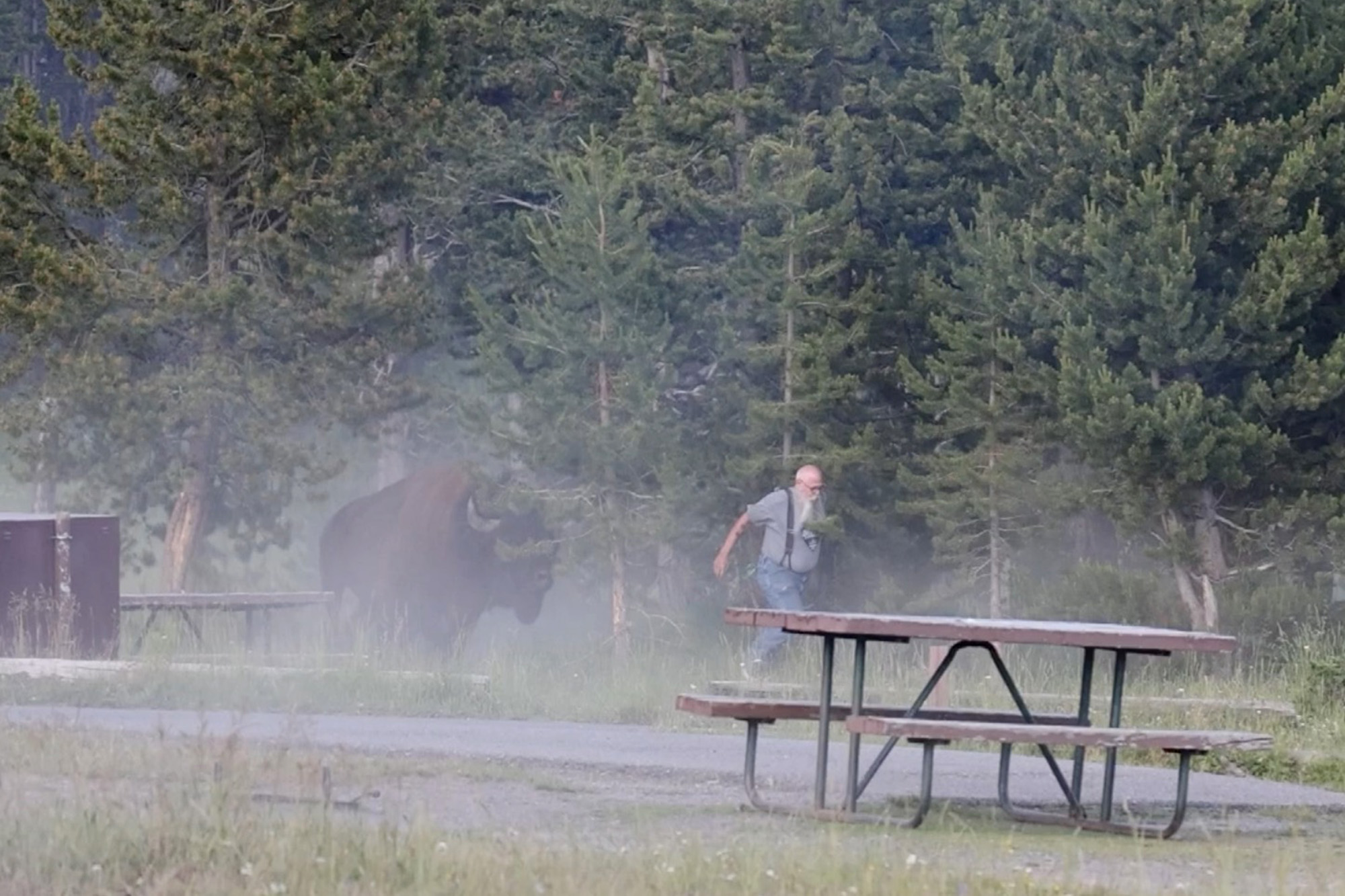
The tourist was attacked at the Bridge Bay Campground Friday.
Mike MacLeod/NewsFlare
advertisement
Serious injuries may not be visible after a bison strike
A lack of visible blood does not mean a person has escaped serious harm. The force of being hit, lifted, and dropped can cause fractures, joint injuries, internal bleeding, or damage to the spine and organs without leaving a large cut on the skin.
Moving someone after a violent fall can also make some injuries worse. Unless the person faces an immediate threat, bystanders should call emergency services, keep the victim as still as possible, and follow the dispatcher's instructions while waiting for trained responders.
The attack also took place inside a campground rather than on a remote trail. Yellowstone's wild animals regularly cross roads, parking areas, campsites, and developed spaces, so being near buildings or other visitors does not make an encounter controlled or safe.
advertisement
Officials had not released a public update on the injured tourist's condition. The pain reported at the scene and the force shown in the recording suggested that he needed a full medical assessment even though no obvious wound could be seen.
MacLeod believed the bull's behavior may have been linked to the rut, the bison mating season that runs from June into September. Bulls become more focused on competing for females during this period, and their mood can change with little warning.
The timing placed the attack close to the most active part of the breeding season. Yellowstone visitors often arrive in large numbers during the same summer months, creating more chances for people and restless bulls to cross paths in campgrounds and popular viewing areas.
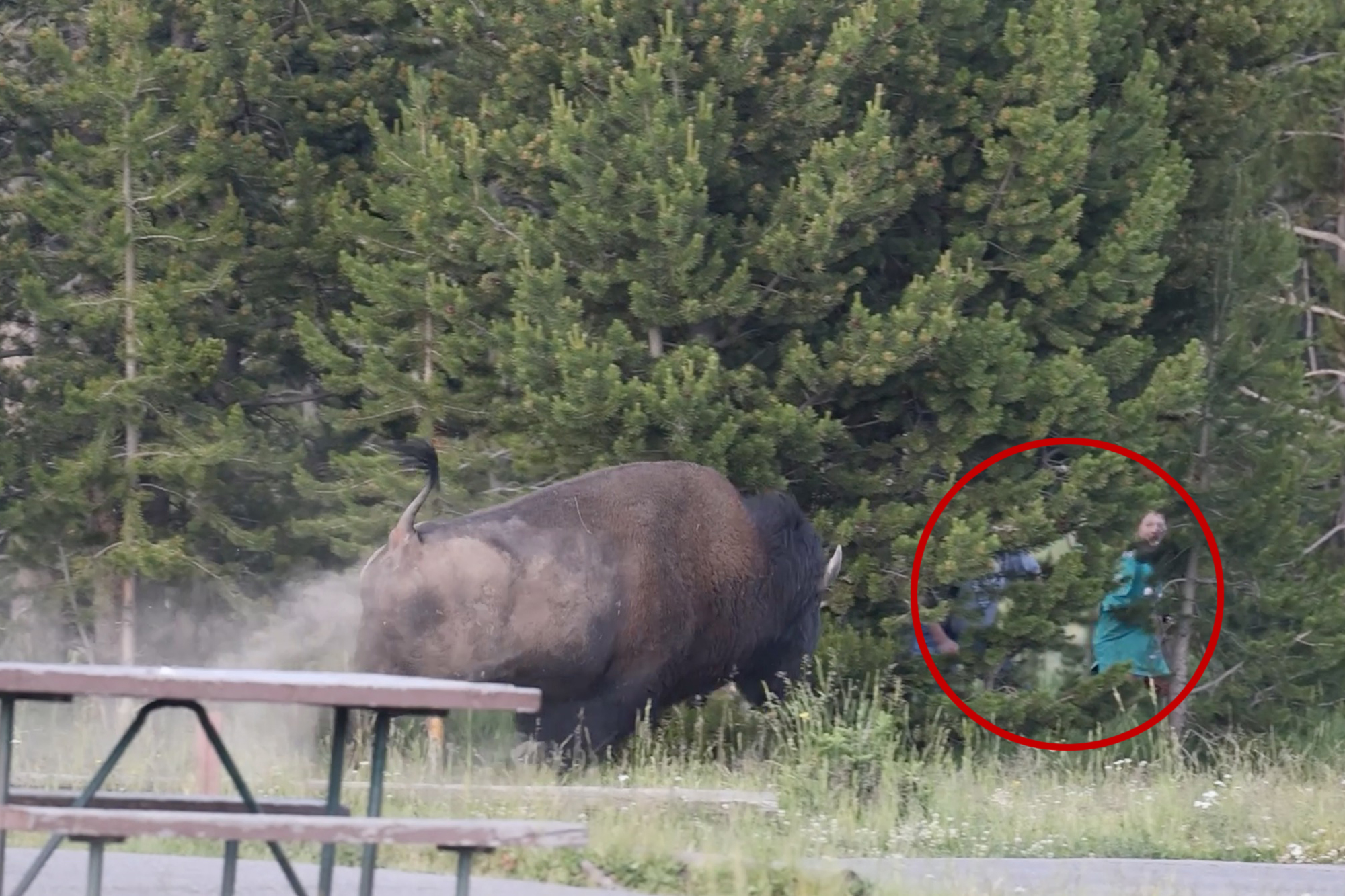
The bison was likely feeling territorial due to mating season before it charged.
Mike MacLeod/NewsFlare
advertisement
Why the bison rut changes their behavior
During the rut, mature bulls rejoin larger herds and compete for access to females. They may bellow, follow cows, challenge rival males, wallow in dust, and react to anything that appears to block or threaten them.
The National Park Service says the annual rut lasts from June through September, with most activity taking place in July and August. Yellowstone officials have also warned that bison can become agitated faster during the peak mating period and should be given more room than the minimum distance whenever possible.
A bull does not need to lower its head and charge before giving a warning. Staring at a person, raising its tail, pawing the ground, swinging its head, snorting, or repeatedly changing direction can all signal that the animal is uncomfortable and needs more space.
advertisement
Male bison often show more energy and aggression during the breeding season as they compete for status and mates. A bull that seemed calm a moment earlier may become focused on another animal, a person, or movement in its path.
MacLeod said the warning signs were visible once the bull began moving through the campground, adding, "You can tell [the bison] was agitated, pissed off, and charging anything and everything,"
For anyone taking a Yellowstone trip, the safest view is from well beyond the required distance, using binoculars, a spotting scope, or a zoom lens. The park's bison may stand quietly beside roads and campsites, but they remain fast, powerful, and unpredictable wild animals.