The field of psychiatry isn’t an exact science. It’s hard to tell exactly how to help someone who is having mental problems because there can be all kinds of factors contributing to the issue. This has led to some people thinking that there is no fix for some problems. It has also led to some rather horrific treatments every now and then. Luckily most of the truly terrible treatments have since gone by the wayside but that doesn’t make the fact that they were once considered to be the norm. Check out these 11 shocking psychiatric treatments doctors have actually used and let us know what you think.

11 Shocking Psychiatric Treatments Doctors Have Actually Used
By
Haider Ali in
Geeks and Gaming
On 27th December 2015
advertisement
#1 Lobotomy
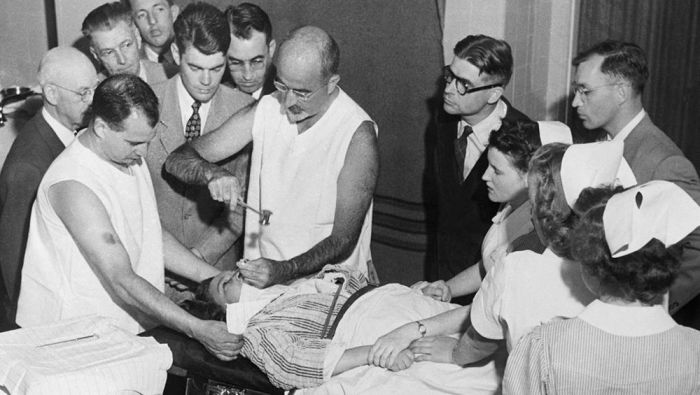
The first psychiatry treatment designed to alleviate suffering by surgically disrupting brain circuits that might cause symptoms of mental illness is also one of the few to be honored with a Nobel prize. Developed by Portuguese doctor Egas Moniz, who believed that mental illnesses were caused by problems in the neurons of the brain's frontal lobe, the lobotomy basically removed all or part of the lobe through surgery. Moniz was awarded the Nobel
Prize for his discovery in 1949, and before the practice was better understood, an American doctor began traveling the country in what was referred to as the "lobotomobile." Walter Freeman performed the technique on people suffering from everything from psychosis to seasonal depression by inserting a small ice pick through the eye socket and into a patient's brain, wiggling it around. Not only did Freeman use insterile techniques, he had no surgical training. It soon became apparent that his patients weren't just calm, they were unresponsive zombies, and the treatment fell out of favor within the medical community.
#2 Clitoridectomy
Based on the Victorian belief that masturbation and sexual urges caused mental illness, 19th century physicians treated patients with forced circumcision, including full clitoridectomies of female patients suffering from a variety of ailments, including masturbation, hysteria, over-excitement, "unfeminine" aggression, yeast infections, and incontinence, to name a few. Records indicate that some British women were even forcibly circumcised for trying to leave their husbands.

advertisement
#3 Orgasm
Vibrators weren't invented to be the source of feminine pleasure. The physicians who invented the sex toy 200 years ago were interested only in developing a labor-saving device to spare their hands fatigue as they pleasured 19th century women suffering from "hysteria," a condition today defined more or less as sexual frustration. If a woman complained to her doctor of anxiety, sleeplessness, irritability, nervousness, erotic fantasies, feelings of heaviness in the lower abdomen or wetness between the legs, she was diagnosed with "hysteria," Greek for uterus, according to overtravel.net. As early as the 16th century, doctors were known to apply vegetable oil to women's genitals and massage them with their fingers, relieving the hysteria when the woman achieved orgasm, referred to as paroxysm.
By the early 19th century, physician-assisted paroxysm was a common treatment among European and American physicians. After doctors complained in early 19th century medical journals of the physical endurance required to treat hysteria, many began to experiment with first mechanical and later electric substitutes for their hands.

#4 LSD
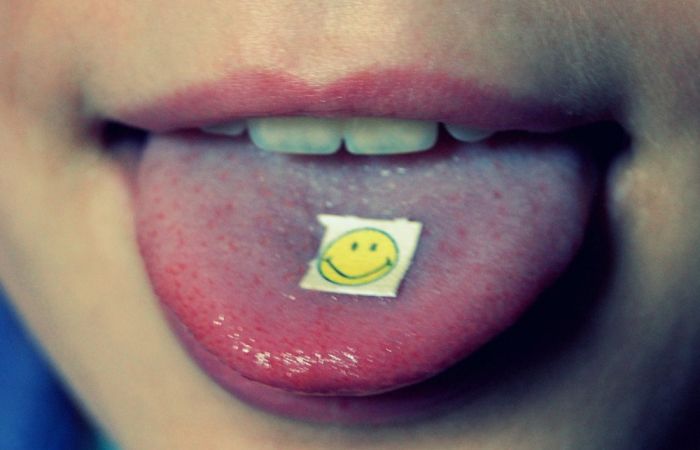
After it was first synthesized from an ergot fungus in 1938, lysergic acid diethylamide was soon discovered to hold psychedelic properties and was commercially introduced as a drug with psychiatric uses in 1947. Many psychiatrists believed LSD could help patients "unblock" repressed memories, as well as treat alcoholism. After the drug was embraced by the youthful 1960s counterculture (and thought by many to cause mental illness), it was banned in the United States in 1968, largely ending most research into its usage and effects. Recent research has actually supported the drug's use in treating alcoholism, however, as well as indicated LSD might also be helpful in treating anxiety, cancer-related pain and cluster headaches.
advertisement
#5 Snake Pits
The Snake Pit isn't just a classic film that brought attention to the plight of the mentally ill confined to asylums, the most common method of psychiatric "treatment" until the mid-20th century. During the Middle Ages, if an exorcism failed to cure the subject of his or her symptoms of "possession," a mentally ill individual might be held over a pit of poisonous snakes so that the "evil spirits" might be scared out of the body. For hundreds of years, it was the same type of thinking that led asylums to treat patients with shock therapy, including dunkings in ice cold water and even continued use of actual snake pits.

advertisement
#6 Trepanation
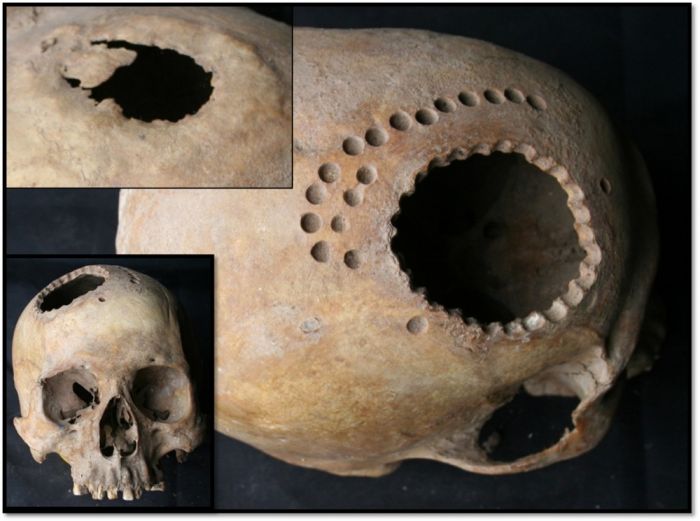
One of the earliest forms of psychiatric therapy, trepanation was developed based on the belief that insanity is caused by demons lurking inside the skull. By boring a hole in the patient's skull, doctors could open a door through which the demons could escape. Archaeologists have discovered ancient skulls containing evidence of trepanation, a carefully-cut circular gap made long before death. Cultures all over the world used trepanation as a way to cure patients from prehistoric times until the 20th century, before the process fell out of practice. Trepanation, however, is not extinct. Supporters to this day have their own organizations, such as the International Trepanation Advocacy Group.
advertisement
#7 Bleeding and Purging
According to the Ancient Greek physician Hippocrates, nearly all human ailments including mental illness resulted from out-of-balance bodily substances, such as blood, bile and phlegm, also known at the time as humours. By the 1600s, English physician Thomas Willis determined the best way to correct such imbalances, or melancholy blood, was by bleeding, purging and even vomiting to eliminate the irregular humours. Leeches were used for bloodletting, and mechanical swinging devices were invented to induce vomiting. Such methods were commonly used in the name of mental health well into the 19th century.

advertisement
#8 Exorcism
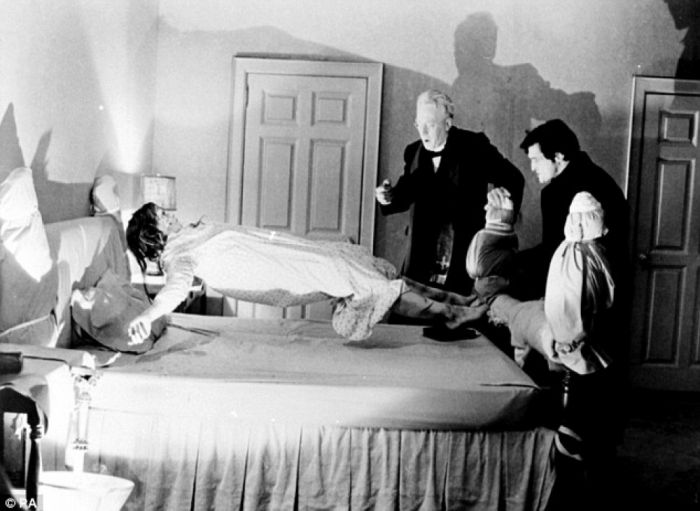
Throughout history, the mentally ill have been presumed possessed, and exorcisms were used to free them of demonic forces. In fact, supposed demonic possession and mental illnesses such as schizophrenia or drug-induced psychosis share many of the same symptoms. Speaking in a language a person has never learned, extraordinary shows of strength, sudden aversion to things spiritual, severe sleeplessness, lack of appetite, self-mutilation: all are signs of possession by a demon, according to Bishop Thomas Paprocki in a 2010 New York Times article. The practice of exorcism is used occasionally even in the present day. And while science now disregards any medical diagnosis of demonic possession, the Catholic church accepts that "most" individuals exhibiting the shared symptoms are, in fact, mentally ill.
"Not everyone who thinks they need an exorcism actually does need one," Paprocki told the Times. "It's only used in those cases where the Devil is involved in an extraordinary sort of way in terms of actually being in possession of the person."
advertisement
#9 Dungeons and Asylumshen
While medieval Europeans generally allowed the mentally ill their freedom, the practice of confining them to a specific location began to take hold within continental culture by the early 13th century. The mentally ill were frequently isolated from society, often housed with handicapped people and criminals. Those considered insane were treated inhumanely, often chained to walls and kept in dungeons, according to PBS. The practice continued in many places, including the United States, until well into the 19th century.
Even when reforms occurred, insane asylums, as the institutions housing the mentally ill had become known, were little more than massive warehouses for the mentally ill, with overcrowded and dreary wards, filled with patients sleeping in hallways and waiting in line just to use the bathroom. Little actual treatment took place. It was these conditions that were brought to light when The Snake Pit was originally published in 1949.

advertisement
#10 Hydrotherapy
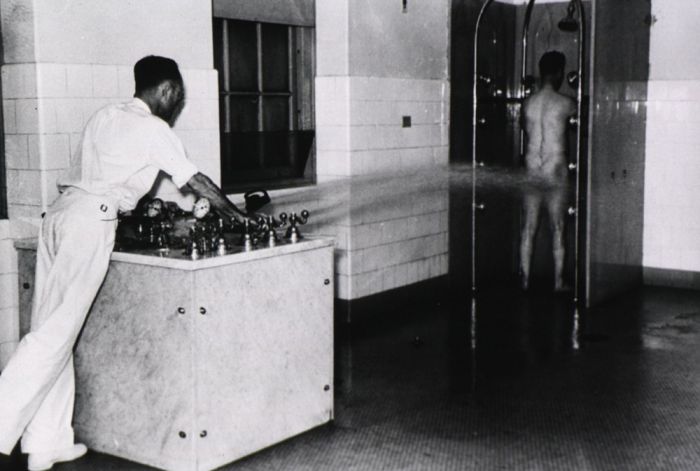
While psychoanalytical therapies ("talking cures"), as developed by Sigmund Freud, Carl Jung and their peers, became the primary treatment of the mentally ill by the early 20th century, some institutions still employed physical treatments, such as hydrotherapy. The use of water to treat physical ailments was not a new concept, and continuous warm baths had proven to be effective in treating agitated, manic and insomniac patients, but some doctors took the concept to nearly tortuous levels. While one treatment involved mummifying the patient in towels soaked in ice-cold water, another required patients to remain continuously strapped in and submerged in a bath for hours or even days, according to the Evolution of Psychotherapy. Reports even indicated that at least one patient was strapped to a wall in a crucifixion position and blasted with water from a fire hose.
advertisement
#11 Electricity and Seizures
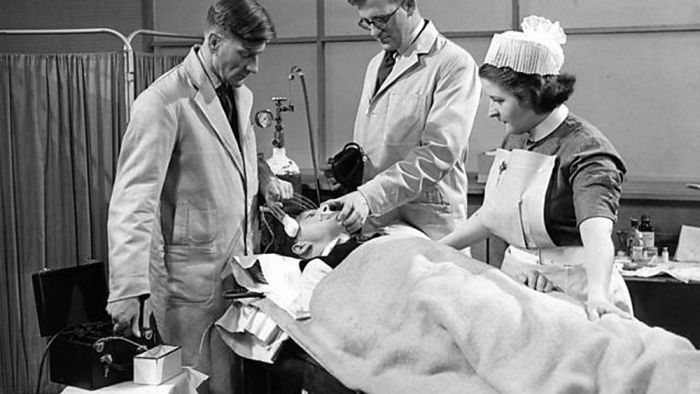
The treatment now known as electroconvulsive therapy (ECT) has its roots in the early 20th century belief that inducing seizures could cure a patient of mental illness. While the seizure-inducing drug metrazol was banned by the FDA in 1982, the theory eventually led to further research in electric shocks and the development of ECT. Modern therapy, however, went through years of evolution before it reached an effective form, during which countless patients were strapped to tables and practically tortured as electric currents were zapped into their brains.