3 Reasons To Avoid Using These Sunscreens On Your Kids This Summer -Harmful!
#1
The sunscreen market is a $1.3 billion industry, according to some estimates, and while the product is extremely important to maintain our health, some sunscreens do a much better job than others.
In fact, some sunscreens may do more harm than good.
#2
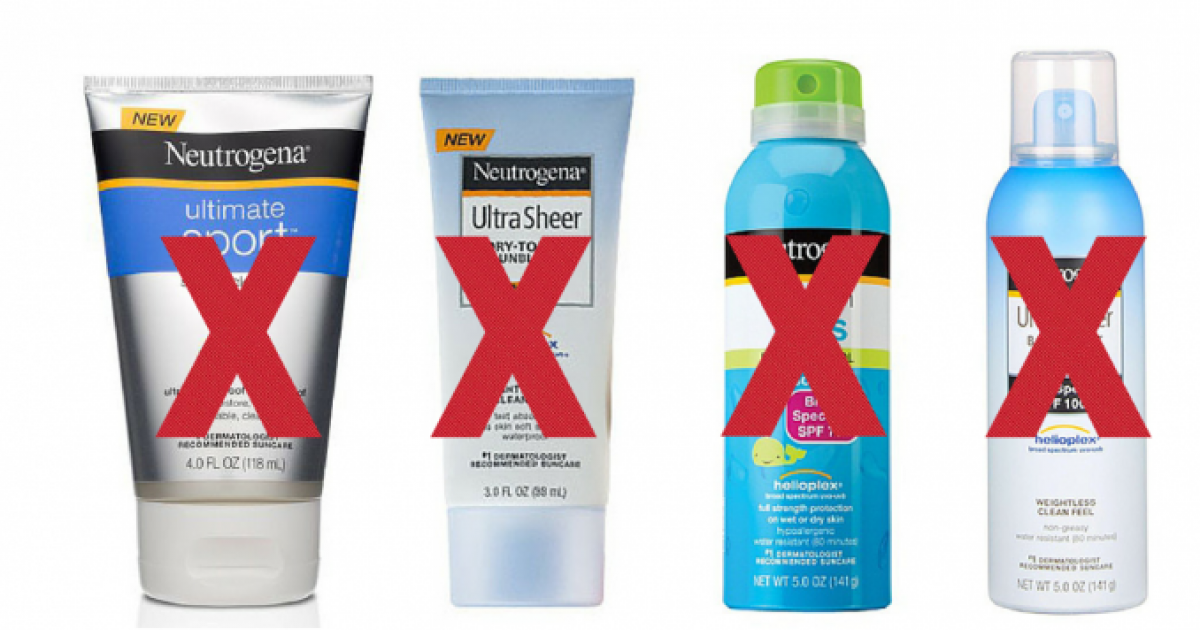
The Environmental Working Group (EWG) has released their 2015 guide to sunscreen, and among the worst brands for sun protection is the number one culprit for toxicity and false advertising, Neutrogena.
"Neutrogena's advertising hype is further from reality than any other major brand we studied. It claims to be the "#1 dermatologist recommended suncare brand, yet all four products highlighted on Neutrogena's suncare web page rate 7, in the red worst zone in our database," says EWG.
Not only do many Neutrogena sunscreens contain harmful chemicals like oxybenzone and methylisothiazolinone we'll get to those later but their advertised SPF levels of over 70 have been debunked by the U.S. Food and Drug Administration. According to the federal department, SPF levels max out at about 50. Europe, Australia and Japan have already banned brands from advertising SPF levels over 50.
#3 HARMFUL CHEMICALS AND PRESERVATIVES
EWG states 80 per cent of Neutrogena sunscreens contain oxybenzone, "a hormone-disrupting sunscreen filter" and 33 per cent contain retinyl palmitate, "a form of vitamin A linked to skin damage".

#4 Oxybenzone
Oxybenzone is part of a class of aromatic ketones called benzophenones and is used in many sunscreens, hair sprays, cosmetics and nail polishes. It is also used in plastics to absorb ultraviolet light. With its use in sunscreen as a broad-spectrum UVB and and short-wave UVA protector, it is acts as a endocrine disruptor.
Endocrine disruptors like oxybenzone interfere with the hormone system, potentially causing cancer, birth defects and developmental disorders. A 2008 study looking at the effects of oxybenzone on juvenile rainbow trout and Japanese medaka found that those samples exposed to the ketone produced a decreased number of eggs, a smaller percentage of fertilized eggs and a smaller percentage of hatched, or viable, eggs.
According to EWG, oxybenzone acts like estrogen in the body and alters sperm production in males. It is also associated with endometriosis in women and may cause fertility problems.
Oxybenzone is detected in nearly every American and found in mothers' milk.

#5 Retinyl Palmitate
Retinyl palmitate is a form of vitamin A used in sunscreens and has been found to accelerate cancer in high doses applied to the skin. While the evidence is not definitive, says EWG, it is troubling. A U.S. government study found that it "may speed the development of skin tumors and lesions when applied to the skin in the presence of sunlight."
Vitamin A, or Retinol, is also used in many skin products that promise to slow the signs of aging, however its controversy as an ingredient in sunscreen is due to its effects when exposed to sunlight. The harmful effects of retinyl palmitate include brittle nails, hair loss, liver damage, osteoporosis and hip fractures. Norwegian health authorities have also urged women pregnant or breastfeeding to avoid any products with vitamin A due to the skeletal birth defects it may cause.