6 Of The Most Overused Buzzwords By Anime Fans
#1. Overrated
Overrated used to be a word that would describe a show that didn't meet expectations. Today, it's a lazy way to dismiss a show without giving proper criticism.
If you have legitimate criticism for a show, by all means share it. But don't let "overrated" be your only critical point.
#2. Underrated
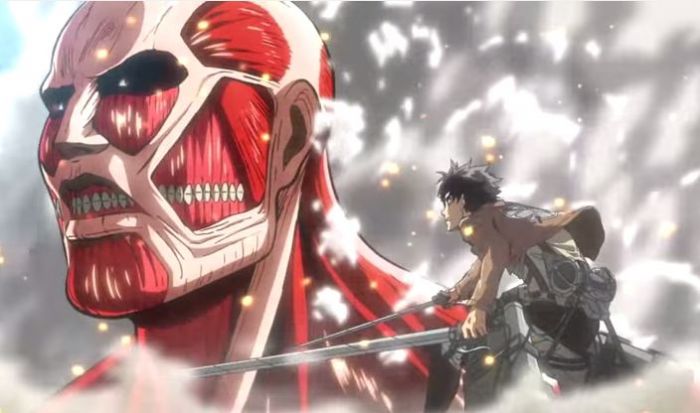
Did you watch a show that surpassed your expectations, but is unknown by the general public? Then it's supposedly underrated. Like overrated, you can't quantitate underrated-ness. Underwatched would be a more apt description.
Like overrated, offer some valid reasons on why a show is underrated, besides blaming big name competitors.
#3. Generic
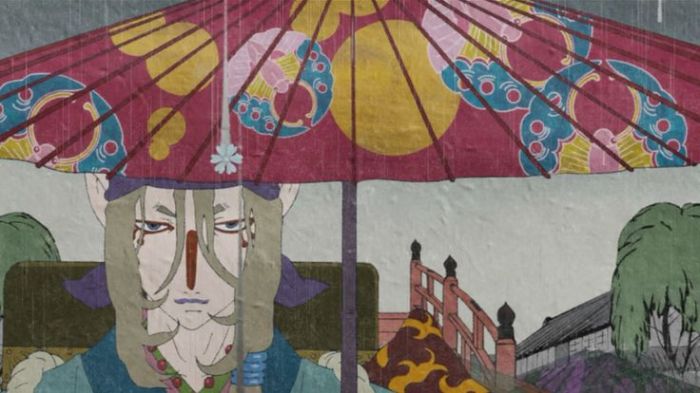
I hate it when someone uses generic as their only means to describe a series. It's lazy. Yeah, we know that generic is something that is repetitive, predictable, and bland. But, wouldn't generic be relative?
If you have watched a lot of a particular genre, you are going to recognize common tropes. Tropes are writing tools, if you didn't know. Someone new to the genre wouldn't know the tropes, so it's new and fresh to them. There is a certain pretentiousness to the label, as if the person is saying, "my vast experience in anime watching has dictated that this show is derivative and no one should watch it." You can do a lot better when criticizing a show.
#4. Deconstruction
Modern fans love to whip out the deconstruction word. If a series defies genre conventions and provides some commentary on said genre, you have a deconstruction.
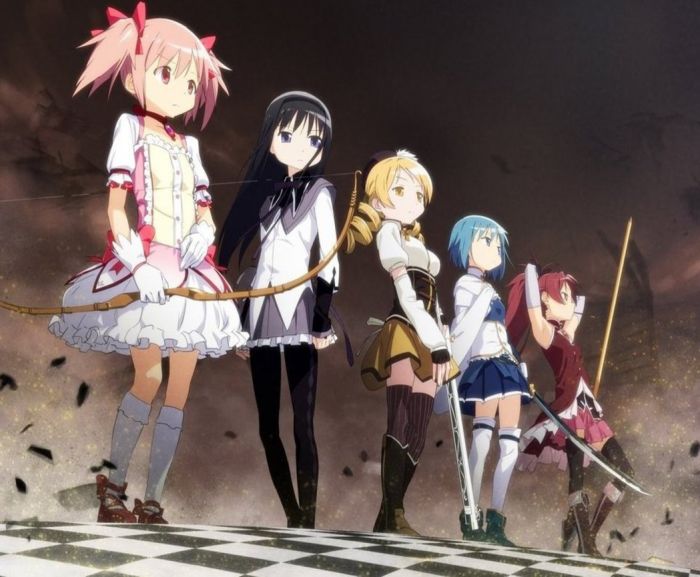
A modern example is Puella Magi Madoka Magica. The series starts out as a cute magical girl series, but becomes a psychological tale about the importance of reading the fine print on a contract.
There is nothing wrong with that, it helps bring in new ideas to the genre. Yet, fans are quick to marry a deconstruction to the point that every show needs to be a deconstruction, which defeats the point of a deconstruction.
#5. Satire
The cruelest form of comedy. Satire uses humor and irony to poke fun at society's failings and hypocrisies. Satire has roots in writings from the Roman Empire, making far from a modern trend. It's also nonexistent in Japan, for the most part.
Outside of Welcome to the NHK and Otaku no Video, shows that are labeled as satire are done so by misunderstood Western fans. That is because Japanese culture puts an emphasis on respecting authority. Satire is defiant by nature, which is a concept many Japanese writers are not comfortable with.
#6. Deep
Look at that symbolism, and did you catch that literary reference? This show is so deep, you have to be well read to understand the inner workings of the show.
I'm sorry, but not really. Western fans are quick to praise a series that uses Christian symbolism or quote a classic novel. That is just window dressing.
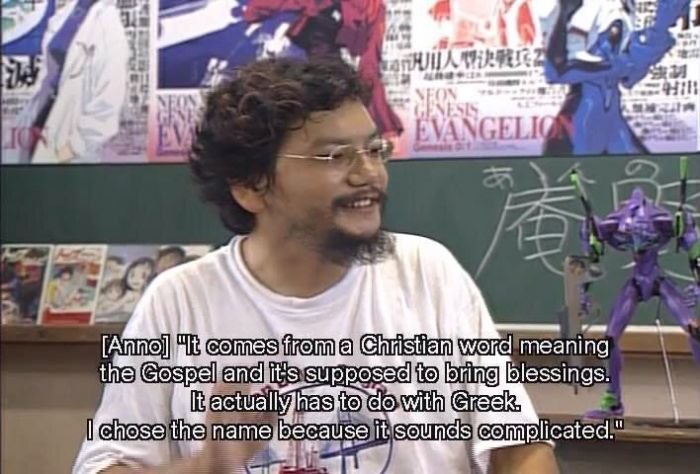
I hate to burst your bubble Evangelion fans, but here is what assistant director Kazuya Tsurumaki said in an interview:
There are a lot of giant robot shows in Japan, and we did want our story to have a religious theme to help distinguish us. Because Christianity is an uncommon religion in Japan we thought it would be mysterious. None of the staff who worked on Eva are Christians. There is no actual Christian meaning to the show, we just thought the visual symbols of Christianity look cool. If we had known the show would get distributed in the US and Europe we might have rethought that choice
That is not to say Evangelion is a shallow show. Its depth comes the cast interactions, the cast overcoming psychological issues, and pointing out the flaws in Japan's concepts of expectations of children.
# 7
Good enough reason to me