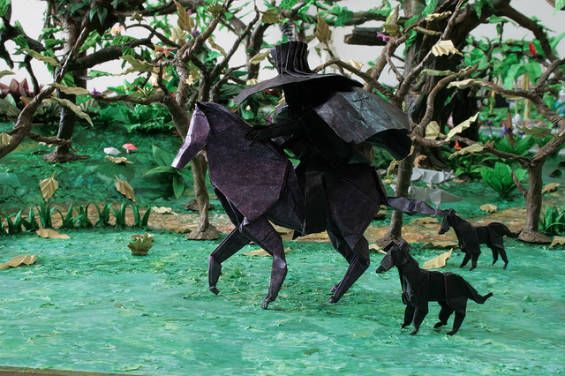
Humans have been obsessed with monsters since the dawn of time. Horrific creatures capable of performing hideous acts of evil upon innocent victims have kept many up late at night, yet we still find ourselves drawn to horror films and supernatural stories like moths to a flame. America has it's own unique spin on the monsters and myths that haunt it's shores.
Creepy American Monsters And Myths That Will Haunt Your Dreams.
By
Teresa Thomerson in
Geeks and Gaming
On 21st October 2015
advertisement
#1 The Beast of Bladenboro
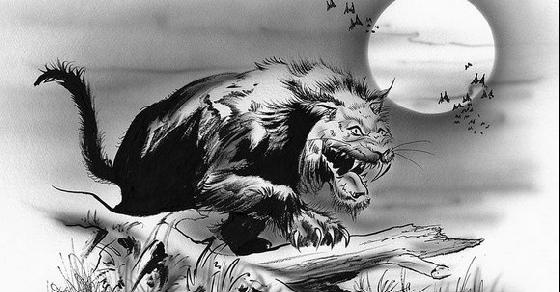
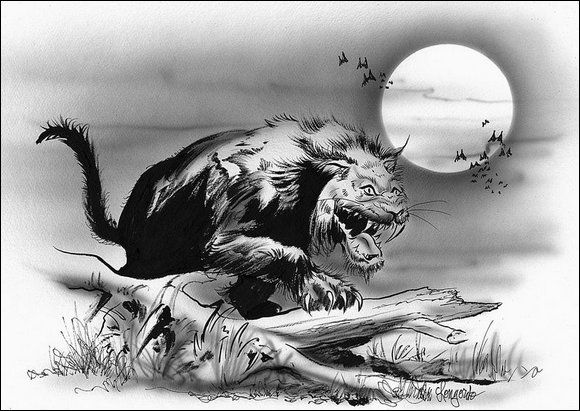
The Beast of Bladenboro is a huge catlike monster. Beginning in late 1953, Bladenboro, North Carolina was the scene of unexplained attacks. A farmer saw a beast resembling a cat carry his dog off. Several dog carcasses were later found drained of blood. Hunters came from all over the country to hunt the "vampire beast" until the small town got sick of the hoopla. A bobcat was then shot and displayed, and the world was assured that the beast had been found. Although some reports have surfaced that the beast remains active, it hasn't stopped Bladenboro from hosting an annual festival centered around the legend.
#2 Wampus Cat
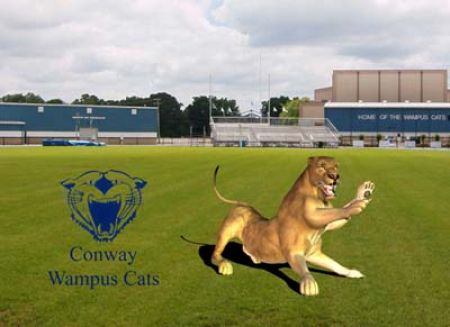
This is the only cryptozoological creature on this list that also serves as a mascot for multiple sports teams (pictured at left, a version used at a high school in Conway, Arkansas ... we wouldn't want to tangle with that thing on a football field, or anywhere for that matter). The cougar-esque Wampus Cat has a wider geographical range than most, but is closely tied to Tennessee folklore, with stories dating back to Native American legends.
It's been described as "half-woman, half-cat, and all-terrorizing the cat kills animals, steals children and smells like a mixture of skunk and wet dog." Um, yuck. Naturally, the Wampus Cat has had its own moment in the excessively popular monster-hunting-TV realm, on an episode of Destination America's Mountain Monsters.
advertisement
#3 Mothman
The Mothman went Hollywood in 2002's The Mothman Prophecies, bringing the foreboding winged creature to the attention of Richard Gere fans the world over. That the Mothman tales are tied to a real-life tragedy makes the story even more poignant, and eerie.
The first sighting was November 15, 1966, and inspired the following immortal headline in local rag the Point Pleasant Register: "Couples See Man-Sized Bird...Creature...Something."
According to Prairie Ghosts, the sightings continued into 1967; author Joel Keel, who wrote the book that served as the basis for the Gere film, estimated that "at least 100 people personally witnessed the creature between November 1966 and November 1967." The Mothman was said to be "between five and seven feet tall, wider than a man, and shuffled on human-like legs. Its eyes were set near the top of the shoulders and had bat-like wings that glided, rather than flapped, when it flew. Witnesses also described its murky skin as being either gray or brown and it emitted a humming sound when it flew."
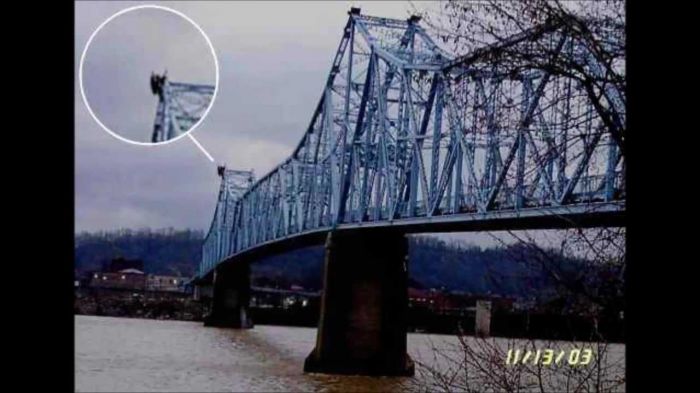
True believers say the Mothman's raison d'être became clear December 15, 1967, when the Silver Bridge, a suspension span over the Ohio River that connected West Virginia and Ohio, collapsed during rush hour; 46 people perished. Though the official story was that the bridge was simply old and overloaded, the timing of the Mothman's appearance and the disaster is too tempting of a coincidence for many to ignore.
The jury's out on whether the creature was warning the people of Point Pleasant about the impending collapse, or whether he was the cause of it. At any rate, it doesn't seem like the town holds a grudge, considering it's home to a Mothman museum, statue, and annual festival. Who says paranormal activity is bad for business?
#4 La Llorona- The Weeping Woman
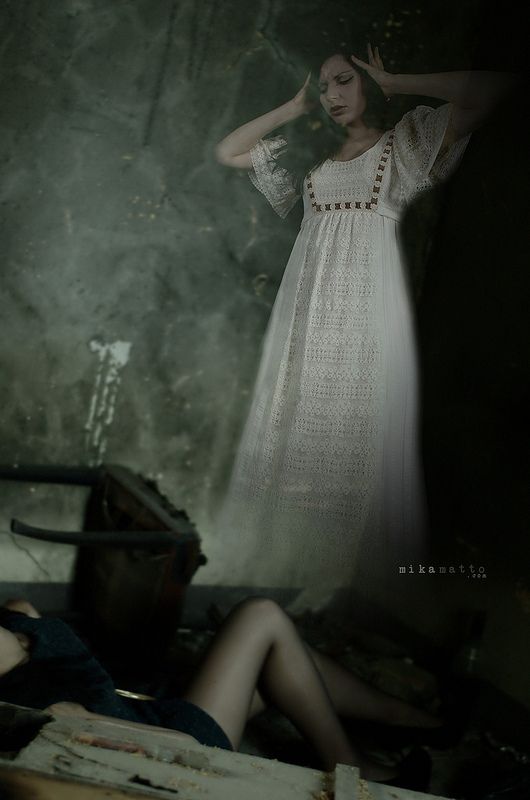
La Llorona means "the weeping woman." This legendary ghost of New Mexico was once a beautiful woman named Maria. She rejected most of her suitors, and married the most handsome young ranchero around. They were happy together for a time, and she bore two sons. But the handsome husband grew bored and turned to other women and ignored Maria. He even preferred the company of his sons over her, which drove her to a jealous rage one night and she threw the two boys in the Santa Fe River and they drowned. In another version of the story, the children died while Maria was away cavorting with other men. Either way, she was responsible for their deaths, and could not bear the guilt. Maria walked the riverside in her white gown, crying for her sons, until she died of starvation on the river bank. Her ghost came back and continued the vigil, wailing and screaming in the night. Now called La Llorana, she attacks those who venture to the river at night, looking to kill people in her grief. The tale is also told along other rivers of the Southwest, and is used to scare children away from the dark, dangerous waters
advertisement
#5 Hodag
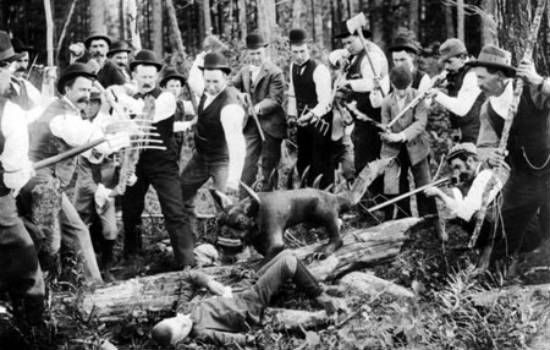
The Hodag (Bovinus spiritualis) is a ferocious animal native to Wisconsin. The black Hodag was first discovered in 1893 and is the largest of the several Hodag species. It has two horns and a series of spikes along its spine. There are also the Sidehill Dodge Hodag, the Cave Hodag, and the Shovel-nose Hodag.
advertisement
#6 Skunk Ape
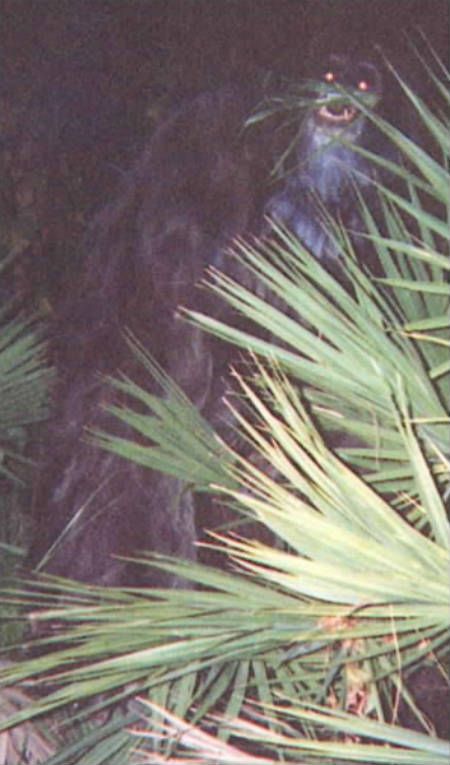
The Skunk Ape appears now and again throughout the American Deep South, from Oklahoma to North Carolina, but most sightings have been reported in Florida. The creature gets its name from its awful odor. In 2000, an anonymous letter accompanied several photographs purporting to show an ape in Myakka City, Florida. The writer of the letter seemed to think this was an escaped orangutan, but no missing ape was reported. Later, an investigation was launched over a horse that was injured by an unknown animal in the same area.
advertisement
#7 Gowrow
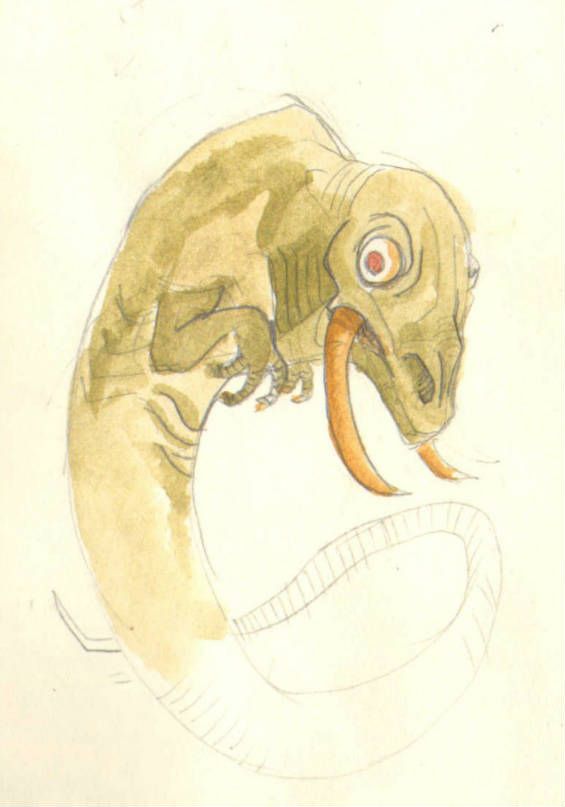
The Gowrow was first reported in Arkansas in 1897. It lives in the lakes and caves of Arkansas and got its name from the horrible sounds it makes. The Gowrow was described as a twenty-foot-long reptile with enormous tusks that ate livestock. One enterprising Arkansan claimed to have captured a Gowrow, and would let the public see it for a small price of admittance. But just before the reveal, he announced the Gowrow had escaped. The audience was so busy running in terror that no one asked for their money back!
advertisement
#8 The Loveland Frog
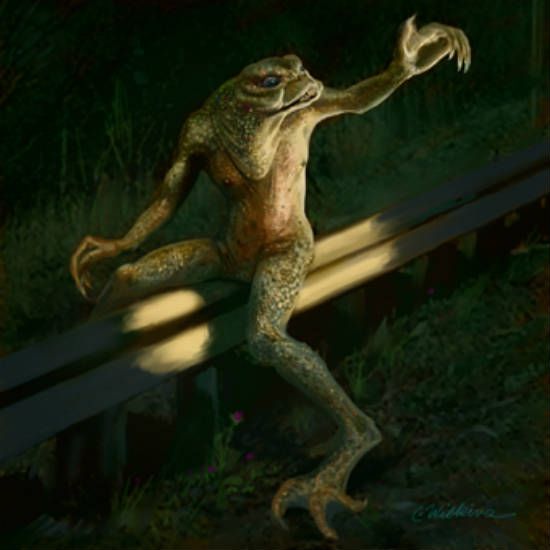
Loveland, Ohio, has multiple sightings recorded of an unusual reptile, which has become known as the Loveland Frog. The most famous sighting was by police officer Ray Shockey in 1972. He saw an animal lying beside the road, and when he approached, it got up on two legs and ran away! He described it as three to four feet tall, about 60 pounds, with a face like a frog or lizard. Officer Mark Matthews had a similar encounter a couple of weeks later. The story grew as it was retold, and the original officers say they never thought the creature was a monster, but possibly an escaped pet. However, there have been other sightings, particularly one from 1955. A businessman reported that he saw three creatures beside the road that were three to four feet tall and had wrinkles on their heads instead of hair, and webbed hands and feet. The most bizarre thing about the earlier sighting is that one of the creatures waved a wand that emitted sparks
advertisement
#9 Jackalope
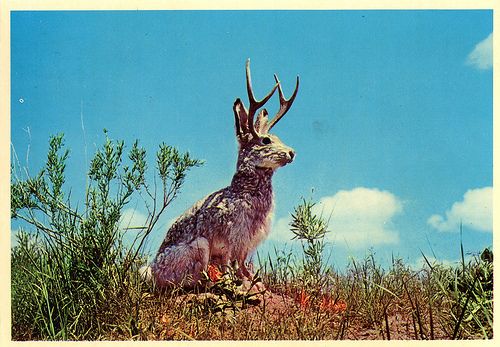
The Jackalope (Lepus temperamentalus) is a cross between a rabbit and an antelope (or sometimes a goat or deer) seen over most parts of the United States. Jackalopes only mate during electrical storms. They can be caught by using whiskey as bait, which will render them easier to sneak up on. Jackalope milk is supposed to have medicinal qualities. The legend of the Jackalope may have come from sightings of rabbits infected with the Shope papillomavirus, which causes hornlike growths. The Jackalope is rumored to be extinct, but can be seen in taxidermy shops everywhere.
advertisement
#10 El Sombrerón
El Sombrerón is the man with the big hat. He is short and wears a thick belt and heavy boots. The legend in Guatemala tells of him always wearing a black hat, while he victimizes young women.
The legend goes that a young girl named Susana in La Recolección yeah, she had pretty hair and big ol' peepers (that means eyes) was admiring the moon and stars from her balcony one night when she was approached and serenaded by a man in a big hat. Worried and upset that their daughter was outside so late, Susana's parents forced her to come inside. The man in the hat returned and serenaded her each night, making it impossible for her to sleep, and whenever her parents would try to feed her, she'd find the food contaminated with dirt. Fed up, the parents cut the girl's hair and had it blessed by a priest naturally, this caused the goblin to stop bothering her, either because of the holy water or because he didn't like chicks with pixie cuts.
El Sombrerón has a habit of braiding the hair on horses and dogs when no one is around. A similar goblin is also called Tzizimite, and other names depending on the local language. The legend casts him as a general bogeyman of Mexico. A similar legend in El Salvador is called Cipitio, who is a short boy with backward feet, and, of course, a big hat. El Cipito pursues pretty girls and torments them if they reject his advances. Altogether, this useful tale is told to keep young girls from flirting with strange men.