#5
Doctors warned Mrs Melton and her husband, Dave, that the baby would not be able to breathe on her own. When Lexi was born weeks later, a team from Seattle's Children whisked her away to surgery.
Furthermore, Lexi had continual health problems between surgeries - because of both her tracheostomy tube and time spent in the hospital.
Mrs Melton said: ‘There were issues with respiratory illnesses and infections, and things that randomly come up when you have a lot of hospital time and complex presentation.'
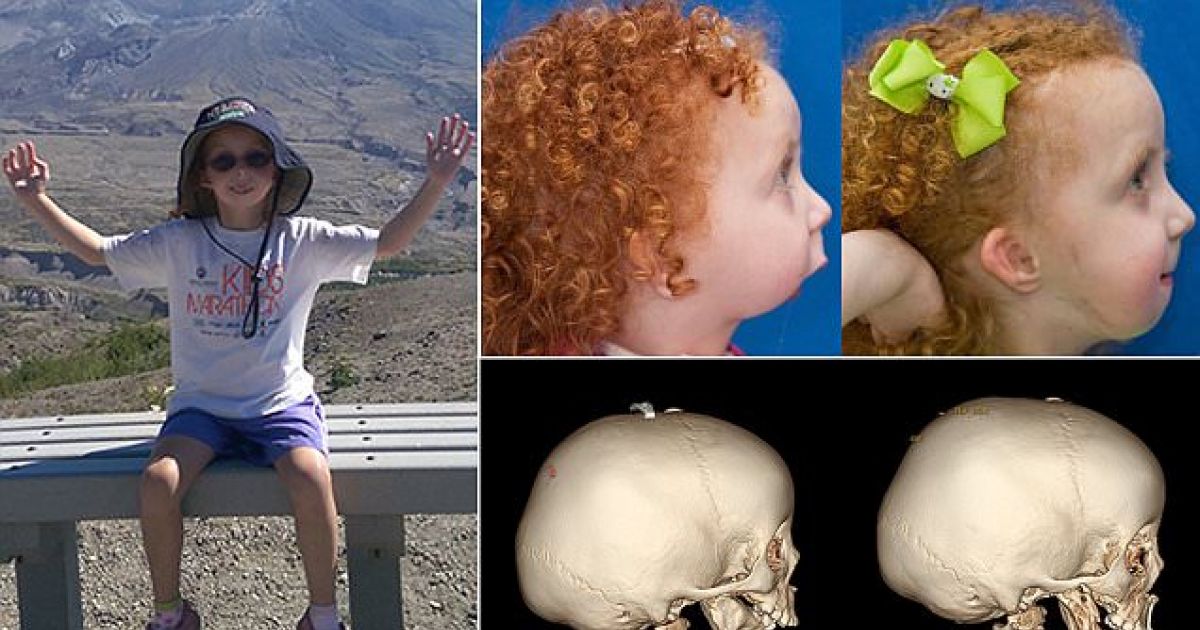
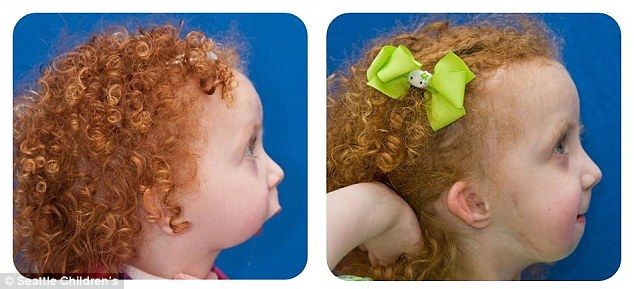
It's now been two years since Lexi's last surgery to reconstruct her jaw.
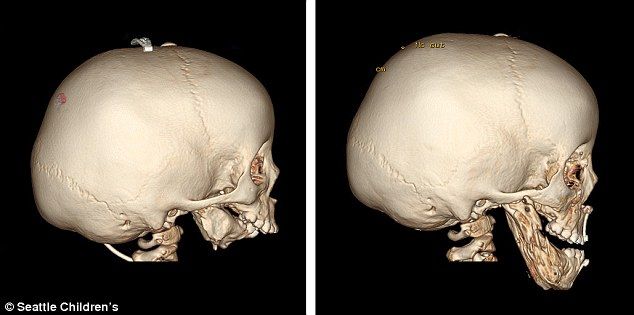
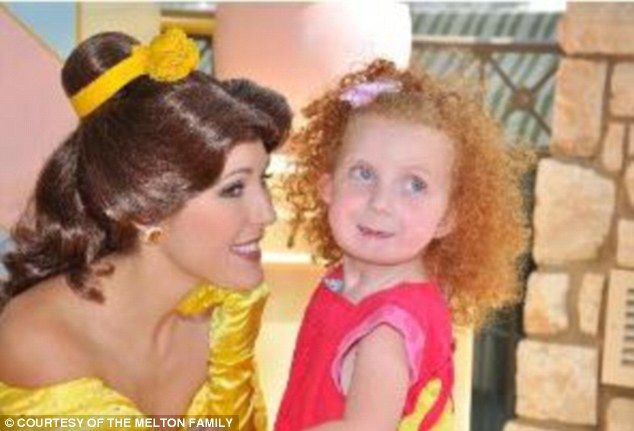
Because the lower jaw was malformed, Lexi was not born with typical jaw joints.
We're one of the largest craniofacial centers in the world and we've only seen this three times
Dr Richard Hopper, Seattle Children's Hospital
At the moment, she has limited mobility in her jaw helping her speak but not enough so that she can chew food.
She currently has a feeding tube in her stomach from which she receives nutrients each day.
And so, her next surgery in 2017 will be dedicated to the jaw joints.
Dr Hopper said: ‘The next stage of surgeries is to reconstruct those joints so she has more opening and closing ability.'
Lexi will have to undergo additional surgeries for roughly the next decade until she stops growing at around the age of 17.
Her reconstructed lower jaw will not be able to grow with the rest of her body, Dr Hopper explained.
He said: ‘The big surgery she had gave her a very pronounced jaw her mother, Lexi and I joke is kind of a Jay Leno jaw because we needed to give her an older jaw than she needed at that age, because we know she's going to have to outgrow it.'
After the surgery to reconstruct her joints, Lexi will likely undergo at least two additional surgeries to increase the size of her lower jaw to match the rest of her body.
Dr Hopper noted: ‘After that it will become more routine procedures.'
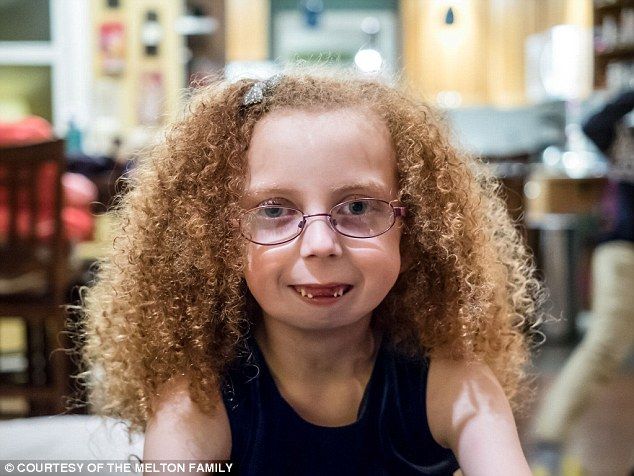
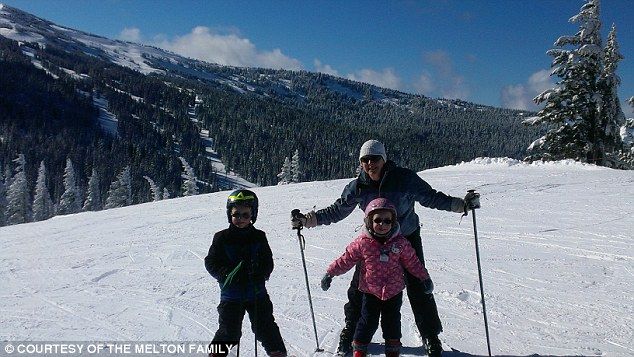
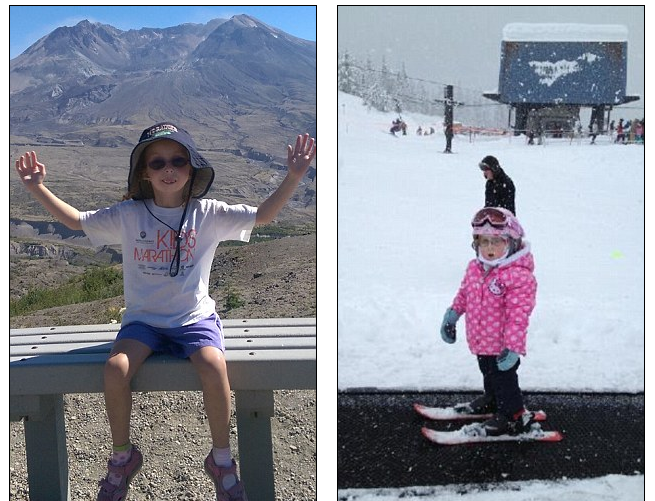
But despite all she has undergone, Lexi has always exhibited a lust for life, according to her mother.